On a warm summer afternoon, Ed Jensen sits in his workshop, tools at his side, facing a large wood carving depicting a Tk̓emlúps te Secwépemc creation story.
To the untrained eye, it looks like a beautiful picture of a coyote, bear, wolf, elk, eagle and other animals facing two people in the foreground. But the accomplished Secwépemc hunter, artist and teacher explains he’s carving history and culture into the cedar slab.
For Jensen, artistry isn’t just skill. It is a way of remembering, honouring and surviving. As the founder of Tk̓emlúps Traditions, where folks can purchase handmade works of art and learn how to craft traditional tools like knives and rattles, Jensen has carved out a life rooted in ancestral teachings, land-based practices and a deep respect for the natural world.
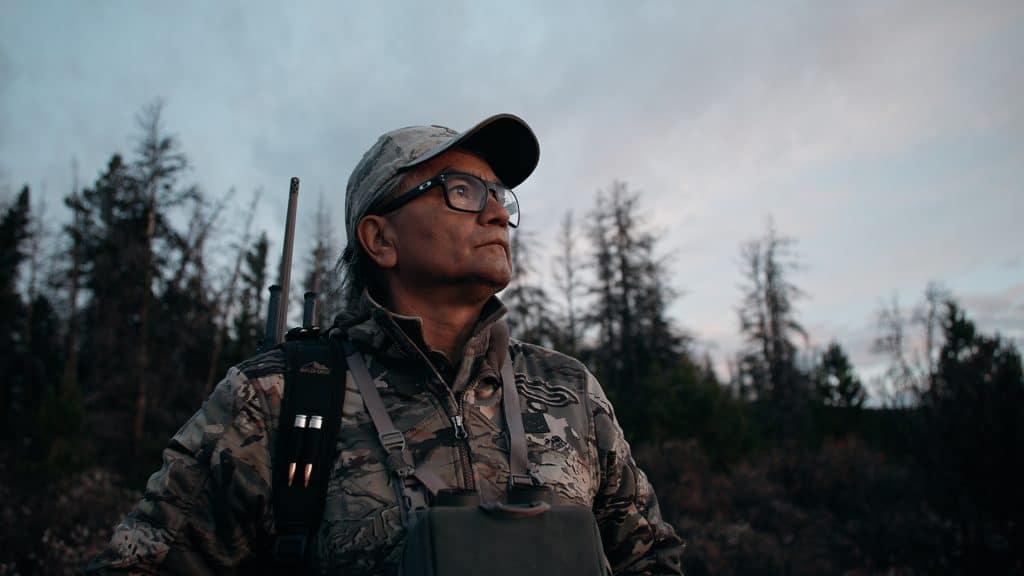
Now his teachings are reaching people far beyond his workshop. As an Indigenous hunting guide featured on the latest season of Aboriginal Peoples Television Network’s (ATPN) award-winning docuseries Yukon Harvest, which premiered on Sept. 4, Jensen helps Indigenous folks of all ages hunt and reconnect to cultural traditions.
‘We don’t waste anything’
Raised on the Tk̓emlúps te Secwépemc reserve, Jensen was chosen by family to carry the role of hunter, a responsibility that shaped his earliest experiences and continues to guide his work today.
“It was just something that was in my DNA, in my blood,” he tells The Wren.
His journey into art began as a form of escape. As a child in the late 1970s and early 1980s, Jensen found solace in building boats from chokecherry trees and baling twine.
That early connection to craft evolved into a lifelong practice of transforming natural materials — bone, hide, wood and stone — into tools, jewelry and ceremonial pieces.
“I started to use parts of animals because that was the way I was taught,” he says. “We don’t waste anything.”
Watching his uncles create small crafts sparked a passion that would eventually become a livelihood.
Flint-knapped knives, drums, rattles, copper etchings and fish weirs are made with materials sourced through respectful hunting, fishing and gathering.
His approach is guided by the Tk̓emlúps origin story depicted in the commissioned carving — a story passed down through generations.
In the story, the animals saw their vulnerability and offered themselves — their flesh, feathers, bones and teachings — so that people could survive. In return, they asked to be honoured in song, ceremony and stewardship.
“That story has always stayed with me,” Jensen says. “When I see people tossing away deer legs or hides, I think, ‘I can make something with that.’”
“We’re sharing breath with the trees, with the rocks, with the ones who sat here before us,” he continues. “Even a stone I work with has been handled by other hands. It has seen centuries. That’s powerful.”
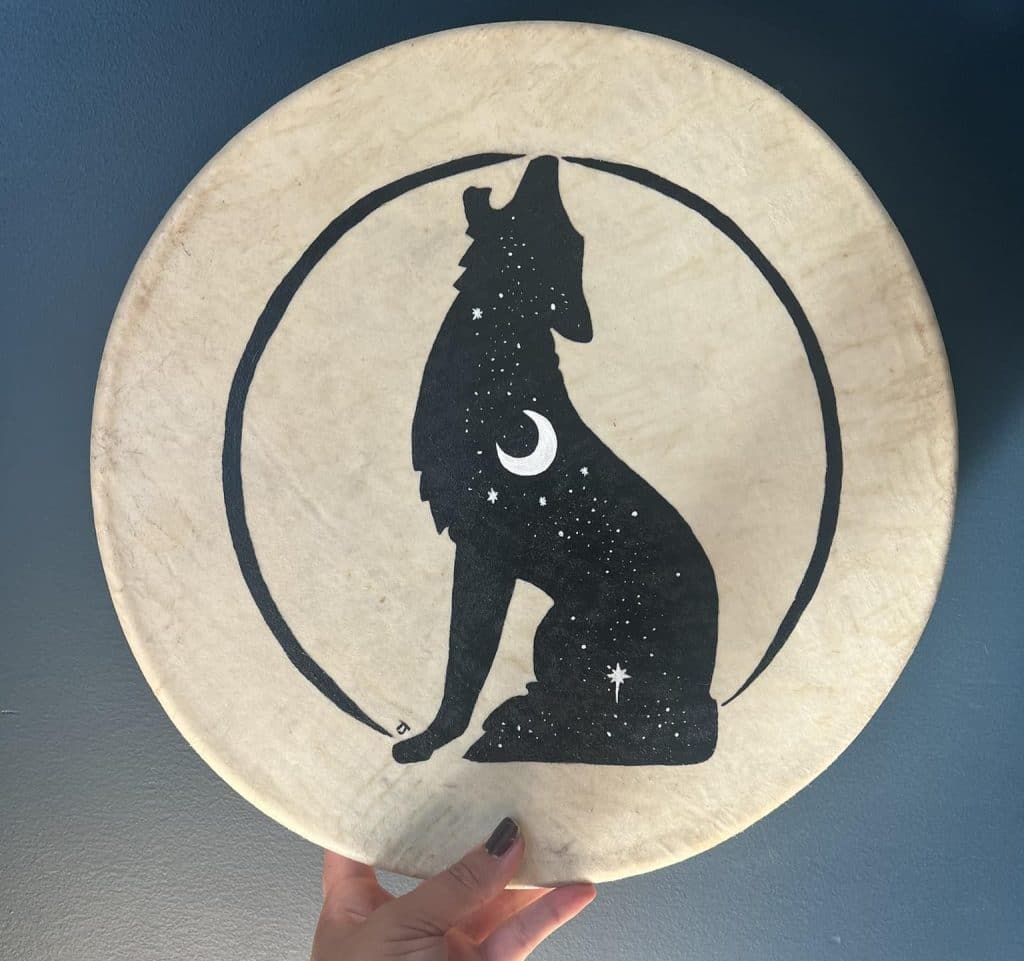
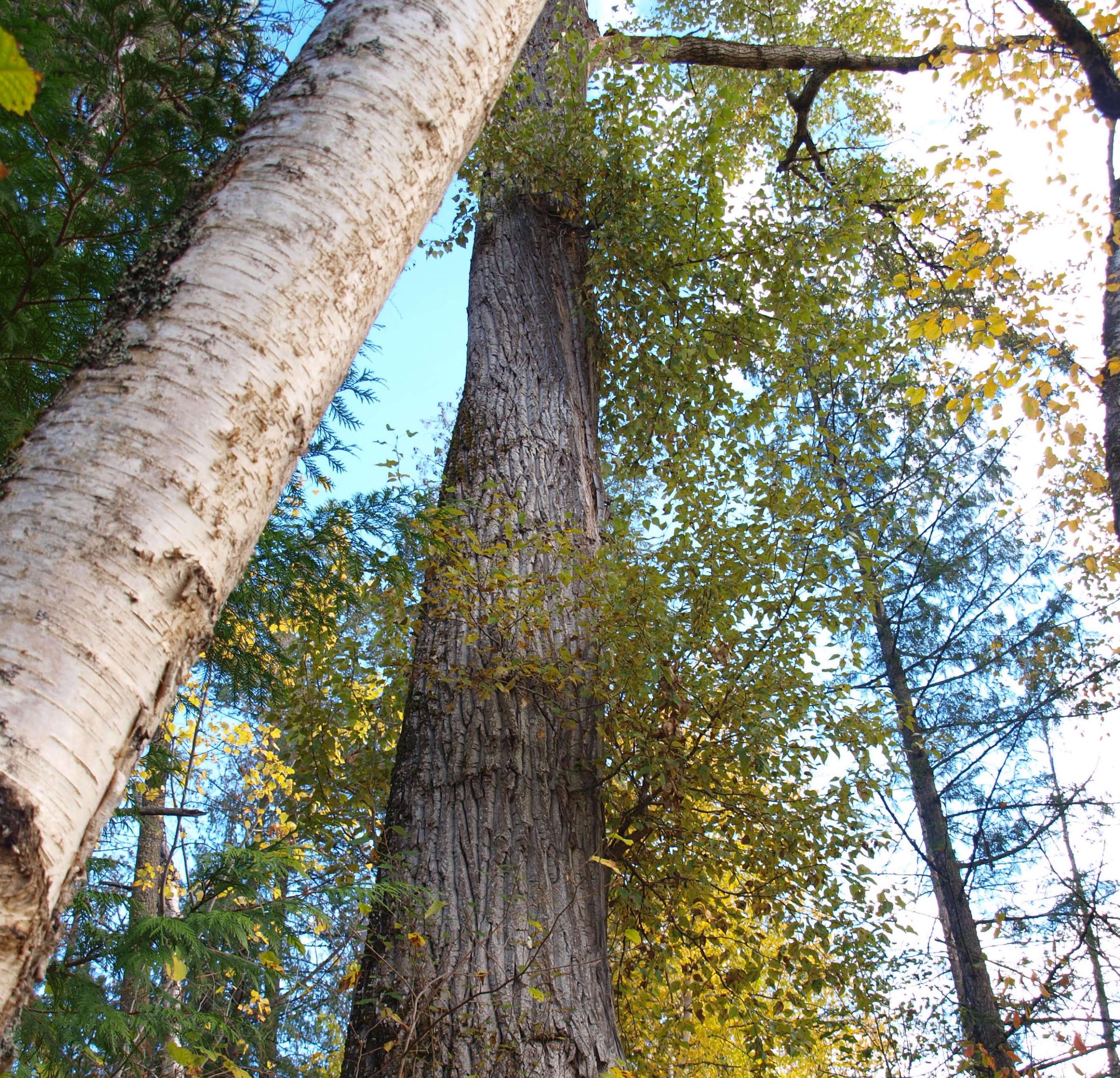
Jensen’s respect for the land is evident in every detail. Deer hide is stretched over bent birch to become a drum. Yellow cedar, once a living tree, becomes a carved piece of art. Obsidian, traded through ancient networks, is shaped into blades.
Teaching through tools and story
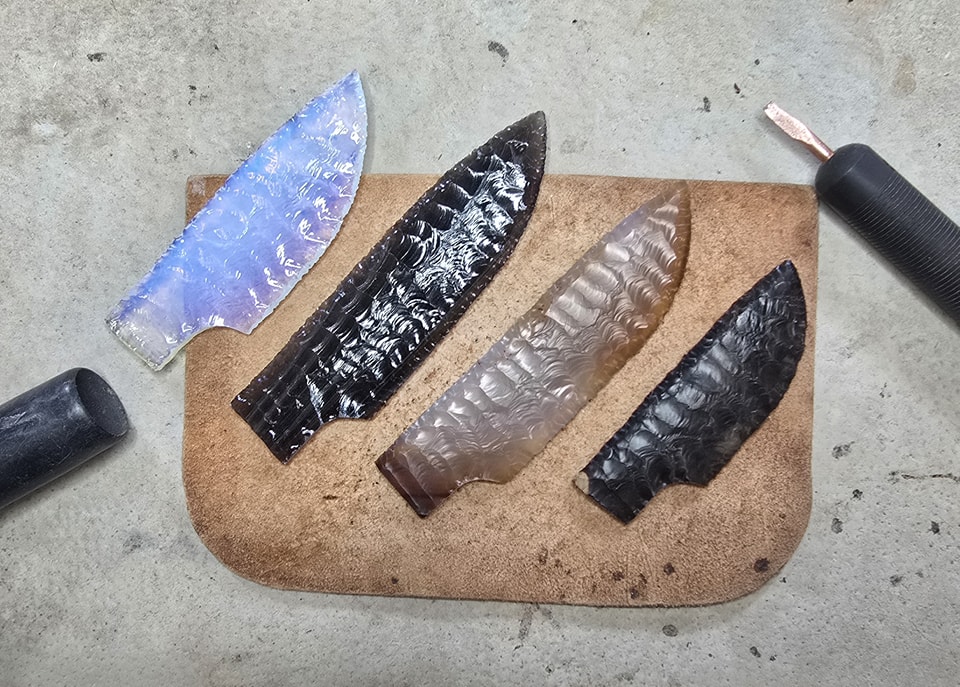
Workshops are a cornerstone of Jensen’s practice. He teaches flint knapping, knife building, rattle making and fish trap construction — skills that connect participants to land-based traditions and cultural teachings.
“I’ve had Elders in my classes and I’ve had kids as young as 12,” he says. “It’s about dexterity, yes, but it’s also about mindset.”
Jensen’s daughter and nephew are now apprenticing under him, continuing the legacy.
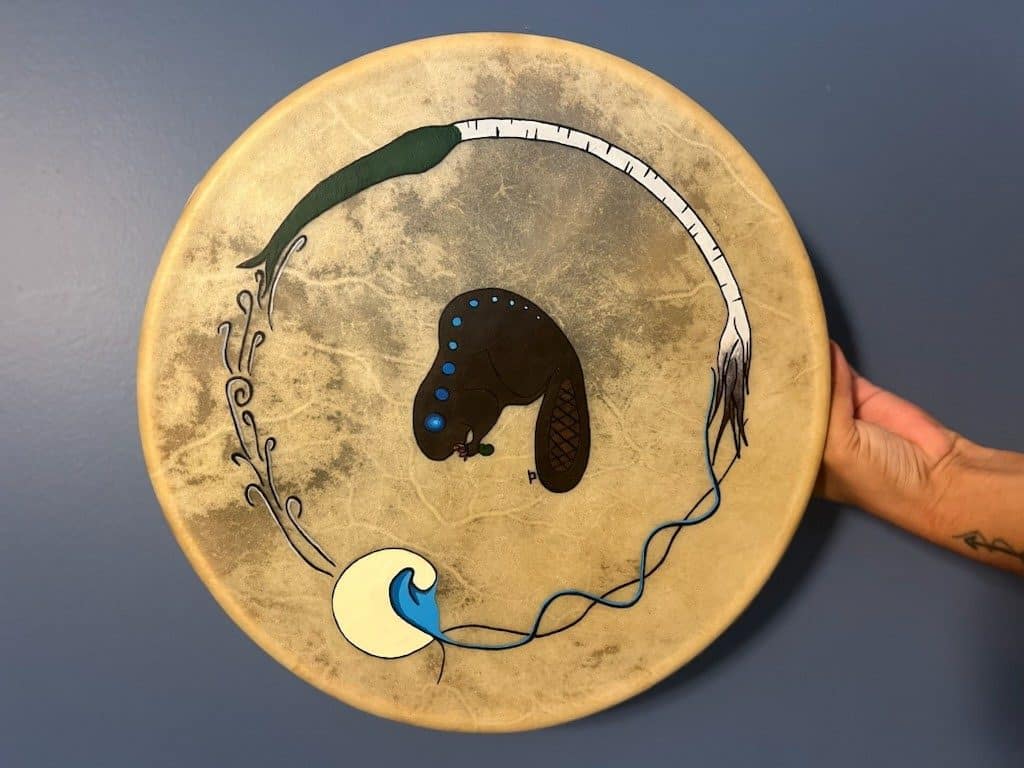
His daughter, Tessa Jensen, recently completed her first painted drum, a commissioned piece for the Royal Bank of Canada that tells the story of the Sqlu7uwi (the beaver), a symbol of trade, land and cultural connection.
“She captured it beautifully,” Jensen says. “It’s a piece of art, and it tells a story.”
While many purchase Jensen’s hunting tools as works of art, they are functional.
Local hunter Justin Erixon has purchased three knives and uses them all.
“After getting the first knife, I told him I was going to test it out and haven’t looked back since,” he says.
One knife alone has skinned roughly 50 deer and is “just as awesome” as the first time he used it, Erixon says.
“Those knives are so fast for skinning, [they are] almost impossible to wreck the hide or meat unless you try.”
A show of culture and a vision for the future
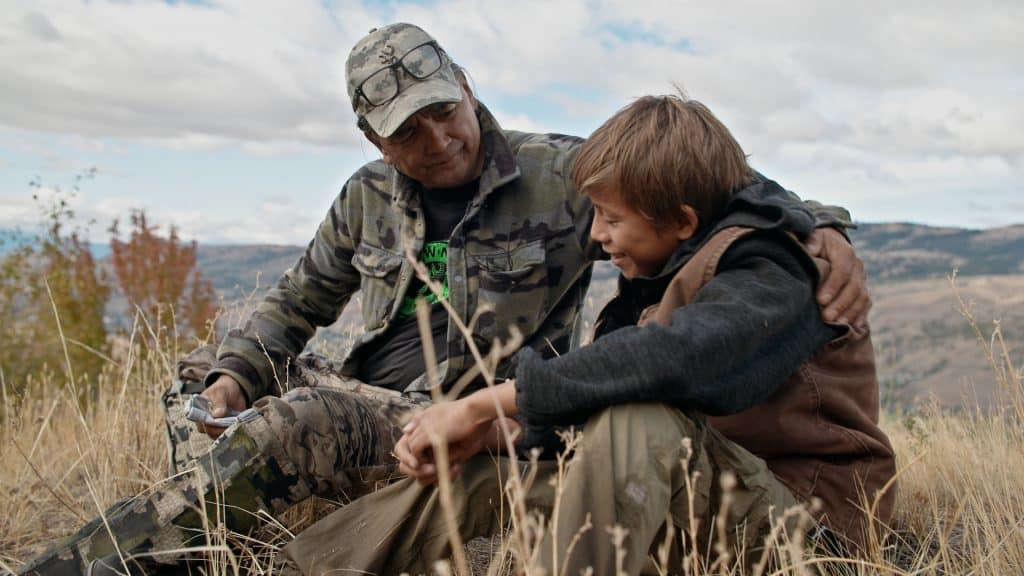
Over the last few years, Jensen has brought his cultural mentorship to a national audience through APTN’s Yukon Harvest.
The documentary series follows Indigenous hunting guides across Turtle Island. Jensen’s role on the show began in Season 2, which aired in 2023. He returns as a guide and cultural mentor in Season 3.
“It’s not a hunting show, it’s a culture show,” he says. “It’s about our place in the natural world.”
His involvement in the show came unexpectedly. He stepped in to carry out the vision of the late Don Harris, a respected Métis-Cree hunting guide who had dreamed of reconnecting youth with the land.
From guiding an 11-year-old through his first hunt to navigating grizzly encounters and bee nests in remote valleys, Jensen’s experiences are full of cultural meaning.
“We start in ceremony,” he says. “We pray for calmness, for a clean mind and heart. That’s how we protect ourselves and the animals.”
Jensen has also been selected as an artist-in-residence with the University of Canterbury in Aotearoa, New Zealand where he will continue to bring Interior Plateau, specifically Secwépemc, art styles to the world stage. He will be collaborating with master carver Fayne Robinson on jade pieces.
“I want to create originals and show the world who we are,” he says. “We have a very specific art style, and it’s in the archaeological record. It’s time to bring it forward.”
Though he’s considering retirement from the day-to-day hustle, Jensen feels secure in his legacy. His apprentices are producing work indistinguishable from his own, and his client base continues to grow.
Upcoming partnerships with the City of Kamloops and Rocky Mountaineer hint at a future filled with cultural and public workshops.
“I’m so happy for the future,” he says. “They’re going to do so well.”
So do we. That’s why we spend more time, more money and place more care into reporting each story. Your financial contributions, big and small, make these stories possible. Will you become a monthly supporter today?
If you've read this far, you value in-depth community news