
History at the Confluence: When Tk’emlúps was born
How Secwépemc traditional knowledge and modern technology tell complimentary stories of the past.
This story is one of five in The Wren’s email series, History at the Confluence: A glimpse into Tk’emlúps’ past.

The Secwépemc history of Tk’emlúps stretches back some 10,000 years compared to the 130-year history of Kamloops as a Canadian municipality.
To ground this exploration of local history at its roots, I sought advice from museum administrator Diena Jules and cultural educator Jackie Jules of the Secwépemc Museum and Heritage Park. Their titles do not do justice to the roles these Traditional Knowledge Keepers play in our community nor to the fullness of their life experience and wisdom.
It is important to be mindful when exploring and retelling Secwépemc history in English that we do so outside of its full context. The fullness of, and authority over, Secwépemc knowledge rests with their Elders and Knowledge Keepers.
Before diving in and learning what Secwépemc knowledge can tell us about the formation and the early history of Tk’emlúps, let’s first orient ourselves.
Where is Tk’emlúps?
This valley’s most defining feature is the merging of the twin rivers of Simpcwétkwe and Secwepemcétkwe into Snek’w7étkwe — which you may know as the North Thompson, South Thompson and Thompson Rivers.
In Secwepemc’tsin, the language of the Secwépemc, this place is called Tk’emlúps, “where the rivers meet,” from which the English name Kamloops derived.
Tk’emlúps is located in the southern reaches of Secwepemcúĺecw, the homeland of the Secwépemc, “spread out people.”
The people, their homeland and their language are perpetually linked; shaping and being shaped by each other since time immemorial — across so many generations that a precise counting of years is impossible.
A precise counting of years is unnecessary. What is important is that knowledge useful to future generations be preserved and passed on. That is what the ancestral Secwépemc achieved, over generations, developing a thriving society that emphasized collective responsibility and ecological stewardship.
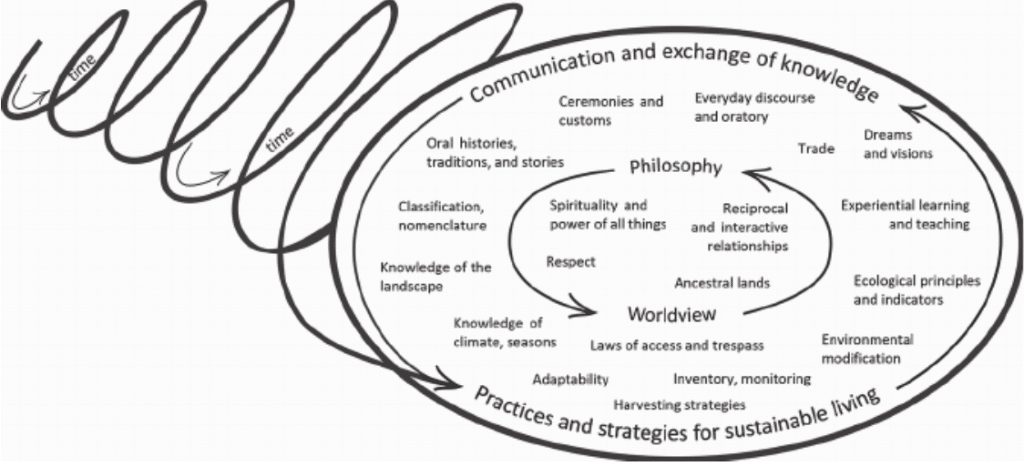
Acknowledging the interconnectedness of all things is fundamental to the Secwépemc worldview. Also fundamental is respect; self-respect, respect for family and community and respect for the natural world, from which we are inseparable.
The living landscape, all of the plants, animals and ecosystems are respected for their contribution to the lives of the people. Harvesting resources is to be done sustainably, to assure continued availability. No more than 20 per cent of a resource should be harvested to ensure enough is left for the other animals, who the Secwépemc view as part of their family.
While their culture has extremely deep roots, the Secwépemc are not a people frozen in time. The knowledge of each generation provides the foundation for the next to develop and iterate on.
The time of the ancient transformers
When asked about the oldest history of the Secwépemc, Diena Jules referred me to the Secwépemc creation story, which goes something like this:
In the beginning, the world was in a state of chaos, plagued by ice, winds, fires and floods. People who lived then had characteristics of both animals and humans; they are known as stsptékwele “ancient storied beings” or tellqel’múcw “transformers.” Some were tsecelemc, “people-eaters or cannibals.”
The old one, the great chief of the ancient world, sent Sk’elép “Coyote” to travel the world and set it right.
Sk’elép was gifted with powers beyond those of the other ancient beings. While he possessed great knowledge and cunning, he could be selfish, lazy and vain, often playing foolish or mean tricks. Nevertheless, he vanquished many evil beings and did many great works.
The exploits of Sk’elép and the other stsptékwele are recorded in the stsptekwll, ancient stories which are often associated with particular locations, historical events, moral lessons and ecological knowledge.
Thus, the collective wisdom of the Secwépemc is in a sense written onto the land, turning the living landscape into an encyclopedia of knowledge to be interpreted for the people of their time by each successive generation of Knowledge Keepers.
The wisdom preserved in the stsptekwll is just as valuable today as it has been for every generation of Secwépemc.
Freeing the Chinook wind
A stsptekwll told to me by Jackie Jules can help us understand how our home valley was freed from the icy grip of glaciation.
A long time ago, the Cold People of the north sent frigid winds to sweep over the lands where the people lived. Among the cold, shivering people dwelled the brothers Fox and Hare.
One morning, while he smoked on his pipe, Fox told his brother, “Last night I dreamed, and gained valuable knowledge.”
He asked the people of his village, “The Cold People have had power over us for a long time now. Do you like the cold?”
“No we hate the cold,” the villagers said, “but there is nothing we can do.”
But Fox knew that there was something he could do, so he said to his brother Hare, “Come with me. We will bring warm weather.”
The brothers were experienced warriors, they packed what they needed and travelled south. They came to the mouth of the large river where the Cold People’s enemies, the Heat People, lived.
As guests, Fox and Hare were brought into Kúkpi7 “Chief” Sun’s house. Inside they saw a large, round bag hanging from a post. From his dream, Fox knew what he had to do, leaping at the bag and punching it. The Heat People jumped up to stop him, but his brother Hare had his bow aimed and ready. They were too afraid to intervene.
Fox punched the bag again, and again, until on the fourth hit it burst. Freed from the bag, the Chinook wind rushed forth, with Fox and Hare running alongside. The furious Heat People sent heat after them. When the heat and the wind became too much the land burned. Many trees, animals and even people were consumed in the blaze.
But Fox and Hare were swift, alongside the Chinook wind, they outran the fire. Without the wind to fan the flames the fire burnt itself out.
Reaching their village, Fox announced to the people, “I have brought the warm Chinook Wind! Henceforth it will no longer be confined by the Heat People. Warm winds will blow over the north and the rest of the world. The ice and snow will melt, and the Cold People will no longer rule over the weather.”
Just as is remembered in the story of Fox and Hare, a shift in the climate occurred roughly 14,000 years ago, towards the end of the Last Glacial Maximum. This shift brought warm, dry winds that rapidly melted the Cordilleran ice sheet, the glacial complex spanning from the Pacific to the Rocky Mountains.
Secwépemc chronology remembers this as the “time of heat and fire” where summers were hot and fires frequent.
The birth of Tk’emlúps
By 10,000 years ago Secwépemc’uluw was dominated by interconnected ribbon lakes, held in place by ice dams. These drained to the east, through Shuswap Lake then south though the Columbia River basin. Glaciers, remnants of the larger ice sheets, persisted at high elevation, on shaded mountainsides and occasionally deep in the valleys where they held back the lakes of meltwater.
One such massive lake at its largest stretched from Squilax all the way to Ashcroft, then was held in place in the south by an ice dam at Spences Bridge.
Nearly all of the valley where people now live was underwater. The top of the silt plateaus along the valley margins marks the bottom of the lake, meaning even high-up neighborhoods like Sun Rivers and Juniper Ridge would be underwater if the lake were to reappear tomorrow. The low points like Westsyde, Dallas or Downtown would be beneath 200 metres of lake sediments in addition to the lake itself.
Flora of this time consisted of scattered stands of pine, alder and poplar along with grasses and sagebrush. Grazers like mountain sheep, deer and perhaps even bison dotted the hillsides. Many families of hares and marmots too made their homes here, hunted by foxes and coyotes. Fossils attest to the presence of kokanee, the landlocked form of sockeye salmon.
In a single cataclysmic event roughly 9,750 years ago, the ice dam near Spences Bridge gave way and the glacial lake drained through the Fraser canyon in a matter of days, carving the valley and reversing the direction of flow from eastward to westward.
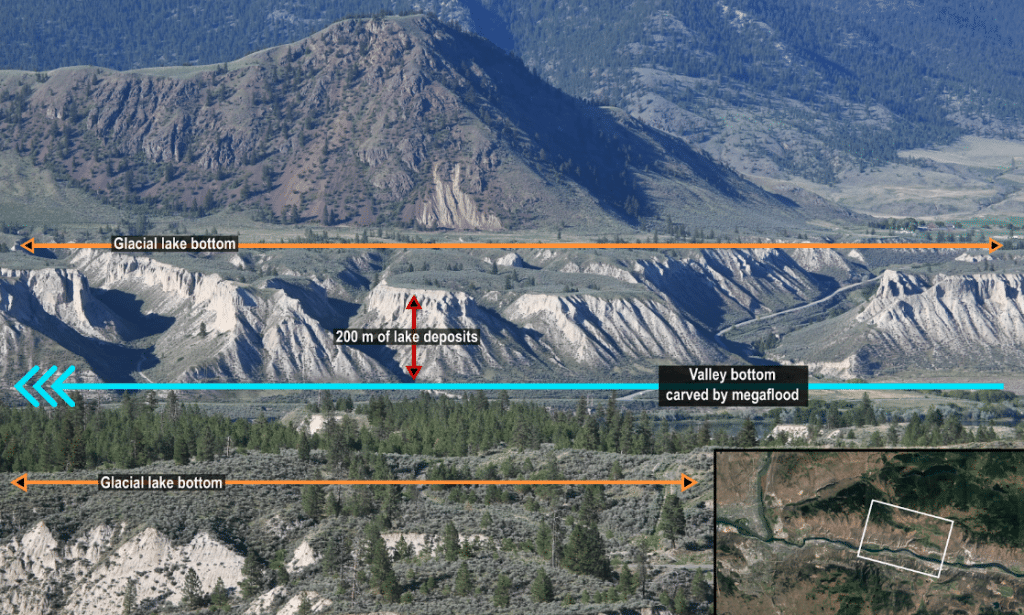
The marks left on the landscape from this megaflood are remembered by the Secwépemc and other Interior peoples as being from Coyote’s time, the ancient period of great transformation that made their homelands ready for people to inhabit.
From this event, the twin rivers and the place where they meet came into being. This was, in a way, the birth of Tk’emlúps, even if it is impossible to know exactly when that name was first uttered.
The people who lived long ago
Draining of the glacial lake created new ecological niches across the varying elevations. The presence of so many unique microclimates provided an attractive array of natural resources. The first people to make use of these wasted little, leaving only subtle traces of their presence. Thus, it is difficult to know exactly when the Secwépemc started making seasonal use of the Tk’emlúps valley or when the first winter villages were established here.
The oldest ancestor ever unearthed in Secwépemc’uluw, and all of what’s been briefly known as Canada, was spotted by a hiker eroding out of the banks of Gore Creek after a deluge in 1975. Analysis revealed this individual was roughly 30 when he was buried in a sudden mudslide in Sk’atsin (Neskonlith) territory near Pritchard.
Radiocarbon dating places his death around 8,250 years ago.
Isotope analysis revealed that his diet consisted almost exclusively of terrestrial protein sources rather than oceanic ones, indicating that ocean-run salmon had not yet established themselves locally during his lifetime.
These details also place this ancestor’s lifetime into context provided by stsptekwll: after the country warmed and flooded, but before Sk’elép led the salmon up the rivers.
Making a place ‘good for people to live’
Since the Secwépemc of the Gore Creek ancestor’s time had not yet incorporated salmon harvesting into their seasonal round, plant and land animal resources dominated their diet.
One of the largest components of the ancient and modern Secwépemc diet are root plants: starchy tubers, rhizomes and bulbs. There are more than a dozen varieties, each with its own ecological niche and optimal harvesting time.
This knowledge has been refined over countless generations, remembered through stories connecting ecological indicators to natural events. For example, the return of a migratory bird species or the blooming of a specific flower can indicate the harvest season of a certain resource.
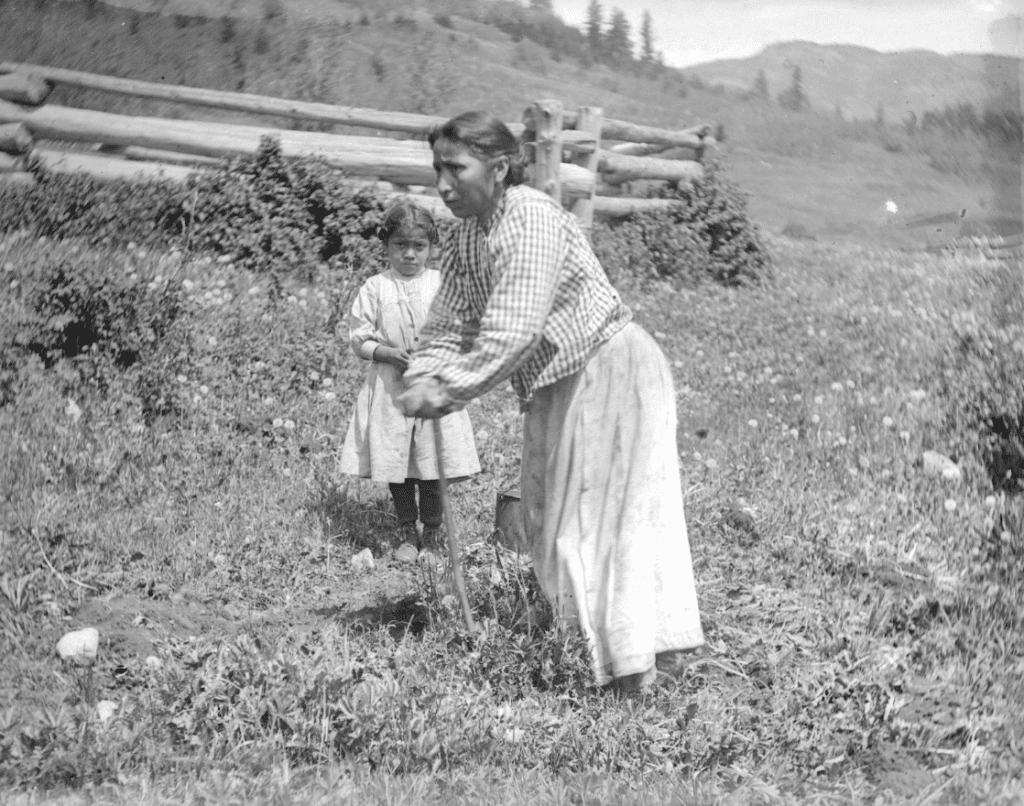
Jackie Jules explained that when the women would go out to harvest these staples they did so in a way that respected the land. “They tread carefully wearing soft moccasins and were selective with what they collected.” Children joined their family, learning hands-on how to steward each resource.
Depending on the species, they would leave the older “mother” plants or replant the smallest bulbs to ensure a harvest next year. Their digging tools were made of wood or antler but never metal, which Jackie said could damage the plants.
Weeds were removed and complimentary species could be co-planted. Minerals, like powdered shells traded from the coast, might be added to improve the soil. Targeting burning controlled pests and enhanced the soil fertility.
In this way, the plant resources across the landscape were managed in the places most favourable for the plants.
By observing the 20 per cent rule, the increased yield provided by human stewardship was shared with other animals, in turn boosting the productivity of the landscape as a whole.
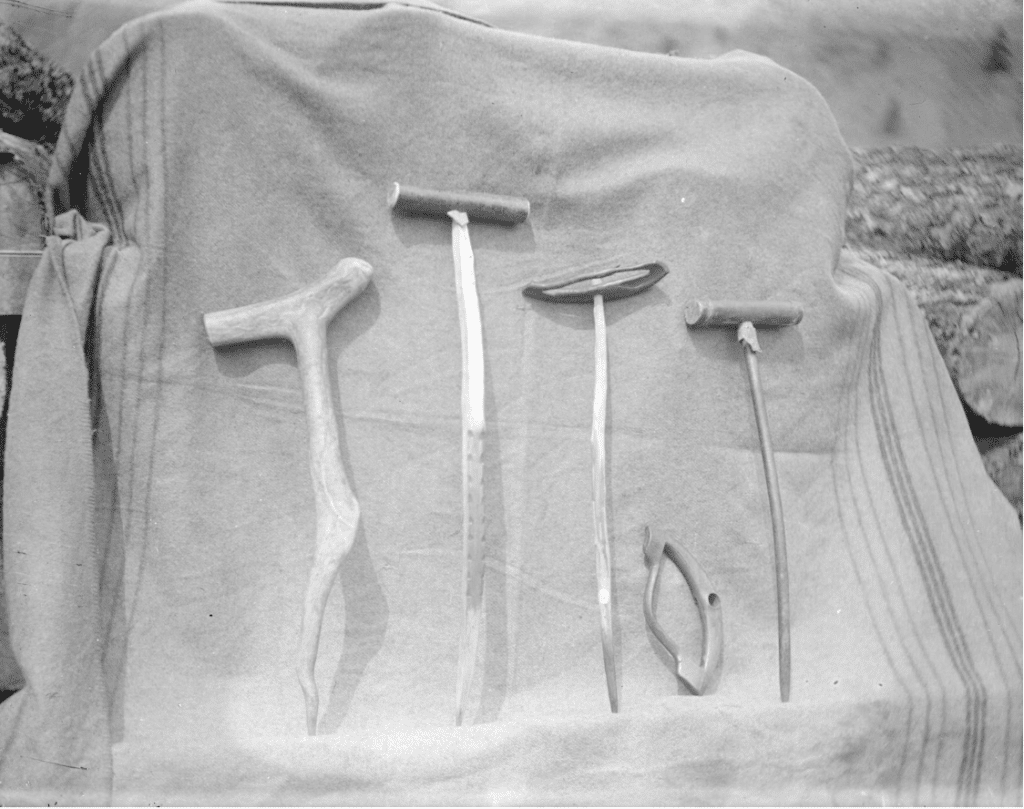
Roots are only one type of plant resource. There are also many other kinds of plants, plus equally complex management schemes for game animals and eventually salmon, that are a part of the communal knowledge as well.
As the tip of the Secwépemc knowledge iceberg comes into view, we can appreciate just how complex their systems of ecosystem stewardship are, and how they transformed and maintained Secwépemc’uluw, including Tk’emlúps, as a bountiful place to live.
The fragments of knowledge shared here are only a drop in the deep well that is Secwépemc history and wisdom. Hopefully, examining the past of Tk’emlúps through this lens allowed you to see history in a new way.
Glossary
For pronunciation refer to the First Voices Secwepemc site as a guide
Kukwstsétsemc – Thank you so much!
Secwépemc – The spread out people
Secwepemc’tsin – The language of the Secwépemc
Secwepemcétkwe – The Secwépemc name of the South Thompson River
Secwépemc’uluw – The homeland of the Secwépemc
Simpcwétkwe – The Secwépemc name of the North Thompson River
Sk’elép – Coyote, the oldest and foremost of the ancient transformers
Snek’w7étkwe – The Secwépemc name of the Thompson River
Stsptekwll – Ancient stories that preserve history and wisdom
Stsptékwele – Ancient storied beings
Tellqel’múcw – Ancient transformers
Tk’emlúps – The Secwépemc name of the Thompson River Valley
Tsecelemc – People-eaters or cannibals, ancient beings that ate humans
Further Reading
Yerí7 re Stsq’ey’s-kucw – Secwépemc People, Land, and Laws by Marianne and Ronald Ignace
Lak-La Hai-ee : Shuswap Indian Meaning “to tell” by Ursula Surtees
Shuswap History: A Century of Change by Annabel Cropped Ear Wolf Shuswap History: The First 100 years of Contact by John Coffey, Ed Goldstrom, Garry Gottfriedson, Robert Matthew and Patrick Walton
The Wren is a community driven local news outlet. Your questions and ideas help guide what we dig into. Your feedback after we publish a story helps ensure we're always improving our reporting to better serve you
What do think about this story?
Author

Related Articles
History at the Confluence: This most important document in Kamloops’ history
The history behind The 1910 Memorial of the Interior Chiefs to Sir Wilfrid Laurier and the fight for justice.

History at the Confluence: Settling east of the confluence
Explore Tk’emlúps in the earliest stage of colonization. Do you know which Kamloops neighbourhood got its name due to lost mail?
History at the Confluence: A juicy history of the North Shore and B.C. Fruitlands
How the communities of North Kamloops, Brocklehurst, Westsyde and Noble Creek grew out of a mostly forgotten company.
