In the first two weeks of the year 12 people died outside in the Interior, according to the BC Coroners Service. It is not yet known if extreme weather played a role in any of these deaths as investigations are ongoing, but these are 12 lives too many for Kamloops City Councillor Dale Bass.
The urgency has prompted Bass to put forward a motion proposing a policy change aimed at adjusting the current temperature threshold of -10 C, which dictates when essential shelter services are available to the city’s homeless population.
Bass’ motion, approved by city council on Feb. 6, will see the city pressure the province to allow extreme cold shelters to open when the temperature reaches 0 C instead, which is the case for many other B.C. communities.
Currently, the -10 C threshold covers the entire Southern Interior and is set by the provincial government.
When asked why the city is not able to change the threshold on its own, Bass explains the city is not responsible for health, which falls under the province. The city works with the province to provide the infrastructure and locations of shelters, but when it comes to regulating the shelters, the province is in charge. It works the same way in extreme heat and in supporting fire evacuees.
“We have to follow the protocol established by BC Housing. That includes the current thresholds,” Bass tells The Wren in an email. “In addition, raising the temperature would see shelters opening earlier and closing later, and agencies running them may lack the capacity to do more weeks without additional resources from the province. Volunteer burnout has to be considered as well.”
Lost to the cold
A recent report released by the BC Coroners Services shows 1,464 people experiencing homelessness died of causes including drug toxicity, accidents, natural causes, suicide and homicide. Half of the people who died were unsheltered, meaning they were living out in the elements.
Among the deceased was a local woman, a friend to many and a mother, Erica Stefan, whose body was found outside on the streets of the North Shore. She was a good person who didn’t deserve to die, a friend named Dayton tells The Wren.
Regardless of the cause of death, “She was homeless, it was cold, and she is now dead,” another resident wrote on Facebook.
Dayton is a small woman; she is timid and soft-spoken when we meet at a picnic table by the tennis courts at Riverside Park. It is sunny, but cold; she is dressed in cargo pants and a bomber jacket and covers her hair with a toque.
She pulls her cart of belongings behind her and starts to unpack and refold her blankets. She is setting things up on the table as if this table in this park is a room and she is unpacking her belongings to stay a while.
She says she is excited to talk with me. I can tell by her demeanor that she is nervous, yet her words convey that she is more concerned for me. She asks if I am comfortable or cold.
She is only 30 years old and she has lived in Kamloops (Tk̓emlúps) since October 2019, when she moved here with her then-boyfriend. She has struggled with housing since she came here, staying on the couches of friends when she can, in cars, on the streets and in shelters.
As we talk, she mentions people dying in the cold, including her friend Erica. She talks a little about her and how they knew each other from The Loop, a local non-profit on the North Shore. She speaks of how nice she was and what a good person she was, saying Erica had helped her a lot.
“I don’t think she deserved to die,” she says, looking down sadly.
Dayton’s father recently passed away, and this has had a profound effect on her. She mentions that she has gotten quiet since the loss and felt she has lost her voice.
Having first-hand experience with the city’s emergency shelter system, she says she prefers the streets to shelters and only uses them when cold.
Dayton, like Bass, would like to see the temperature threshold for opening emergency shelters change.
“It was cold before the snow fell; I swear at one point it felt like it was [colder] than – 10 C. I think they should just be open when it’s cold,” she explains.
Dayton says she would also like to see a delinquent shelter where people who have been kicked out of others for their behavior can go, more like the lowest-barrier shelter in Kamloops, Merit Place.
Read More: Meeting the residents of Merit Place
She would like to see more housing and people being put in real homes with privacy instead of cubicles. In her time here, she has only met two people who have been placed in housing from the shelters.
When I ask her what the community and public can do to help, she tells the homeless community often talks about pages on Facebook where people make comments saying, “Kill the homeless people.”
“Stop doing that,” she suggests.
While The Wren could not verify these specific comments, there are many similar comments on local Facebook groups.
She also tells me how people often film her. She specifically recalls a time when she was walking along the train tracks looking for a hole to get through the fence, and two kids started filming her while laughing.
When asked what the shelters can do to serve the homeless community better, she mentions bedside manners, claiming many staff can be rude.
What is the current cold weather shelter situation in Kamloops?

Operating round the clock and throughout the year, permanent emergency shelters like the Y or Emerald House offer a refuge for people in need, on a nightly basis.
Meanwhile, extreme weather-response shelters swing their doors open overnight, but only when harsh weather conditions are anticipated in the community.
2The city currently provides approximately 180 beds year-round for people experiencing homelessness, as well as the Interior Community Services youth shelter and the Y Women’s Emergency Shelter.
The Mustard Seed Kamloops operates one 20-bed emergency winter shelter at the Yacht Club in partnership with the City of Kamloops and BC Housing. This is open during the winter season from Nov. 1 through March 31.
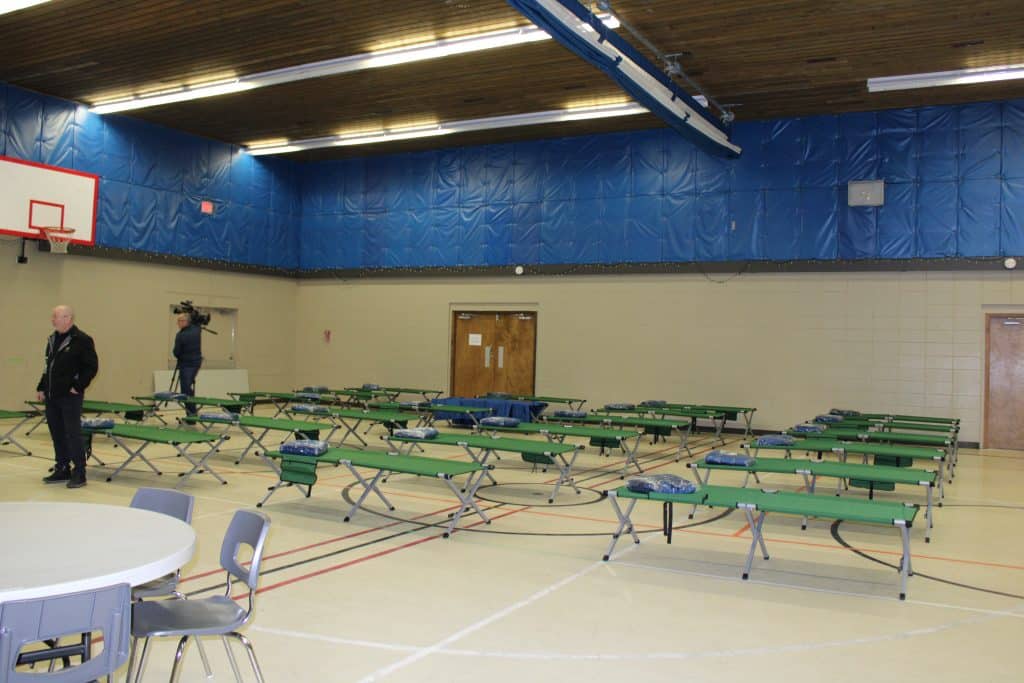
In partnership with BC Housing and Kamloops Alliance Church, the Mustard Seed also operates an 30-bed, Extreme Weather Response Shelter, which is open only in extreme weather alerts of -10 or with 5 cm of snow in the forecast.
Every two years, a Point-in-Time Count surveys people experiencing homelessness in Kamloops. Like a photograph capturing a single moment in time, this study reveals a glimpse into homelessness within a 24-hour period, though it is known to underestimate actual numbers. During the 2023 count, 312 Kamloops residents were identified as experiencing homelessness, a 51 per cent increase from the 2021 count.
Kamloops faces challenges in providing sufficient shelter and protection for its homeless residents, according to the city, advocates and service providers.
There are not enough emergency weather beds for the city’s residents in need. Lack of staff and staff burnout are among the many challenges shelters face.
However, when asked about specific challenges, Nyasha Manyanye, director of operations at The Mustard Seed says they are working on it.
“At this time, we are working alongside our community partners, like BC Housing and the City of Kamloops, to make sure that our vulnerable neighbours are cared for and have a safe place during extreme weather conditions.”
Why is the extreme weather threshold set so low?
In Bass’ motion, which she dubs the Motherhood Motion, she brings up the BC Centre for Disease Control’s (BCCDC) threshold for hypothermia, which is below 10 C.
According to BCCDC, “When the temperature falls below 10 C, and a person is not able to be sufficiently protected from exposure to the cold air for prolonged periods, an individual’s body temperature can drop and cause hypothermia.”
BCCDC also reported an increase in cases of hypothermia over the last two years in the Interior Health Region “at temperatures of 10 C or lower.”
Bass is not the only one pushing for the change. The BC Health Effects of Anomalous Temperatures Coordinating Committee (HEAT), led by members of the Ministry of Health and the BCCDC, recently released public health recommendations calling for a temperature threshold change. The BC HEAT Committee was established in January 2022 to support planning and response efforts related to the public health impacts of extreme temperature events.
The Wren reached out to the Ministry of Health and HEAT to inquire as to why the lower threshold hasn’t been implemented following their recommendations.
“These recommendations are being taken into consideration by the Ministry of Health and BCCDC and the recommended temperature research will inform future policy development,” a ministry spokesperson says in an email.
Bass’ motion raises questions about the city’s preparedness for severe weather events and the adequacy of existing support systems for the homeless population.
The motion, which was submitted as a resolution to the Southern Interior Local Government Association (SILGA), will urge the provincial government to open shelters across the province when the temperature is 0 C or lower. If passed at SILGA, it will then go to UBCM. If passed there, it will go to the province.
Additionally, shelters should also be opened at higher temperatures if the weather forecast includes wet, snowy, or windy conditions, based on the recommendation of the HEAT Committee’s cold-weather response.
Furthermore, council instructed city staff to send a letter to the BC Ministry of Housing, requesting a meeting between relevant staff from both parties.
The purpose of the meeting is to discuss the request to change the trigger temperature for shelters so that it aligns with the recommendations of the BCCDC HEAT Committee.
Bass hopes to see this motion gain traction; she also hopes it will help start conversations to change the stigma surrounding homelessness.
“We must not abandon our duty to ensure that everybody has an equal chance at a life worth living,” she says.
As the climate crisis intensifies, it’s becoming increasingly clear that policies must adapt to protect vulnerable residents from the harsh realities of extreme weather.
If passed, Bass’ proposal could prevent further loss of life during extreme weather conditions, as well as encourage other communities to jump on board and provide more robust support for the homeless population.
Meantime, community members can follow Dayton’s suggestion to treat homeless residents with dignity and respect. People can also help with donations of winter gear, sleeping bags and other needed items like food and hygiene products. Financial contributions are always appreciated, according to the Mustard Seed.
The Wren is a community driven local news outlet. Your questions and ideas help guide what we dig into. Your feedback after we publish a story helps ensure we're always improving our reporting to better serve you
What do think about this story?