Death is a difficult topic. It reminds us of painful memories and hard times. Yet we all recognize, sometimes reluctantly, that death is a natural part of our lives.
Before modern medicines and vaccines became widely available, death and dying were visible parts of community life, usually taking place at home, says Emily Bootle, local funeral director and deathcare advisor. It wasn’t until recent times that this part of life “became unfamiliar” and somewhat taboo.
There’s good, grassroots news in town! Your weekly dose of all things Kamloops (Tk’emlúps). Unsubscribe anytime.
Get The Wren’s latest stories
straight to your inbox
Once you get folks past their hesitations though, she says they are often surprised at how much they have to say about their own end-of-life wishes.
An end-of-life option gaining popularity is the desire for a natural or green burial, which involves fewer fossil fuel emissions than cremation and more natural degradation than a typical burial allows for. At Kamloops’ (Tk̓emlúps) inaugural Climate Action Fest held last year, a group of Kamloopsians started the Green Burials Action Project to engage with the city and advocate for a green burial option locally.
The Wren caught up with these volunteers at Climate Action Fest 2.0 to learn more about green burials and to find out what motivated them to take on the initiative.
“Adding a green burial option is a great way to encourage people to think about their place in the local environment,” says Bonnie Klohn, a volunteer for the Green Burials Action Project.
For many, a green burial represents taking agency over one’s final resting place, and exercising the right to return to the earth, Klohn says.
Preparing the body to rest
By far the most popular option for British Columbians is cremation. In fact, B.C. has the highest rate of cremation of all provinces and territories, in 2016 85 per cent of deaths resulted in cremation.
But cremation uses natural gas, propane or diesel fuel (90 L of fuel) and therefore produces emissions, in addition to those produced by the combustion of the body itself. Only bones remain and are ground up into what we colloquially call “ashes” but are more accurately known as “cremains.”
“British Columbia is the scattering capital of Canada, maybe even the world,” Bootle says, crediting it to B.C.’s stunning natural beauty and laws, which allow the scattering of cremains anywhere as long as permission is obtained from the land’s owner or guardian. Cremains can also be interred (buried) at a cemetery.
Modern full body interments are a bit like a nesting doll, Bootle says. For example, most B.C. cemeteries require a casket made from non-deteriorative materials, and a grave liner or vault made of concrete or fiberglass.
While these extra layers between the body and the soil prevent the ground from slumping and keep the cemetery lawn and monuments intact, they also significantly hinder the natural decay process.
Embalming, the process of chemically preserving the body, is optional and while still practiced has been declining in popularity. Modern embalming, mainly a North American practice, was popularized during the American civil war so that soldiers’ bodies could be sent home to their families.
What is a green burial?
A green burial is simple. There is no embalming and no grave liner or vault. Coffins can be present, but are made of biodegradable materials. Often these burials are shallow, three feet versus the conventional six, in a more biologically active soil layer. The goal is for the remains to return to the earth rapidly through natural decomposition in contact with soil.
Green burials require extra landscaping in the first year, since there is a cavity that collapses as the body and coffin decays, Bootle explains. An extra mound of dirt can be left on top to fill in after the collapse.
As to why a green burial is preferable to some, volunteer Margaret Huff says, “I would much rather my body feed something else,” rather than sitting isolated in a concrete box.
The City of Kamloops is open to the idea of providing a green burial option, and they aren’t alone. The number of municipalities allocating green burial spaces in their cemeteries is growing, with Prince George and Penticton recently joining the list.
The city’s own plan for the future of Kamloops’ cemeteries acknowledges spaces for green burial are needed.
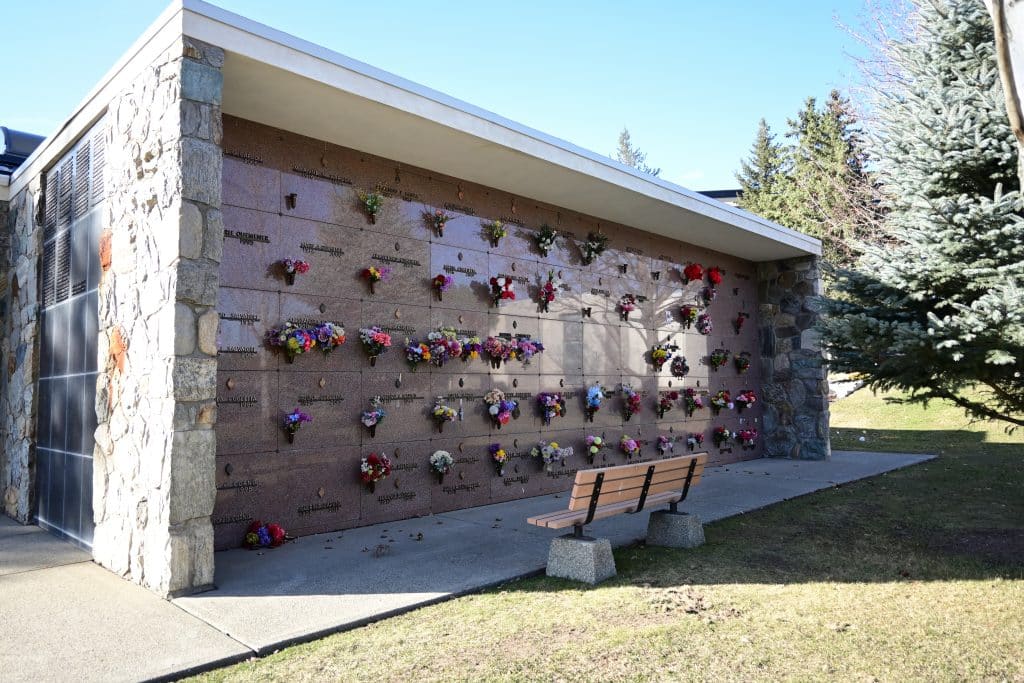
When she met with the city about adding green burial spaces at Hillside Cemetery, Klohn tells The Wren they were receptive. However they did indicate that their first priority would be completion of the new mausoleum.
There is more to this trend than environmental consciousness. Sam Redl says that while he is passionate about emissions reduction, he joined the Green Burials Action Project because he wants to make sure that the option is available to anyone who wants it, whatever their reason.
Many cultures require burials directly in the ground, with only a simple cotton shroud between the body and the earth. Currently there is no suitable space for this type of burial in Kamloops.
Where our dead rest

While three cemeteries are active today, there are many burial grounds scattered across the Kamloops landscape, ranging from ancient to modern and from maintained to forgotten.
Take a walk along Lorne Street to find the first recorded colonial cemetery, now known as The Old Pioneer Cemetery. Built in the gothic Victorian style it was in use from 1876 until about 1900, later falling into disrepair. Today only a few headstones remain.
The Chinese Freemason Cemetery was established around the same time, when white settlers refused to allow Chinese people to be buried alongside them. Its last internment occurred in 1974. Today it is undergoing renovations to preserve this important historical site.

Many small family cemeteries from this era also dot the landscape, including one at Campbell Creek and another at Cooney Bay.
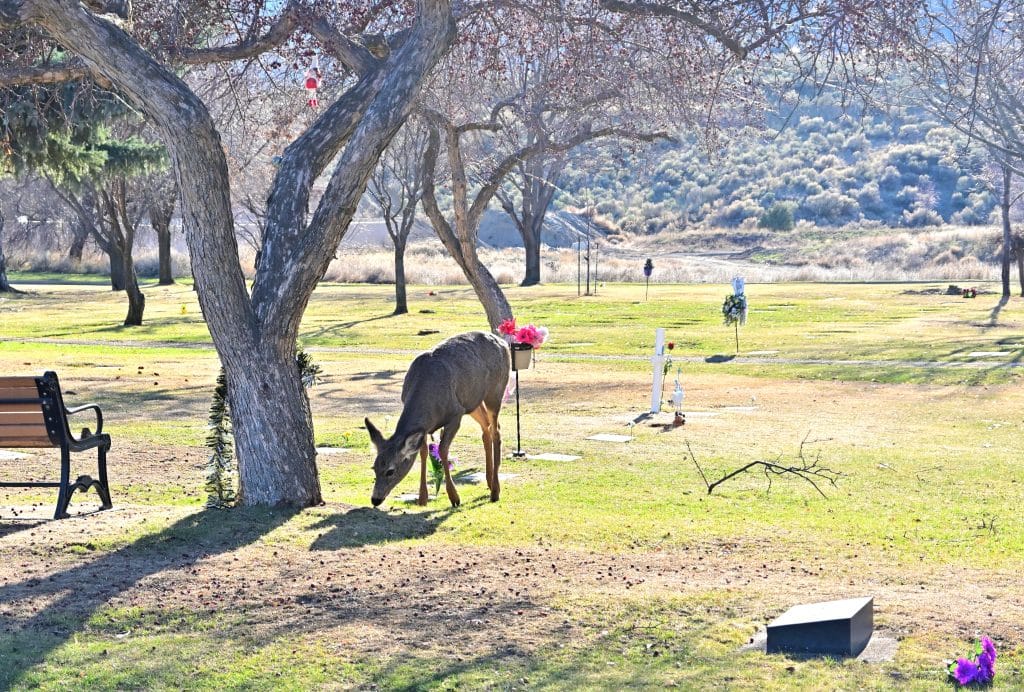
The oldest cemetery still in use is the Tk̓emlúps te Secwépemc Pen Pen, also known as the St. Joseph’s Church Cemetery. Operated by Tk̓emlúps te Secwépemc, this picturesque site features tall bunchgrass and native wildflowers. It has been active since 1858 and continues to serve the needs of the community 170 years later.
Pleasant Street Cemetery replaced the Pioneer cemetery as the city’s main internment grounds, and today is nearly full.

The City of Kamloops has also operated Hillside Cemetery in Sahali since 1951. This expansive site features many internment options besides burial plots, including a mausoleum, ossuary, columbaria and scattering garden. About half of the site is still undeveloped and is expected to serve the needs of Kamloops for decades to come.
Cemeteries as spaces for conservation

Once a place has been designated as an interment site it is very difficult to change or redevelop. This provides an opportunity to create beautiful natural resting places that also protect the local ecosystem.
“Which is why conservation burial is a really cool concept,” Bootle says. “If you take a landscape you want to protect and you can bury people there, then no one can disturb it forever more.”
In B.C., where people can designate a portion of their land as a cemetery, this creates an opportunity for folks to protect beloved landscapes or restore those that have been degraded.
There are only a few of these fully natural conservation burial grounds in B.C., for example the stunning Salt Spring Island Natural Cemetery.
Such a place doesn’t yet exist in the interior of B.C., but if anyone has a piece of land they are interested in protecting this way the Green Burials Action Project would love to help.

The team is also considering another alternative. Across the province there are hundreds of small, inactive cemeteries, remnants of communities, churches and even ranches that no longer exist. While these cannot be redeveloped into condos, Bootle says they can be reactivated and become active burial grounds once more.
The Green Burials Action Project has big dreams of adopting one or more of these largely forgotten sites and converting them into green or even conservation cemeteries to serve new generations, and protect the resting places of those that came before us.
So do we. That’s why we spend more time, more money and place more care into reporting each story. Your financial contributions, big and small, make these stories possible. Will you become a monthly supporter today?
If you've read this far, you value in-depth community news