Editor’s note: This article contains information about the sex work industry in Kamloops. The names used of the sex workers who spoke to The Wren are their work names and not their legal names. To protect the identity of the sources The Wren interviewed, the article does not contain any personal photos or physical descriptions from the individuals.
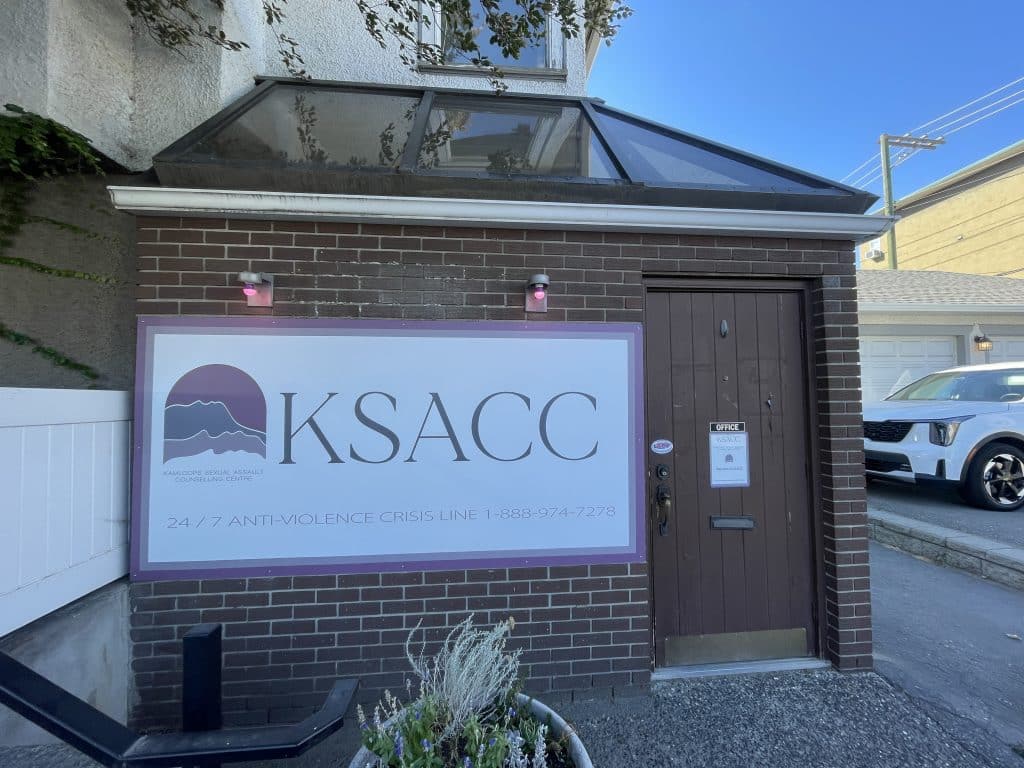
Lavender sat under dim lights at a meeting room at the Kamloops Sexual Assault Counselling Centre (KSACC) while they shared their story.
Lavender, who uses they/them pronouns, has been a sex worker for 13 years, holding various jobs in the industry. Currently they work full-time as a dominatrix and run the sex worker outreach program at KSACC — an organization that’s been serving Kamloopsians since 1982.
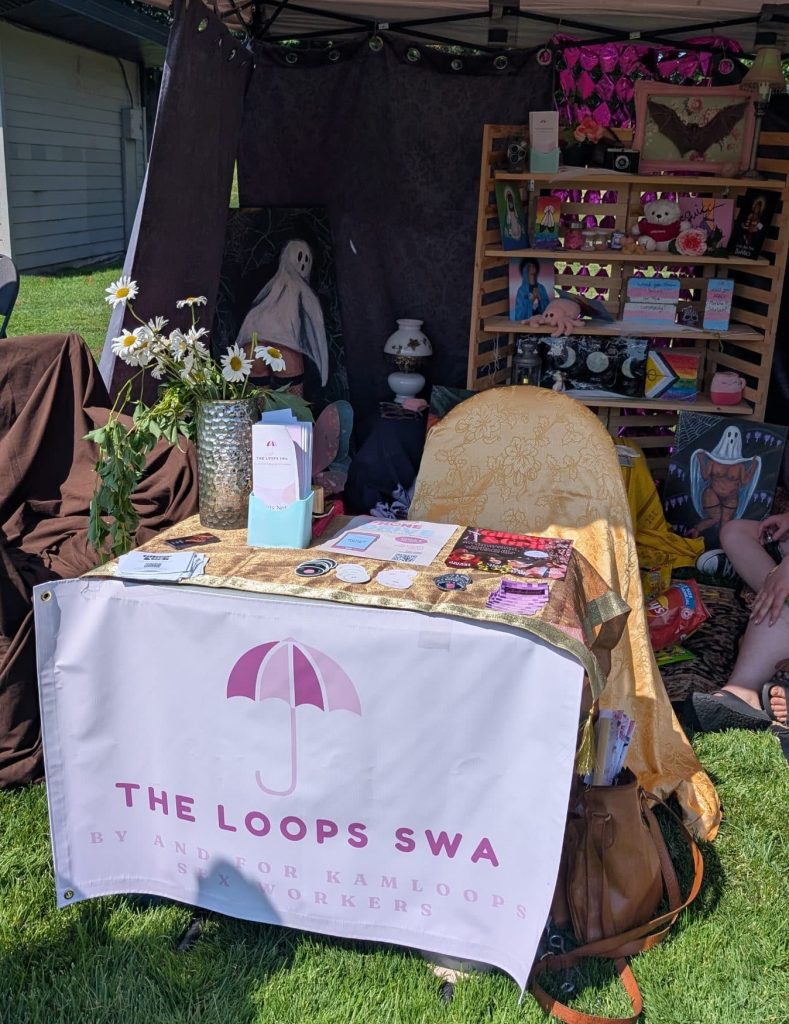
They also work as the director of the Loops Sex Workers Association, educating the community about sex work while advocating for the needs of sex workers.
The Loops Sex Workers Association was founded in 2023 with the goal to create a community for sex workers, provide peer support and advocate for safer practices, laws and working conditions.
“We also do sex work-specific supports for survivors of intimate partner violence and domestic violence,” Lavender tells The Wren.
Both KSACC and the association work in collaboration, funded through grants specifically supporting sex workers, such as the City of Kamloops’ social and community development program.
Clarifying the legality of sex work in Canada, Lavender explains the nuances of Bill C-36, the Protection of Communities and Exploited Persons Act.
“We operate under the Nordic model federally, which means that it is legal for me to sell my services, but illegal for someone to purchase them,” she says.
According to the Department of Justice of Canada, “this means that purchasing sexual services is illegal and businesses that profit from the prostitution transaction are also illegal.”
Yet a series of court cases have affirmed the rights of sex workers, as they are at a high risk of encountering physical violence.
To better understand what this looks like on the ground in Kamloops, The Wren reached out to the Royal Canadian Mounted Police (RCMP).
“The Kamloops RCMP Detachment do not criminalize the sex trade work, recognizing the complex societal issues around why they are active in the trade,” Corporal Dana Napier explains. “However, we do investigate human trafficking, and offences including sexual assault that may occur in some instances with sex trade work.”
“Further, investigations surrounding the sex trade in general are investigated targeting those paying for services provided by sex trade workers as per the Criminal Code of Canada,” Napier adds.
“To be clear we do not investigate the workers, we investigate those seeking and paying for services, while offering key supports to those workers through a trauma informed approach.”
Getting that explanation out of the way early, Lavender shares their experience as a sex worker in Kamloops, offering a peek behind the curtain of an often hidden industry.
Sex work has existed for a long time and in many cultures, they add.
“We are in every single community. I laugh when people tell me they’ve never met a sex worker before, because that’s just not true. Whether you believe it or not, whether you realize it or not, you have interacted with us on a regular basis. We’re literally everywhere.”
Why sex work?
This is a question Lavender is asked often. Every sex worker has a different answer, but in Lavender’s case it’s a disability and the cost of living.
“The total amount of money that you get as a disabled person in B.C. is less than $2,000 a month. If you have to pay rent and get groceries and pay your utilities, and then you have additional costs like medication and mobility aids in order to just function as a human being,” they say.
Lavender’s disability, which includes seizures, limits the time they are able to sit in an office.
“I never had a paid sick day in my entire adult life. The days or weeks or months that I was sick, I was just not making any money and not coping,” they share. “But doing sex work, I can make a lot of money very quickly and not have to do a ton of labour for my body. It allows me to accommodate myself.”
And Lavender isn’t alone.
A 2023 study done by sex workers in the Transitions Metro Vancouver Consortium found 73 per cent sex workers surveyed live with at least one disability.
“In my personal experience, that number is higher because I have been in this industry for over a decade, and I’ve never met a sex worker that didn’t have a disability,” Lavender says.
In her time in the industry, Lavender has met sex workers with autism, ADHD, OCD, physical disabilities, chronic pain, PCOS, endometriosis, cognitive disabilities and significant head injuries, among others.
“I know sex workers who are in wheelchairs who have a really hard time navigating office spaces… a lot of disabled folks have trouble with the hours that they have to work,” she says.
Clara, a local sex worker, is one such individual.
She has been working consistently as a sex worker since February, doing various types of work from online to fetish services.
“I do not personally know any sex workers who are not disabled,” she tells The Wren.
While she began sex work nine years ago, she did not have a community and felt ashamed of the work she was doing.
As someone with a dynamic disability whose health ocillates between highs and lows, often putting her in the hospital, she reentered sex work for its flexibility.
“Online sex work has a lot of passive income streams with it,” Clara explains.
These passive streams of income aren’t limited to folks with disabilities. Other folks get involved in sex work for the flexibility it provides, and then for some, sex work is simply a job of choice.
“It’s just life circumstances that have led you into it. There are also people who it’s their career and it’s something they really enjoy,” Clara says.
What is it like to be a sex worker in Kamloops?
Current statistics can be hard to find on what actual sex work looks like in Canada. This is because very few sex workers are able to vocalize what they do, according to Lavender.
“Virtually every marginalized group is over represented in sex work. Indigenous women represent three per cent of the general population, but over 50 per cent of street-based sex workers,” they say, which aligns with research from PACE. “Trans folks are also incredibly over represented in sex work as well as immigrants and migrant workers are very over represented in sex work, often because they’re experiencing other barriers to regular forms of employment.”
“I don’t know any sex workers that are completely straight and most sex workers that I know do not have supportive families,” Clara explains.
Because sex workers face additional barriers due to their employment, many find community and support with each other.
A day in the life of a sex worker in Kamloops includes communication, administration and marketing, not unlike many other jobs.
Vetting or screening clients is a primary safety component of the work, vital in keeping workers safe and within the law, Lavender explains.
“I ask for a deposit and age verification, which can either be ID with everything blurred out, except for name, birth date and picture, or references from two additional sex workers,” they explain.
Sex workers also check in and let one another know where they will meet a person for an appointment for safety reasons. This is called the check-in system.
“The check-in system that we use within Kamloops is really helpful,” Clara says. “There’s a lot of other workers who don’t have any friends or family who can help them with that. So having someone on the other end who can show up and knock on doors and if you don’t come home, that’s helpful.”
Clara tries to be as safe as possible when it comes to her job, driving herself and avoiding the police.
“We use different names obviously to help keep things separate. Any photos I post anywhere online for sex work are never posted into my personal information, so that you can’t cross reference the photos. I use a different phone number,” Clara adds.
Providing clients with clarity in services provided and the cost is also a vital step in minimizing conflict prior to meeting.
“We spend a lot of time messaging back and forth…I have so many folks who contact asking for ridiculous things that are totally unsafe,” Lavender says.
Some potential clients have misconceptions about the job and assume that since they are reaching out to a sex worker that they will do anything they want, they add.

‘But you’re not dirty’: Sex workers respond to discrimination
While the clientele is diverse, Lavender says the majority of their customers are men.
“The largest consumers of porn, also the most common clients of escorts, and just like every other type of stuff in general.”
In Lavender’s experience they are also the most likely to “misunderstand” that the work is, well work.
“I have a set rate and the amount of conservative folks who attempt to haggle, that’s what I find difficult. You wouldn’t go and ask your dentist, who just told you your root canal is going to be $600 if they would do it for two. That’s inappropriate, you just wouldn’t do that. But that happens a lot with us, all the time, like every single day.”
Dealing with haggling is just one drawback of working in the sex trade.
Although sex workers file taxes and operate as any other business, most of the laws are not in the favour of this industry, Lavender says.
Navigating the laws presents complications. Because inquiring about and paying for sex work illegal, it’s harder to negotiate up front.
“It also makes clients very hesitant to want to do things like screening and providing their ID and paying a deposit, which are normal things that you do to see other types of service providers, but they’re worried that they will be arrested or publicly outed,” Lavender says.
Safety measures like hiring a driver or marketing sex work are also illegal, creating additional complications.
“It’s illegal for me to pay someone to advertise,” Lavender explains. “It’s illegal for me to pay someone to drive me to an appointment. It’s illegal for me to work with other sex workers – all of the things that I could do to possibly make myself safer.”
Clara agrees that there are limitations to the work.
“It’s also illegal to hire security, anything like that, because then they’re technically pimps because they’re profiting off sex work,” she explains.
It can be challenging to navigate work that can be criminalized, according to Halena Seiferling executive director of Living in Community, a non-for-profit based in the Vancouver area.
“It impacts the work and makes it extremely difficult and often less safe and less protective,” she explains.
While workers in other industries can access workplace benefits, such as occupational health and safety and the employment standards act, sex work is different. That’s why Living in Community advocates for provincial policies and programs that will be inclusive of sex workers, Seiferling says.
De-platforming and financial discrimination are further challenges sex workers face.
Social media accounts used for marketing and finding clients are often deleted, suspended or limited if content displays images or phrases that go against the platform’s guidelines.
This can make it difficult and often dangerous to do sex work, removing a safe and regulated option for screening, Lavender says.
When the classified ad listings website Craigslist shut down its “personals” section in 2018, Bob Hughes of ASK Wellness noticed an uptick in Kamloops’ street-level prostitution, according to a City of Kamloops community safety committee meeting.
With these limitations, many folks who do sex work take to the street, or “the stroll,” to advertise their services.
“More workers are having to go out and actually stand on the stroll and try and get people that way because they are getting raided in hotels, massage parlours. We’re being investigated regularly,” Lavender says.
Unlike Vancouver, the City of Kamloops does not have a specific area where sex work is “informally tolerated,” according to TRU professor Lorry-Ann Austin, who has researched street sex work regulations in Kamloops.
This is in part due to public opposition to the trade. The city’s response to these concerns has ranged from funding programs aimed at getting sex workers off the streets to creating “red zones” where sex workers are barred from returning after release from custody — a move toward further criminalization that prompted KSACC to organize a demonstration.
Beyond the challenges of screening clients and finding a safe place to work, Lavender has faced barriers with accessing income.
“A lot of folks are having their funds withheld because they’re being investigated for doing sex work, because it’s not legal for a bank to make money off of a sex worker, so they can’t hold our money,” Lavender adds, speaking to the financial challenges sex workers face.
Other challenges are even more existential, like losing housing or children or the possibility of assault.
“I know a girl who was reported as a human trafficker because she’s a sex worker,” Lavender says. “When the police were done tearing up her entire home and found that she was not, in fact, a human trafficker, but was just a sex worker, they reported her landlord to bylaw for allowing her to rent there, and she was immediately evicted.”
Stigma also adds mental and emotional stress to operating as a sex worker.
After sharing they were a sex worker during a routine STI check, Lavender says the nurse responded in disbelief, saying “but you’re not dirty,” just one of many stigmatizing comments they’ve heard.
“Then she asked me a whole bunch of super inappropriate questions about what services I provide and how much money I make,” Lavender recalls.
Despite these many barriers, sex workers navigate the challenges.
“I still have to live somewhere, and I still have to have space to work in, and I still have to get to the places I need to go. So I’m gonna do the things, whether it’s legal or not,” Lavender says.
Whether through active discrimination or through snide remarks, the challenges associated with sex work are vast. To counter some of the harmful narratives around the industry Lavender and others are working toward decriminalization.
Reducing stigma and creating a safer industry
Language that is used around the industry really matters, Seiferling tells The Wren.
“The importance of using the term ‘sex work’, and using the term sex workers to kind of really emphasize the work part. This is a labor issue. This is work that people are doing.”
The term “sex worker” encompasses the many categories in the industry, including phone sex, cam girls, anyone who makes pornography, fetish artists, folks who sell pictures or used underwear and socks, dominatrixes, professional submissives, escorts, strippers and sugar babies among others.
Words like “prostitute” or “working girl” are derogatory while words like “full service sex worker” are less stigmatizing.
Using the correct language is just the start when it comes to destigmatizing sex work.
“I think there needs to be an agreement within British Columbia and wider in Canada, but specifically here to not prosecute based on those laws,” Lavender says adding that full decriminalization of sex work would be a key step that would allow for safer conditions.
“The biggest thing is having those policies being led by sex workers,” Clara says.
“Essentially there’s just a lot of not believing sex workers when they share their experience and what they need. We are the ones best positioned to say what we need in this industry,” Clara says.
Although they both agree that there are parts of this industry that need to be regulated, there should be a comprehensive effort to clarify, provide structure and protect sex workers.
“I don’t think you should be legally allowed to throw someone onto the street because they’re working at their home. I just think that’s insane,” Lavender says. “We need legal protections from stuff like that.”
There are other areas where there can be improvement besides just the laws, Seiferling says.
“There’s just so much that municipalities and the province of B.C. can do to increase accessibility and to decrease stigma and other barriers,” Seiferling says.
One thing they can do is continue to support local sex worker support and drop-in programs.
“I find that often groups that are most oppressed are the first to get left behind when the economy is tough for a lot of people and when governments have less money to invest in.”
Both Lavender and Clara agree that sex workers are smart and resilient.
“I get asked a lot if I feel competition with other [sex] workers, and that just doesn’t exist for me,” Lavender adds. “It’s not really a part of our industry. It’s very collaborative. We all want to see each other when we’re all there to support each other.”
So do we. That’s why we spend more time, more money and place more care into reporting each story. Your financial contributions, big and small, make these stories possible. Will you become a monthly supporter today?
If you've read this far, you value in-depth community news