Editor’s note: As a member of Discourse Community Publishing, The Wren uses quotation marks around the word “school” because the Truth and Reconciliation Commission found residential “schools” were “an education system in name only for much of its existence.”
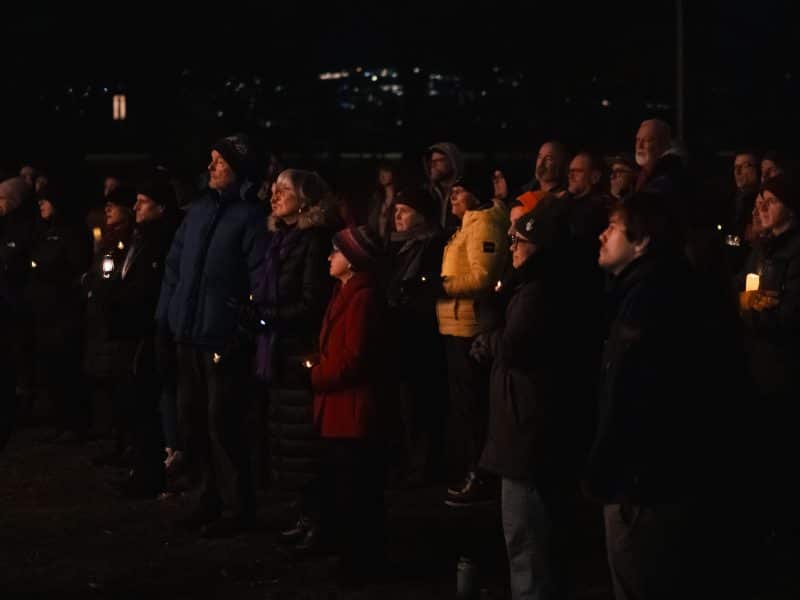
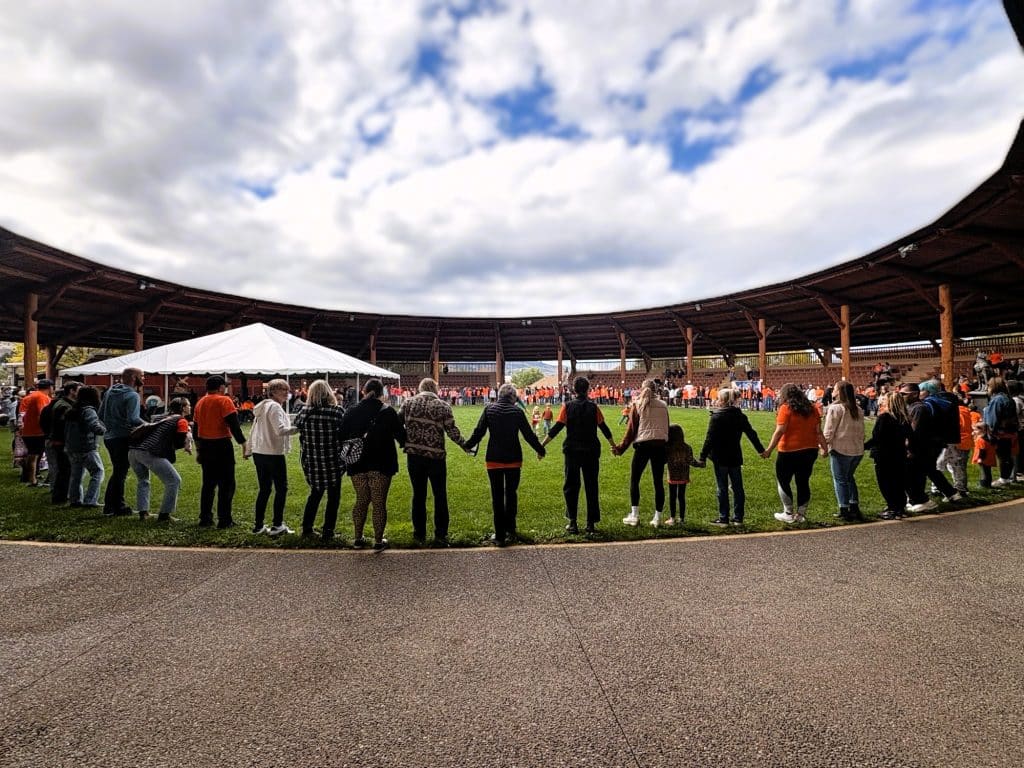
On Sept. 30, hundreds gathered at the Kamloopa Powwow Arbour to mark the National Day for Truth and Reconciliation. The event honoured the children who never returned home from residential “schools,” and the survivors, families and communities who continue to carry that legacy.
Organizers and Elders reminded those present that reconciliation is not only a day of remembrance, but an ongoing responsibility shared by everyone.
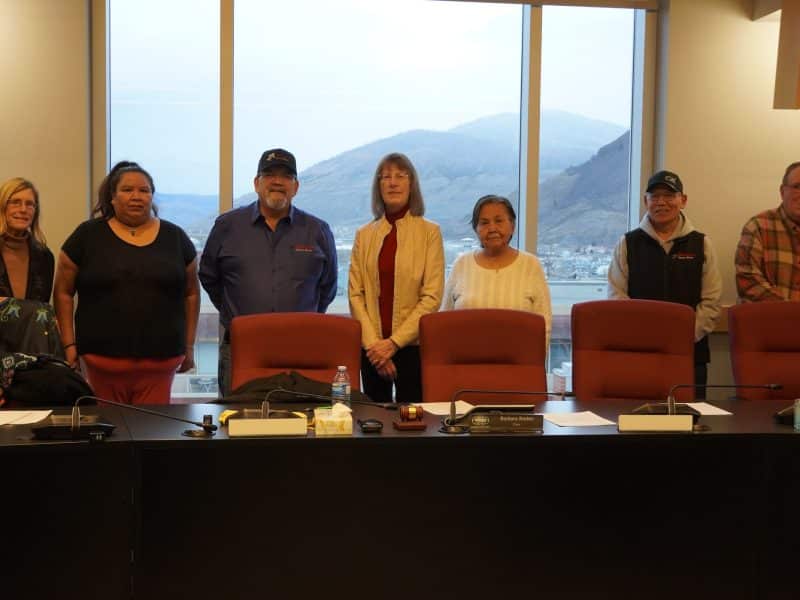
This year’s gathering built on the collaboration between Tk̓emlúps te Secwépemc and the City of Kamloops, which first co‑hosted a truth and reconciliation event in 2024. That partnership was described then as a step toward walking together in truth, and it continues to shape how the community commemorates Sept. 30.
Across the country, Orange Shirt Day and the National Day for Truth and Reconciliation fall on the same date. The orange shirt, rooted in the story of survivor Phyllis Webstad, has become a symbol of the children taken from their families and the survivors who endured.
Scenes from the day
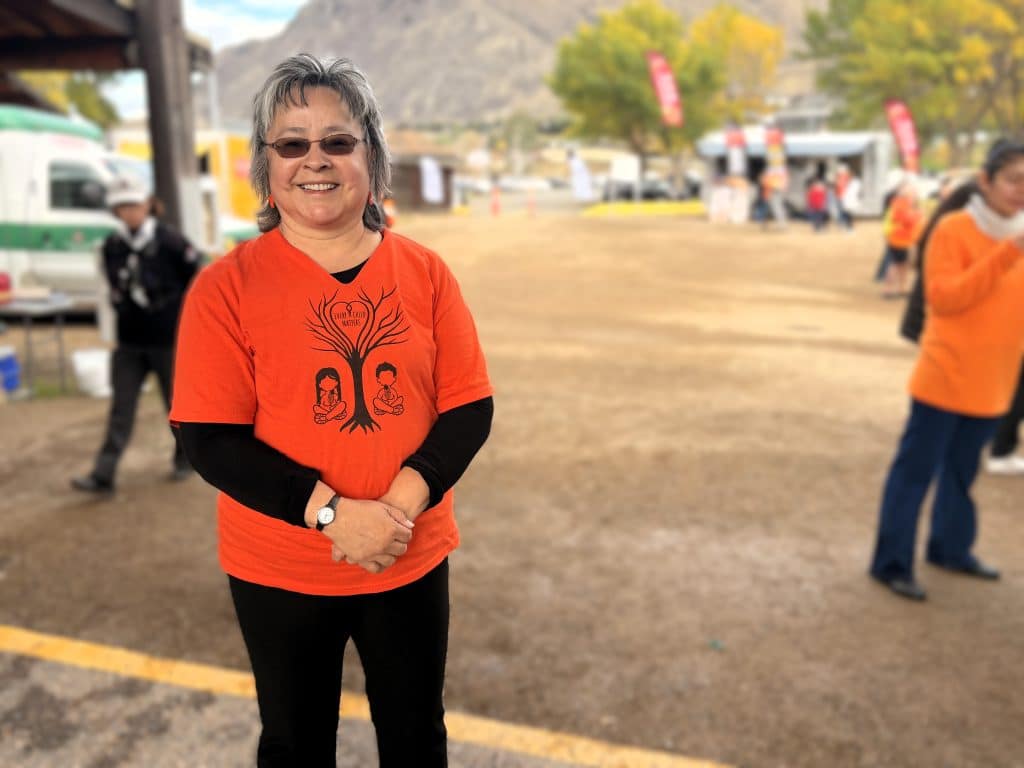
Phyllis Webstad, guest speaker and founder of Orange Shirt Day spoke with The Wren about the urgency of remembrance.
“Today is a day for survivors and their families to remember those who never made it,” she said. “There are survivors alive today, but there won’t always be. One day, there will be no survivors left in Canada. So today is a day to honour residential school survivors, and to remember the children who never came home. There are people alive today who had brothers and sisters, aunts and uncles who never came home and today is a day to remember them.”
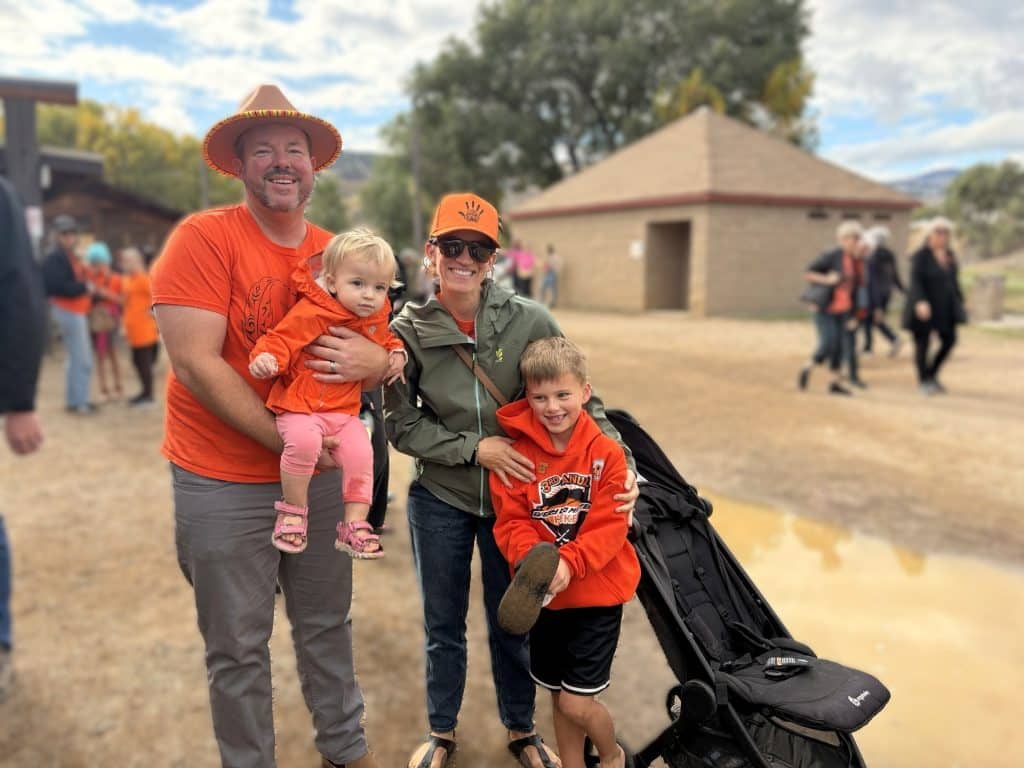
Kamloops City Coun. Mike O’Reilly attended the event with his family, all wearing orange.
“I think this event has evolved and changed, but by having the city of Kamloops involved in it, it truly is a community event,” he said. “It’s a chance to reflect and teach our children.”
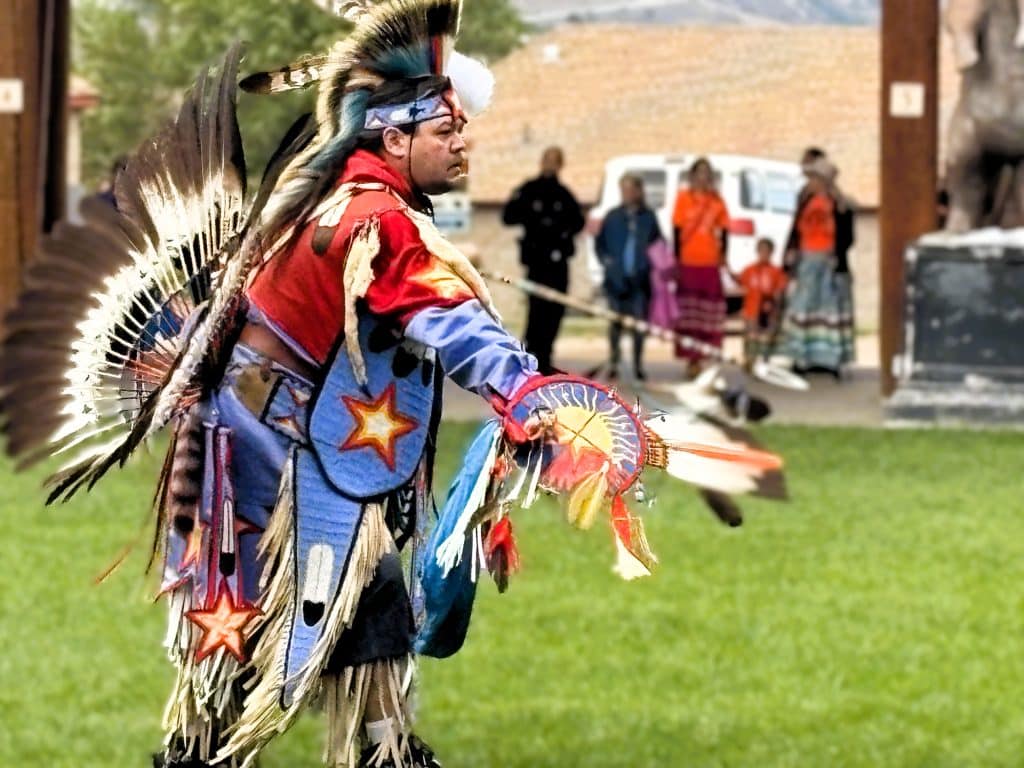
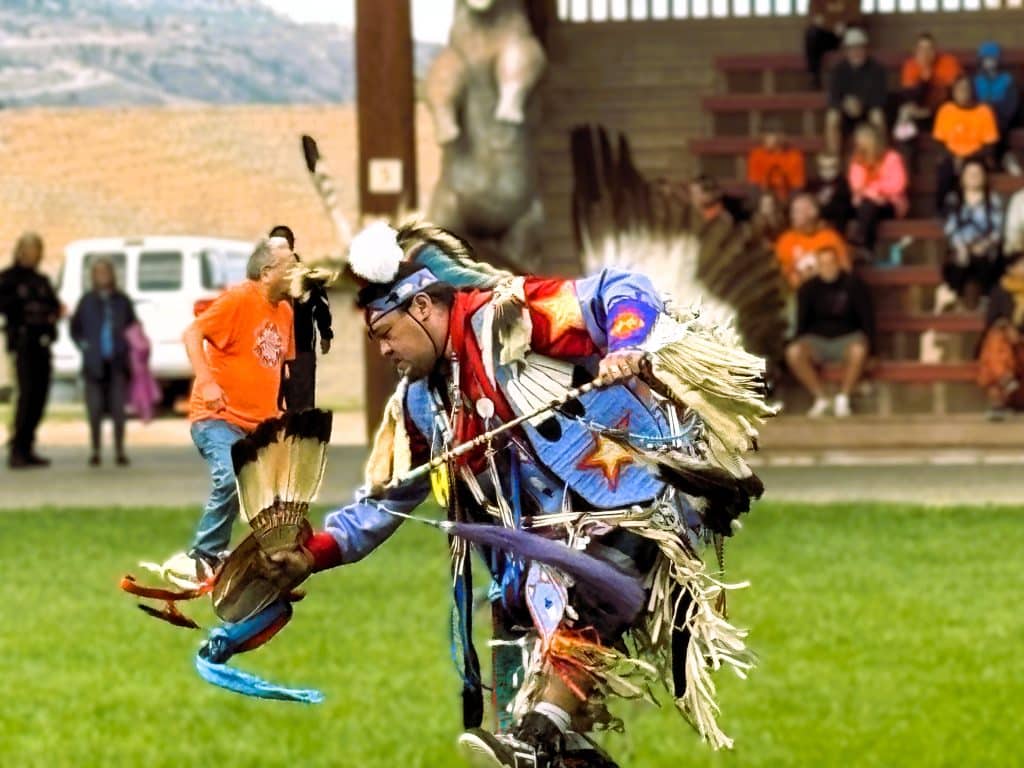
A dancer performs a Warrior Dance at the Kamloopa Powwow Arbour on Sept. 30, 2025. Photo by Rebecca Owens/The Wren
His regalia ripples with each step, feathers, fringe and beadwork in motion. The dance speaks without words, honouring strength, survival and the stories carried forward through movement.
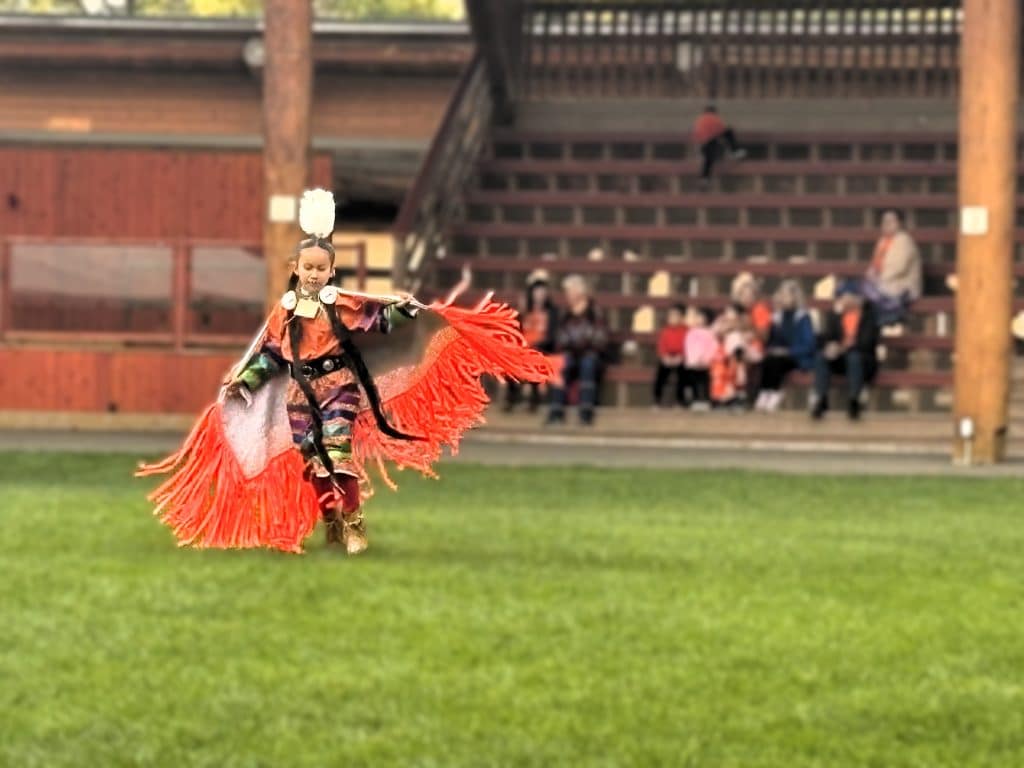
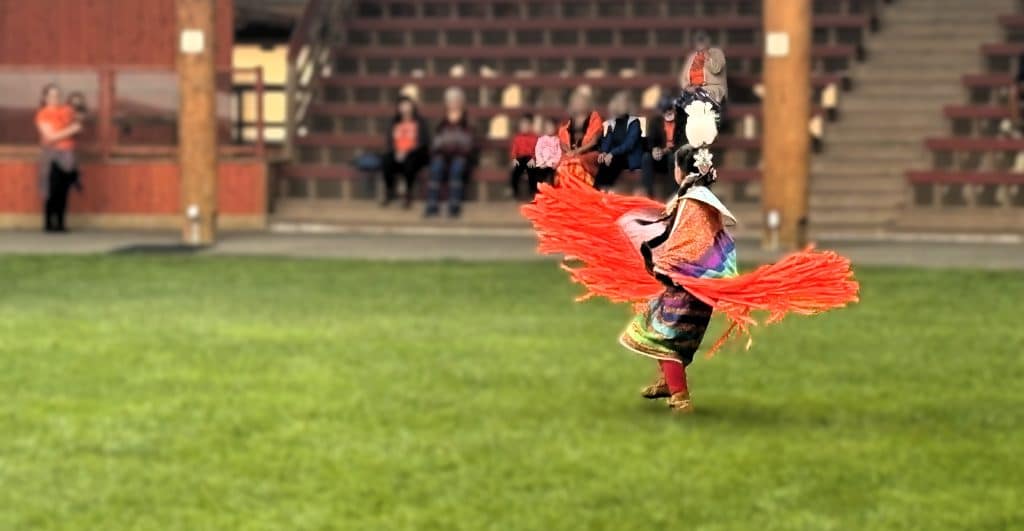
A young dancer performs at the Kamloopa Powwow Arbour on Sept. 30, 2025. Photo Rebecca Owens/The Wren
Dressed in vibrant regalia with orange fringe trailing mid-motion, the dancer’s movements carried stories older than the “school system” that tried to silence them, a living expression of culture, resilience and remembrance.
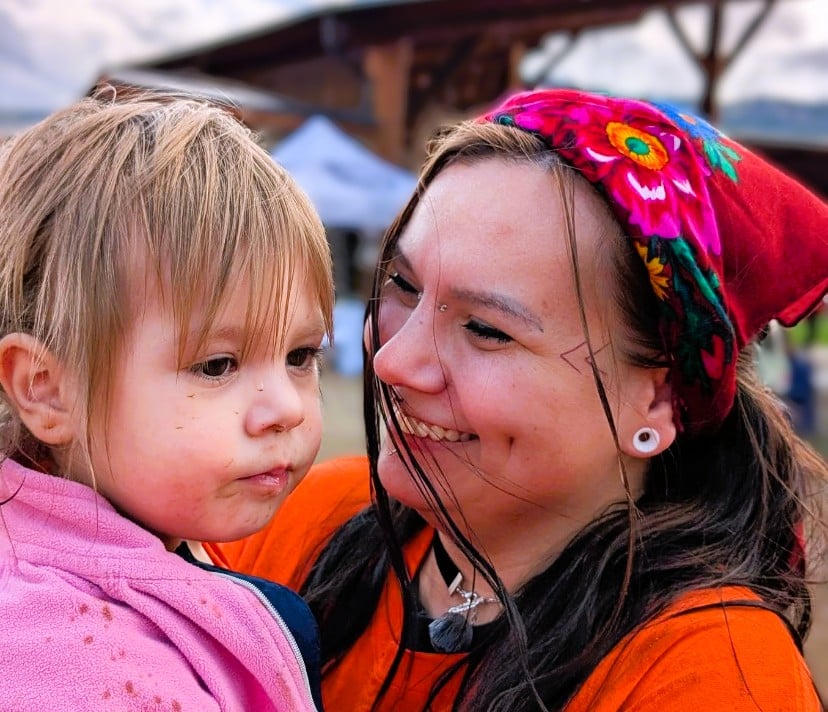
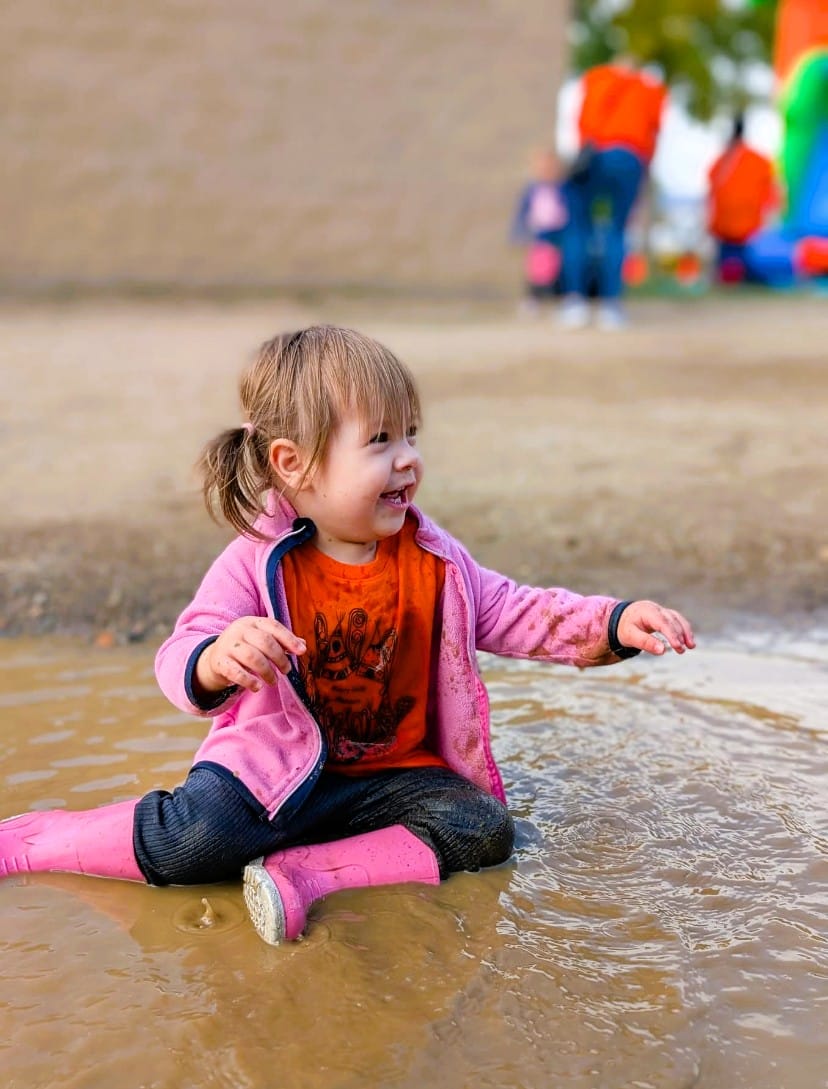
Megan Berezansky-Wright smiles at her daughter, Luna. The rain couldn’t keep them down as Luna played in the puddles. Photos contributed by Tracy Sperling
Among the families gathered, one mother watched her daughter splash in puddles despite the rain. For many, the day was not just about remembrance, but also about learning, passing down stories and reclaiming joy.
“I’m just glad there is a space where I can educate myself and be able to pass it down to my daughter,” Berezansky-Wright said. “My culture is so important and deserves to be remembered and respected and celebrated.”
If you need support
Residential “school” survivors can access 24-hour crisis support and health referrals by calling 1-888-925-4419, a toll-free line provided by the Government of Canada.For Indigenous individuals seeking counselling or crisis intervention, the Hope for Wellness Help Line is available 24/7 at 1-855-242-3310 or online at hopeforwellness.ca
So do we. That’s why we spend more time, more money and place more care into reporting each story. Your financial contributions, big and small, make these stories possible. Will you become a monthly supporter today?
If you've read this far, you value in-depth community news