
In Secwepemcúl’ecw, a bighorn sheep herd too small to survive gets a second chance
To help save a herd of wild sheep vulnerable to infection, the Whispering Pines / Clinton Indian Band collaborated with scientists, conservationists and the province to repopulate the Chasm headbanger herd.
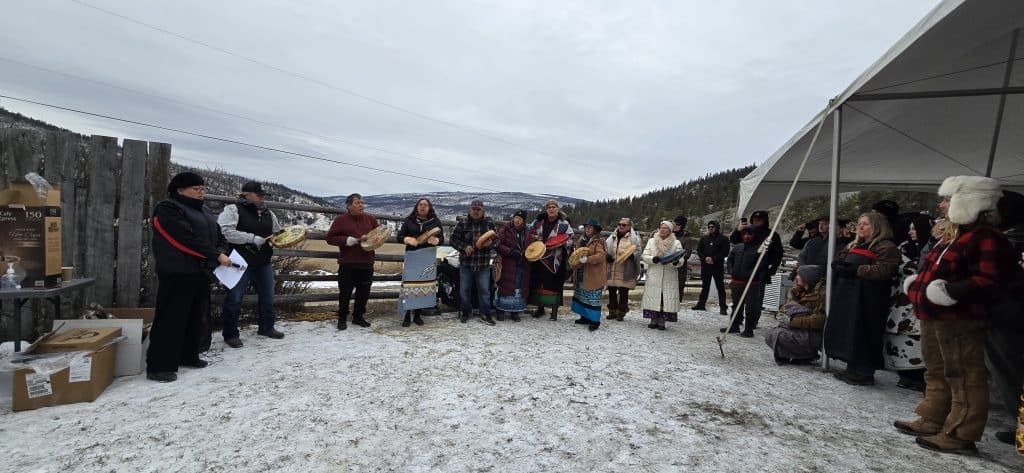
Twelve California bighorn sheep were successfully relocated to the Chasm mountain range from Battle Creek to help repopulate the Chasm headbanger herd from the verge of collapse.
The Whispering Pines / Clinton Indian Band (WPCIB) successfully completed the translocation of the Chasm herd in collaboration with the Ministry of Water, Land and Resource Stewardship, as well as the Wild Sheep Society of BC.
“The revitalization of the Chasm Bighorn Sheep herd is deeply personal to us,” WPCIB Chief Sunny LeBourdais said in a recent statement of the collaboration called Friends of the Chasm Headbangers.
“We know what it means to be reduced to only a few individuals while carrying the burden of many impacts. This herd needs us all to work together to help them — we all need to be Friends of the Chasm Headbangers and when we do that, things will change.”
At its lowest point in 2012, the herd had dropped from 120 bighorn sheep to just eight, driven by Mycoplasma ovipneumoniae, commonly known as M. ovi, which originates from domestic sheep.
Droplets are transferred between domestic and wild sheep populations, causing pneumonia, respiratory problems and ongoing lamb mortality. Typically, an infected lamb only survives up to eight weeks after birth if the mother is infected.
“They declined by about 80 per cent in one winter,” Chris Procter, provincial wild sheep and mountain goat specialist from the wildlife branch at the Ministry of Water, Land and Resource Stewardship, told The Wren by phone.
This species is provincially blue-listed as vulnerable under its conservation status, but is still not yet deemed endangered despite some close calls, which can be aggravated around rutting season.
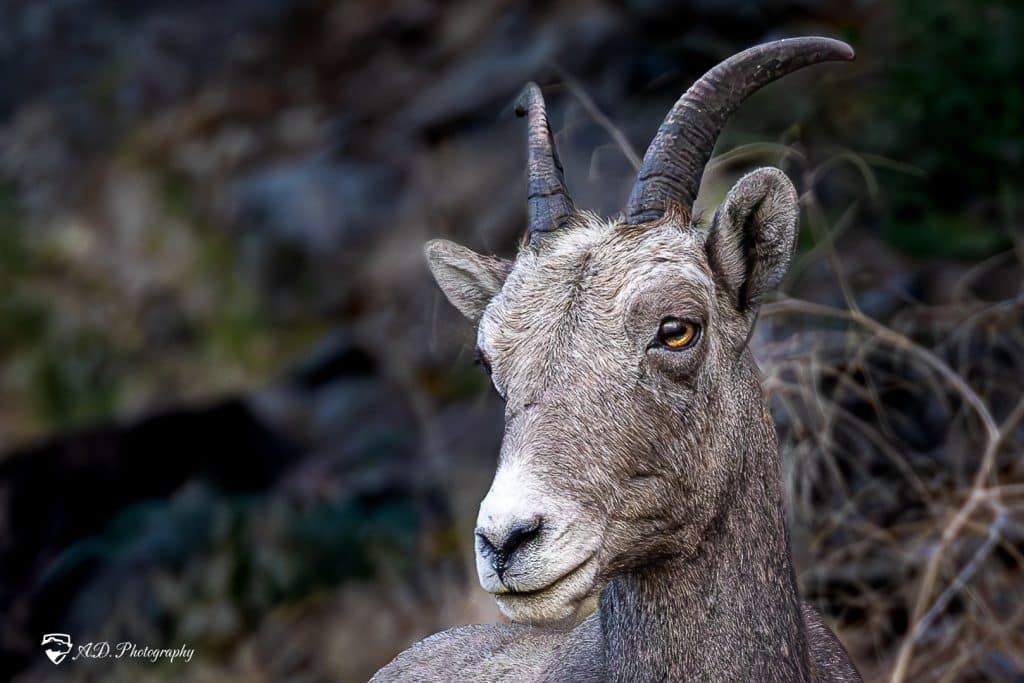
Because bighorn sheep roam, it’s hard to keep them away from domestic sheep, according to Proctor. Relocating herds, while expensive, can help lower the risk of transmission and ensure long-term survival.
“We want to make sure we’re putting those sheep somewhere that they’re going to do well,” Procter said.
As the 2023 documentary film Transmission, produced by the Wild Sheep Society of BC, lays out, the alternative is to euthanize sheep when they test positive for the bacteria to prevent further spread of the infection.
The Chasm herd used to roam a much larger area, but due in part to this disease, habitat degradation and predation from wolves and cougars, the herd has been confined to an area near Chasm Provincial Park, approximately seven kilometres northeast of Clinton.
Though small in number, this population was successfully found to be disease-free after extensive monitoring and testing, creating ideal conditions for adding additional healthy sheep from the Battle Creek area.
“We worked very closely with Bonaparte and Skeetchestn from their herd at Battle Creek. We worked very hard with our own bands and protocols,” LeBourdais said.
Officials said the purpose of the translocation is expected to reduce pressure on the original grazing habitat while helping to establish a healthy breeding population in the new location.
“My understanding is this is one of the first translocations that have happened in quite some time,” LeBourdais told The Wren by phone. “When we do learn from something, then we’ll be able to… turn around and pass that on to others, or use it to help inform what we do next and how we move forward.”
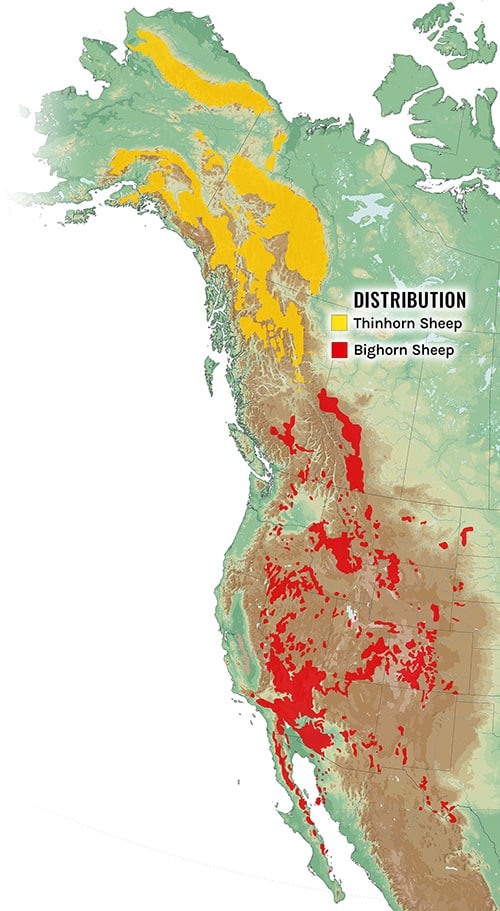
Image courtesy of the Wild Sheep Foundation
Bighorn sheep are culturally and ecologically significant to the band thanks to the story of Tellísa7, which is a Secwepemc legend about a transformer who turned a dangerous, cannibalistic sheep into the helpful bighorn sheep we have today, providing meat and materials for people.
The teaching reflects a deep, reciprocal relationship of animals helping humans, and humans being obligated to care for them.
“Bighorn sheep and many of the animals were given to us by the creator,” LeBourdais said. “… I think it’s just a real, natural connection that we feel to them that really is an extension of those relationships that were built between us and the big horns given to us by the Creator.”
The sheep will be monitored over the coming months to ensure they adapt successfully to their new environment with support from the Friends of the Chasm Headbangers.
Building trust with local landowners has been one of the most critical aspects of the program, according to LeBourdais.
For ranchers who rely on their domestic sheep for a living, testing for M. ovi often results in stamping out those who test positive for the bacterial infection to stop the spread of M. ovi from wild bighorn sheep populations.
The goal of working with agriculture is to identify those with domestic sheep that could be low, moderate or high-risk to wild sheep population when it comes to testing positive, given there are virtually no symptoms when the infection appears. Nasal swabs are required to evaluate the presence of the infected animals.
But bringing the band together with provincial scientists, regulations and Secwépemc stewardship laws helps to ensure decisions are grounded in respect and shared responsibility from each stakeholder group to ensure collaboration holds up for future generations.
Throughout the project, WPCIB consulted its members, Secwépemc leadership, local landowners and the community of Clinton to witness and acknowledge the release of the translocated sheep into the Chasm range.
“When you bring Indigenous ways of knowing together with provincial approaches, it creates a much stronger way of managing wildlife,” she said. “When you walk on two legs, you need a process that equally acknowledges Indigenous knowledge and Western management approaches.”
The Chasm project could help demonstrate a broader model for conservation built on collaboration between Indigenous communities, government and private landowners, she said.
Nothing we do is ever going to be perfect, she added, but the team of stakeholders is continuously learning.
WPCIB is also working with University of Victoria law students to help document and synthesize Secwépemc laws drawn from oral histories and cultural teachings to help inform future stewardship decisions.
The gathering for the release, titled Chasm Headbangers Sheep Release – Yecwemínte re Sweláps (We are taking care of the Bighorn Sheep), marked a collective effort to support the herd’s recovery and ongoing stewardship within Secwépemc territory.
“This has been a long road to get here,” said Chad Frizzi, WPCIB crew boss in a recent press release. “To see the sheep back on the land and watch this work take shape is incredibly meaningful.”
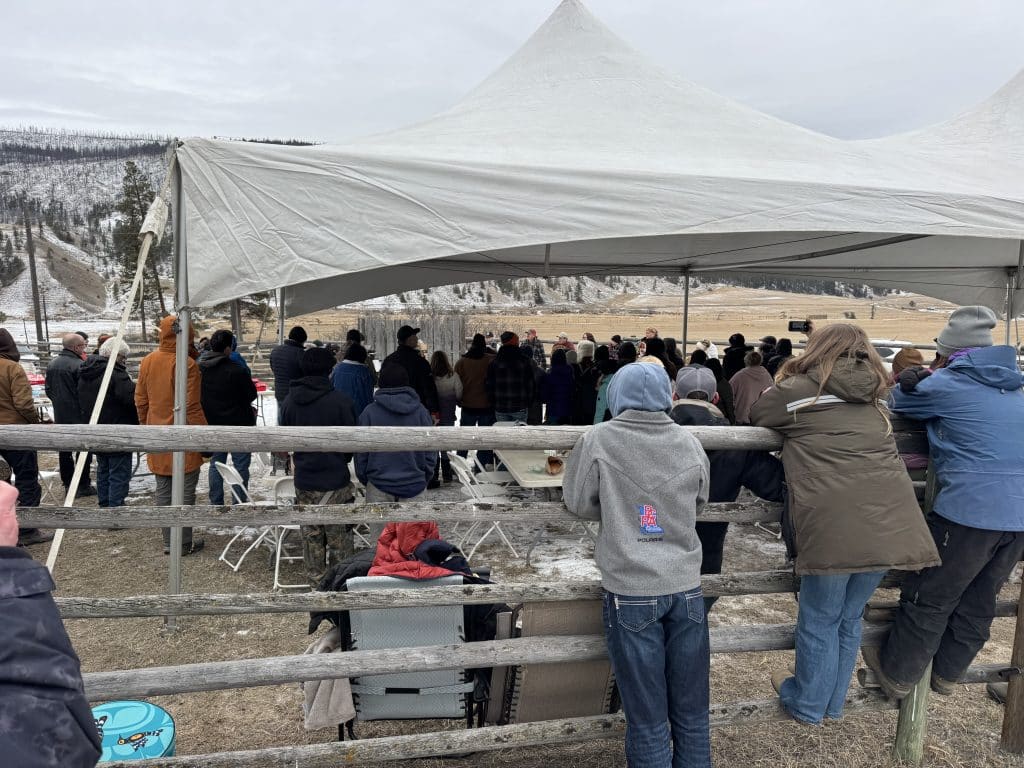
Lebordais said the project has already provided important lessons about stewardship and collaboration that could help guide future conservation work.
“We’ve been very active in building our stewardship working capacity,” LeBourdais said. “We’ve been building it the last few years in terms of upholding that responsibility we have as caretakers.”
“It’s a way to reconnect our membership back to our lands,” LeBourdais added. “When you can do something that helps to build and restore the lands, and all of our relations, then also help build relationships between people, our members included, back to those lands as well — that’s a bit of a trifecta for us.”
Two-year monitoring plan underway
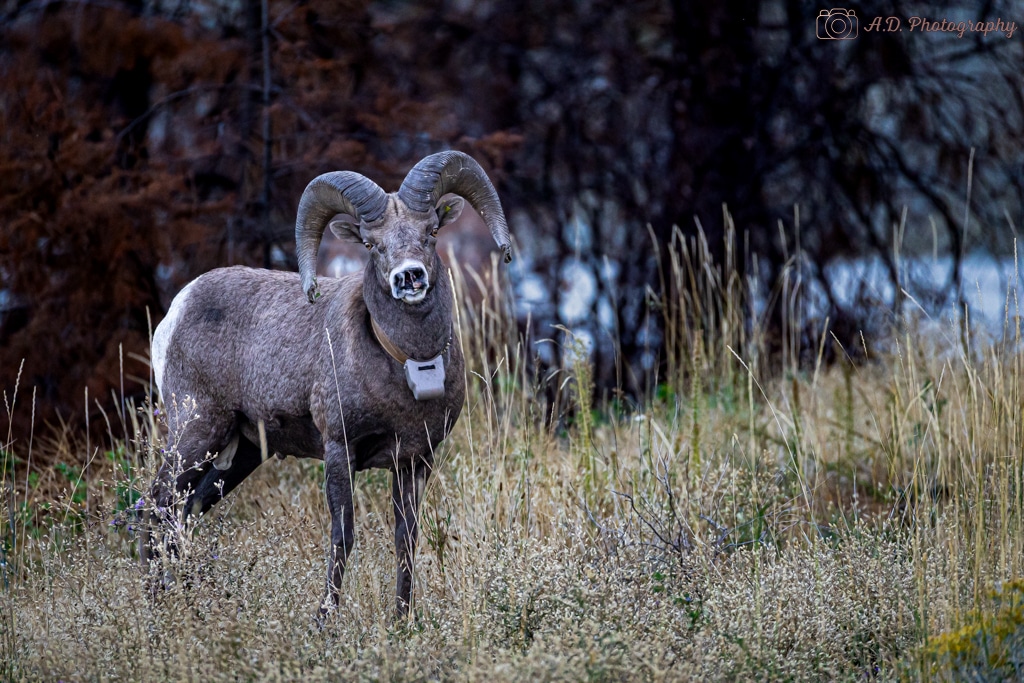
The herd will be closely monitored over the next two years to track survival and adaptation.
“All the sheep wear radio collars so we know where they’re going and what they’re up to,” Procter explained. “Those collars take location every four hours to monitor habitat behaviour and movement behaviour where most of the herd lives.”
As that work continues, LeBourdais said additional conservation funding from NGOs could help expand stewardship efforts.
“I think there’s a lot of opportunities for NGOs and nonprofits to step up, and I hope those types of funders will step up to institute real change,” said LeBourdais.
“Collaboration is the key to everything moving forward,” said Chris Barker, Wild Sheep Society of BC projects chair, who has spent 20 years advocating and collaborating with ministers of wildlife. “So it’s collaboration with First Nations, with our government biologists, with politicians and even the general public.”
For “real change” to happen — for the California bighorn species to survive in a meaningful way — Barker said he wants to see education through 4H clubs, voluntary partnership testing through the agriculture sector, as well as policy and regulation pieces for high-risk, moderate-risk, and low-risk ranching and farming.
“…Having that whole piece of the pie together, where everybody’s talking about the same thing and doing the same thing for wildlife and habitat.”
The Wren is a community driven local news outlet. Your questions and ideas help guide what we dig into. Your feedback after we publish a story helps ensure we're always improving our reporting to better serve you
What do think about this story?
Author

Related Articles

‘It is about courage’: More students take up Secwepemctsín as language revitalization efforts grow
‘Without any new interest or passion for Secwepemctsín, there is no revitalization,’ student says.
Secwépemc actor William Belleau brings Hollywood to Alkali Lake
Days before the Leo Awards, Secwépemc actor William Belleau reflects on a career that’s come full circle with his role in the independent Secwépemc film W7éyle (Moon’s Wife).
Meet Eric Van Stone, the archaeologist who stopped digging and started carving
Once trained to uncover the past, Chipped Stone Tools artisan Eric Van Stone now reshapes stone into functional blades.
