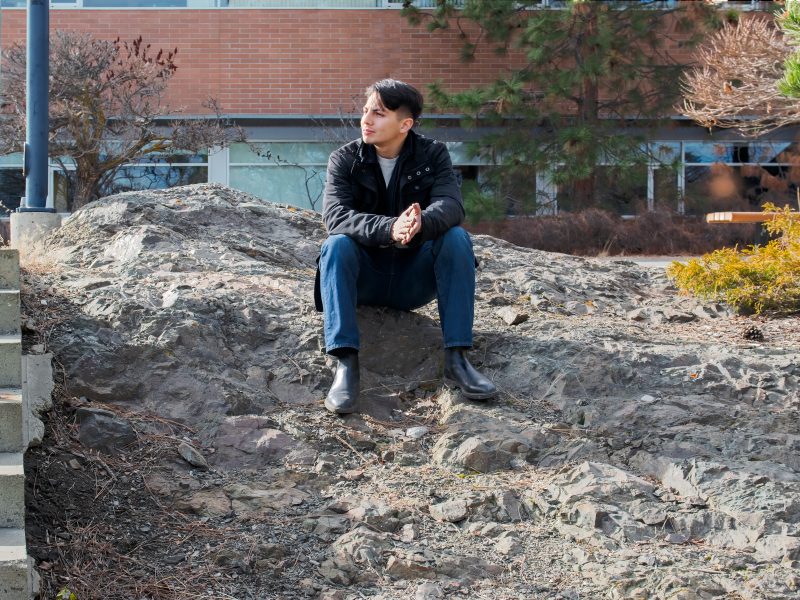
Santos has spent the past ten years as a temporary foreign worker paving roads in Canada, spending months away from his home in Mazatlan, Sinola in Mexico. “We grew up playing in the street,” Santos said. “Being in the countryside. Living among the animals, cows, horses. It was a balanced life compared with today.” The married 62-year old works hard so his six children can access a good education. An experienced worker and fluent in English, Santos takes a leadership role with his co-workers, helping new Mexican workers open a bank account or get a phone line. In 2023, when the Bush Creek East fire devastated British Columbia, he was working out of a campground 10 kilometers from Chase.
We are part of this crew of workers. We start at six in the morning and finish at 6, 7, 8 p.m., and sometimes we get home at night. The plan was to stay for a three-year contract. But we know these are temporary jobs because the snowfalls don’t let us work anymore. Once we are done with our seasons, we return to Mexico.
There’s good, grassroots news in town! Your weekly dose of all things Kamloops (Tk’emlúps). Unsubscribe anytime.
Get The Wren’s latest stories
straight to your inbox
The day before the fire happened, we were invited to have dinner with a couple at their home. Their house was in front of Shuswap Lake. We were enjoying the food when the flame started. The mountains that were in front of the lake began to change. That flame was getting bigger and bigger. I asked this young man, “Do you think that flame is going to reach us, is it going to jump into the lagoon?” And he told me, “Very possibly yes. There are many possibilities that this flame could get out of control and hit us.”
The weather was extremely intense. None of us slept. We were very attentive to the behavior of that phenomenon. I was monitoring that fire on my phone because I had never experienced a wildfire. It had already traveled four kilometers. The next morning it managed to catch fire with the help of the air that was blowing. If it had been against us, it might have kept further away. The fire jumped the lake, and it reached where we were.
The only thing I remember is the birds were announcing the danger was coming. I think it was the eagles. The sound was easy to hear. They were in the sky, circling. They were sort of whistling, getting more and more agitated. They didn’t stop. That caught my attention. These animals knew something very bad was about to happen.
I was the one in the workshop all day, while they were doing some work outside. They kept asking me. I was looking at the behavior of the fire. It was getting closer. I told them I didn’t see any way out, and that we urgently needed to get out of here.
At four o’clock in the afternoon, they finally returned to the base to remove as much machinery as possible. The fire was already very much on top of us.
The fear reached us up to the hairline. The flames were very high. They were about 20 to 30 meters high. The sound of the trees when they are on fire was very particular. I think it is the resin of the tree it is consuming. It was like the forest itself was complaining about the fire: “I’m burning, can someone do something for me?”
Evacuating was the most difficult thing. We were practically pushing each other. Some of us couldn’t even start the truck because of the nerves. Am I going to have space to be able to get out? Some of them were paralyzed, totally paralyzed. I had to go talk to them and say “Get out.” But we didn’t know where to go. The flame was going to be everywhere. We were trapped in the flame.
Firefighters were also part of our caravan to Chase. The fire burned down their camp. At the entrance of the village, there were three police officers. They were receiving us with a triumphal entrance.
A young woman firefighter of barely 21-years-old took special care of me. She said to us, “We will be keeping an eye on you.” They installed sprayers in case the fire reached us. They even installed a kind of pool around the houses to have water available at a given moment.
Our feeling now was not so much that we were at risk but that our company was going to suffer. Everybody believed that what we were going to find afterward were ashes. Fortunately, it wasn’t like that. The fire couldn’t do much damage to the work campground. We considered it a miracle but in reality, it was thanks to the firefighters.
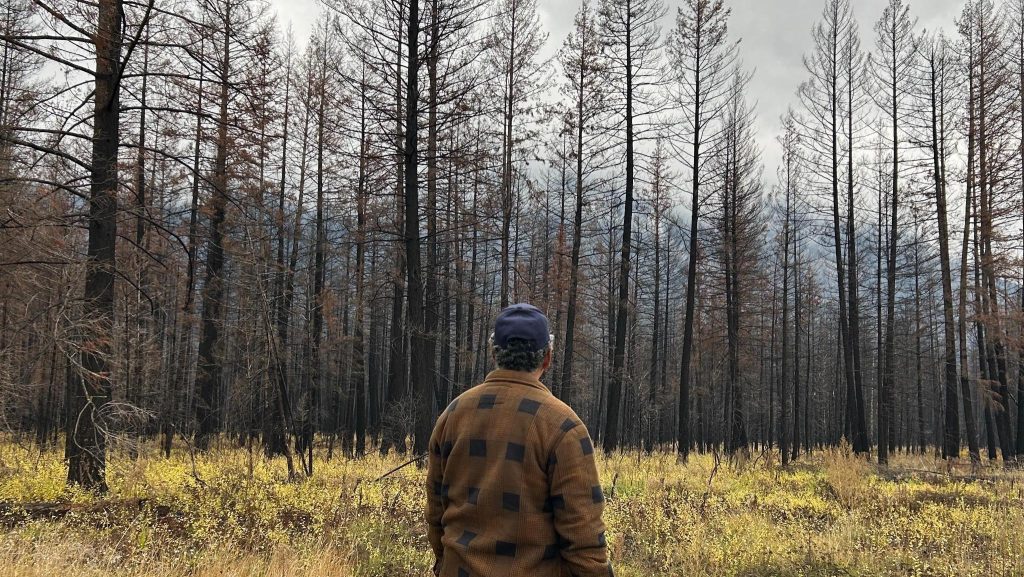
I knew this place ten years ago. It was a beautiful place. It was all populated. There were houses that had real life. There was even a gas station. That gas station burnt down. It’s new again, everything is new. And now you see changes. It makes me very sad. Looking at these trees burned, and thinking what it was like makes my hair stand. Seeing all this dark, black, it hits me inside.
I was in love with all of this. I liked to go to stand in the lagoon. There are some streams. You can sit and listen to the sound of the water, how it runs, and how it hits the stone. The smell of the salmon. Every year that I’m here, I know that by September, they’re coming back to make their leaps. It’s like a kind of therapy. The truth is that this year I didn’t manage to see the salmon. I feel that it’s lost part of its attractiveness.
When we talk about what happened and what may happen, we shiver about it. I shiver because of what I went through. Now we are very aware. We don’t sleep. As we say in Mexico, “We simply keep one eye open and the other closed, while we wait for the flame coming again.”
There’s no doubt that those memories must need some kind of treatment. I haven’t received help from anybody. I only talk about it with my family and my coworkers. Whenever I think about it, it makes me nervous.
I’m going to tell my grandchildren what I lived. We have no choice but to help our generations, our children, and our grandchildren to be more oriented regarding climate change. The wildfire that I lived in is just an announcement of what is coming. There is more coming.
We should have a conversation. The world needs guidance to be able to face this type of phenomenon. There is no doubt that firefighters are very prepared for this, but we need to support them. We cannot be confident because we’re in the first world. We are losing awareness of our ecosystem. We need to be more conscious about this. It’s not just Canada, other countries are also part of these changes.
This story is a part of a series created by Thompson Rivers University students and led by instructor Jennifer Chrumka as part of the Climate Disaster Project.
So do we. That’s why we spend more time, more money and place more care into reporting each story. Your financial contributions, big and small, make these stories possible. Will you become a monthly supporter today?
If you've read this far, you value in-depth community news