
‘Every little bit helps’: How Kamloops entrepreneurs are responding to social disorder and crime
As business owners, the city and social agencies call on more support from the province, these local entrepreneurs are turning frustration into action.

From a bird’s eye view in a loft above Fourth Avenue, a trio of stylists at the House of Carmond anxiously watched as a young person stumbled along the sidewalk adjacent to the studio.
When he lost his footing and stepped off the curb into traffic, salon owner Raymond Salmond swiftly picked up the phone.
He reluctantly contacted emergency services, after weighing the risks the individual might face if the authorities arrived, clarifying that he may need some sort of medical intervention to stay safe.
Salmond hung up and reiterated concern to the folks at his shop. Within a few minutes, an ambulance of paramedics arrived across the street and Salmond went outside to meet them, but the young person had left the area. The paramedics planned to make a loop around the block to search for him to check in.
For business owners in Kamloops (Tk’emlúps), these types of calls are increasingly part of the daily demands of the job.
Many calls like these go unreported, but in a survey conducted by the downtown and North Shore business associations and the Kamloops and District Chamber of Commerce last year, 55 per cent of respondents said they have seen a significant increase in “criminality or social issues.”
When it comes to social challenges, local business owners, business associations and social service agencies like The Loop and ASK Wellness agree more needs to be done by the city, the province and federal governments to support people with housing, mental health and affordability.
In the meantime, the City of Kamloops’ Crime Prevention Team, the Community Services Officer Outreach and Response Program and local agencies are working to reduce the impact of these systemic failures on businesses and unhoused residents, especially in the North Shore and downtown.

Crime prevention can make a difference, business owners say
For Oscar Or, owner of Hatsuki Sushi, the impacts of disorder and petty crime makes running a small business harder and more expensive. People have treated his storage room back door as a toilet, he says, and even cut the chain to access the roof to try and set up camp.
For safety, he recently spent upwards of $1,000 on an upgraded sound and motion sensor CCTV surrounding the building, which he says is an added cost of doing business on the North Shore.
“[This] is not a bank. I’m a restaurant only,” he says, expressing frustration with the added expense. “I’m not selling jewelry right?”
When it comes to crime, it’s important to remember that people living unsheltered are not necessarily responsible, ASK Wellness’ director of outreach and clinical supports Jeremy Cain reminds The Wren.
“There’s a huge difference between somebody who’s camped out and not doing well, and somebody that’s kicked open the front window of a store and stolen things,” he explains, adding that many crimes are organized and involve a small number of repeat offenders.

Some local property crime rates like residential break-and-enters are on a downward trend, according to the Kamloops RCMP’s 2023 summary report, however shoplifting and business break-and-enters increased last year and this year so far. RCMP attributes some of the business break-ins to two prolific offenders who have been charged.
After consulting with a member of the Crime Prevention Team, Salmond made some changes to lower the risk of theft, including moving the storefront’s cash register and computer away from the door.
In 2023, the team recorded 207 visits to assist entrepreneurs like Salmond, 37 of which included Crime Prevention through Environmental Design (CPTED), a component of the city’s free and voluntary Business Watch program, which utilizes a proactive design philosophy to reduce the rate of recurring crimes.
The team conducts safety analyses for businesses to help identify areas of vulnerability, like gaps in video surveillance or areas with low light, to prevent crime.
“We focus on what issues a business is having, and then we try to address those issues,” says Lisa Gammel, spokesperson for the crime prevention team.
Sandro Piroddi, another team spokesperson, says proactivity is vital to preventing crime.
“Let’s all do our part. Crime prevention works when everyone participates.”
The North Shore Community Policing Office is home to several programs, including the RCMP’s Auxiliary Constable Program, Restorative Justice, Crime Watch, Speed Watch and general policing.
Whether or not local entrepreneurs are formally part of the volunteer-based Business Watch Program, the chamber survey shows they are taking action.
Eighty-four per cent of 129 respondents reported installing security cameras, locks, lighting and fencing in the last year to prevent crimes like vandalism, trespassing and theft or to address social disorder such as hazardous materials disposal.
For Salmond, ultimately the best decision for his business and staff was to relocate the salon from a street-level storefront to a loft overlooking Fourth Avenue last fall.
“I’ve moved from a reactionary standpoint to a proactive approach because I’m removed from the day-to-day happenings around my doorways,” he explains to The Wren. “I’m able to keep watch and help individuals who need help.”
Despite enduring a shattered window in his first year of operation and a break-in through the front door in his previous location on Victoria Street — which resulted in a theft under $500 — Salmond feels it is critical to support an inclusive community, while taking pride in running a safe space.
Crime prevention and advocacy for marginalized individuals in the community is what’s most needed, he says, acknowledging there’s a lot of collaboration required to make outreach and support successful — between RCMP, the city, health care, law, education and social agencies.
When asked if any of the lessons he learned might be helpful for other business-owners in Kamloops, Salmond replies: “I would say really monitor awareness for the front of your business, monitor blind spots and make sure your staffing levels are good… if you have single or double people working at night, there’s a safety component to watch out for.”

Community outreach creates connections
Seven days a week, ASK Wellness and Canadian Mental Health Association (CMHA) outreach staff work with City of Kamloops Community Service Officers (or CSOs, formerly called bylaw officers) through what’s called the Community Services Officer Outreach and Response Program.
Launched in early 2023, the program helps connect people with essential services like shelter or addictions services.
Local businesses can also call the ASK Wellness outreach team directly if a resident looks like they need help.
“We’ve built relationships with these guys for years and years and years, so our approach is a little bit different,” ASK Wellness’ coordinator of outreach and overdose prevention Karly Bradley tells The Wren.
Because outreach workers know many local residents living without shelter, they work to have productive conversations and get folks what they need and where they need to go. RCMP can be called in rare instances of aggression.
But finding unhoused residents another place to stay with their belongings, especially on the North Shore, is the hard part.
“Bylaw is receiving calls and then just trying to pack them up, keeping their area tight, nice and clean, but there’s nowhere for them to go. That’s the struggle right now.”
So long as folks lack secure housing or a place to gather during the day like The Loop’s now-shuttered outreach centre, CSO’s are simply shuffling people around, she says.
Long-term sustainable solutions like supportive housing and adequate day spaces are urgently needed, which is why ASK Wellness is calling on the province, which funds a large portion of their work, and the federal government to step in with more help.
In the meantime, ASK Wellness’ services on 433 Tranquille Rd. include laundry, showers, food, phones, social and housing services, overdose prevention and other health supports.
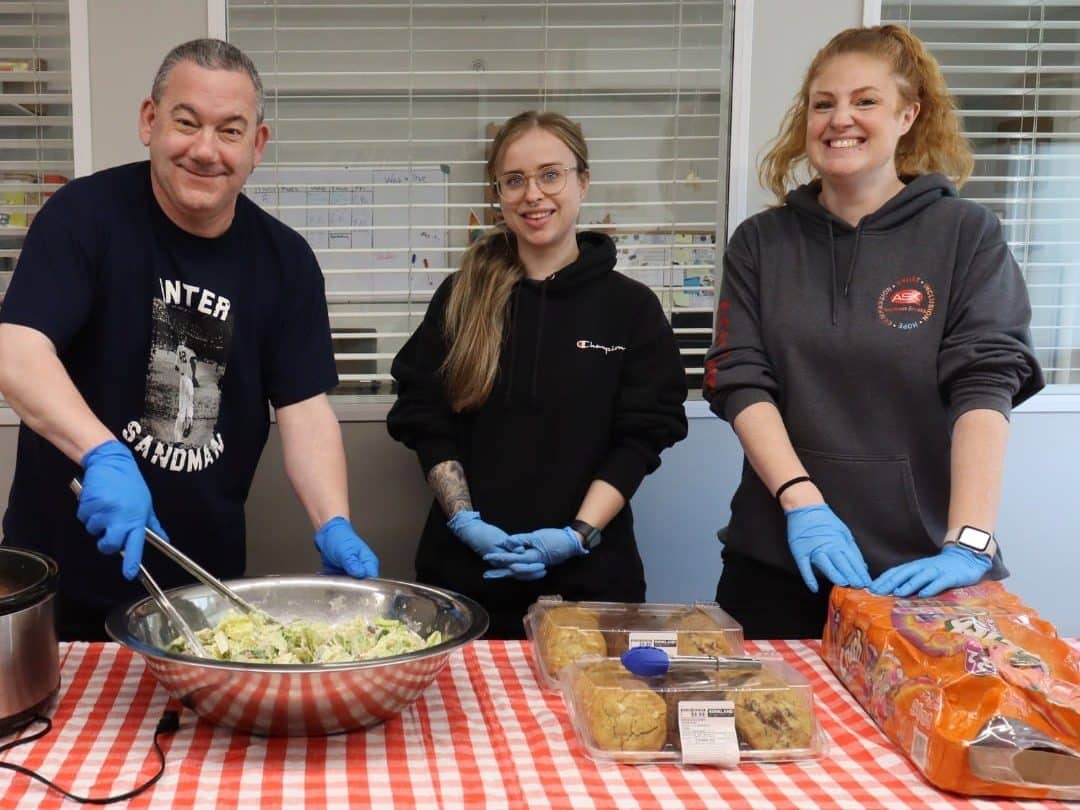
Karly says that from her perspective, she hasn’t seen an increase in crime — it’s just that a small minority are more vocal about it.
“There are more folks, for sure, on the streets than what there used to be,” she adds, clarifying that while Kamloops has always been a natural hub, unhoused people are not deliberately being brought in from elsewhere.
Many folks living on the streets are fully functional and largely keep to themselves, she says. “But some of these folks have a lot of needs that also need to be met, like mental health, there’s a lot of that. There’s a lot of substance use.”
When it comes to graffiti, ASK Wellness’ Karly says they work with the North Shore Business Improvement Association and its Clean Team to cover it up, if they can’t do it themselves.
Stolen bikes remain a challenge as well, Karly adds, though Kamloops has a network of community members working to bring bikes back to their rightful owners.

In so far as environmental design, Karly says some business owners get creative with deterrence. She’s heard speakers playing classical music and even the Chipmunk’s Christmas album used as a way to dissuade people from camping in certain outdoor areas.
ASK Wellness will sometimes make recommendations to local businesses on how to prevent or address recurring challenges in a way that works for everyone involved. If neighbouring residents have concerns they are welcome to reach out to learn more.
Karly’s advice on how to interact with folks who are struggling?
“I feel like with these folks — with anybody, really — if you’re going to come up to someone hot and aggressive… they might give it back to you,” she says. “If you have a little bit more of a compassionate approach to the situation, I think you’ll get better outcomes.”
‘It’s so sad what’s happening to Kamloops’
For business owner Jennifer Dawn, moving locations also became the only viable option. After 10 years of operating Soul Artistry tattoo studio in downtown Kamloops, she moved her storefront to Dene Drive on the North Shore.
“I was afraid for my clients, the girls in my studio who I share space with and myself,” she tells The Wren via direct message about the move, describing incidents like the theft of her $2,300 tattoo machine and feeling like she had to run.
“I hated it and I became miserable and the whole of it took me to where we, as a group of four businesses, opted to move out of our location,” she explains.
The building owner did access crime prevention services, she adds, but these can only go so far.
“It’s so sad what’s happening in Kamloops,” she says. “Although I understand it’s everywhere… I would love to give the city my moving bill.”
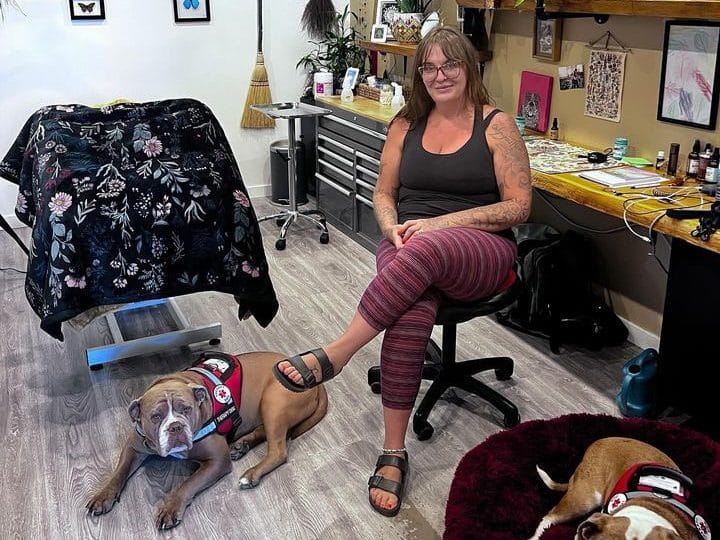
She says she wishes the city would do more to ensure customers want to come downtown.
“How insulting as business owners that the council and mayor are too busy arguing and making Kamloops look like a joke to actually hear the downtown businesses,” she says.
The Loop’s Glenn Hilke shares frustration with the city. “Our city is in sad shape because the administration is incompetent and really indifferent when it comes to taking action, especially on the level of trying pilot projects,” he says.
There are no year-round shelter spaces and no public washrooms on the North Shore, he says, while the public washrooms downtown are scattered.
A city map of public washrooms show many are seasonal, closed or have limited hours of operation.
People who are unhoused and using drugs have limited spaces to safely consume them on the North Shore as well, he says, increasing public drug use.
In the Interior Health region this year, 74 per cent of toxic drug deaths were from smoking but there is no safe inhalation site in Kamloops, according to the B.C. Auditor General’s recent report on the government response to the toxic drug crisis.
With two daytime drop-in centres in Kamloops, The Loop and the Mustard Seed, closed, the disorder will only get worse, he says.
“So I would tell a business owner, whether they are a member of the North Shore Business Association or not, to go and complain at the source of where the upstream problems are taking place,” says Hilke.
The city responds to frustration and community safety concerns
In response to questions from The Wren, Deputy Mayor Nancy Bepple said in an email CSO’s and outreach workers are now available 24/7, “which will allow uniformed and marked vehicles on patrols through the corridors and to help move along any persons from sidewalks and vestibules prior to businesses opening.”
Five more RCMP officers will be added to the local detachment and enhanced street patrol shifts will be separated from general duties “to focus on the downtown and North Shore corridor.”
To facilitate collaboration between stakeholders, the city’s Safe and Secure engagement groups and the outreach response table is working toward solutions, she says, like addressing vandalism and drug use at the North Shore bus exchange.
The city is also funding other programs beyond the Community Services Officer Outreach and Response Program like the Envision Shuttle to get folks to shelter beds, the Sharps Recovery and Peer Program and the SHOP program for sex workers.
When it comes to creating a permanent day space for folks who are unhoused, especially on the North Shore, she says the city has been advocating for funding from the province, sending a formal appeal to the province in June.
“There is currently no dedicated funding program day spaces and drop-ins for unhoused individuals – this is an issue across the Province,” she says.
Hilke said the city’s appeal is too little too late. “City Council knew of this since March but only sent the letter in JUNE,” he wrote on Facebook.
Bepple says council is working to support ASK Wellness with a meal program and cooling space at the back of its offices.
The Gathering Place, a day space operated by The Mustard Seed at the parking lot outside the Kamloops Aboriginal Friendship Society’s storage facility, has now extended operations to seven days a week since The Mustard Seed’s day space closed and it will remain open through October, she says. At this time, the Yacht Club winter shelter will open.
To address the absence of shelter beds on the North Shore, work is ongoing to create an “access hub” to provide a much-needed permanent shelter space alongside health and social services.
“Once a site is secured, BC Housing will make all needed improvements to the site and building and identify and fund an operator to provide shelter service,” Bepple explains. They are also working with Interior Health to ensure health services will be available.
Kamloops has also been selected for a purpose-built complex care housing facility with 20 beds. Last year, the city invested in a proposal to the province for a sobering and assessment facility, she adds. However, the province recently told Radio NL it has no plans to move forward with it.
Business advocates call for reforms, community resources
Downtown Kamloops Business Improvement Association (DKBIA) executive director Howie Reimer works closely in collaboration with the Crime Prevention and Business Watch teams to facilitate a number of workshops and consultations.
The DKBIA is also utilizing the crime prevention through environmental design approach, but continues to see systemic issues surpassing the preventative measures that are currently in place.
“It’s helpful to a point,” says Reimer about working with the Business Watch program. “Every little bit helps. Every little bit that can help mitigate or prevent some crime but unfortunately there’s still elements that are breached and we’re still seeing far too much criminal activity in our downtown core.”

While the BC Chamber of Commerce offers a one-time business grant for up to $2,000 per calendar year to address vandalism, and the DKBIA supports it, Reimer questions the effectiveness of whether financial aid after vandalism occurs is truly a preventative measure.
“As far as helping the situation, advocacy is something that we do, so we’re advocating at the municipal levels for increased police resources, increased community resources, lighting, sanitation and things that the city has within its purview,” he says.
“At the provincial level, we’re advocating for judicial reform and complex care,” Reimer adds. “At the federal level, we’re advocating for a bipartisan task force to tackle these issues to keep it apolitical… in more of a committee approach that goes across party lines.”
Reimer indicates there is a need to improve systemic issues by tackling social issues, like affordable housing, mental health and addictions, judicial reform, treatment and recovery in an effort to make the community feel safe in its downtown core.
Reimer maintains the philosophy of CPTED is essential for crime prevention, emphasizing that showing pride in public spaces by hosting community events like SpringFest, Hoops in the Loops, Hot Night in the City and the Santa parade can reduce the appetite for crime.
Reimer is proud to be involved in the ongoing effort to see economic growth continue in Kamloops, and there are positive changes afoot too.
“I think we’ve got a lot of people that are working very hard,” Reimer says. “The needle is moving very, very slowly if at all.”
He underlines the work being done at the city’s Build Kamloops committee to create safe and lively community spaces.
Kamloops crime prevention resources
“Despite what’s happening with crime and disorder, we’ve got a lot of people working very hard to move people forward to the next level of a metropolitan city.”
- Business-owners who need guidance around crime prevention can contact the Business Watch program at 236-597-1487 between 8 a.m. and 4 p.m. during the week.
- For help with sharps disposal or if someone living without shelter needs assistance, ASK Wellness’ outreach team can be reached at 778-257-1292 or by email at ODP433@askwellness.ca. If it’s a medical emergency call 911.
- The North Shore Business Improvement Association’s 2024 impacts survey is open for feedback
- Residents can also volunteer with various local programs including Kamloops Community Patrols.
- For those who need to report a serious crime, contact the RCMP directly at 250-828-3000. Less serious crimes can now be reported online.
The Wren is a community driven local news outlet. Your questions and ideas help guide what we dig into. Your feedback after we publish a story helps ensure we're always improving our reporting to better serve you
What do think about this story?
Author

Related Articles
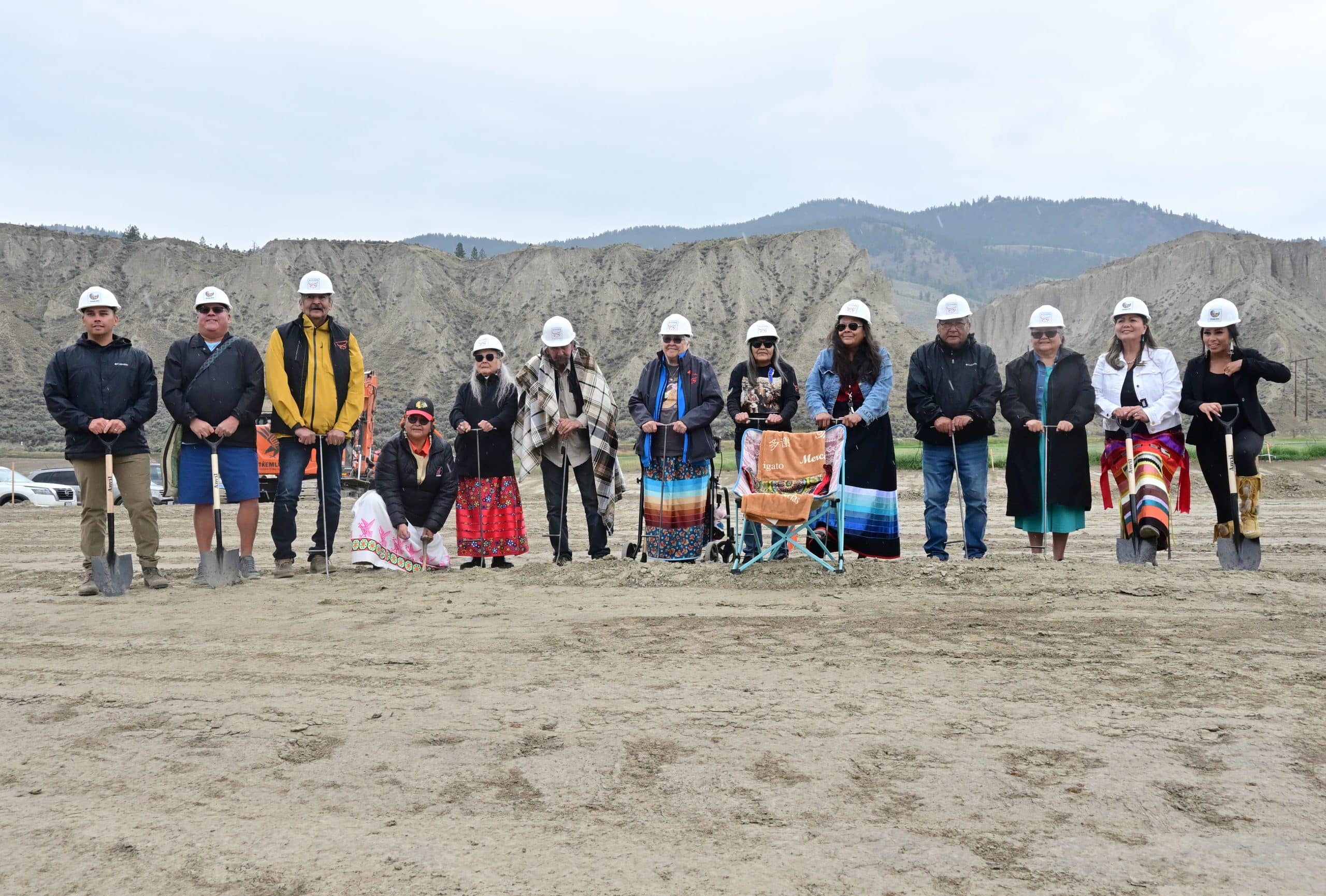
Tk’emlúps Healing House envisions ‘reclamation, resilience and self-determination’
Kúkwpi7 Rosanne Casimir sits down with The Wren to discuss the nation’s $12.5-million project for residential school survivors and descendants.
In depth: How Kamloops sex workers find support through community
‘We are the ones best positioned to say what we need in this industry,’ a sex worker in Kamloops tells The Wren.

‘I wasn’t sure what I was going to do and I was scared’: Kamloops addictions services offer a lifeline
From detox beds to recovery centres and harm reduction, Kamloopsians face a changing treatment landscape.
