With a streak of high temperatures in Kamloops (Tk’emlúps) and wildfires across B.C., many organizations are clamoring to offer services. Among those impacted by the heat and increased needs is the Kamloops Food Policy Council (KFPC). The organization is working hard to offer water and essential food items even as a series of pressures have restricted operations.
KFPC is the oldest independent food policy council in Canada, originating in 1995. It started with a group of volunteers who wanted to focus on food security and food sovereignty in the region. It has grown to offer programs like a community pantry, urban gardens, food redistribution and a food hub to support the production and distribution of local food, known as The Stir.
Eden Mackay is the food sovereignty coordinator for KFPC. She is responsible for maintaining and promoting the seed library in addition to promoting other programming and initiatives such as Indigenous food sovereignty in Kamloops.
To start our conversation, Mackay mentions it is important to distinguish between food security and food sovereignty.
“Food sovereignty is the ability to feed yourself food that is nutrient rich, affordable, culturally appropriate, accessible to you,” Mackay says, adding food security is having access to food. “Food security is the issue and food sovereignty is the goal.”
Since the heat wave, KFPC has tried to reduce donations of fresh foods at their community pantry, located outside of The Stir, because they can go bad quicker, opting instead for non-perishables. Other initiatives have also sprung from the need to cool down.
“During the heatwave, we started an initiative to distribute frozen water bottles to our community. At this point, we’ve distributed over 200 and [there are] no signs of slowing down,” Mackay says.
KFPC has also been struggling to keep the community pantry stocked.
“As soon as you put something in there, in 20 minutes it is empty. It’s very heavily utilized,” Mackay says. “People are really desperate. I know from my own experience, you just constantly see people begging for resources.”
Seeking help from the community, KFPC is encouraging residents to come and stock the food pantry with non-perishable food items and other things not susceptible to high temperatures.
Since the pantry is always open, those willing to donate can just put things in it.

How the heat wave impacts harvests
Human-caused climate change is a big factor affecting food security in Canada, Mackay explains, as it has increased the frequency and intensity of extreme weather events including drought, heat waves and extreme precipitation. The recent heat wave has put a strain on KFPC’s resources and operations.
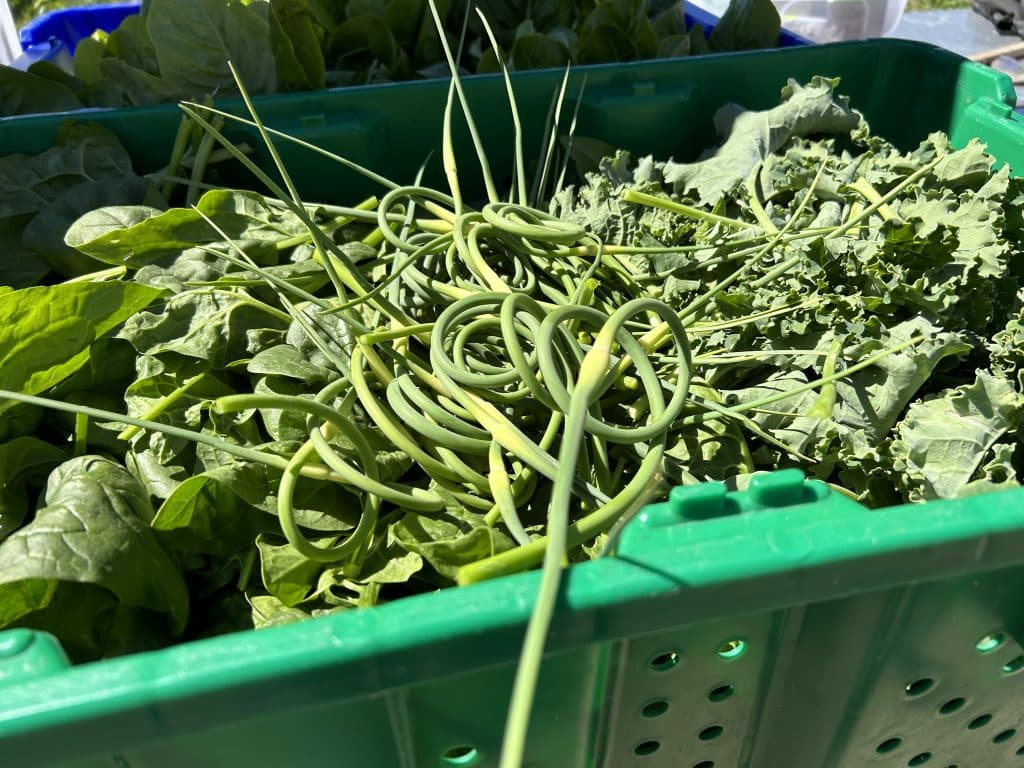
At KFPC’s Butler Urban Farm, people can get hands-on knowledge about growing produce. They grow food, distributing it to local programs where people get the opportunity to work. The farm does not have any fencing, inviting people in the community to access it.
“[Climate change] affects our ability to farm on our urban farm. We don’t want our staff to be out there in 40 degree heat, it’s not safe for them,” Mackay says. “Climate change is affecting our ability to support communities.”
Among KFPC’s other programs and initiatives, the gleaning abundance program helps fight food waste by enlisting a group of volunteers to harvest community fruit trees, which is then distributed.
One third of the harvested product goes to the homeowner, one third goes to the volunteers and the rest goes back to the community through different organizations they partner with.
This program is also seeing a decline due to climate change, Mackay explains. “[Climate change] is shifting plants and trees out of their natural rhythm so they are no longer able to withstand the climatic shifts that impact their ability to produce fruit,” Mackay says.
The fruit is susceptible to changes in temperature and the buds can be killed easily. KFPC has also missed some harvests due to the high heats since it is not a safe work environment.


Ways you can help
KFPC recommends that if you have a garden with harvest to spare, you can share or exchange your produce. People can connect with their neighbors and create a community where they can share meals so everyone can access food.
“I think that community care and community support is going to become more and more critical. It’s going to be very important for us to just kind of reach out and support each other,” Mackay says.
Reaching out to the local government and voicing the needs of the community is also important.
KFPC is working on launching a Food and The City initiative for the provincial election where they create a list of recommendations to the province on how they can support food sovereignty.
“We need comprehensive food programming, we need to not be using pesticides in our local parks so that we can plant fruit trees that can be used to feed our community,” Mackay says.
During heat waves, KFPC accepts donations of flats of water or even reusable water bottles for their emergency heatwave community water initiative.
To make a donation, place water bottles in their cooler at The Stir on 185 Royal Ave. in Kamloops, either by washing and filling reusable bottles or donating pre-bottled water, or by making donations to their general account with the subject “for community water initiative.” For larger donations of water, contact Mackay.
Other ways to help include becoming a monthly or one time donor, signing up to participate in their Gleaning Abundance Program, donating unused or extra seed to our Community Seed Library and donating non-perishable food items (canned, dried or boxed food), personal hygiene products (tampons, pads, wet wipes, toothpaste, toothbrushes, etc) or harm reduction supplies (naloxone, pipes, alcohol wipes, unopened syringes, etc). to the community pantry.
So do we. That’s why we spend more time, more money and place more care into reporting each story. Your financial contributions, big and small, make these stories possible. Will you become a monthly supporter today?
If you've read this far, you value in-depth community news