
December 2023 in Kamloops (Tk’emlúps) and across Canada was one of the warmest on record.
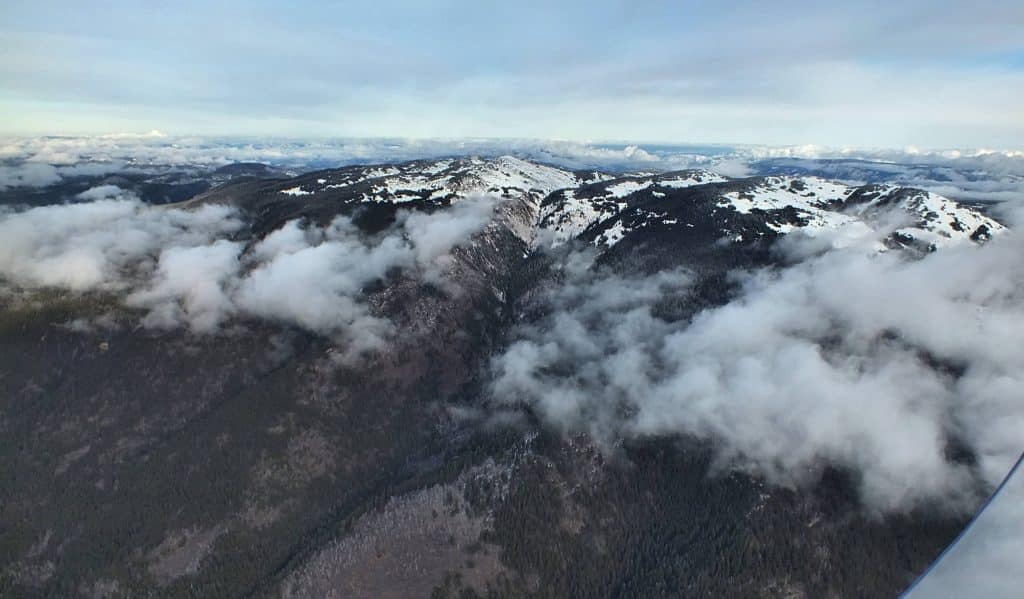
While recent snowfalls have punctuated the dry spell, the snowpack feeding the confluence remains extremely low after two years of persistent drought, according to the province.
The North and South Thompson River snow basins are averaging 30 to 40 per cent below normal for this time of year, the most recent survey states, which increases the likelihood of a Kamloops drought this summer — for the third year in a row.
Scientists recently calculated that human-caused climate change made December’s warmer temperatures twice as likely after controlling for historical temperature fluctuations and the ongoing El Niño.
So what does an increased likelihood of warmer winters mean for Kamloops? The Wren spoke with Thomas Pypker, chair of the department of natural resource sciences at Thompson Rivers University, to learn more.
This interview has been lightly edited for clarity and length.
Q. People might not think about Kamloops’ drought during winter. What thoughts or concerns do you have this season?
Pypker: I think people don’t always recognize how the water system works in B.C. We’re a snow-driven system. We get concerned in the summer when it doesn’t rain, and that is a concern… we can have very dry summers, which can dry out fuel and have fires.
But a lot of the water that we’re using in the summer — particularly in areas like Kamloops, the Okanagan, which are semi-arid systems — doesn’t fall here. It falls up in the mountains and then accumulates as snow. And just like a savings account… it doles out that water later in the year.
So there are two things I think you have to think about with the Kamloops drought. One is what kind of precipitation are we getting right now? And then, what did we get in previous months in the winter?
Up until this point, we’ve had less snow than we typically would and so that means our bank account is accumulating slower. Combined with the fact that we had a very dry spring and summer with a very rapid melt of the snowpack, we went into the winter with low flow. So right now the snowpack is below seasonal averages.
We’ll see how this all plays out the rest of the winter, but this is going to be an ongoing concern as we move forward with climate change because it’s going to start changing the snowpack dynamics in the province. So we’ll end up having potentially, in all probability, less snow in the mountains.
You may start to see an increase in some areas for a while because sometimes a little bit warmer temperatures allow for a little bit more snow to fall. But then ultimately, a transition to less snow and more rain. That will shift the dynamics of how water moves through the system.

Q. Could you elaborate on the role climate change plays in Kamloops’ drought?
Pypker: We see a lot of misconception between weather and climate. It’s really the shifts in long-term trends that’s the driving force.
So is the low snowpack this year because of climate change? That one event, I don’t think you could draw a straight line to climate change and say with definitive confidence that that’s a climate change issue. Because day to day, we’re going to see different types of weather. Some days, it’s going to get cold — it’s gonna get really cold. So day-to-day — or even in one-year events — aren’t indicators that climate change is indeed happening.
But when you look at the cumulative impacts over time – and you have to look at this long-term shift in the trends — the temperature change is written in stone at this point. We are definitely warming.
That trend can be seen over the last hundred years. It cannot be explained away with things like sunspots, changes in the orbit of the Earth, those sorts of cyclical patterns that we are very well aware of. It only can be explained by changes in greenhouse gas emissions, and therefore that has increased the temperatures.
Other aspects get a little bit more complicated and they’re harder to define. So if you look at the Intergovernmental Panel on Climate Change, they state very clearly where they are highly confident and where they are moderately confident on changes.
On temperature they are highly confident that this is going to happen, and that has cascading effects on things like water and drought, and excessive rainfall in different regions of the world.
And those are harder to predict. They’re harder to state with certainty that they have changed. But when we look around the globe, there is so much change occurring that it’s becoming very difficult to deny the fact that this cascading effect of increasing temperatures is resulting in other aspects of changes in the climate system.
Q. How will climate change and drought play out in Kamloops?
Pypker: Drought kind of goes hand-in-hand with increasing temperatures. We’re already in a dry region. We’re in a warm region, particularly in the summer. So things like those heat domes that happened a few years ago, the climate models have already predicted that those would occur. They actually came a little earlier than the climate models predicted, if you look at a regional prediction of heat domes.
Those cascade down… drying out the ecosystem, which increases water demands. It will cause ecosystems to have to adjust. So we may see the expansion of grasslands around Kamloops, for example. Trees that used to be able to survive at certain elevations may no longer be able to survive because it’s just too dry and too hot.
That then leads into the wildfire issue. We’re in a wildfire-prone area, and these dry, hot conditions will lay the seeds of the foundation for increased fire risk going forward. So in the Kamloops region, I think we need to be thinking about fire and buffering our communities for fire going forward.
We also need to be thinking about water supply. We rely on the North and South Thompson Rivers in Kamloops. All that water is coming from other regions in the mountains. And that supply of water is going to shift over time. So we’re likely to see changes in water levels going forward due to changes in snowpack dynamics.
On top of that, changes in glacier presence. Many of the watersheds in B.C. have glaciers in them. These glaciers are really long-term water supply sources. In some regions in the western portions of North America, in the mid-summer months when it’s very warm, the water that’s coming out may be 10 to 20 per cent glacial water.
Fast forward 50 years, those glaciers will likely, in many places, not be present anymore. So that means your low flows in the summer months, when the salmon want to go upstream, will cause challenges for the salmon because there will be even less water going into the system.
I have students working, for example, on the Adams watershed, looking at glacier loss. They’re still crunching the numbers, but looking from 1985 to present day, you’re already probably looking at about a 30 per cent loss of glaciers.
We’ll see what the results come up with projected modeling going forward, but in all likelihood, we’ll see a decline or almost complete loss of glaciers by 2100 in those watersheds.
That’s going to then have an impact on that late-season water supply to the system. How much of an impact? I can’t say at this point. But that is an amount of water that will no longer be present at the end of the year.
Q. The climate and wildfire anxiety is very real for Kamloopsians. Are there any tangible things folks can do?
Pypker: I think a lot of power is in your vote. A lot of changes need to be done systemically, within the government itself. So making sure that politicians are aware that your vote for them hinges on their climate policies going forward.
It’s a challenge because the whole world has to do it. And sometimes we’ll hear people say, well, Canada only represents roughly 1.6 per cent of all greenhouse gas emissions worldwide.
But we are one of the worst emitters per capita in the world. So the onus is on us to reduce. Part of that is personal choices and part of that is governmental choices, finding ways to drive down our fossil fuels, and there are different pathways for doing that.
Another is for us to consider how much water we use. We [in Interior cities] are on the higher end of water use per person, relative to the rest of the country. The average person in Canada uses about 400 liters per day, and we are more than 700 litres per day. So we use a lot more water.
The City of Kamloops started metered billing for water about a decade ago and saw a dramatic drop in water use because people suddenly had to pay for the resource.
So we need to find ways to become more water efficient because we don’t actually live in an environment that has a lot of water. We need to be adapting ourselves to be living within our means, basically, for water supply. Because there are lots of end users that need it and we also want to make sure we can irrigate our crops so we can feed ourselves.
Q. What else should Kamloopsians know about the impact of wildfire on the local environment?
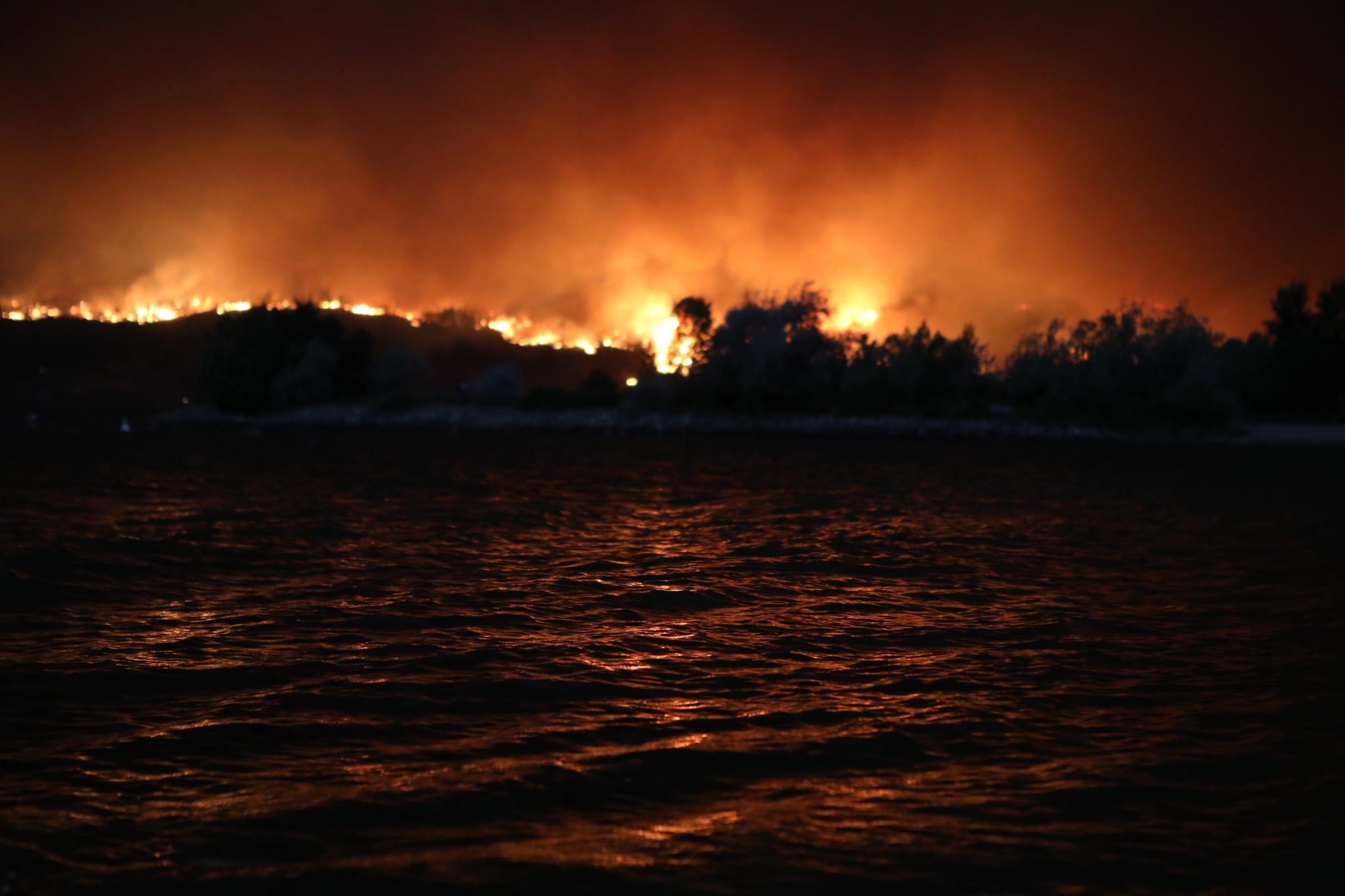
Pypker: Every ecosystem is unique, but the general expectation following a wildfire – especially one that’s extensive, that removes the crown of the forest canopy, as well as burns off a lot of the organic matter on the ground surface — is it will change the flow of water.
What people often don’t realize is that forest canopies intercept about 20 per cent of all the incoming precipitation and evaporate it back into the atmosphere. So right off the bat, you typically increase water input into the ground by about 20 per cent.
Then that water — and that snow, depending if it’s snow or rain — needs to go somewhere. Ideally, if you’re going to avoid erosion, the water will infiltrate into the soil, can move through the subsurface in the soil and make it to the stream over time.
What happens if you have too much water come in, it will then pond on the surface and run across the surface and cause erosion. And that’s common, though there are always exceptions.
In general, if you get that overland flow you’re going to get erosion, and then sedimentation of the streams that then will impact fish and other aspects of the system.
Plus of course, if you erode the top layer of your soil, that’s your most valuable soil because it has lots of your organic nutrients in it. You’re losing productivity on your site as well.
Q. What about El Niño, how does that play into Kamloops’ drought?
Pypker: Last year, 2023, has now been verified as the warmest year on record, worldwide. We are over 1.4 degree increases for a large chunk of the year.
We also have an El Niño event that’s occurring, which is sort of compounding and interplaying with the climate change issue. El Niño was part of the reason we had such a warm December. We’ve had warm Decembers before, but it’s likely coupled with the climate change aspect.
So it becomes complicated. The system isn’t: you flick one lever and one thing happens. You flick one lever and then impact 10 things which then all interplay with one another. So it makes it challenging.
Q. With climate change having such a big impact, why are we seeing some resistance to climate action locally?
Pypker: This is not my area of expertise. I’m not a social scientist. But my guess is there is going to be ongoing pushback on adaptation requirements to meet climate change objectives.
So the new rules that are supposed to come out — whether the government actually follows through — with eliminating fossil fuel passenger cars by 2035, those types of changes, I think, I would anticipate we will continue to see fairly strong pushback.
There is that pushback, it will continue. But the portion of the population that actually wants climate action is much bigger. The majority do want to see climate action, but there is going to this 10 per cent who are mobilizing better these days, who will oppose it. And I think that’s going to be an ongoing challenge for any government going forward.
Q. What else should people who care about the confluence be thinking about when it comes to Kamloops’ drought?
Pypker: As a society I think we have to start asking how our land-use decisions interplay with water. So for example, if you eliminate a forest, I talked about increasing amounts of water in the system which has implications for everything down slope.
I think we need to be thinking holistically. Not just, ‘Okay, we have a climate change problem, so we need to reduce fossil fuels.’ We need to be thinking, we have a climate change issue, which isn’t gonna go away — even if we stopped using fossil fuels, temperatures will continue to rise for a while. How is our land management either helping us or hindering? And working to come up with an approach that tries to be beneficial in the best way possible.
The Wren is a community driven local news outlet. Your questions and ideas help guide what we dig into. Your feedback after we publish a story helps ensure we're always improving our reporting to better serve you
What do think about this story?


