
Advocates call for B.C. to implement a Red Dress Alert during Kamloops walk
A community walk through the North Shore of Kamloops marked Red Dress Day, honouring missing and murdered Indigenous women, girls and two-spirit people this week.
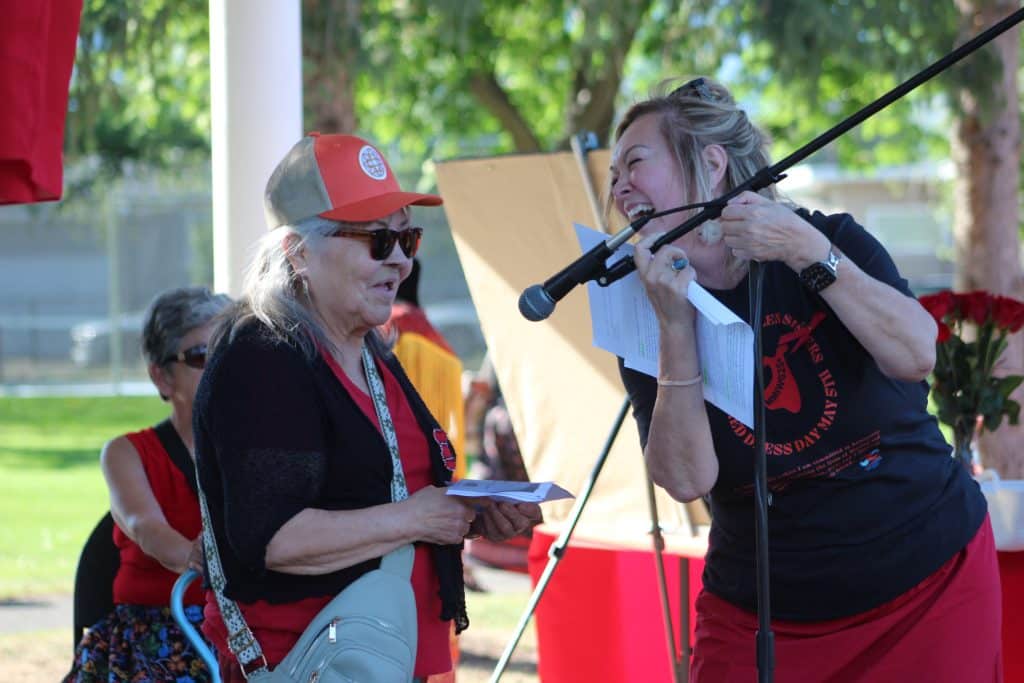
Roughly 150 community members gathered to remember and honour the lives of missing and murdered Indigenous women, girls and two-spirit people (MMIWG2S+) at the second annual Red Dress Day walk in Kamloops (Tk’emlúps) on Tuesday, May 5.
The event, organized by Lii Michif Otipemisiwak Family and Community Services and Kamloops Aboriginal Friendship Society, was among several other community events held to raise awareness of the high rates of violence against Indigenous people in Canada.
Charting a path from 707 Tranquille Rd. to McDonald Park the group sang, drummed and spent three hours sharing stories of trauma, racism and grief.
Red Dress Day began with the REDress Project, which was created by Métis artist Jaime Black in 2010.
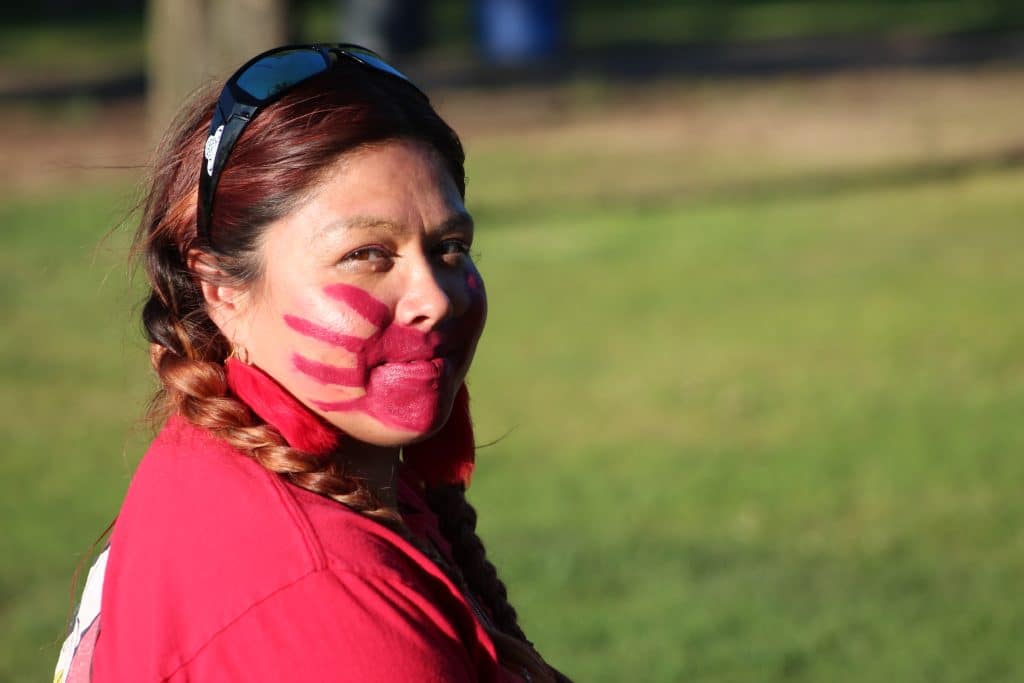
Since then, the movement has been marked with powerful imagery of red dresses — hung in trees, displayed in windows, worn on clothing and marked across faces — to honour lives that have been lost and to call for justice for MMIWG2S+ at rallies and ceremonies. It has evolved over time to honour survivors and support their families.
Walking through the North Shore of Kamloops, bright red moved like a current, held together by the quiet understanding that each step was for someone who should still be here: sisters, daughters, aunties, friends and community members at large.
Singer RJ Edward and drummer Silas Hance performed the Welcome Song to open up the ceremony.
The event featured personal reflections on Indigenous social issues, racism and grief from several speakers, including Dog Creek / Canoe Creek Elder Rose Wilson, Tk’emlúps te Secwépemc members Leona Doe Thomas and residential school survivor Viola Thomas, Nsyilxcen member Rhonda Ned, and Tk’emlúps te Secwépemc Knowledge Keeper, Elder and artist Colleen Seymour.
Seymour assembled a fish weir red dress which was carried by a group of volunteers.
“I do appreciate having the red willow fish weir dress slowing us down, like we’re at a funeral procession, for keeping everyone together,” event organizer Sharon Campbell said after the event.
“It was very symbolic.”
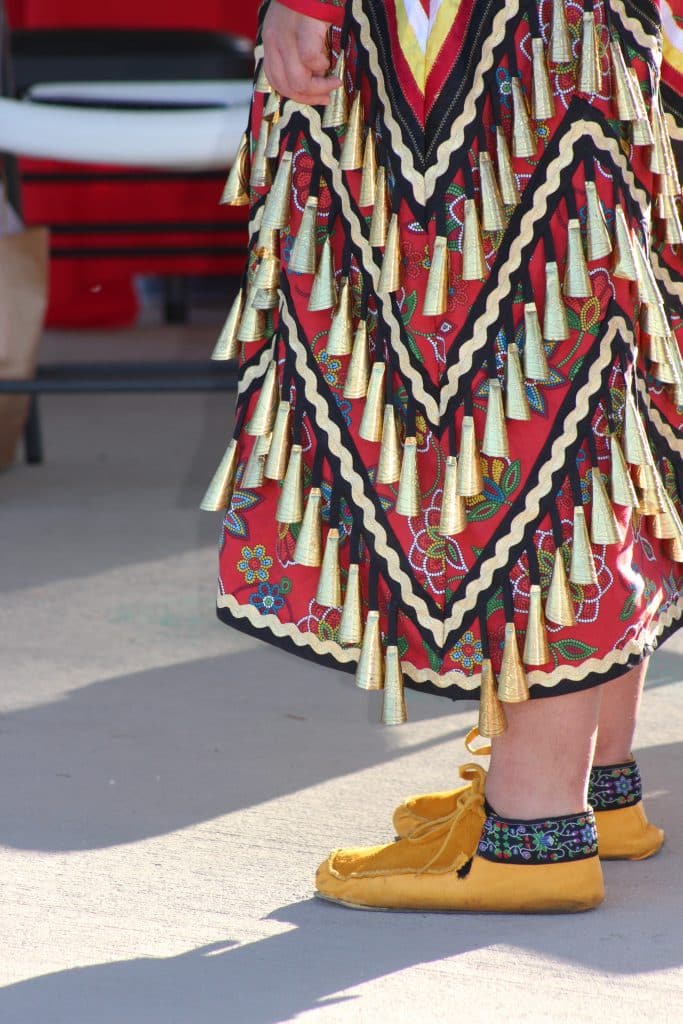
The event closed with a jingle dancing performance and gifts for the speakers.
“We want to have an impact, and we’re hoping to have an impact that one day we’ll be right downtown, shutting down the streets,” Campbell said, highlighting the need for a walk that was accessible to both Elders and youth.
“We wanted to have exposure to walk right down the streets, but we complied with the city to walk on the sidewalk,” she added.
Call for action
Advocates are urging the province to adopt a province-wide Red Dress Alert, similar to an Amber Alert, to be activated when Indigenous people are reported missing. The notification is an Indigenous-led emergency system, and could help in the critical first hours of a missing persons report.
“I’m a member of the Métis Nation. I’ve known women throughout my career who have gone missing, and in some cases, been murdered. In frontline services, situations happen in real time,” says Kamloops Aboriginal Friendship Society manager of family violence programming Charlotte Ribalkin.
“As great as awareness is, having that information that it’s happening today in Kamloops, and that it can affect anybody, is really important.”
A pilot program for the Red Dress Alert is already active in Manitoba, according to speakers at the event, who called for the initiative to come to B.C. as well.
Along with many speakers from the event, Ribalkin referenced a decision that was implemented in a motion for the pilot program in Manitoba, which passed in the House of Commons in May of 2023.
In October of 2024, the federal and provincial governments agreed to work with Giganawenimaanaanig, a MMIWG2S+ organization in Manitoba that advocates for justice and equality initiatives for survivors, to collaboratively develop the plan for a Red Dress Alert.
On May 5, Prime Minister Mark Carney announced support for the Manitoba program, valued at $300,000, comprising a portion of the $2.6 million investment in the National Family Survivors Circle Inc. to work towards ending the national crisis of missing and murdered Indigenous people.
“Right now they’re talking at the parliamentary level about having it in B.C., but I think it’s been in talks for about two years now,” Ribalkin said.
Ideally, a provincewide pilot program — and ultimately a national Red Dress Alert — should be implemented, said special projects coordinator for Lii Michif Otipemisiwak Family and Community Services, Jeanette Melnychuk.
“I want to make sure that people are aware that this is still ongoing and people are still mourning for their loved ones,” Campbell added, citing the need for better responses from the police to take the issue seriously and to see the implementation of the Red Dress Alert.
Why calls for justice are critical
While the Kamloops RCMP did not respond to The Wren’s information request for local data on violence aimed at Indigenous people prior to publication, national data underscores the urgency behind events like the Red Dress Day walk in Kamloops.
According to Amnesty International, Indigenous women and girls represent less than five per cent of Canada’s population but account for approximately 24 per cent of homicide victims. Additionally, Indigenous women are estimated to be 12 times more likely to be murdered than other citizens.
The Final Report of the National Inquiry into Missing and Murdered Indigenous Women and Girls, released in 2019, concluded that the violence constitutes a form of genocide and called for sweeping systemic change.
These realities continue to shape awareness events, like the one here in Kamloops.
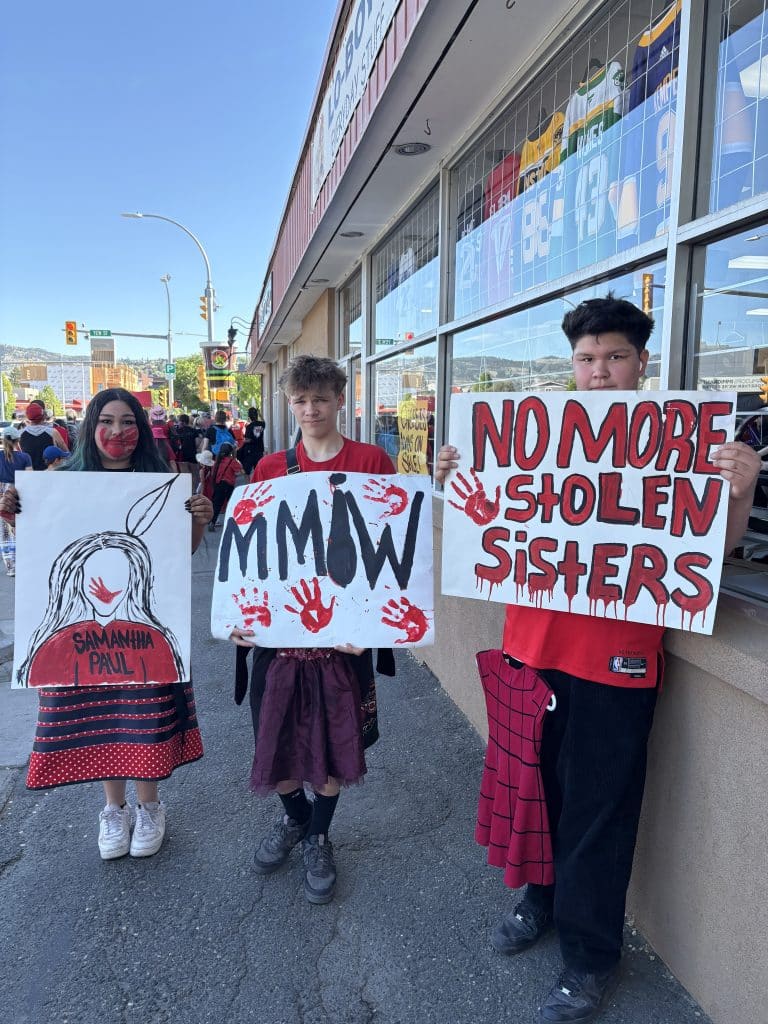
“I want to bring awareness on what some people have done to Indigenous women and that the cops won’t look for them. Our own people need to,” says Setetkwe Gottfriedson, a 17-year-old member of Tk’emlúps te Secwepemc who carried a sign for unsolved case Samantha Paul.
“I didn’t really know her that well. I just knew she went missing from Tk’emlúps,” she added.
Setetkwe was joined by Hayden Cherman, 15, and Kwen Gottfriedson, 14 for the walk to support family members. The trio has been participating in awareness events for a few years now.
Kwen referenced the importance of women in his own family when asked about his desire to join the cause.
More than five years since the Final Report of the National Inquiry into Missing and Murdered Indigenous Women and Girls was released, gatherings like this serve as both a reminder that calls for accountability and a way to commemorate the losses that have hit local families directly, particularly for those in the region who have been directly affected.
The Wren is a community driven local news outlet. Your questions and ideas help guide what we dig into. Your feedback after we publish a story helps ensure we're always improving our reporting to better serve you
What do think about this story?
Author

Related Articles
Where to go and what to know: Voting in Kamloops’ 2026 general election
The Wren’s guide to voting in Kamloops’ 2026 general election.
SURVEY: What questions are top of mind for the 2026 local elections?
The Wren wants to know what’s on your mind as you prepare to head the to polls on Oct. 17, 2026.
Third annual 2 Rivers Remix creates space for Indigenous music, art and connection
2 Rivers Remix Festival co-founder Meeka Morgan says the event aims to create a safe and accessible space for Indigenous artists and communities.
