
‘We heal through connection’: How students are turning away from substance use and toward each other
Through education, awareness and connection, students are Thompson Rivers University are supporting each other through substance use.
Content warning: This story mentions substance use, the toxic drug crisis and domestic violence. Please read with care. To connect with your local mental health or substance use centre, call B.C.’s Mental Health and Substance Use line at 310-MHSU (6478), or visit HelpStartsHere.gov.bc.ca.
Cheryl Latimer’s story with addiction began long before substances entered her life. She recounts a difficult childhood, and how she later started using cocaine socially.
“For the first time in my life, I felt self-confidence,” she tells The Wren. “I didn’t care what people thought.”
For many years, her cocaine use was occasional. But after years of accumulated trauma including a series of violent relationships and the fear and exhaustion that came along, addiction truly took hold. During a period with one abusive partner, Latimer recalls lying awake one night terrified while her children slept nearby.
“I just watched them sleep,” she says. After escaping to a safe house, substance use became more serious.
“As soon as I got to the safe house I felt numb. I gave up,” Latimer says.
After a night of drinking, someone introduced her to methamphetamines.
“The next morning when I woke up, I had to have it. It was the only thing I could think about.”
Addiction rapidly consumed both her mind and body.
“It’s not a choice — because your brain becomes already wired that way from the first time you try,” she says. “It’s like when your phone dies and you keep reaching for it but a billion times worse.”
Within only a few months, “everything came crashing down,” Latimer recalls. “I lost my job. I lost my home. I lost my children.”
“Everybody was telling me I need to change and fix this,” she says. “But what do I do? I have no money, I am on the street and I have no clothes.”
Eventually, she entered detox after spending a night outside waiting for a possible bed. Latimer remembers feeling hopeful during treatment.
“I was the happiest person in detox,” she said. “I think it is because I could finally see light at the end of the tunnel.”
After a period struggling to balance online learning and recover from addition, Latimer is rebuilding her life as a student at Thompson Rivers University. She hopes to attend law school and advocate for people struggling with addiction, homelessness and systemic barriers.
“I am very passionate about law,” she says. “But another thing I am passionate about is the homeless and addictions.”
Now looking back at her experiences, from the vantage point of a student advocate working on the student union’s university affairs committee among other roles, Latimer says the most important thing people can do is seek support before reaching a breaking point.
“Find somebody you can trust to confide in,” she says. “Ask for help, because there is help out there. It is better to get help before you lose everything.”
How substance abuse impacts students
The addiction crisis is often framed around street-level use, but research shows post-secondary students also turn to substances. And experts say that when it comes to addressing solutions, we need to talk about what leads people there.
Health Canada monitors substance use among post-secondary students through a drug-use survey, and findings from the latest school year show that 75 per cent of students had used alcohol in the last 12 months, 39 per cent had used cannabis, 15 per cent had used prescription opioids and 10 per cent had used prescription sedatives.
Among students who used sedatives that weren’t recommended or prescribed by a medical professional in the past 12 months, 32 per cent did so to manage stress or anxiety. For non-prescription opioids, 74 per cent used to manage physical pain. For non-prescribed stimulants, 74 per cent cited academic performance as a motivation.
Overall students who self-rated poor mental health tended to use more substances.
“I think we need to really look at the function of that behavior,” says Serena George, a psychology faculty member at Thompson Rivers University and practicing counsellor who works from a trauma-informed lens.
“What is the function of using substances?… it is to help regulate our nervous system, to help us cope.”
For many students, especially newcomers, the pressures are intense. Academic demands, financial stress and cultural adjustments all collide at once.
Chelsea Corsi, senior wellness coordinator at Thompson Rivers University, sees this everyday.
“Loneliness is definitely a common experience of students,” she says. “And now what we’re finding… is loneliness coupled with trouble finding work.”
For international students the emotional toll runs even deeper.
“It does become really emotionally, spiritually and physically taxing,” Corsi explains.
Many arrive with dreams not only of their own but their family’s as well. Success is not optional, it is expected and when things begin to fall apart even slightly, the shame can feel overwhelming.
In many cultures struggle is something to hide, not share. Pain is endured quietly.
“I think anywhere in the world that there’s a lot of stigma and shame and judgment,” Corsi says, “people may not seek support because they’re ashamed.”
Students can gradually question and doubt themselves. Why can’t I handle this? Why am I not strong enough? While still trying to meet expectations no one else can see.
“Some people are told to just push through,” Corsi explains.
But seeking help takes immense courage. George emphasizes the importance of shifting how we respond to that struggle.
She says the question to ask is not “What is wrong with this person” but, “What has happened for this person?” because behind the silence is often pain, pressure and the desperate need to cope.
For international students, another layer of vulnerability comes from unfamiliarity with Canada’s drug environment.
Anh Thu Pham, a psychology fourth-year international student working at the university’s Wellness Centre, highlights this risk of not knowing about the drug environment in B.C.
“Most international students come from countries where drug contamination is less common,” Pham says.
That gap in awareness can be dangerous.
“Some people may think they are taking a party drug like cocaine and amphetamines, MDMA, but it may contain traces of fentanyl, where even a single use can be fatal.”
In moments of stress, curiosity, or social pressure students may not fully understand the risks they are facing. And when silence prevents open conversation those risks are amplified and grow even stronger.
According to Health Canada’s post-secondary education alcohol and drug use survey, students may underestimate the dangers of today’s drug supply; Sixty-six per cent have heard of naloxone, a medication that can reverse opioid overdoses.
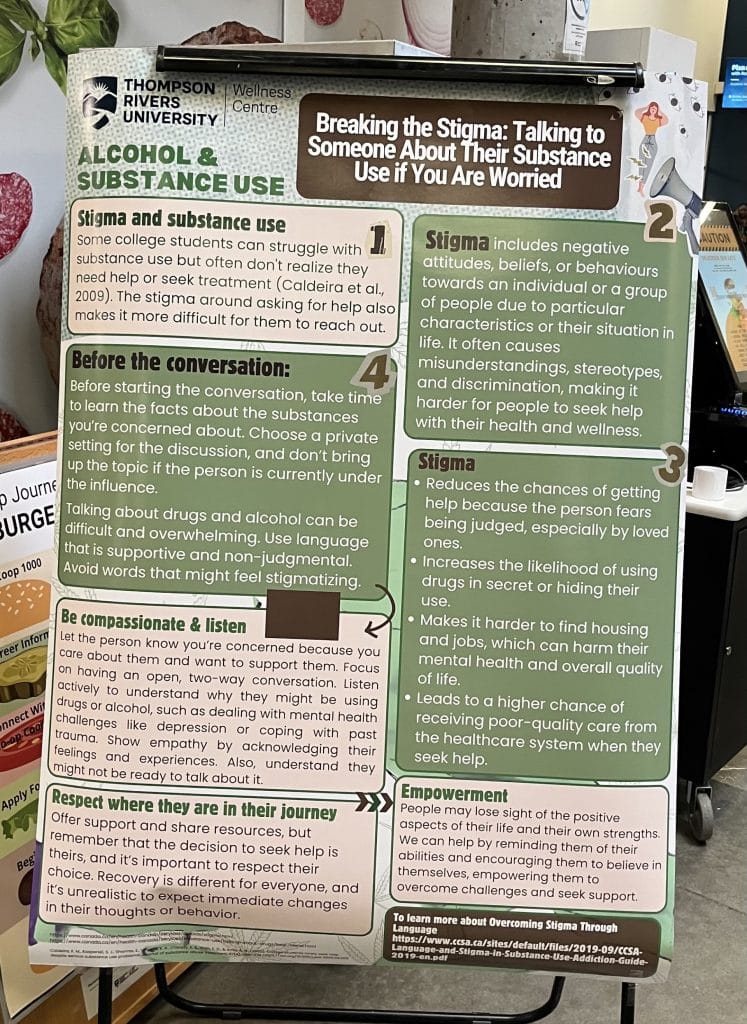
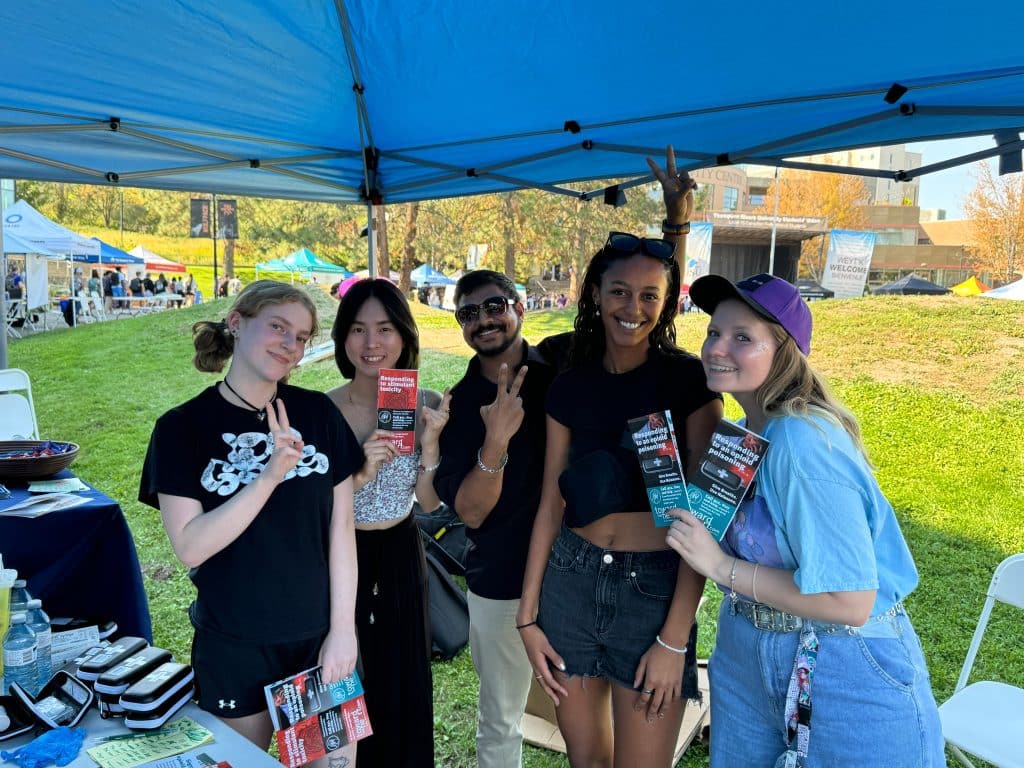
At the university’s Wellness Centre, the response is not built on fear, but on care. Rather than focusing only on prevention through abstinence, the university promotes harm reduction by educating students on how to use life-saving naloxone to reverse an overdose and open up community conversations through Mock Talk events, where they bring students together to talk about substances over mocktails.
“I absolutely do think it’s empowering,” George says. “It is a way for people to care for themselves … you may save someone’s life.”
Corsi explains the philosophy behind it: “My job is always how to reduce barriers for people to access this.”
The goal is to give students tools so they are not left alone in critical moments.
“We heal through connection,” George says. “Isolation on the other hand can deepen everything stress, shame and risky coping behaviors.”
Spaces like the Wellness Centre aim to offer more than just services, but also “a place of safety, of peace and connection,” Corsi says.
Stigma remains one of the biggest barriers preventing students from seeking support, Health Canada states.
For students like Pham, that sense of connection can be life changing.
“I was lucky enough to have a community that I can open up to,” she says. “And I think it is really important to know your limit and reach out for support. Sometimes, what students need most is not a solution but a space where they are not judged. A space where they don’t have to pretend that they are OK.”

The Wren is a community driven local news outlet. Your questions and ideas help guide what we dig into. Your feedback after we publish a story helps ensure we're always improving our reporting to better serve you
What do think about this story?
Author

Related Articles
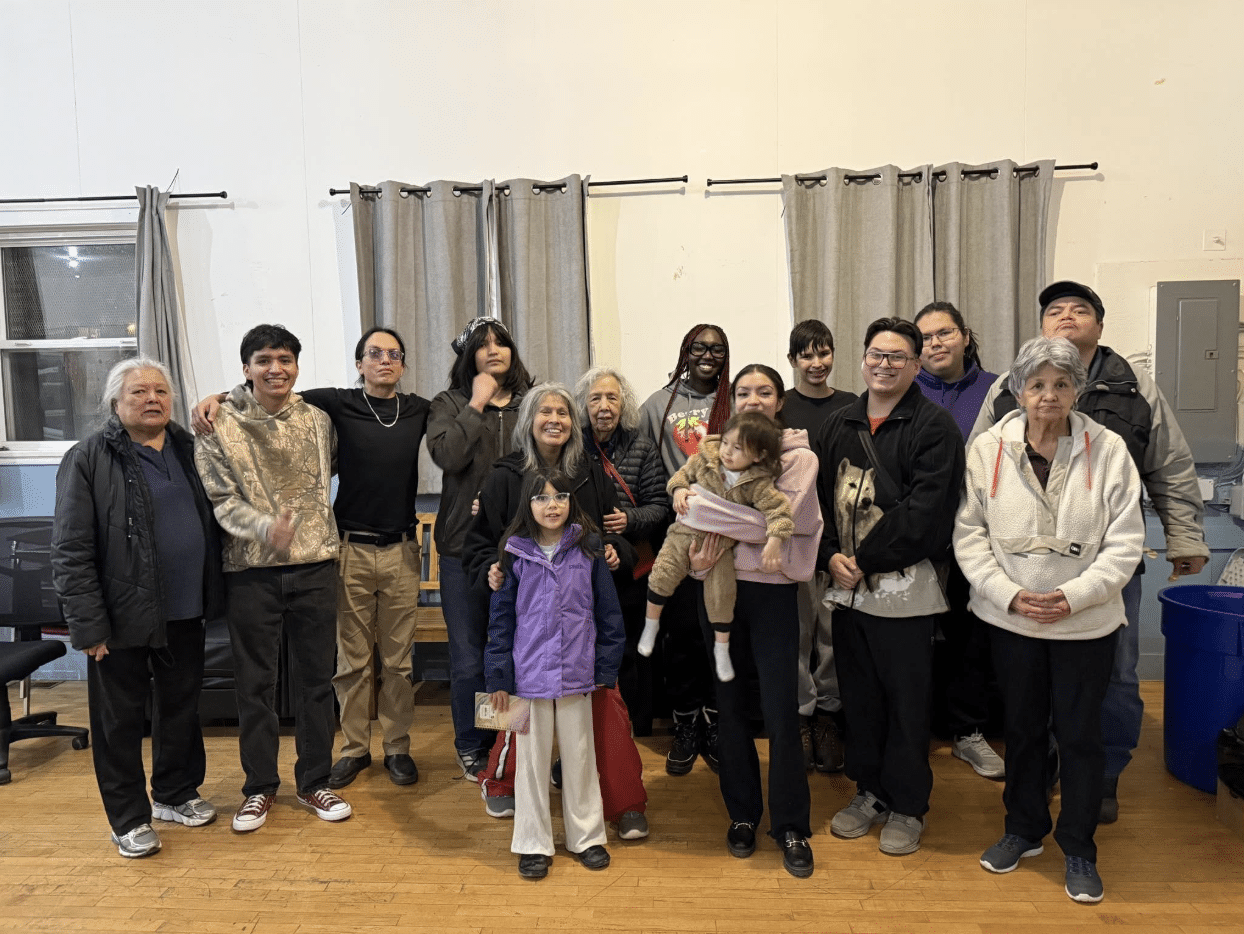
‘It is about courage’: More students take up Secwepemctsín as language revitalization efforts grow
‘Without any new interest or passion for Secwepemctsín, there is no revitalization,’ student says.
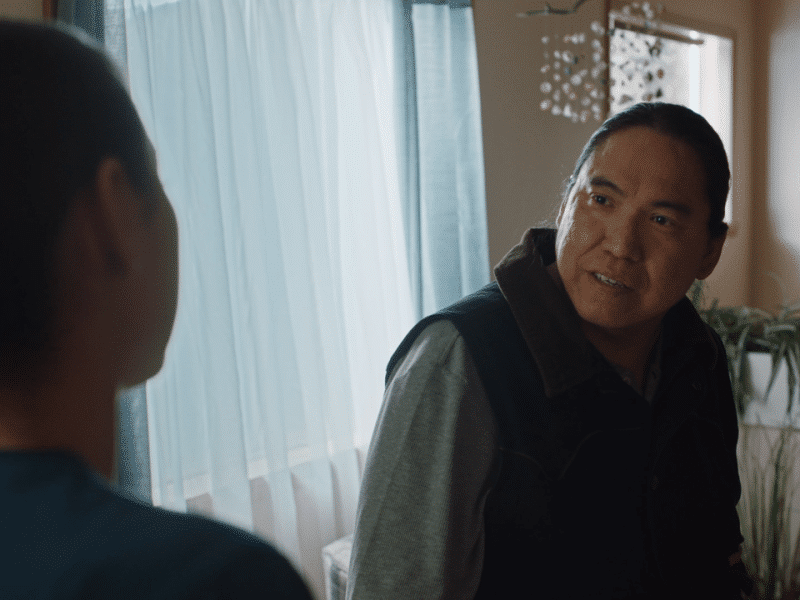
Secwépemc actor William Belleau brings Hollywood to Alkali Lake
Days before the Leo Awards, Secwépemc actor William Belleau reflects on a career that’s come full circle with his role in the independent Secwépemc film W7éyle (Moon’s Wife).

Meet Eric Van Stone, the archaeologist who stopped digging and started carving
Once trained to uncover the past, Chipped Stone Tools artisan Eric Van Stone now reshapes stone into functional blades.
