Western Canada Theatre (WCT) is celebrating 50 years of staging plays for the Kamloops (Tkʼemlúps).
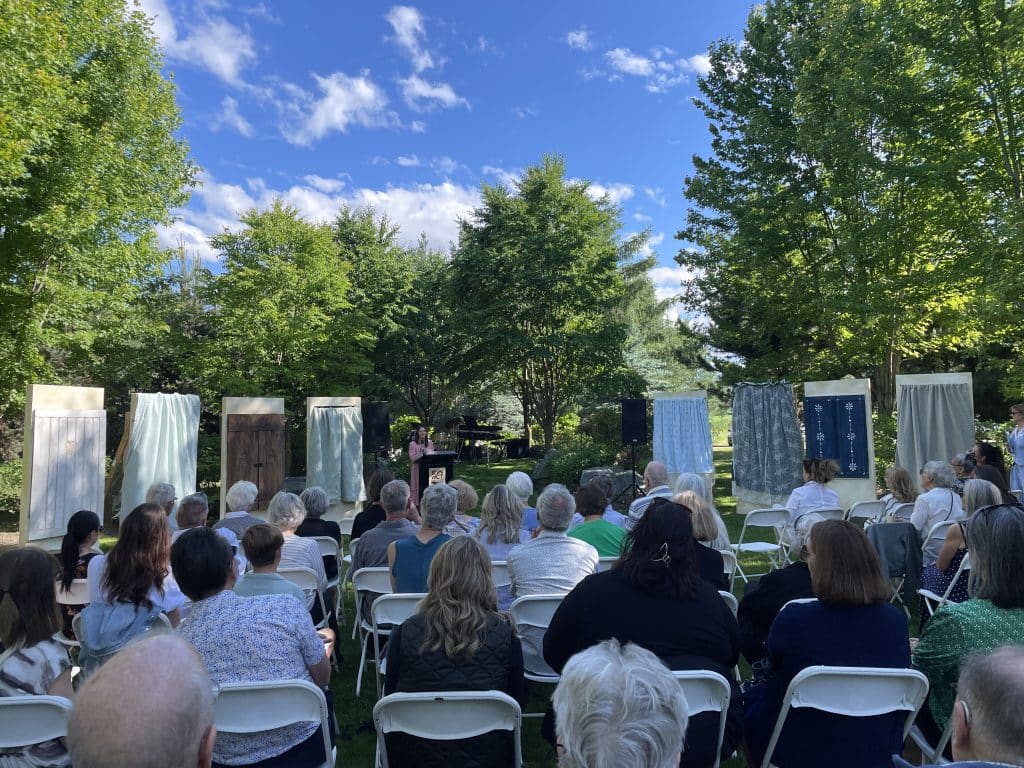
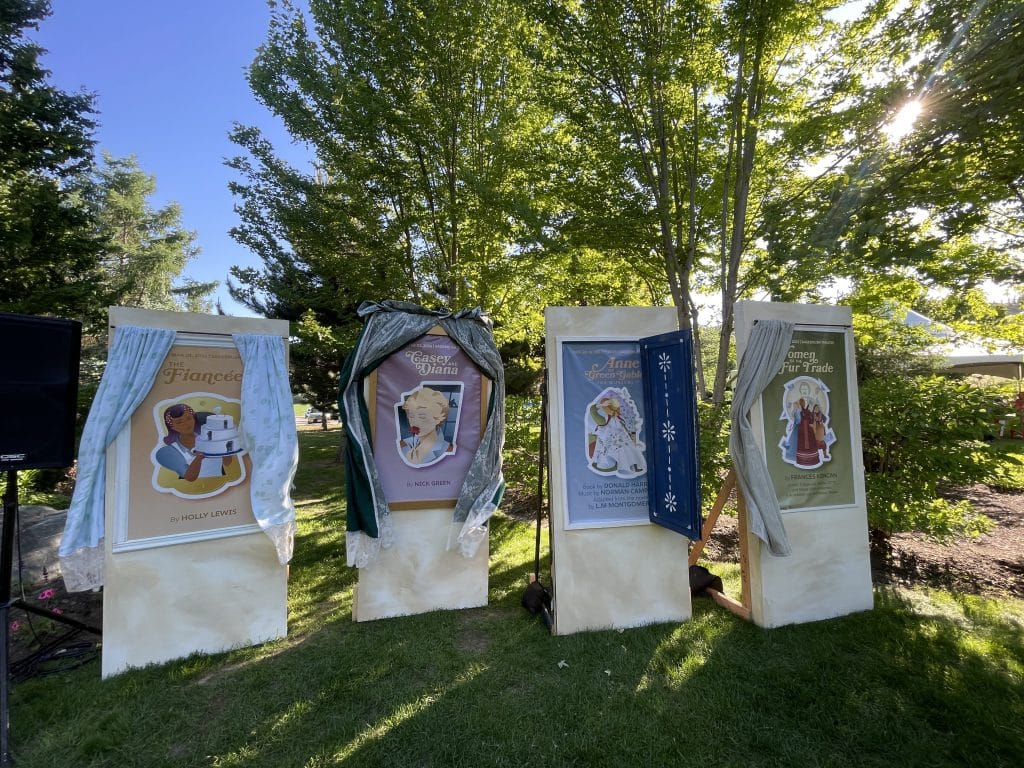
The theatre company unveiled its offerings for the upcoming 2025-2026 season — seven plays, all of which are written in Canada — at an event hosted at Privato Winery in May.
Matt Eger, WCT’s executive director, moved to Kamloops from Toronto last September.
The company is proud to have offered a place for world premieres of new works, and a growing number of Indigenous productions over the past five decades, Eger says.
“I think it’s amazing to be able to produce seven Canadian plays in one season,” says Eger, who has worked in production for more than a decade and even longer as a theatre artist.
“I think it’s a great example to set for the Canadian theatre community.”
Following the departure of WCT’s previous artistic director mid-season, Eger started partnering with other Canadian theatre companies to put the local 50th-anniversary season together, including in Alberta.
In late May, Kelli Fox took over as the company’s artistic director. Originally from B.C., Fox brings much experience in the industry, from acting to directing.
‘Pathway to Indigenous work being created and then spread’
This season will kick off with Women of the Fur Trade, by Anishinaabe and Slovene playwright Frances Koncan, a member of Couchiching First Nation who now teaches at UBC’s creative writing program.
Koncan’s play, which premiered in 2020, will be introduced to Kamloops from Oct. 9-19.
“It is a fantastic new piece of work that’s been making its way across the country for the last couple of years now and really belongs in Kamloops,” Fox says.
The play follows three women — one Métis, one Ojibwe and one European settler — during the era of the 19th-century Canadian fur trade.
It was produced in collaboration with National Arts Centre Indigenous Theatre, the Great Canadian Theatre Company and Native Earth Performing Arts.
“It would be really exciting to see if the show gets to go on tour the season after that,” Eger says.
“If we can start to build a pathway to Indigenous work being created and then spread around the country, I think that there’s no better place,” than Kamloops for Indigenous playwrights to stage their work.
All-Canadian plays — with a focus on Indigenous playwrights
“I think it’s crucial that we have Canadian work on the stage every year,” Fox says, adding that although it’s rare to see a company only stage works from Canada, “In the current climate, I think it’s a good call.”
The message to theatre audiences is, “Here are our writers and creators, and here are the reasons why they’re valuable to us — they are literally telling us our own stories,” Fox says.
Besides Women of the Fur Trade, another Indigenous playwright will be showcased this season — with a staging of WCT’s artistic associate Cheyenne Scott’s newest work, Wolf Cull, which will premiere from April 30-May 10, 2026.
Scott, whose ancestry is Tsawout (SȾÁUTW̱) First Nation and Norwegian, set her latest play on an invented Indigenous territory — but drew inspiration from the Tkʼemlúps area, where she was raised and learned to hunt deer with her father.
Wolf Cull — a collaboration with Longhouse Theatre and Urban Ink — is centred on five women who attempt to understand mysterious tracks they find on their hunting grounds.
“One of the most striking realities that kind of landed with me when I spent a little bit of time in Kamloops was how clear it is … in a really powerful way, whose land we’re on,” Fox says.
Fox was particularly inspired by the use of the Secwépemctsin language throughout the city, for instance on stop signs.
“It’s impossible to ignore,” Fox said. “Which means that a piece of that stage every year has to be given to those voices.”
WCT has staged numerous previous Indigenous-created plays and stories, such as Kevin Loring’s Little Red Warrior this year.
“I think that the Interior of B.C. has a very specific identity in Canada, as far as the Indigenous community,” Eger notes.
“Indigenous people are storytellers, and theatre is in their blood. It doesn’t make sense that Indigenous people aren’t just basically included in this art form.”
WCT hopes to offer a hub for Indigenous theatre creation, according to Eger.
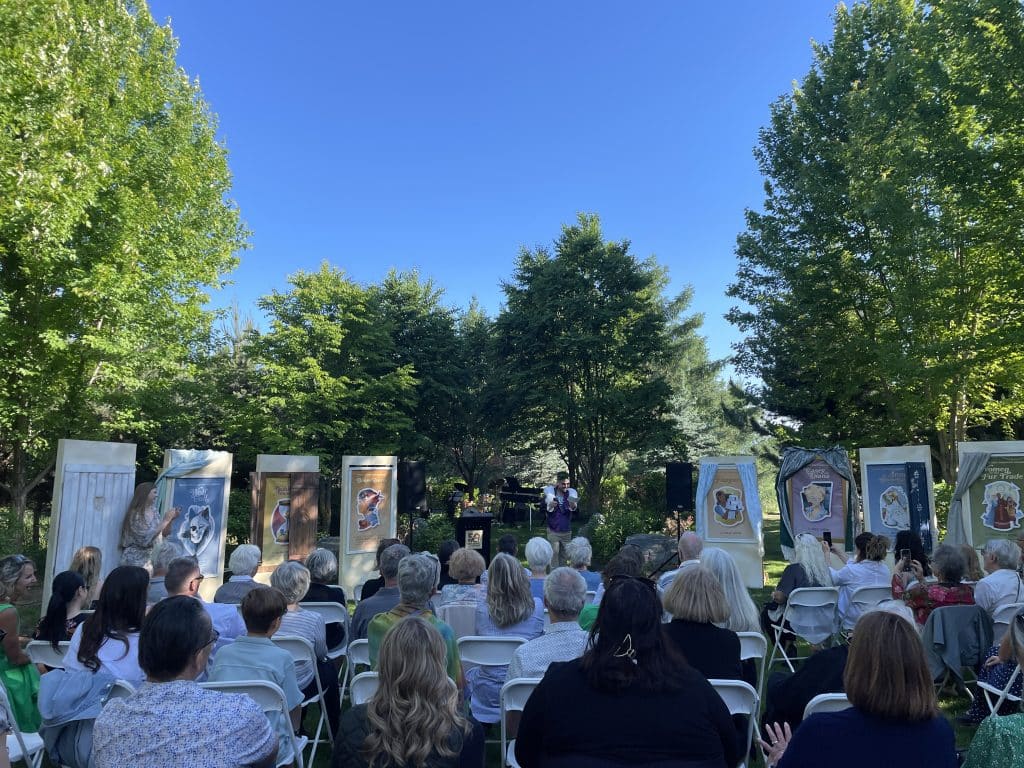
Five decades of local theatre
For WTC’s 50th anniversary, organizers want to invite new audiences from all over to Kamloops to see for themselves — and show support for the local theatre arts community.
“It’s an opportunity for Kamloops to speak to the rest of the country with its own voice,” Fox says.
The company hopes proudly celebrating five decades of local theatre with events throughout the year will empower and thank the many local artists “who’ve been keeping WCT afloat” for decades — “whose energy is what kind of keeps the embers warm under it.”
“I want to kind of blow on those embers a little bit and see if we can create a spark and see who comes out of Kamloops who is a great Canadian voice.”
WCT’s success has also been largely thanks to Kamloops’ dedicated and loyal theatre-loving community, Eger says.
“I think that Kamloops is a really special place for that reason,” he notes.
That’s especially true as the city moves closer to building a new arts centre, he says.
“I think that we’re in a place to harness the positive energy that’s being directed at the arts in town,and allow that to grow and thrive.”
“It’s important for the theatre to thrive for another 50 years in a community like this.”
The full lineup of plays for the upcoming 2025-2026 season is available on WCT’s website, where future events and performance dates will be announced.
So do we. That’s why we spend more time, more money and place more care into reporting each story. Your financial contributions, big and small, make these stories possible. Will you become a monthly supporter today?
If you've read this far, you value in-depth community news