
Secwépemc actor William Belleau brings Hollywood to Alkali Lake
Days before the Leo Awards, Secwépemc actor William Belleau reflects on a career that’s come full circle with his role in the independent Secwépemc film W7éyle (Moon’s Wife).
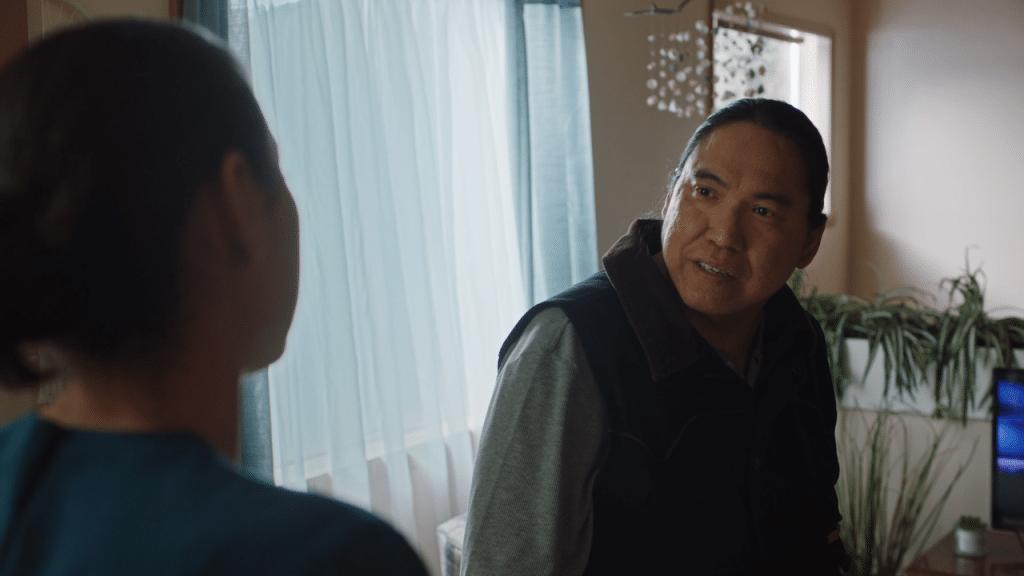
Mere days before Vancouver’s Leo Awards for the film and television industry in B.C., Secwépemc actor William Belleau was unpacking moving boxes back home in Alkali Lake.
The 44-year-old had recently returned to Esk’etemc First Nation, roughly 48 kilometres south of Williams Lake, when he realized one essential item hadn’t survived the move: the kitty litter.
His elderly neighbour watched him and teased, “So, you’re leaving Hollywood behind?”
Belleau smiled.
“No,” he said. “I’m bringing Hollywood to Alkali Lake.”
After studying theatre at the New York Conservatory for Dramatic Arts from 2006 to 2008, Belleau built a career with cameos in productions including The Twilight Saga: Eclipse, Frontier, The Last of Us and The Unforgivable.
“I remember when I didn’t know how I was going to break into the industry. I only had one credit and my mom said, ‘just build your body of work,’” Belleau said. “Now I think I’m almost 40 credits. When I was starting out, six credits felt out of reach.”
Out of left field, Belleau was cast in Martin Scorsese’s film Killers of the Flower Moon in April of 2021.
“I checked the stats on all the auditions I went for,” he said. “Apparently I didn’t get 86 per cent.”
However, of the 16 per cent he did get, he was working with Martin Scorsese, Robert De Niro, Leonardo DiCaprio, Sandra Bullock, Anthony Hopkins, as well as meeting Danny Glover and attending the Oscars, he said: “I don’t think that’s much of a failure.”
This year, Belleau’s journey reached another milestone when he earned a 2026 Leo Award nomination for Best Performance in a Short Drama for his role in W7éyle (Moon’s Wife), a short Indigenous science-fiction drama.
“You never know when your life is about to change, sitting around in a T-shirt and shorts,” Belleau said, laughing as he remembered learning the news and quipped he was doing chores around the house when his phone lit up with the announcement.

When Belleau heard the elevator pitch for W7éyle (Moon’s Wife), the decision to participate wasn’t driven by the paycheque.
Secwepémc director, writer and producer Amanda Wandler had reached out to him with an honest pitch: the production was operating on a shoestring budget in the Crazy 8s Film Festival contest. She hoped Belleau would consider reading the script in it.
“Because a traditional story was woven into the sci-fi elements of it, I wanted the story to be as representative of Secwepémc as possible,” W7éyle (Moon’s Wife) Wandler said by phone, adding the music was also performed by Secwepémc artist Jeremy Kneeshaw.
“I recognized [William] was part of the community and I also recognize he’s a great actor so I wanted him.”
Belleau reflected on advice another actor had once shared with him about looking for a job.
“One actor told me there are three things to look for when you’re deciding whether to take a job: money, connection and growth,” he said. “If you’ve got two out of the three, you’re doing pretty well.”
This opportunity didn’t have the financial incentive, but it definitely had the connection and the growth Belleau longed for.
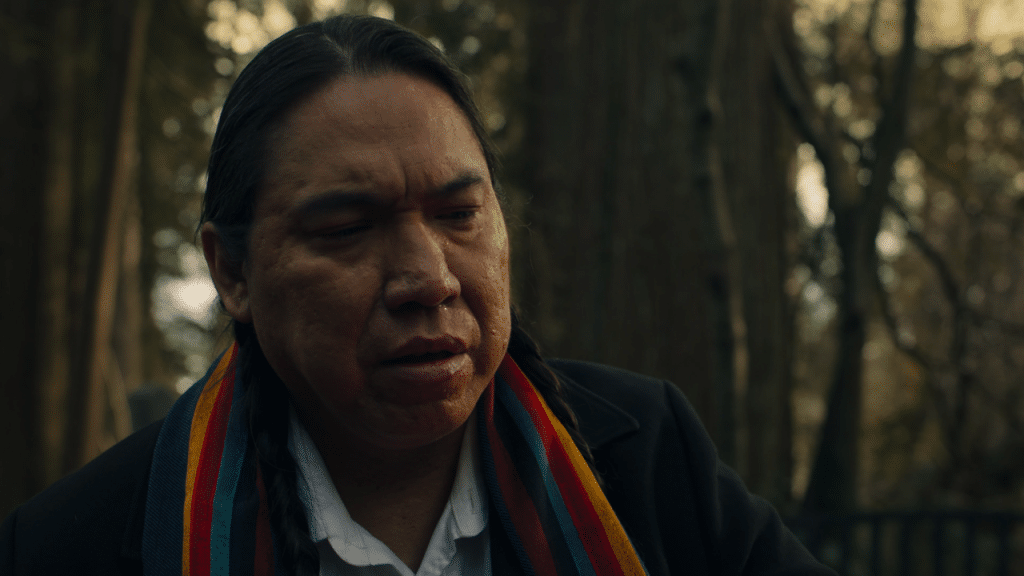
It was the first time a Secwépemc director had asked him to read, and during production, Belleau got the opportunity to pitch and perform the Journey Song, which is a traditional Secwepemctsín mourning song.
The production followed community protocols to include his performance of the Journey Song, including obtaining acceptance from the Esk’etemc First Nation Kukpi7 Fred Robbins for the production.
“We’re not perfect people,” Belleau said. “We’re just not, and I think the imperfection is what the camera loves.”
Ultimately, the nomination for best performance in a short drama at the Leo Awards 2026 did not yield a win this time around, Belleau believes the experience still marks a precious moment in time.
“This is my very first nomination,” Belleau said. “I’m extremely honoured to have my first nomination come from my home province.”
Keep an eye out for future screenings of W7éyle (Moon’s Wife) by following Wandler on Instagram.

Looking ahead: Beyond the stereotypes
Recognition is gratifying, Belleau said, but awards aren’t what motivate his long-term vision for acting.
Instead, he hopes to help broaden how Indigenous performers are seen on screen.
“Now, plainly put, I desire to work in roles that aren’t necessarily Native American or Native Canadian. On the casting breakdown, they’re called “open ethnicity,” Belleau shared, remembering a moment early in his career where a friend on set revealed he read against Peter Storemare for an “open ethnicity” part.
“I don’t mind losing out on roles when I’m up against guys like Peter Storemare.”
Still, he acknowledges the industry has made meaningful strides in Indigenous representation despite sometimes “hitting a wall” for roles that aren’t stereotypically Indigenous. Belleau said there is still room to challenge long-held assumptions about the kinds of characters Indigenous actors are expected to portray.
“I’ve been on sets where they’ve admitted, ‘We don’t know what we’re doing,’ and asked for my thoughts,” Belleau said about a sweat lodge scene on set in recent years.
“I’ve also been on the other end of the spectrum where they’re putting feathers in my hair, like I was a Ken doll.”
As he looks ahead, Belleau hopes to continue expanding the kinds of stories Indigenous actors get to tell — while also feeling empowered to subtly influence how those stories are told.
Throughout his career, he’s encountered situations where directors championed his casting, only to face hesitation elsewhere in the decision-making process.
“They’re following metrics,” he continued. “And there isn’t a metric for what I want to convey.”
Belleau’s answer, he said, is to create that evidence himself through independent projects that demonstrate Indigenous actors can portray characters whose profession — not their ethnicity — drive the story.
“It’s incumbent upon me to provide the data,” Belleau said. “To show that I can be the doctor in the room, or the lawyer pleading for a man on death row.”
Although barriers remain, Belleau said they haven’t made him bitter.
“They have a job to do, and I have a job to tell stories,” he said. “I need to take ownership of telling my stories and keep working on it.”
Rather than being seen exclusively for Indigenous characters, he hopes to be considered for roles where his heritage isn’t the defining characteristic — a doctor, a detective or another professional whose story simply happens to be played by an Indigenous actor.
“They’ll say, ‘We don’t see him as a detective,'” Belleau said. “The director wants to work with me, but that’s the wall I’m hitting right now.”
He added, “We’re funny. We’re intelligent. We’re complicated. We’re not just serious or mystical.”
The Wren is a community driven local news outlet. Your questions and ideas help guide what we dig into. Your feedback after we publish a story helps ensure we're always improving our reporting to better serve you
What do think about this story?
Author

Related Articles
MLA candidates for Kamloops share plans to address affordability ahead of B.C. election
Here’s how Kamloops’ MLA candidates answered the question: What will you do to help with affordability?

How will Kamloops MLA candidates support healthcare?
Here’s how Kamloops MLA hopefuls will address the shortage of primary healthcare providers in small-urban and rural areas.
Here’s how MLA candidates will improve safety for all in Kamloops
Here’s how candidates answered the question: How would you create safety for everyone in Kamloops?
