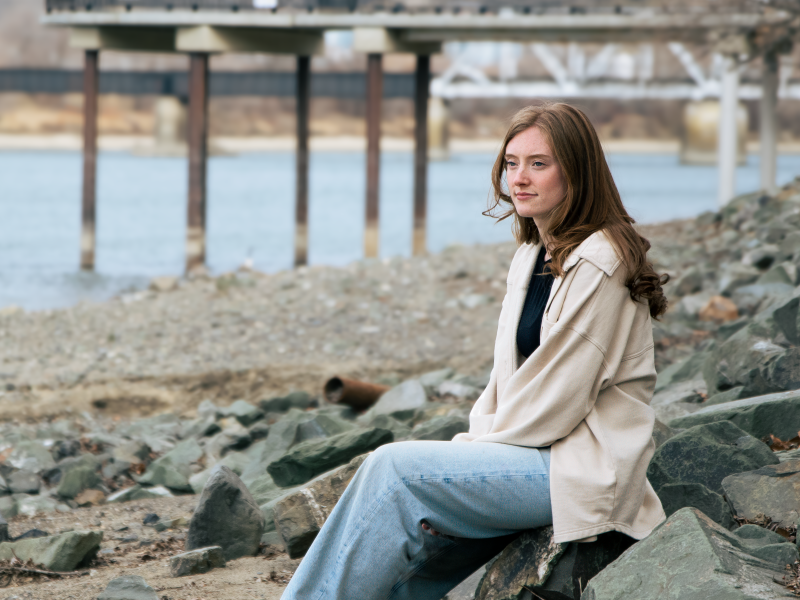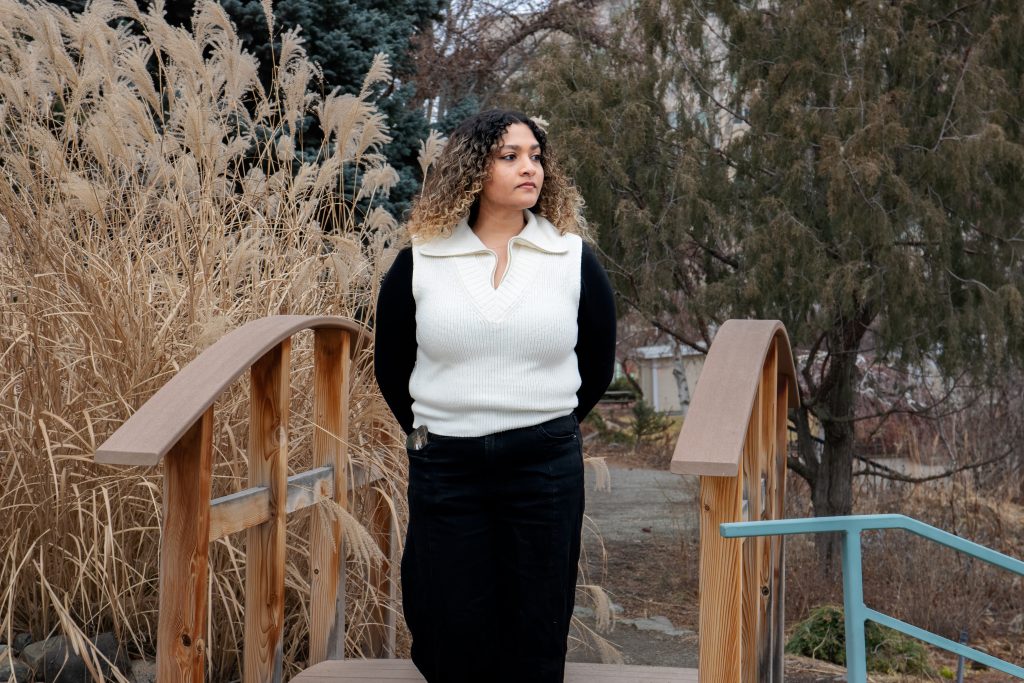
Shekainah is a student at Thompson Rivers University in Kamloops, Canada. Originally from Sri Lanka, she moved to Kamloops in April 2022 to pursue a bachelor’s degree in communication and digital journalism. She grew up on the coast in Colombo, the capital city of her home country. “There are many lakes and rivers back home. A lot of houses are built on marshy lakes because of how close it is to the sea,” Shekainah says. “It is very common for water levels to rise and flood the surrounding villages and cities.” But nothing could prepare her and her family for the rainfall that hit the country in May 2016.
Our home was my mom’s childhood home. When floods used to happen when I was little, the water would always be inside our house. My family rebuilt this home in a way that the bottom floor would be pushed back on a slope. So that if the water level did rise, it wouldn’t get to the house. Flooding was just a normal thing because there was always drainage issues, blocking, things like that.
It was a hot season that year, and it was dry, very dry. Everyone was mostly worried about the heat. We had a drought going on. Water levels were running low. There were power cuts because our electricity is hydro-powered. Then suddenly, in the middle of May, it started raining. Even though there were forecasts of heavy rain, there was no expectation of flooding. Colombo itself has two big rivers that tend to overflow quite often and usually, after a couple of hours, it just goes down.
It was very gloomy constantly. Everything just seemed gray in comparison to the sunshine that we usually had. It felt like indoor weather. The smell of rain was strong and it was a little colder than usual. Everything was wet and muddy. Your school shoes would easily get wet. It was difficult for vehicles to be on the road because the water would be covering the tires. You really don’t want your vehicle on the road because the water was going to go into your exhaust and mess up your vehicle.
When you live in a country where the only change in weather is the rainy seasons, you can tell when one particular season might be more harsh than the other. Mainly, by the way the rain fell, and the serious thunderstorms. When you looked at these canals, you could see the water levels rising.
On the news, I started to see houses underwater. Some of the suburban areas had one story houses and a lot were halfway underwater. People had to evacuate their homes. It was constant reports of houses being flooded, people being displaced and landslides caused by the rain. A lot of roads were closed because trees would fall and leave debris.
I recall an instance, where on our way to school, one really big tree had fallen right in front of our school gate and blocked the entire road. The parents and the teachers had a conference, and realized that it was not safe for students to be traveling to and from school. The school itself would not have been able to hold students in case anything happened. A message was sent out to the parents informing them to keep kids at home for the next couple of days.
The water levels didn’t rise in our street as much as other places. We were continuously checking up on any friends and family that lived in any of the severely affected areas. We ended up having a relative move in with us for a while because of how high the water levels were. I could see how difficult that was for her because her whole life is in that house, and she had no access to it. Seeing her and how that could have happened to anyone, it made me think about people who probably didn’t have relatives to go stay with, people who got displaced. These floods lasted quite a while.
Because of the severity of the disaster, the government did enlist the armed forces for help in rescuing people, getting them to safety, and also giving out supplies. Once school resumed, helping out the survivors became a school project. We had a box in every class, and each student was expected to donate something. Then we’d wrap it up and we’d send it to those affected through the armed forces or through certain channels.
After the water levels decreased, my relative was able to go back home. A lot of stuff had been ruined by the water. She was eventually able to get the house cleaned up and replace a lot of the stuff. But obviously, it did take a toll on her. In the end I think she was just happy that her house was still intact.
I didn’t have much of an understanding back then on what climate change was. However when I look back on it now, I realize how bad it can get, and that concerns me. Because, considering how frequent these floods are, if it happened back then, it can definitely happen again. Climate change concerns me a little more now. You don’t expect it to happen to your own country but there is a possibility of that happening to my own country as well.
This story is a part of a series created by Thompson Rivers University students and led by instructor Jennifer Chrumka as part of the Climate Disaster Project.
So do we. That’s why we spend more time, more money and place more care into reporting each story. Your financial contributions, big and small, make these stories possible. Will you become a monthly supporter today?
If you've read this far, you value in-depth community news