Four years after the City of Kamloops rolled out its organic waste collection program, the once-controversial initiative is starting to feel like part of everyday life.
Only about 22 per cent of household garbage is actually garbage, according to the City of Kamloops. The rest is either recyclable or compostable. In B.C., it is estimated that 40 per cent of material sent to the landfill is organic and can be diverted through composting programs.
Still, Kamloops’ composting program didn’t launch without pushback. In its early days, many residents resisted the idea, questioning the collection schedule, the need for an additional bin and the “ick” factor in handling organic waste.
“At first a lot of people were grumbling,” Marcia Dick, the city’s solid waste reduction coordinator tells The Wren. “But we’ve seen people that initially refused receiving an organics cart actually change their mind and use it.”
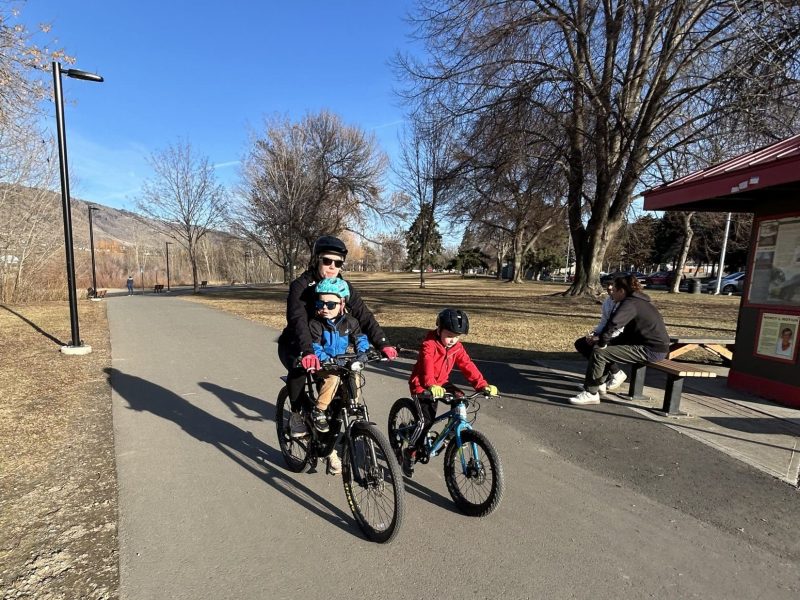
For Dick, composting is more than a municipal policy, it’s personal. Long before she worked in waste reduction in any official roles, she peddled through the city collecting compost by bicycle for small businesses.
“I’ve always had a passion for waste,” Dick says. “I think that waste, to me it’s just this unnecessary thing. Everything can be recycled or composted.”
Dick isn’t alone in her drive to reduce.
Shelley McGuinness, co-president of the Thompson Shuswap Master Gardeners has been composting for a long time.
“When we moved here [in 2020], I was surprised that there was no organics composting,” McGuinness says.
This changed in August 2022. Following a year-long pilot program which saw compost services in select neighbourhoods, Kamloops City Council authorized a city-wide curbside residential organic waste collection program.
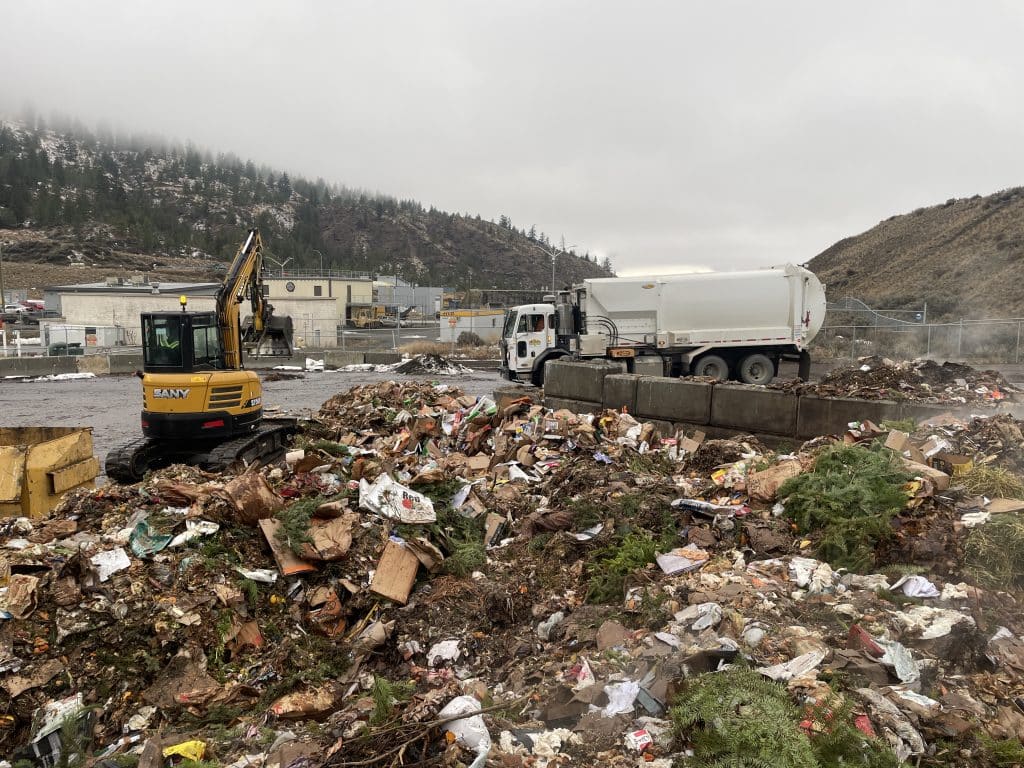
With this policy, all materials would be dumped at the Bunker Road Recycling Depot and Yard Waste Site before being taken to a composting facility in Princeton.
During this time, the city analyzed the impacts of the program and its possible expansions through community surveys and sorting events.
“We looked at how much organic material was going into the organics cart, how much was going into the garbage and how that changed over time,” Dick says.
Households in the pilot areas set out an average of nine kilograms of garbage per week, roughly half the nearly 18 kilograms set out by residents without access to composting. Data from both summer and winter showed consistent reductions in weekly garbage collection per household following the program’s introduction.
As a result the organic waste collection program was officially adopted to households only on curbside collection routes.
“When we rolled out the program, the people that were in our control group that received organics collection had higher participation than our pilot program participants,” Dick says.
Based on feedback, the city started collecting organics every week year-round in 2024.
What makes composting important?
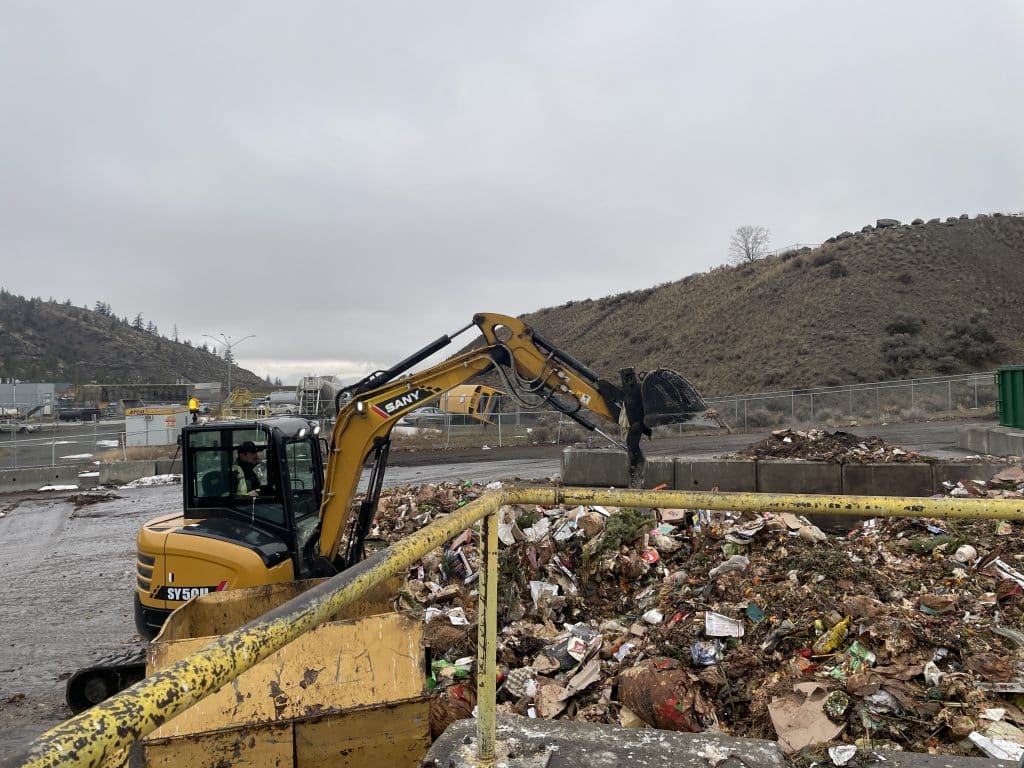
Composting is vital for reducing greenhouse gases, particularly methane gas which Dick explains is 26 times more potent than carbon dioxide.
The waste generated by organic material sitting in landfills accounts for eight to 10 per cent of global greenhouse gas emissions according to the UN Environment Programme’s 2021 food waste index report.
When this waste is diverted to compost facilities where processes allow in oxygen, it creates carbon dioxide instead of methane, which is less damaging to the environment, McGuiness explains.
The city works with Grasslands Organics to process the material closer to Kamloops.
As a more natural alternative to landfills, composting replicates a system that already exists – the decomposition cycle, which provides nutrients back into the land. This can help reduce the need for chemical fertilizers, improve water retention and boost soil fertility.
“It’s really great to create your own compost to do that,” McGuiness says.
Providing ease and autonomy, city-wide composting offers an accessible way to participate in improving Kamloops carbon footprint and livability factors.
“It’s very satisfying to see something break down,” McGuiness says. “At the end of whatever your term is…it’s soil. It’s lovely. It’s beautiful stuff.”
Additionally, composting extends the life of the city’s landfill.
“It’s really hard to build new landfills, I think we added 60 years to the landfill from this process,” Dick says.
What are the main issues of composting?
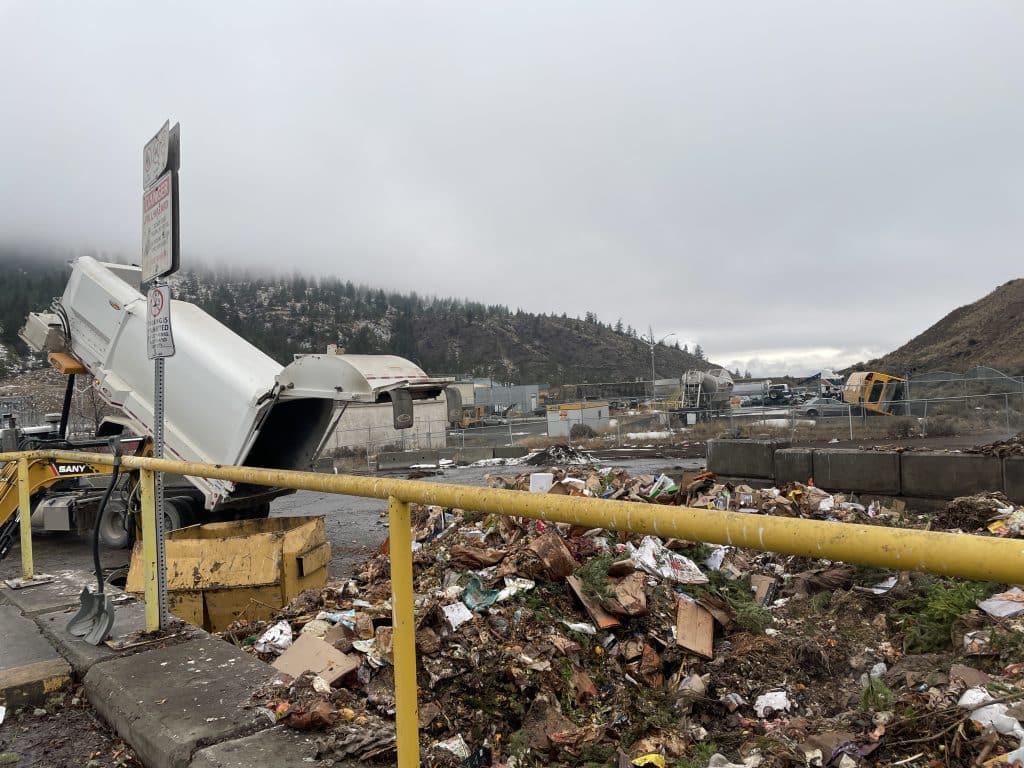
Contamination is among the main issues with organic waste collection in Kamloops, Dick says.
Putting plastics, recyclables or other non-organic material into compost bins complicates the process by reducing the quality of the finished compost.
In some cases the city might leave an OOPS! Tag if they find any unacceptable materials in the organic cart.
The city has a guide to help folks understand what to put in their bins.
“[Composting] reduces the amount of garbage you have to put out,” McGuines says. “Yes, there are additional steps, for sure, but you’re helping. We’re helping the environment.”
What is the future of composting in Kamloops?
In 2025, Dick and her team went to council with a plan to expand the program to multi-family homes like apartment buildings.
This program was approved by council and it contributes towards the goals stated in the Community Climate Action Plan.
“We’re just kind of working on that right now,” Dick says.
More information about the residential organics program is available at the city’s website.
The Wren is a community driven local news outlet. Your questions and ideas help guide what we dig into. Your feedback after we publish a story helps ensure we're always improving our reporting to better serve you
What do think about this story?