
Echoes of the Homesick Heart seeks to answer the question: ‘What do we do to heal our communities?’
Laura Michel’s play Echoes of the Homesick Heart aims to support language revitalization with learning tools and a bursary.
Editor’s note: As a member of Discourse Community Publishing, The Wren uses quotation marks around the word “school” because the Truth and Reconciliation Commission found residential “schools” were “an education system in name only for much of its existence.”
How is a language reclaimed? And what comes after? These are the main questions at the centre of Laura Michel’s Echoes of the Homesick Heart.
What began as a research project funded through the Social Sciences and Humanities Research Council through the Community University Research Alliance (CURA), Echoes of the Homesick Heart is a verbatim theatre project, a type of documentary theatre created from words of real people.
Based on over 40 in-person interviews across the Secwépemc Nation, the story focuses on the connectedness, or non-connectedness, to the Secwépemc language, and individual thoughts and feelings about traditional language learning.
“I am a playwright in that sense, but I was also a researcher that crafted these words into this play,” Michel tells The Wren.
As a member of the Adams Lake Band and granddaughter of a residential “school” survivor, Michel has an intimate connection to what it means to revitalize language.
“My own family is deeply involved in language revitalization efforts, and I had witnessed what was being done currently for those reclamation and revitalization efforts,” she explains. “So that was the inspiration for the show.”
While diving into research, Michel found herself deep in examples of colonization and the impacts of residential “schools.”
“At the time, I could only find that dark portion of everything,” she recalls.
Lacking anything contemporary that exemplified language revitalization, Michel decided to create her own.
“There are some beautiful and devastating pieces, theatrical pieces that address all of the trauma that has happened to the Indigenous community,” Michel says. “The whole focus of this play is what comes next? What do we do to heal our communities? What do we do to reclaim our language? What efforts are being made in that area?”
Supporting the next generation of language learners
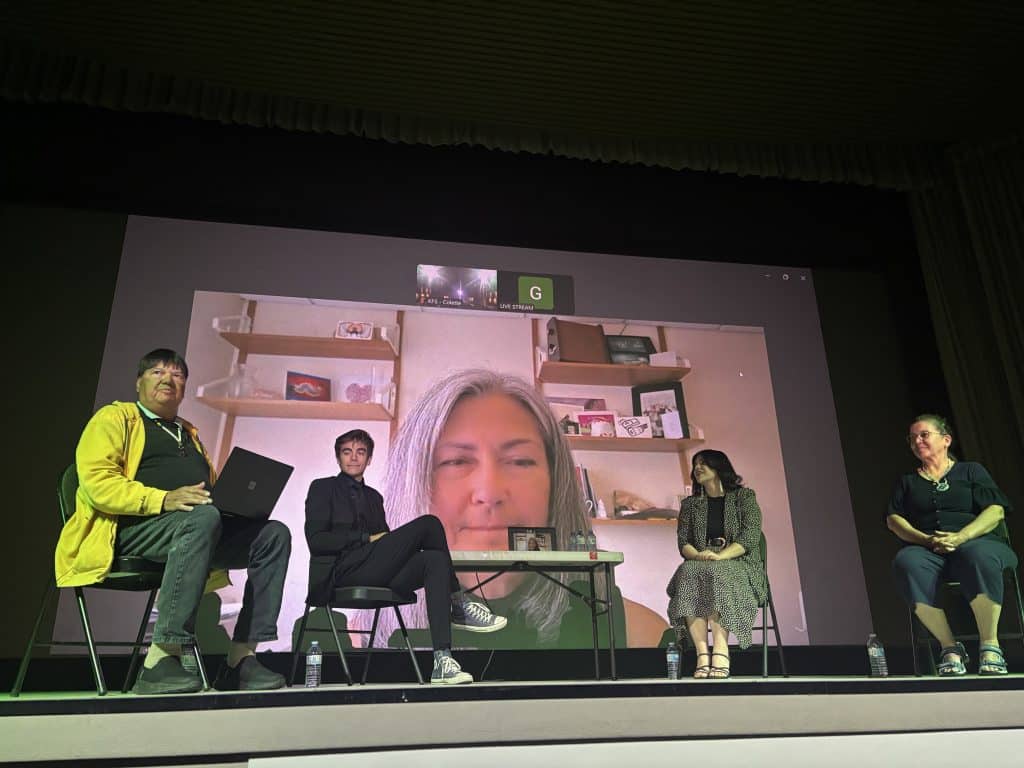
Echoes of the Homesick Heart first screened in 2022 in collaboration with Western Canada Theatre (WCT) at the Paramount Theatre.
The play was recorded and released at a premiere in June with a discussion panel about the importance of language revitalization. The release also announced the Echoes of the Homesick Heart Bursary, designed to give back to the community that made the project a reality.
“About 70 per cent of the dialogue in the play is directly from those interviews,” Michel explains. “In that thread of responsible, community-based research, [I wanted] to make sure that there was that reciprocity with the community.”
To achieve that goal, Michel set aside a large percentage of any royalties to go toward the bursary benefiting Secwépemc language post-secondary students.
“We can actually announce now that WCT has stepped up to match my contribution to that bursary,” she adds.
Supporting students in learning the Secwépemc language is key in answering that question of “what comes next.”
With culture and community wrapped up in language, Lori Marchand, who was involved in the project since its inception, tells The Wren revitalization efforts are key to reconciliation.
“With the loss of language we lose our history, our laws and our knowledge, because all of those are contained in the word stories that we tell,” Marchand says. “Since time immemorial, teachings and knowledge have been handed down from generation to generation.”
Marchand is a member of the Syilx First Nation, and she served as the executive director at Western Canada Theatre for 19 seasons.
She supported the project in the development process, along with having an involvement in readings of the play. Supporting theatre and storytelling is oftentimes supporting language revitalization, Marchand says.
“What we hope is the end goal of the reconciliation process [is] that recognition and valuing of Indigenous knowledge and Indigenous cultures, Indigenous peoples will lead to a better society all around, and it’s an incremental piece of the ongoing work.”
Also personally connected with the effects of the residential “school” system, Marchand, whose father Leonard Marchand was at Kamloops Indian Residential School at the same time as Michel’s grandfather, knows the impact of language loss.
“My connection with her grandparents, Joe and Annie, was something that had been in my life really, for its entirety,” she explains. “Knowing the work that they were doing with language and language retention was absolutely critical and really is the background to this research and the story.”
Creating a teaching tool for language revitalization
Teaching tools like Echoes of the Homesick Heart are needed not only in B.C. but at a national level, Marchand says.
“Another great outcome of the truth and reconciliation process was a requirement of the inclusion [and] integration of Indigenous history and knowledge experiences into school curriculums across the country,” she says. “My experience has been that the school districts are really lacking material to inform that curriculum.”
While there are no current plans for future showings of Echoes of the Homesick Heart, the video of the play is available for other language learners and folks invested in language revitalization. It also includes a study guide.
Those interested in these resources can contact Michel at lmichel@wctlive.ca.
The bursary remains open to students pursuing post-secondary education in Secwépemc language. Michel is finalizing the documents for the application, which will be uploaded to the WCT website. Applications will be accepted as soon as it is available, with the award going out in January 2026.
Marchand hopes the film itself will continue to have an impact, in both supporting students and educating audiences.
“The people who saw it, who spoke to me, particularly the community members were really moved by the work. They were really, really touched by the story,” Marchand says. “It’s certainly a piece that I still have big hopes will have a life beyond the premiere.”
The Wren is a community driven local news outlet. Your questions and ideas help guide what we dig into. Your feedback after we publish a story helps ensure we're always improving our reporting to better serve you
What do think about this story?
Author

Related Articles
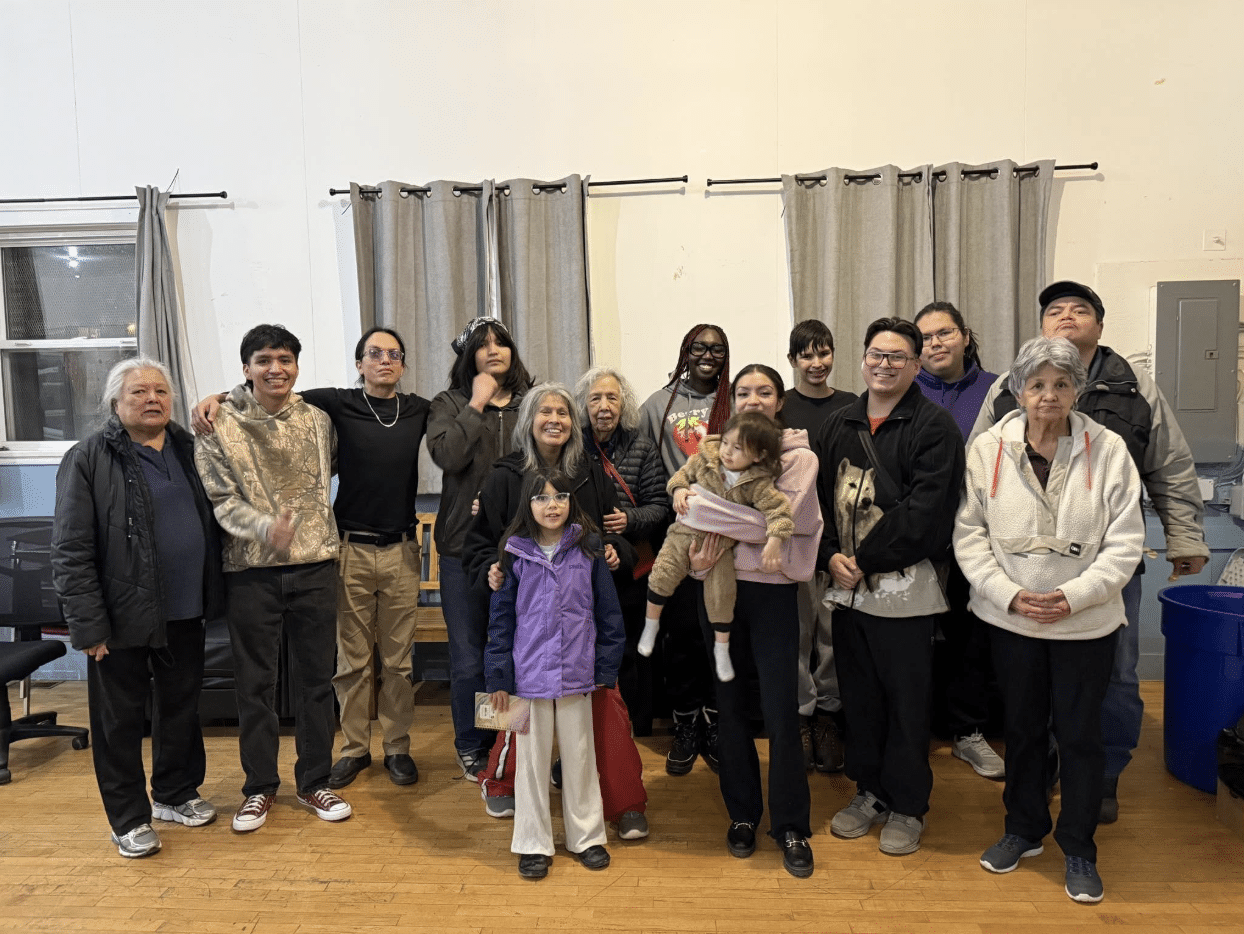
‘It is about courage’: More students take up Secwepemctsín as language revitalization efforts grow
‘Without any new interest or passion for Secwepemctsín, there is no revitalization,’ student says.
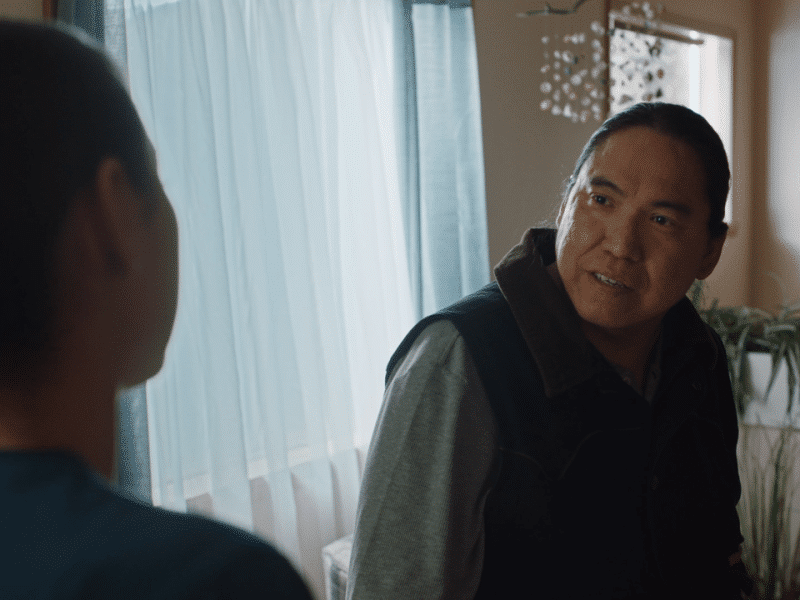
Secwépemc actor William Belleau brings Hollywood to Alkali Lake
Days before the Leo Awards, Secwépemc actor William Belleau reflects on a career that’s come full circle with his role in the independent Secwépemc film W7éyle (Moon’s Wife).

Meet Eric Van Stone, the archaeologist who stopped digging and started carving
Once trained to uncover the past, Chipped Stone Tools artisan Eric Van Stone now reshapes stone into functional blades.
