
‘I’ve just done what needed to be done:’ New documentary features women on the frontlines of climate disasters
Screening of Emergence: Women in the Storm by award-winning filmmakers Nova Ami and Velcrow Ripper brought local experts, researchers and frontline workers together for a community conversation.
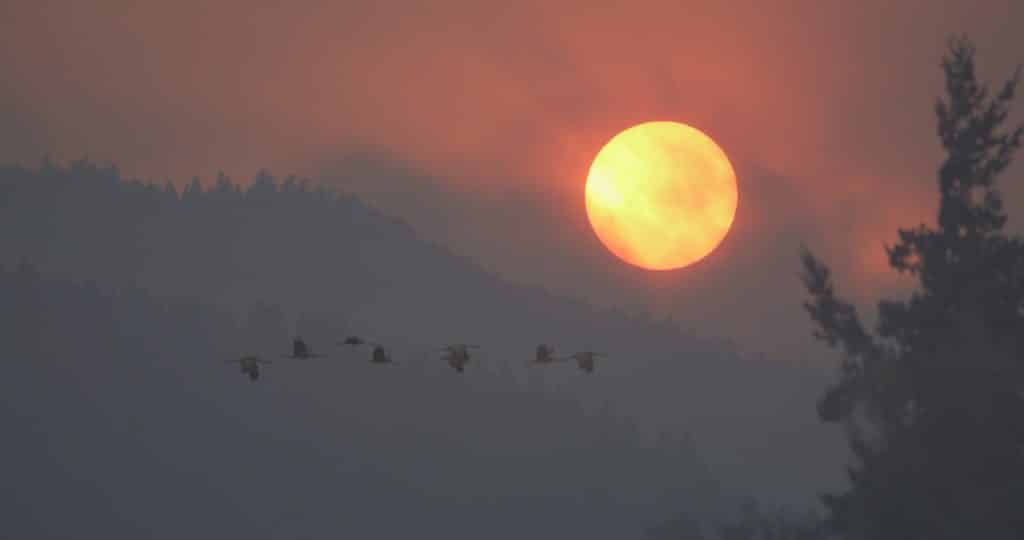
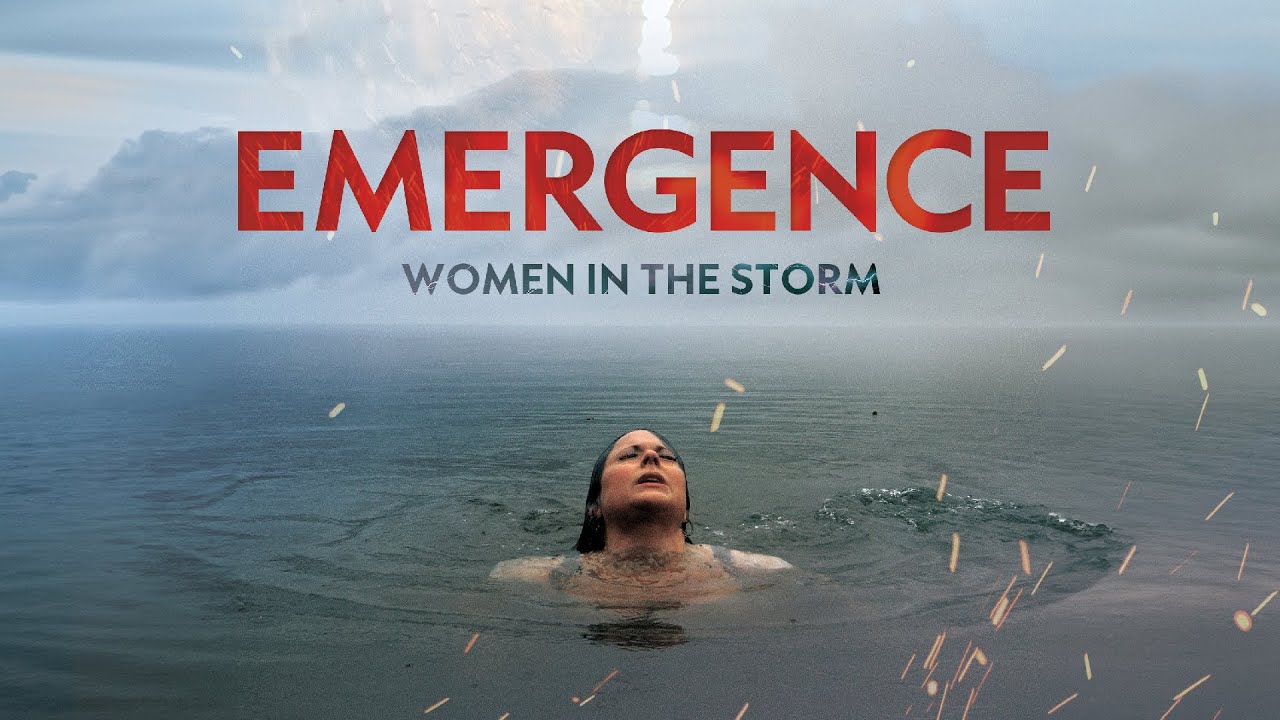
An in-depth documentary that takes a look at the “wisdom of women” frontline responders, community leaders and survivors of climate change disasters in British Columbia and the Northwest Territories hopes to spark conversations about resilience and solutions.
The new documentary entitled Emergence: Women in the Storm from award-winning directors Nova Ami and Velcrow Ripper was showcased for the community by the Kamloops Film Society and Thompson River University’s Hot Topic Cultural Mapping Research Group at the Paramount Theatre July 4.
“We hope that it inspire(s) people to engage with emergency planning in a little bit more of a critical way,” Hannah O’Neil, Thompson Rivers University (TRU) Wildfire Cultural Mapping Group research assistant told The Wren by phone, adding it’s critical for the community to start thinking about mitigation efforts for natural disasters as the climate crisis worsens in the region.
“Things like fires and floods, unfortunately, aren’t going away, and they’re only getting worse,” she explained. “We hope this [screening and panel discussion] can spur community conversation on how we can build community resilience here in Kamloops.”
The film was produced with participation from the Canada Media Fund, Creative BC along with support via tax credits from the province and Canada.
Directors Ami and Ripper took to the stage for questions and answers from viewers after the screening, moderated by longtime TRU professor Will Garrett-Petts.
Joining the panel was artistic director of Same Sky Collective Society Lana Fine, Dr. Cheryl Gladu, Dr. Alana Hoare, director of TRU Wildfire Dinyar Minocher and film subjects Sheri Lysons, former fire chief of the Adams Lake Indian Band, and poet Meghan Fandrich.
“As one of the people working on the research side of this project, it really reflects our shared interests in building community resilience,” said O’Neil, who is helping with research to identify what motivates people to engage with FireSmart program principles. “We’re super excited to be working with them and the directors.”
While the film screening has passed, people can view the film at future screenings via https://www.transparentfilm.media/emergence.
“Because it’s not just about the physical aspects of surviving a disaster, it’s also (about) the mental and emotional aspects, and how they moved through them in different ways.”
The filmmaker’s vision
More than five years ago, the idea to produce a documentary about climate change began to take shape.
Directors Ami and Ripper worked together on the award-winning film Incandescence, which told the story and aftermath of the White Rock Lake Fire of 2021 and the McDougall Creek Fire of 2023.
They began discussing the need for a climate change film that focused on mutual aid, recovery and the impact on women coping with the realities of natural disasters.
The duo’s primary goal was to explore how first responders navigate the climate crisis but as development moved forward, it became clear that there was little-to-no representation of women in climate disasters.
This gap ultimately became the focus of Emergence: Women in the Storm.
“Women are disproportionately impacted by climate disasters yet they are not really represented or are excluded from shaping policies, strategies and programs to address disaster resilience,” Ami explained about the discovery process.
“So it really was an inspiration for us to really seek out the wisdom of women who have [been] through these climate disasters and [explore] how they moved through them in different ways.”
She added the original concept included focusing on the impact of climate disasters during the devastating 2021 that took place in B.C., resulting in approximately 1,600 fires burning nearly 8,700 square kilometres of land.
According to the Office of the Auditor General in B.C. ‘s examiner report this year, 90 per cent of the Village of Lytton was lost due to wildfire on June 30 that year.
“We realized we didn’t have to go anywhere. Everything was coming to us in terms of the wildfires, atmospheric rivers and flooding, extreme heat, so we made it a very B.C. focus, as well as Northwest Territories focus stories,” Ami said.
The journey of capturing the stories of communities who were willing to participate in the documentary became all-consuming for the directors.
“I can’t count the hours… it’s just suddenly your life till you carry it with you for the rest of your life,” Ami told The Wren by phone.
A voice from the front lines
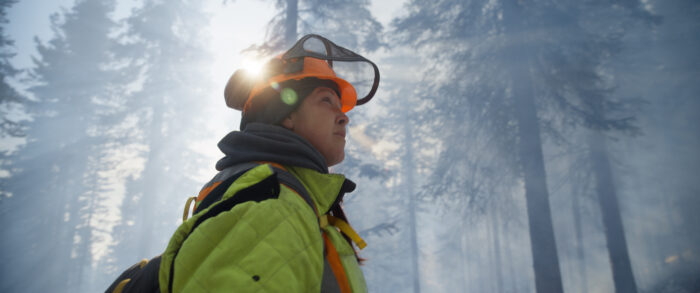
When documentary filmmakers began looking for women whose lives illustrated the realities of climate change, they found Sheri Lysons — a former volunteer fire chief at the Adams Lake Indian Band whose decades of emergency response have been shaped as much by community relationships as by wildfire.
Over roughly 12 years with the band’s volunteer fire department, Lysons spent 10 years as deputy fire chief before serving two years as chief, she said.
During that time, she helped grow the department from four firefighters to 14, prioritizing structural firefighting training while building a team rooted in community.
Those experiences took on new meaning during the Dorian Point wildfire, after Lysons left the fire department of the north Shuswap in 2021.
Lysons was out of town working when evacuation notices began. As the fire intensified, she worried about family members and friends, while navigating challenging evacuation routes and helping guide people to safety along back roads in the northeast Shuswap.
She said evacuations unfold differently in Indigenous communities because relationships extend far beyond neighbours.
“It’s not just neighbours,” Lysons said with pause. “It’s families.”
Despite years spent leading emergency response efforts, Lysons said she was surprised when directors Ami and Ripper approached her about appearing in their documentary on climate change.
“I’m just a mom,” she said. “I’m a mom that raised five kids. I’ve got 10 incredible grandchildren. I’ve just done what needed to be done.”
Her experiences raising children, building a volunteer fire department, mentoring Indigenous youth through the Preparing Our Home program and advocating for Indigenous-led emergency planning reflect many of the documentary’s central themes.
The film explores the often-overlooked leadership of women who recognize risks others miss, organize families and communities and quietly carry people through emergencies without seeking recognition.
Ripper said the most impactful community engagement occurred when individual contributions brought people together, pointing to the Fraser Valley food hub featured in the documentary as one of the strongest examples of community resilience. What began as neighbours helping one another during a crisis evolved into a lasting support network that continues to strengthen community connections.
The documentary illustrates that everyone has something to contribute during an emergency, regardless of their abilities or circumstances, he added.
One woman featured in the Fraser Valley community was unable to help with physically demanding work such as sandbagging, so she instead organized a food hub for displaced residents.
Likewise, elders played an important role by caring for children, sharing stories and providing comfort during uncertain times.
“We need more and more of that mutual aid where we’re looking to support each other,” Ripper said. “In a disaster, everyone is needed.”
He believes the stories are universal, and that in 10 years, the documentary will still be relevant as the climate crisis continues to worsen.
“I hope we’re going to be better at dealing with and mitigating it,” Ripper added about his expectations on viewership.
Ami explained that it’s essential for filmmakers to take the time to have responsible discussions that are trauma-informed so that participants know they’re not alone in sharing their experiences with the public. She hopes in the future there will be more emphasis on conversations in communities after a disaster.
“I feel like once the disaster is over [the mainstream media and first responders] move on and the [issue] is that it’s not over when the climate disaster is over,” Ami said, indicating that communities still require support in their daily lives, both mentally, emotionally and physically.
“We don’t hear about that enough.”
Going forward, the directors feel crisis management could be improved if the elicitation of community feedback was taken into account earlier in emergencies to serve the unique needs of each impacted region navigating climate change, as opposed to being told what to do in an emergency.
For Lysons, her efforts are often described as resilience — a word she finds inadequate.
“I’ve just done what needed to be done, and I really hate the word resilience because, yeah, we are, but to me, that’s not a choice,” she said. “The reason that you get resilient is because of the constant [adversity]. Indigenous communities have had that forever, and no matter what, they’ve had to get up and carry on.”
Lysons believes climate adaptation solutions require strengthening community engagement, and changing who is included in emergency planning. She argues decision-makers too often overlook people with generations of experience living on and caring for the land when assisting communities they visit. In an ideal world, Lysons would like to see Indigenous nations being responsible for emergency planning as opposed to other ethnicities coming in without understanding of cultural protocols.
“Listen to the people who know what they’re doing,” she said about first responders only meeting with elected officials during the duration of each term.
She believes Indigenous women and other community members with lived experience should play a larger role in shaping climate and emergency management policy.
“We need to be at the forefront when decisions are being made,” Lysons said.
The Wren is a community driven local news outlet. Your questions and ideas help guide what we dig into. Your feedback after we publish a story helps ensure we're always improving our reporting to better serve you
What do think about this story?
Author

Related Articles
Here’s what The Wren’s readers want to know ahead of the 2026 provincial election
From family doctors to the provincial deficit, these were the most-asked questions in The Wren’s provincial election survey.
Here’s how general local election candidates will support public transportation
Candidates for the 2026 municipal election have plans for transportation in Kamloops.
Here’s what candidates have to say about AI infrastructure in Kamloops
As Kamloops becomes a hub for AI data centres, candidates share their thoughts on regulation and support.
