
‘It’s not always as simple as putting the fire out’: Teaching a new approach to wildfires
A new wildfire program at Thompson Rivers University is reshaping how we respond to crises.
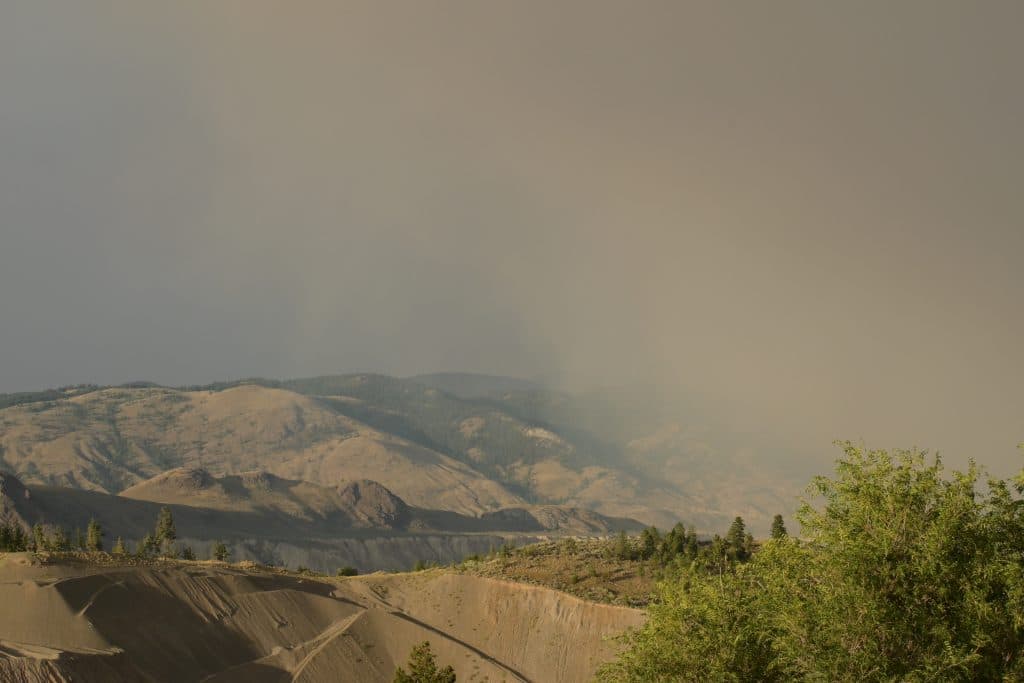
For many Interior B.C. residents, wildfire season means smoke-filled valleys, red summer skies, evacuation alerts and constant updates from emergency officials. For those responding to the flames, wildfires involve far more than firefighting, with relationship building, communications and more at play.
At Thompson Rivers University, a new wildfire program is training the future frontline workforce to understand social and community impacts of wildfire, focused on social dynamics, Indigenous fire stewardship and leadership, while providing resources for residents and communities to actively prepare themselves for wildfires.
Shannon Wagner, the university’s vice president of research and head of the wildfire portfolio tells The Wren the diploma expands beyond traditional forestry models to incorporate diverse disciplines, adding the program has received strong support from surrounding communities.
The two-year diploma consists of four certificate programs: Wildfire Science, Sociocultural Dynamics of Wildfire, Wildfire Leadership and Wildfire Communications and Media, each centred around four pillars: research, education, training and innovation, with four subcomponents: fire science, social and community, health and well-being and Indigenous fire stewardship.

Why is the wildfire program at Thompson Rivers University needed?
Over the last 150 years, land use management centred around practices of fire exclusion, prioritizing suppression that Mahed Choudhury, assistant professor in Wildfire Studies, suggests has contributed to the accumulation of combustible forest fuels such as dead vegetation, woody debris or dense overgrowth. Coupled with climate change, Choudhury describes the current wildfire situation as “a time bomb.”
With a shift in framework characterizing wildfire as something to “live with” rather than fight, Choudhury says it can be used intentionally through cultural and prescribed burns.
While wildfire is often framed as a battle to be fought, Choudhury sees it differently.
He challenges students to analyze “science worldviews [and] the idea of fire fighting as opposed to living with wildfire.”
He encourages students to critically examine the management and mismanagement of wildfires through history and how future approaches can be more collaborative, culturally informed and sustainable.
This style allows students to approach their workplace with reflection and purpose to include Indigenous worldviews.
Choudhury braids Indigenous research, knowledge and perspectives into his courses, including the concept of two-eyed seeing or two legs walking as a focal point of the courses. The phrase refers to the ability to see from one eye the strengths of Indigenous knowledge, and from the other eye, the strengths of Western knowledge.
“Disaster essentially involves humans,” Choudhury says, “that’s why we need to understand the social, cultural, human dimension of [wildfires].”
Another core part of the program, communications and relationship building, is becoming more and more vital to emergency response work. During recent wildfire seasons, B.C. residents relied on social media, the BC Wildfire Service app and online updates for wildfire activity across the province, but increasingly misinformation and AI-generated information can circulate quickly, causing confusion and panic.
The summer 2025 BC Wildfire service Facebook post confronting misleading and AI-generated information was extensively explored in the course to demonstrate efforts of non-fireline related wildfire communication challenges.
In an environment of panic, potential misinformation and communication breakdowns, the communication skills developed in the certificate are crucial to maintain public awareness and trust in disaster.
Learning from the best
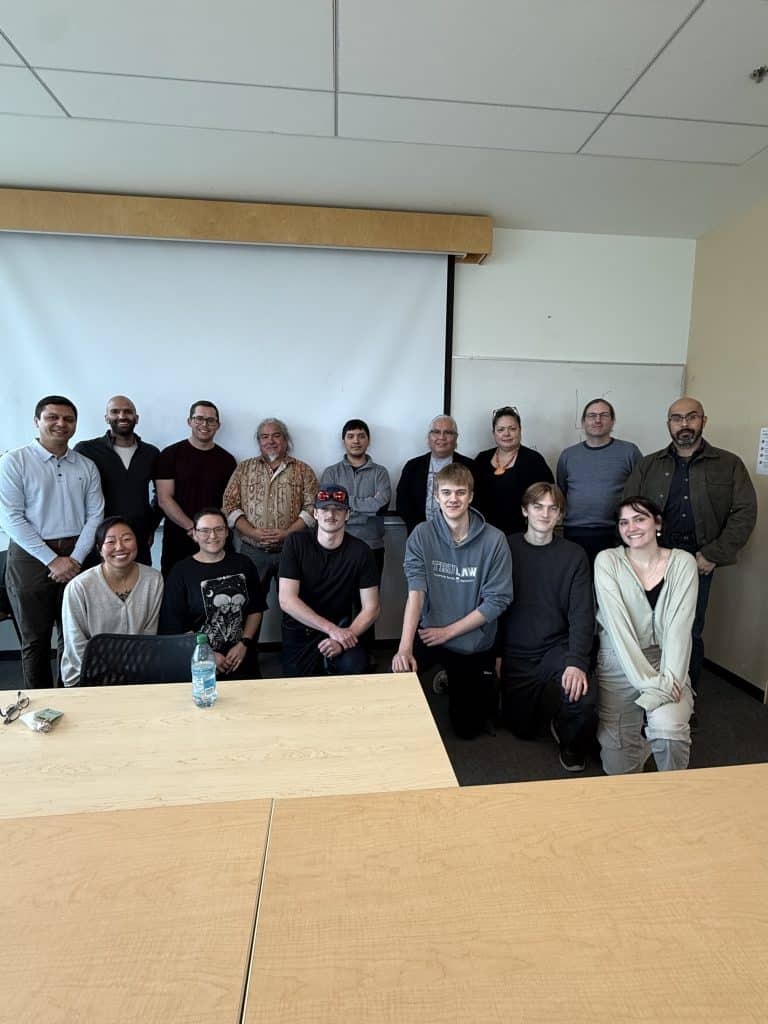
Through a partnership with BC Wildfire Service, the program includes wildfire experts who bring extensive knowledge and experience to the table.
The partnership extends beyond curriculum development and student enrollment.
Thompson Rivers University and BC Wildfire Service were awarded a grant of over $1.5 million through the federal government Natural Resources Canada to provide funded training programs for communities. The university is also a founding member of the federally funded Wildfire Resilience Consortium of Canada and a partner of the UN Global Fire Management Hub, Wagner says.
The initial goal was to train 260 wildfire fighters over the course of the program and grant. That number is expected to be generously surpassed in the first year, according to Wagner. Local communities, Indigenous communities, and others are applying to participate in the training program increasing FireSmart and wildfire resilient neighbourhoods across the region.
“The team is very happy to be able to say that the training is rolling out and folks in communities are gaining wildfire skills,” Wagner says.
Kayla Pepper taught one of the courses in the Wildfire Communications and Media Relations certificate, alongside Mike McCulley and Kevin Skrepnek. The three instructors have years of experience in wildfire communication and crisis management.
For Olive K.E. Taylor, a student at Thompson Rivers University, the Wildfire Communications and Media Relations Certificate was a natural addition to her studies.
Taylor pursued the certificate because of its specialization and real-world impact, noting the severity of previous wildfire seasons and the societal and environmental recovery.
“The courses really opened my eyes to how much effort goes towards wildfire suppression and how many people and different moving pieces are involved,” Taylor said. “It’s not always as simple as putting the fire out, and that was a huge takeaway for me.”
Wildfire response extends beyond the fireline
Pepper ensures the skills students develop are highly applicable to the wildfire environment, but are just as easily transferrable to other governments, Indigenous communities, public sector agencies and other entities.
This allows students to “translate critical, sometimes very complex information in a way that’s accessible in all terms to those who need to receive it,” she says.
Pepper discusses the perception many have about a uniform, explaining that throughout her career wearing the BC Wildfire Service uniform has either supported trust building or challenged it.
The public’s previous experience with the Wildfire Service or other uniformed responders often dictates their comfortability and vulnerability when in emergency situations, she adds.
Members of the communities she’s served in have asked“am I safe with you,” or “can I trust you” and Pepper brings that to the forefront of her human-to-human relationship building.
Beyond tactical skills, students focused on self-regulation, leadership and community relationship building. Pepper emphasizes what she calls “compassionate crisis leadership,” or the ability to remain grounded and emotionally aware while supporting communities in distress.
“Calm without direction leads to confusion,” she explains. “Direction without humanity leads to resistance.”
To her students, Pepper always presents a situation she remembers as “a wake up call,” in shaping how she approaches communities in crisis.
While working at the Provincial Emergency Operating Centre responding to the events of the Lytton Creek wildfire in 2021, a fire started in Juniper. Despite working for wildfire service and assisting numerous communities with wildfire information, Pepper describes “short-circuiting” and being ill-prepared and in a place of panic as she rushed to pack the evacuation bags.
It proved a humbling moment, with a chance to look at the perspective of the other side of the emergency.
”We are human and we make mistakes and that’s okay,” Pepper says. “We have these systems of support… year-round because it can happen to anybody and we all need to be able to lean on each other when our own capacities aren’t where we would want them to be.”
The Wren is a community driven local news outlet. Your questions and ideas help guide what we dig into. Your feedback after we publish a story helps ensure we're always improving our reporting to better serve you
What do think about this story?
Author

Related Articles

MLA candidates for Kamloops share plans to address affordability ahead of B.C. election
Here’s how Kamloops’ MLA candidates answered the question: What will you do to help with affordability?

How will Kamloops MLA candidates support healthcare?
Here’s how Kamloops MLA hopefuls will address the shortage of primary healthcare providers in small-urban and rural areas.

Here’s how MLA candidates will improve safety for all in Kamloops
Here’s how candidates answered the question: How would you create safety for everyone in Kamloops?
