
How Secwépemc songwriter Jeremy Kneeshaw gives back
Through his Kamloops-based recording business, the mutli-instrumentalist and producer amplifies the power of music and culture by preserving it.

For songwriter Jeremy Kneeshaw’s first performance at this year’s Salmon Arm Roots and Blues Festival, he assembled a retro-styled blues trio that ignited the dance floor.
“It was totally surreal to be there, on the other side of the curtain,” he tells The Wren. “Ever since I was like a little kid, that was always my dream.”
Through his company Jeremy Kneeshaw Music Ltd., the Kamloops (Tk’emlúps)-based musician moves fluidly between solo performances, full band ensembles and behind-the-scenes production. Uniting his diverse skillset is a singular purpose to “make the right ears happy,” he says, whether by filling the dance floor or preserving songs too often silenced by history.
A proud member of Tk’emlúps te Secwépemc, Kneeshaw’s story is deeply rooted in both artistry and community. His lifelong journey in music started from childhood as a piano prodigy, but he also plays over a dozen instruments.
“I’ve always been drawn to music,” Kneeshaw says. “I see music as a language of sorts, and we don’t all necessarily speak it or communicate it, but we can all understand it. That’s kind of a beautiful thing to be able to share with people.”
At just 19, he self-produced and released his debut album, a feat that earned him the Akedamia Music Award for Jazz/Funk/Fusion in 2016 and an invitation to perform at the Rose Bowl Stadium in Los Angeles.
He records his own music and offers recording services and support for community-based projects through his company and Cutting Station Studios.
As a way to support other Indigenous artists, he offers free recording sessions to traditionalist drum groups and Indigenous storytellers — a service Kneeshaw says is rooted in both personal connection and cultural responsibility.
“I am Secwépemc,” he says. “My mother is Secwépemc, and she’s related to many of the people who live here on the reserve at Tk̓emlúps te Secwépemc.”
His decision to offer free recording time was shaped by the confirmation of Le Estcwicwéy̓ (‘The Missing’ in Secwepemctsín), referring to the evidence of unmarked graves found at the site of the former Kamloops Indian Residential School, a confirmation of decades of survivor testimonials and third-party evidence of abuse that occurred less than a kilometre from where he grew up.
The confirmation of Le Estcwicwéy̓ has changed the way he thought about the past and the reality of people’s stories, he says.
“I walked by it every day going to school. It really impacted me…I have to try to be a voice for those who were ignored or denied or brushed aside for so long.”
By using his skills and equipment to record Elders and Knowledge Keepers, often in their own homes, Kneeshaw aims to remove financial and logistical barriers to cultural documentation, such as preserving language, song and oral history.
“I want to use what time and skill and ability I have to be a voice for those who were ignored or denied,” he says. “If offering it for free means that a financial hurdle isn’t in the way, then I want it to be as available as it can be.”
Kneeshaw sees music as a powerful tool for storytelling and memory, one that connects people across generations and cultures, emphasizing the importance of experiencing music in person, especially in traditional settings like powwows, where the sound of the drums creates a “visceral connection.”
“When you’re there in person and you feel those drums booming, it all just makes sense,” he says. “You get why people travel all over the continent to come and dance.”
For Kneeshaw, preserving traditional music is not about perfect vocal pitch; it’s about participation and shared experience. The songs are written and designed to be sung as a group. His goal is to help others feel the same connection to music that he has felt throughout his life.
“If I can help others feel the way I felt with music, I want to,” he says. “That’s why I do what I do.”

‘I believe in purpose’
Kneeshaw cites American singer-songwriter John Mayer as a major influence during his teenage years, noting he spent time emulating Mayer’s guitar tone, vocal phrasing and lyrical style.
Over time, Kneeshaw began to adapt his performances to suit different audiences, balancing personal musical preferences with crowd expectations.
“I could do it pretty well, but in the places I was playing, nobody knew who John Mayer was,” he says. “They were saying, ‘Hey, play some CCR,’ or ‘Play something we know so we can dance.’”
He continued performing in bars, casinos and weddings, often filling in for other musicians and playing multiple instruments.
While he initially supported his passion for music through carpentry, he left that career in 2015 to pursue music full-time.
His years of experience performing as a multi-intrumentalist led to the formation of Jeremy Kneeshaw Music, a project focused on matching the right music to the right environment.
“I believe in purpose, and I do believe that this is mine.”
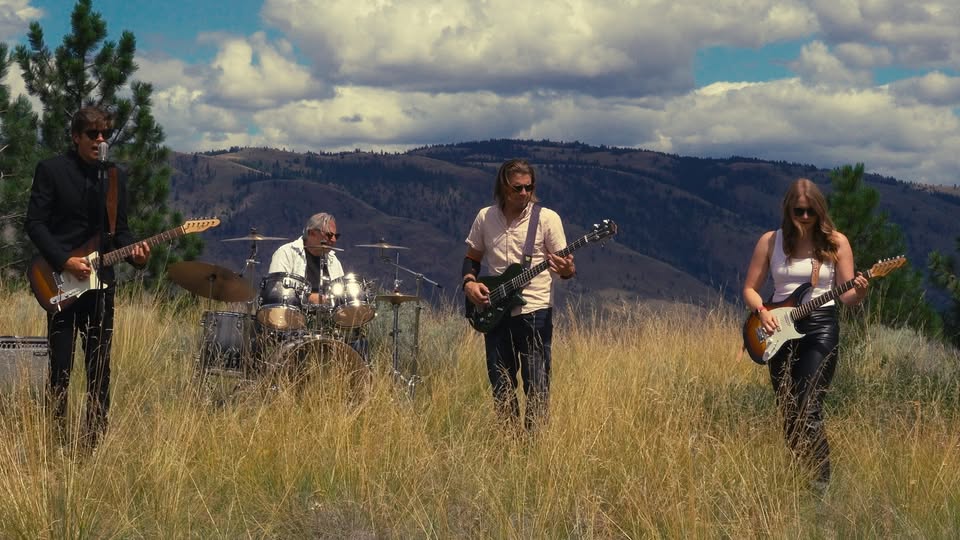
For Kneeshaw, recording music is more than capturing sound. It’s a way of revisiting moments in time.
“How it makes you feel listening to those things or that part of your life, that’s kind of how I hear my recordings,” he says.
His musical style has undergone significant evolution, especially in recent years. He’s been exploring early blues influences, drawing inspiration from artists like Robert Johnson, Muddy Waters, and the three Kings, B.B., Freddie, and Albert.
“I’ve always loved playing the blues,” he says. “I’ve been going really far backward in time… Trying to emulate these players and get into their headspace has impacted my own playing style.”
This deep dive into blues history has expanded his musical vocabulary and perspective, which he sees as essential for artistic growth.
“I think the most important thing as an artist is to be open-minded to allow all those things to impact your way of looking at music, even if it’s your own,” he says.
Looking ahead, Kneeshaw and his live band are preparing to enter the studio in August to record an album that reflects their summer performances at events like Kamloops’ Music in the Park, Music for the People and the Roots and Blues Festival.
The project will feature live versions of previously released songs, along with new material, split into two albums: one showcasing his guitar work, the other focused on keys.
“My heart is really in playing with the band and capturing that live magic,” he says. “That’s what I want to focus my creative direction on.”
He also plans to release similar recordings from his solo set and his work with Velvet Groove, offering fans a range of options to experience the evolving sound of Jeremy Kneeshaw Music.
‘It doesn’t happen in the basement’
When asked what advice he would offer to emerging artists trying to build a career while staying true to their values, Kneeshaw didn’t hesitate. “Find people who are genuine in supporting you for your art,” he says.
“They are out there: people who love artists and are just looking for someone to follow around to shows. But you have to be out playing shows for that to happen. It doesn’t happen in the basement.”
Kneeshaw acknowledged the self-doubt that often accompanies early performances, noting that many artists never feel fully ready to take the stage. But he emphasized the importance of pushing through that uncertainty.
“You never feel like you have the chops or that you belong up there,” he says. “But just do it. Maybe you’ll hate it, but at least you’ll know.”
He encouraged young musicians to be open-minded about where and how their style might resonate.
“Have the courage to be objective,” he says. “Maybe what I’m playing doesn’t fit in the place that I live, but maybe down the road there’s a scene of people who would have me join them and play.”
Courage is also required to take on the financial uncertainty, the blank calendar and emotional highs and lows involved in pursuing a creative life, he adds.
“There are a million people out there who want to stand at a mic and have people hear what’s on their heart,” he says. “But only one in that million is willing to put in the work and stare down the fear.”
His advice to young artists is simple: “Go where you’re appreciated, seek out your people, and don’t be afraid to take risks.”
For further information, visit www.jeremykneeshaw.com
The Wren is a community driven local news outlet. Your questions and ideas help guide what we dig into. Your feedback after we publish a story helps ensure we're always improving our reporting to better serve you
What do think about this story?
Author

Related Articles
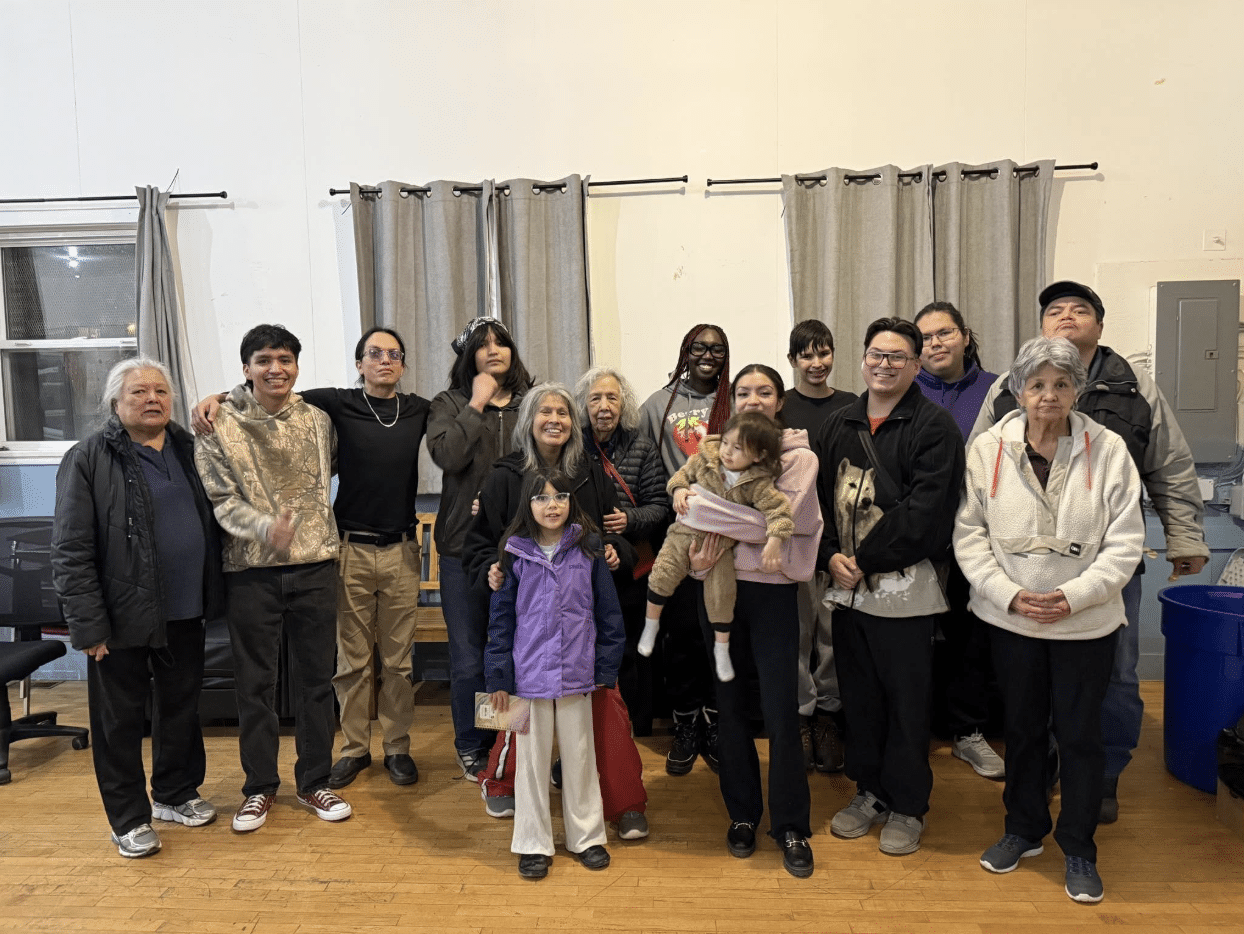
‘It is about courage’: More students take up Secwepemctsín as language revitalization efforts grow
‘Without any new interest or passion for Secwepemctsín, there is no revitalization,’ student says.
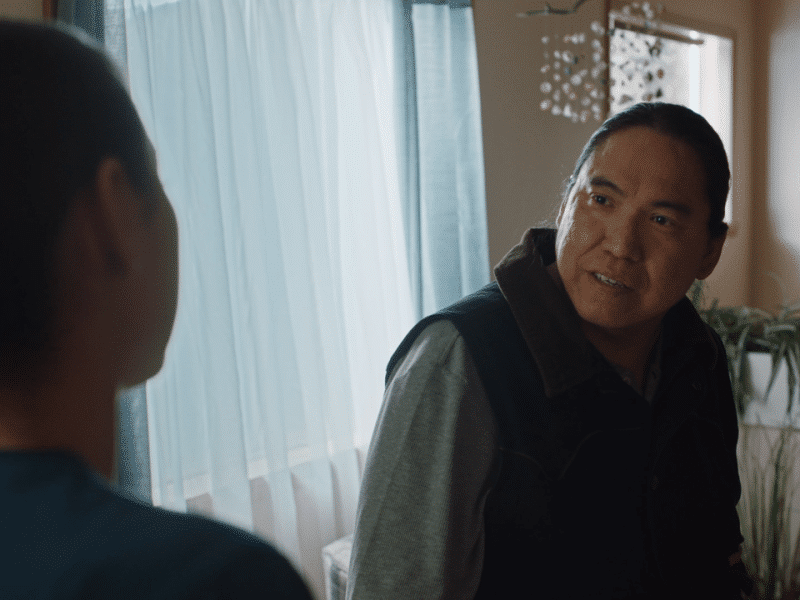
Secwépemc actor William Belleau brings Hollywood to Alkali Lake
Days before the Leo Awards, Secwépemc actor William Belleau reflects on a career that’s come full circle with his role in the independent Secwépemc film W7éyle (Moon’s Wife).
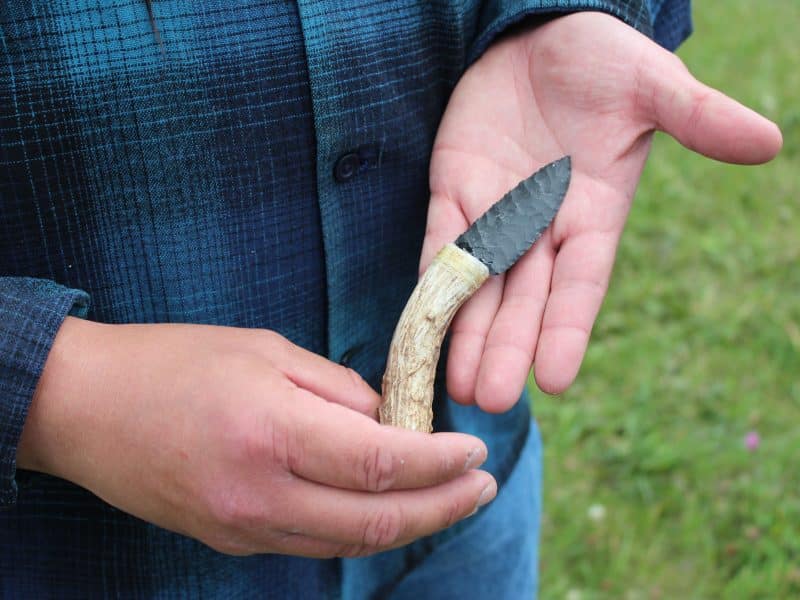
Meet Eric Van Stone, the archaeologist who stopped digging and started carving
Once trained to uncover the past, Chipped Stone Tools artisan Eric Van Stone now reshapes stone into functional blades.
