Editor’s note: This article includes the discussion of topics like missing and murdered Indigenous women, sexual assault, and femicide. Please read with care.
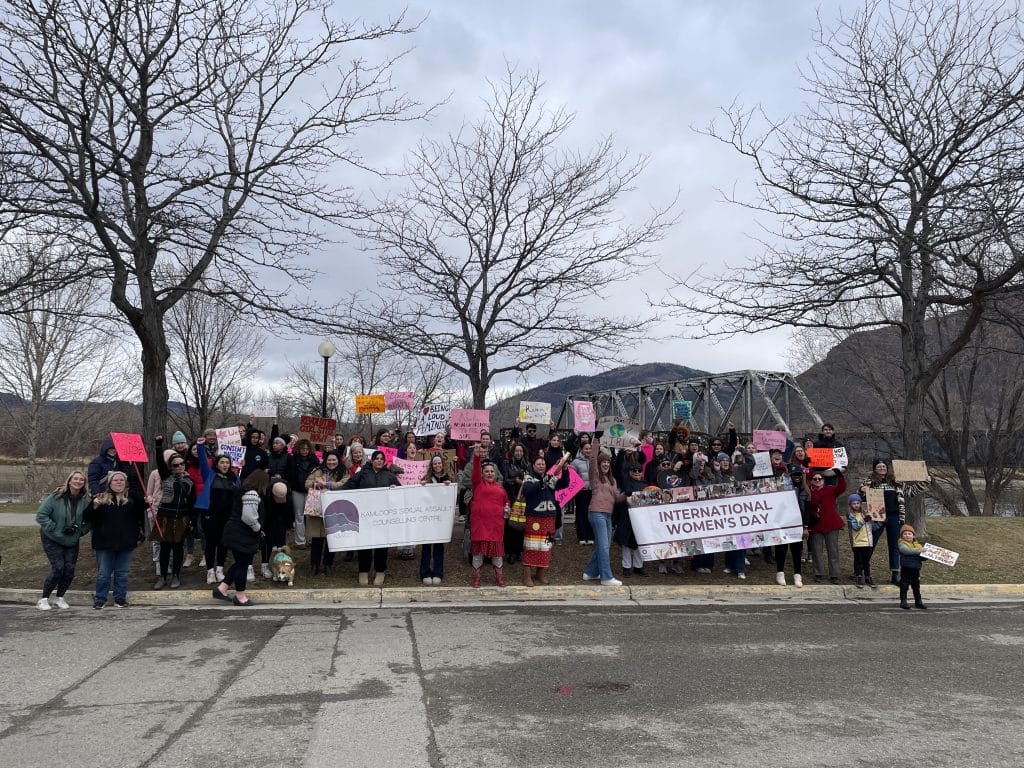
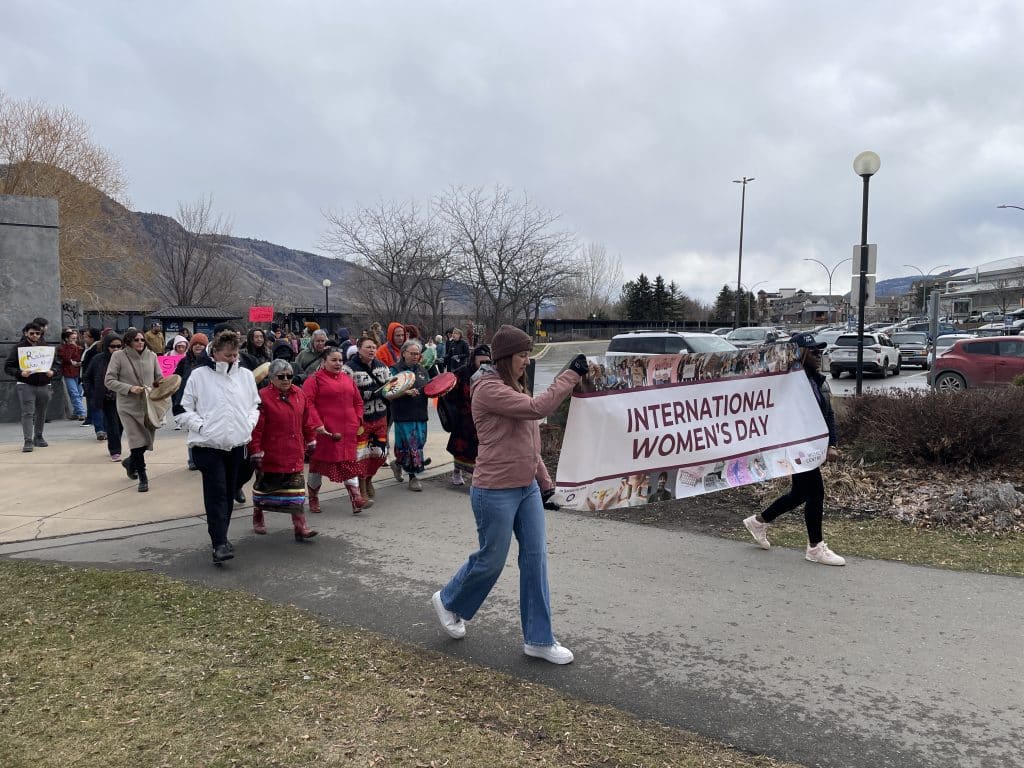
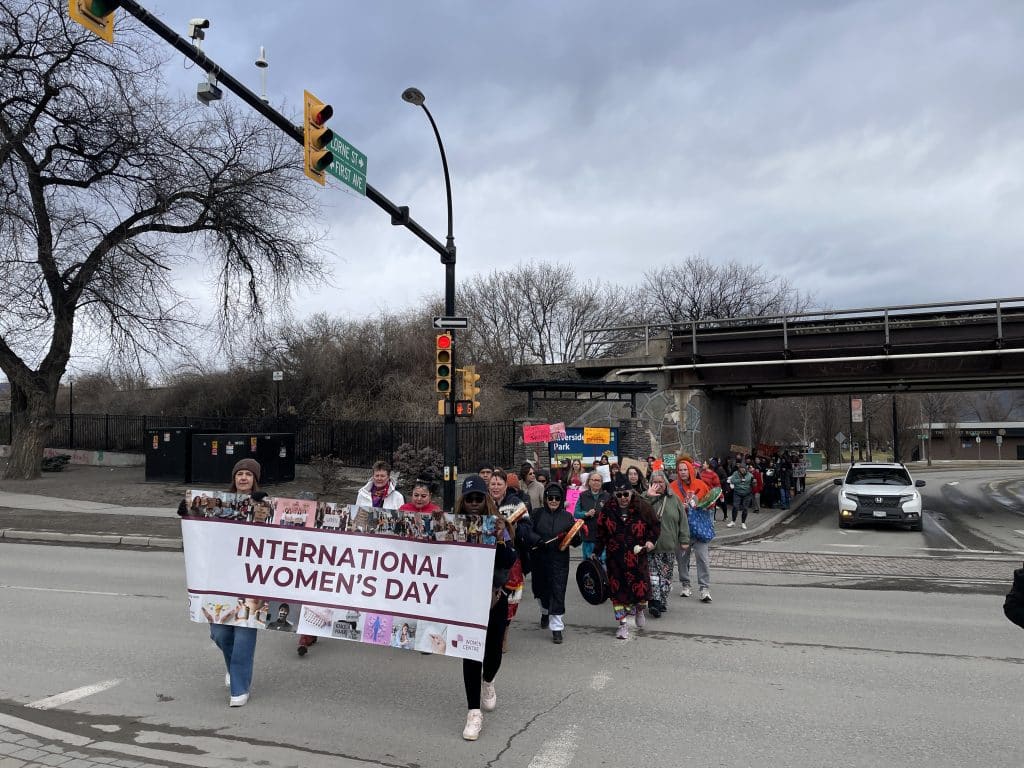
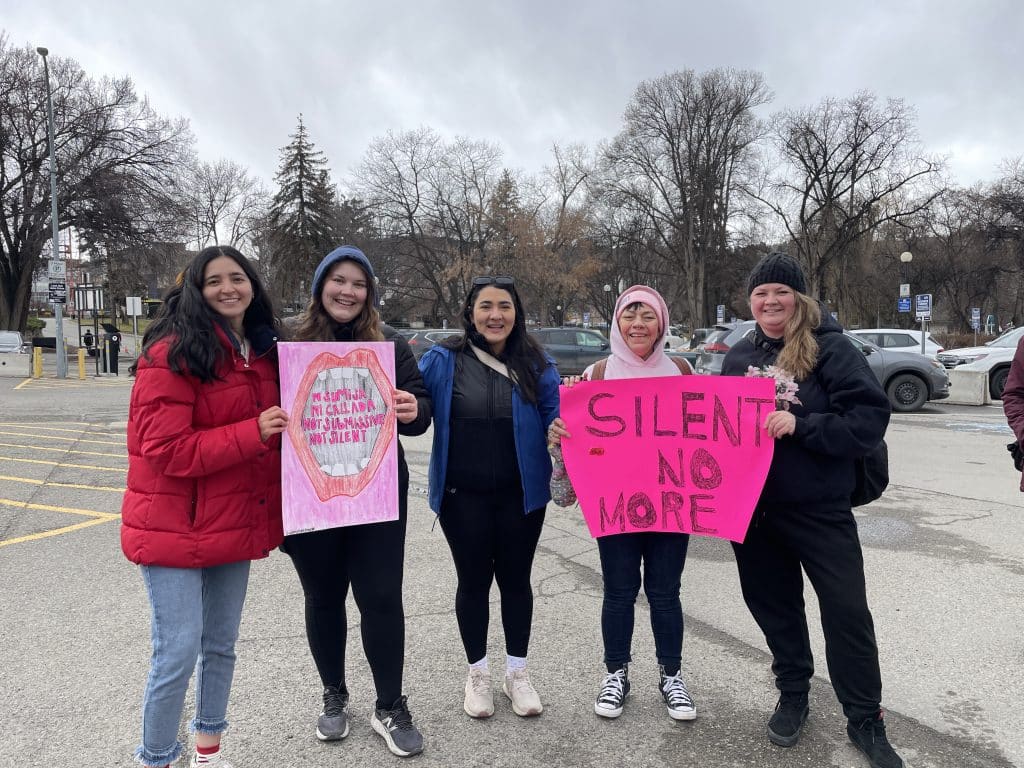
This Sunday, March 8 marked International Women’s Day, commemorated in Kamloops with a march starting at Riverside Park organized by the Interior Women’s Centre Society.
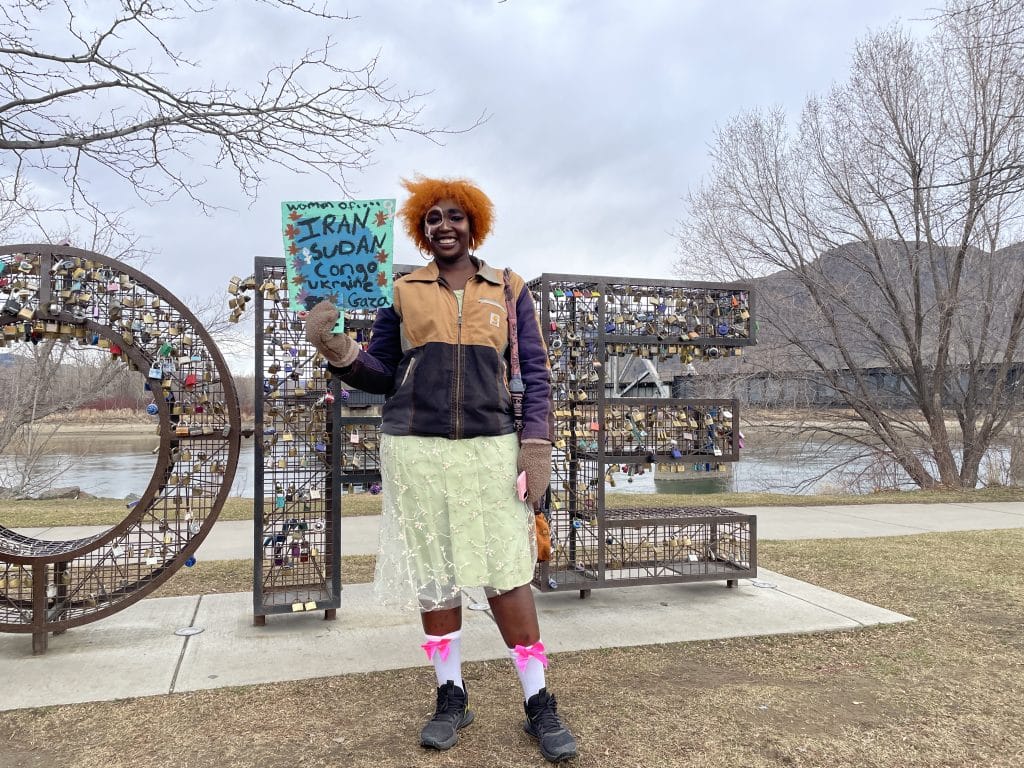
Several countries and cities around the world organized marches and protests, and in Latin American countries like Mexico, Chile, Argentina and Ecuador these marches gathered thousands of people to commemorate women who fought to have rights, and to hold governing bodies accountable for ongoing femicide, missing women and girls, sexual assault, abuse and more.
In Kamloops, the scene was much more peaceful compared to the protests in Latin America but attendees were not quiet when expressing their concerns on equality and justice.
Before the march through downtown, there were some opening remarks and speeches.
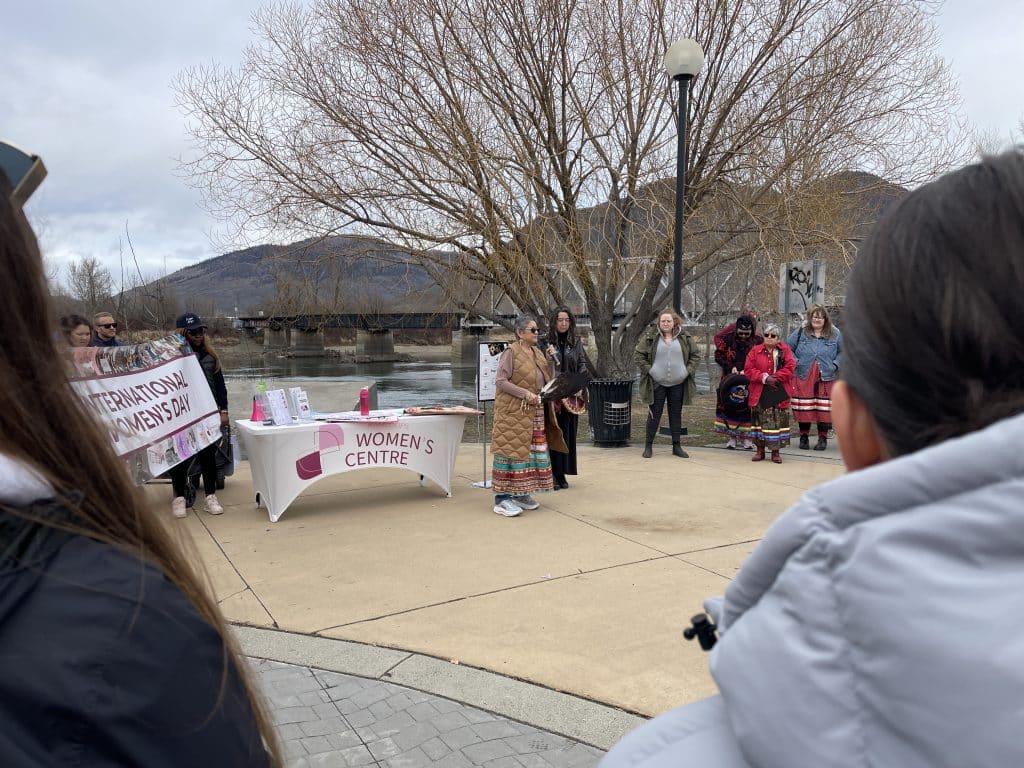
Elder Freda Jules from Tkemlúps te Secwépemc opened with a prayer followed by drumming and singing by Indigenous attendees.
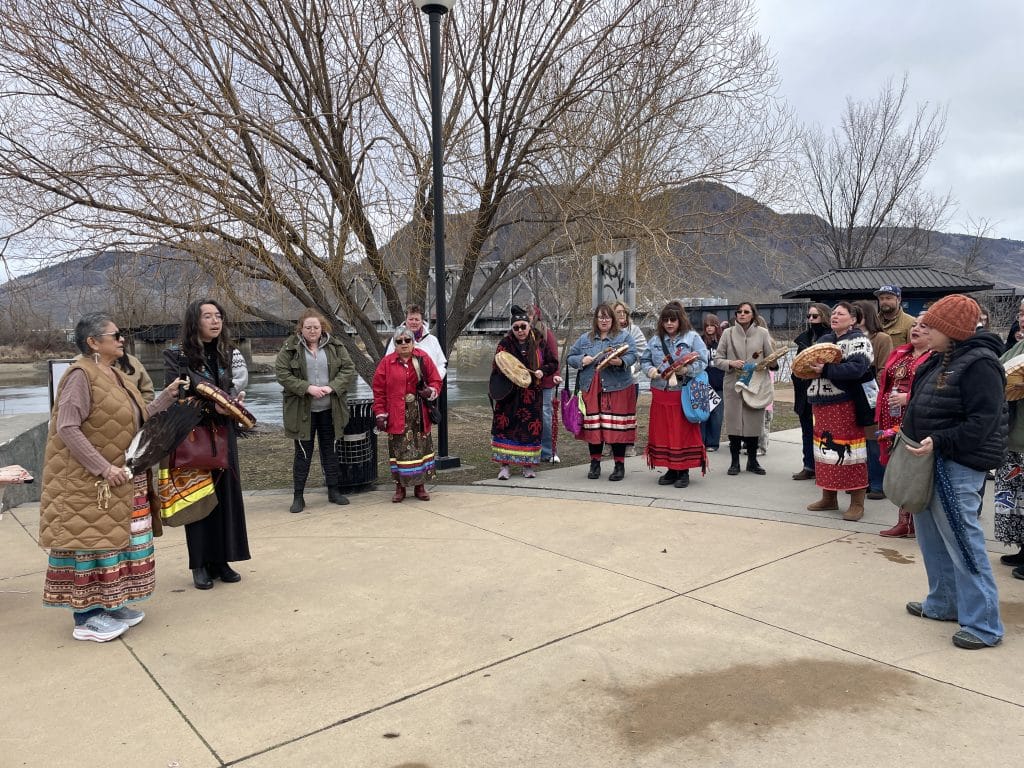
Then, Viola Thomas shared her experience as both a survivor of the Kamloops Indian Residential School, where she says she suffered physical and sexual abuse as a child, and as an advocate advancing the implementation of the woman’s calls to justice.
Her advocacy comes from her personal experience with sexual abuse both as a child and as an adult.
“Today, I’m standing on the shoulders and the strength of my ancestors and in loving memory of all the murdered and missing Indigenous women, Two-Spirit girls, boys and men from across Turtle Island,” Thomas said.
In her speech she emphasized the importance of holding levels of government accountable and the need for systemic social and legal reforms that address these issues.
“The systemic harms and structural racism that is perpetuated by weak policies and lack of proactive legislative reforms invokes violence,” Thomas said. “[It] only serves to benefit perpetrators and not survivors of misogyny and femicide.”
She expressed her disappointment in how the public perceives Indigenous women as mere numbers and how many stories are just headlines.
“It is shameful and a gross miscarriage of justice that we continue to face so many obstacles and systemic challenges with so many lives stolen or harmed by violence and continued cultural genocide.”
Since the National Inquiry into Missing and Murdered Indigenous Women and Girls released its 215 Calls for Justice in 2019, only a handful have been met, according to an audit produced by the CBC. These include implementing a Red Dress Alert across the country.
Thomas’ speech ended by calling upon attendees to get together and move forward despite the obstacles and uplift the rights of women.
Coun.Katie Neustaeter also spoke to the public and shared how grateful she was for spaces like this.
“There are women of all different representations in this space,” Neustaeter said. “We are stronger when our voices are united. We are stronger when we recognize our diversity.”
Neustaeter spoke to a number of ways women are excluded, from research on menopause to vehicle testing.
”Why haven’t we had these conversations earlier? Why haven’t we had the dollars invested to keep us healthy earlier? Why have we been ignored and marginalized? Why have our bodies been disvalued? And it is because of that infuriatingly simple reason, because we are women.”
“Why is it 10s of 1000s of women tell us about their sexual assaults, tell us about the harm that they are experiencing. They are ignored because they are women,” she continued. “Why is it that the rights that were given to half of the population had to be fought for and then fought for again harder, because we are women, because we are racialized women.”
She acknowledged how it is easy to feel discouraged nowadays and how current news can feel disappointing.
“Because we are women, we need to be in the spaces where decisions are made.”
She told the public to keep showing up, especially women and how the fight is not over.
“I don’t want it just to be women in the room. I want us all to be in the room. I want us all to be represented in the room, because that’s when things get stronger, that’s when things get better, and that’s when we find equality when we are in the room,” Neustaeter said.
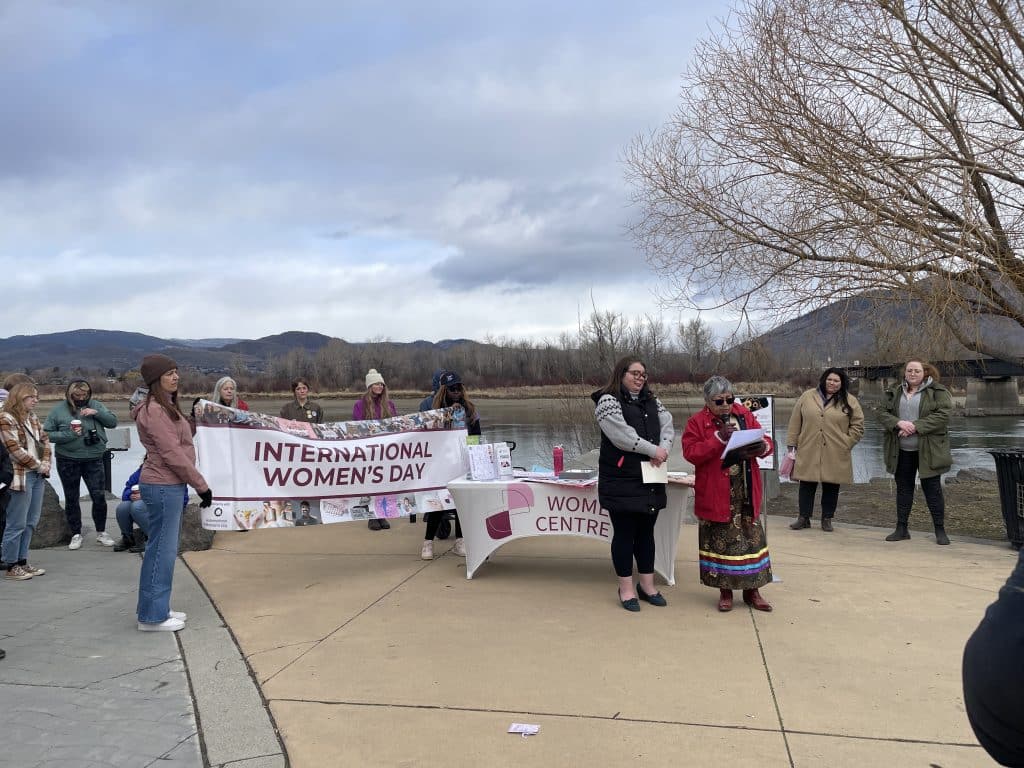
Before the march started Kathleen Larose one of the co-founders of the Interior Women’s Centre Society spoke to the public on what this day means and how this year carries powerful themes.
“…We are in rooms with a lot of words, but we’re seeing very little action on the grounds,” Larose said. “It is about what we are willing to give as communities, systems, governance, governments and leaders in order to create change.”
Larose expressed there is urgency to address all the issues women face nowadays and stated that advocating for them matters.
“We are in a time when women’s centres need to speak up. Women based organizations need to speak up. We need to show up. We need to advocate for policies that impact the betterment of women’s lives overall.”
She expressed her worry on the lack of resources allocated to women’s organizations and women’s advisory committees in different levels of government.
“We are here to accelerate action and hold our leaders accountable for the commitments, as well as address and speak to the gaps we are seeing,” Larose said.
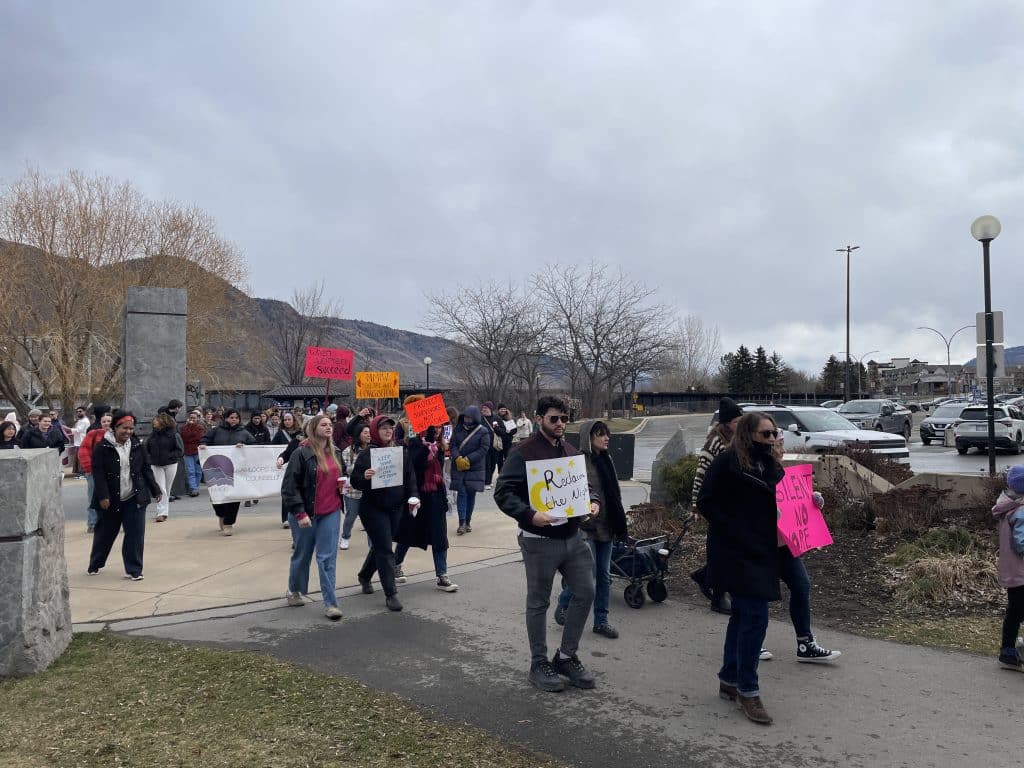
Folks got together and did a loop around downtown while chanting statements like “my body, my choice.” Some bystanders looked at the attendees while cars passing by honked in support.
When the march got separated by traffic lights attendees waited for one another, leaving no one behind. Indigenous folks kept singing and drumming while others chanted.
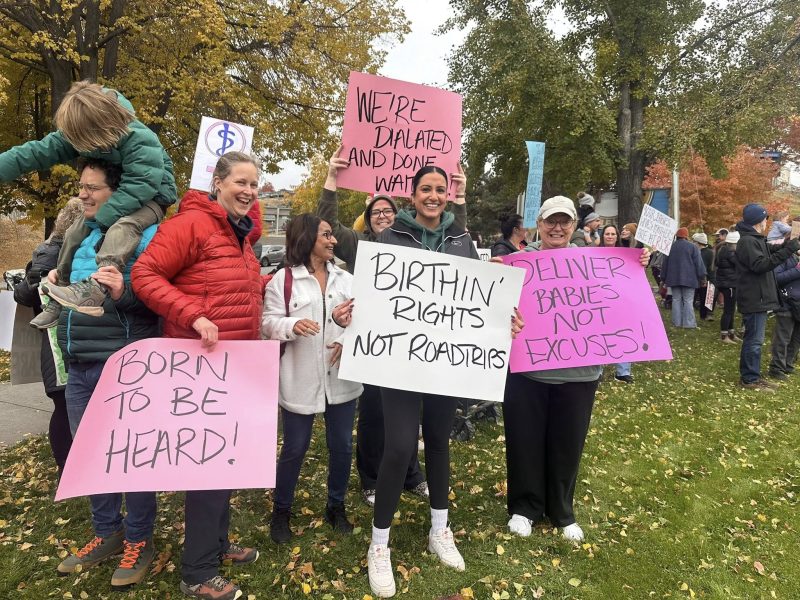
Women and allies marched together. Mothers with their children attended while they pushed their strollers forward and held their signs.
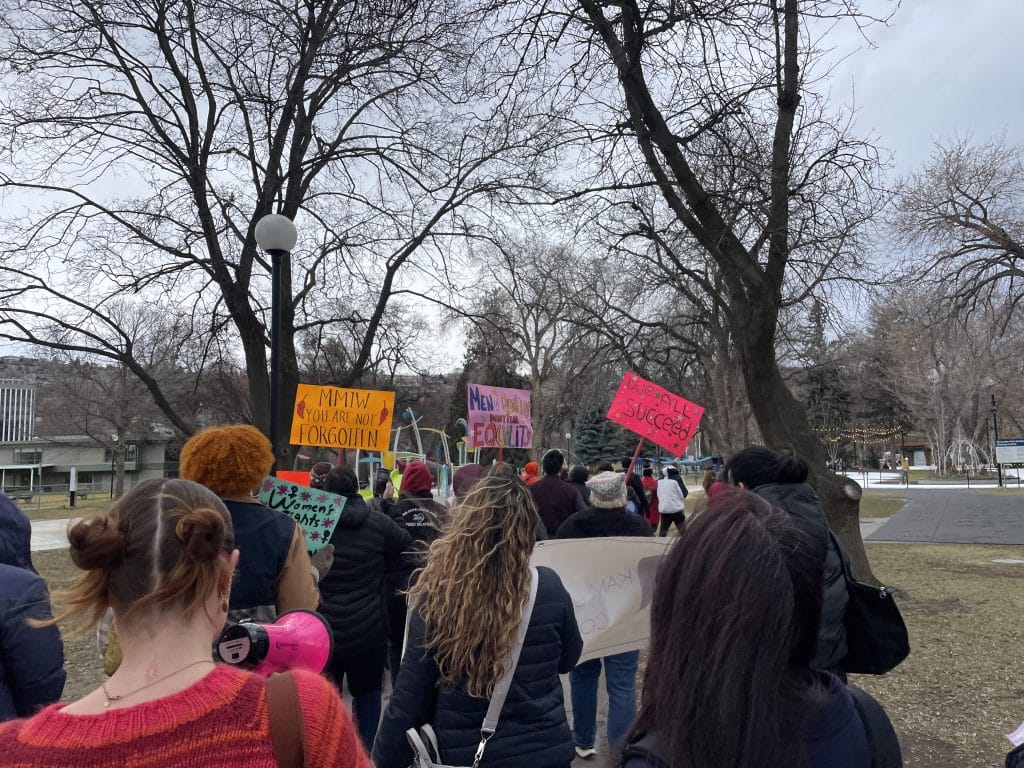
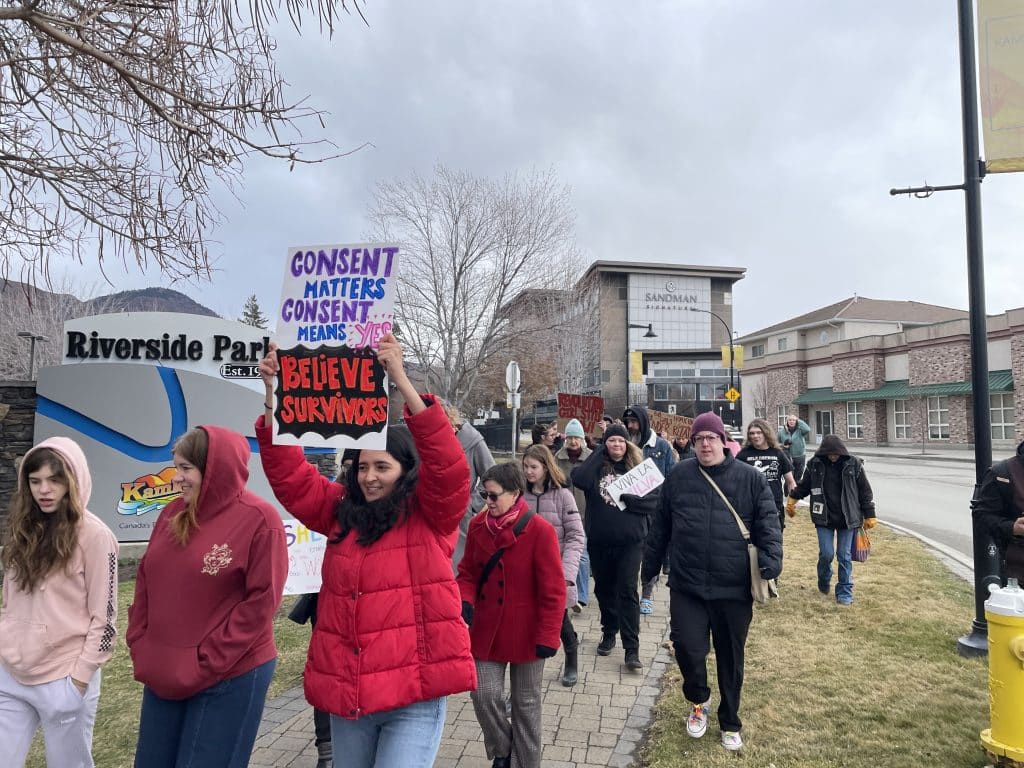
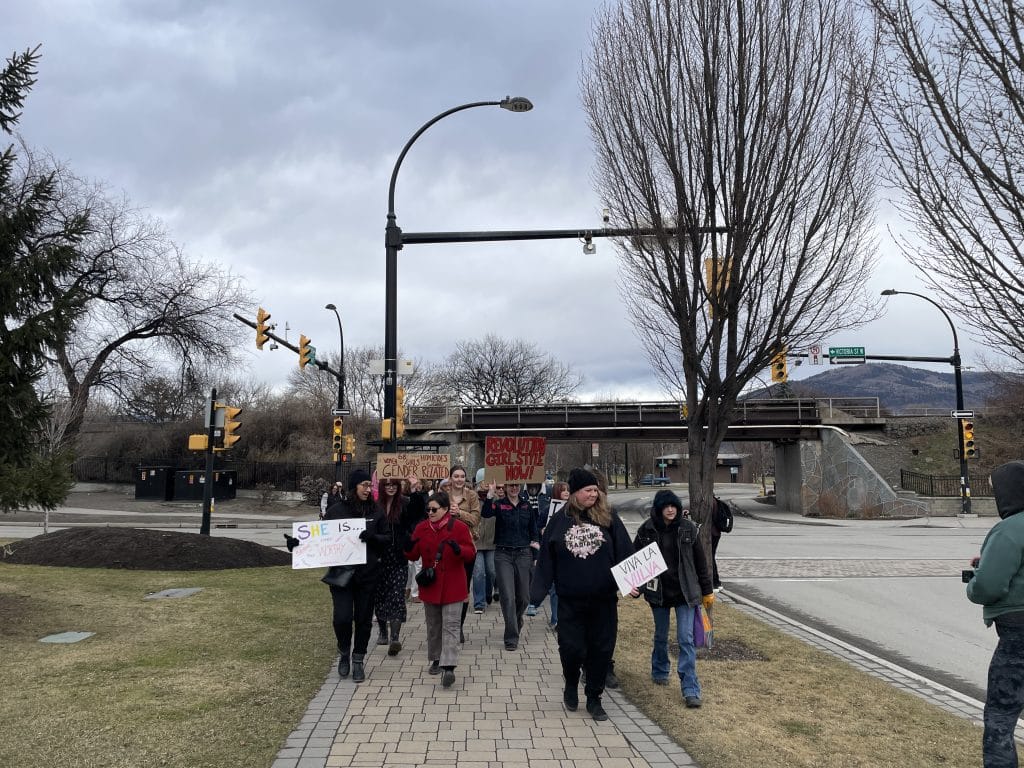
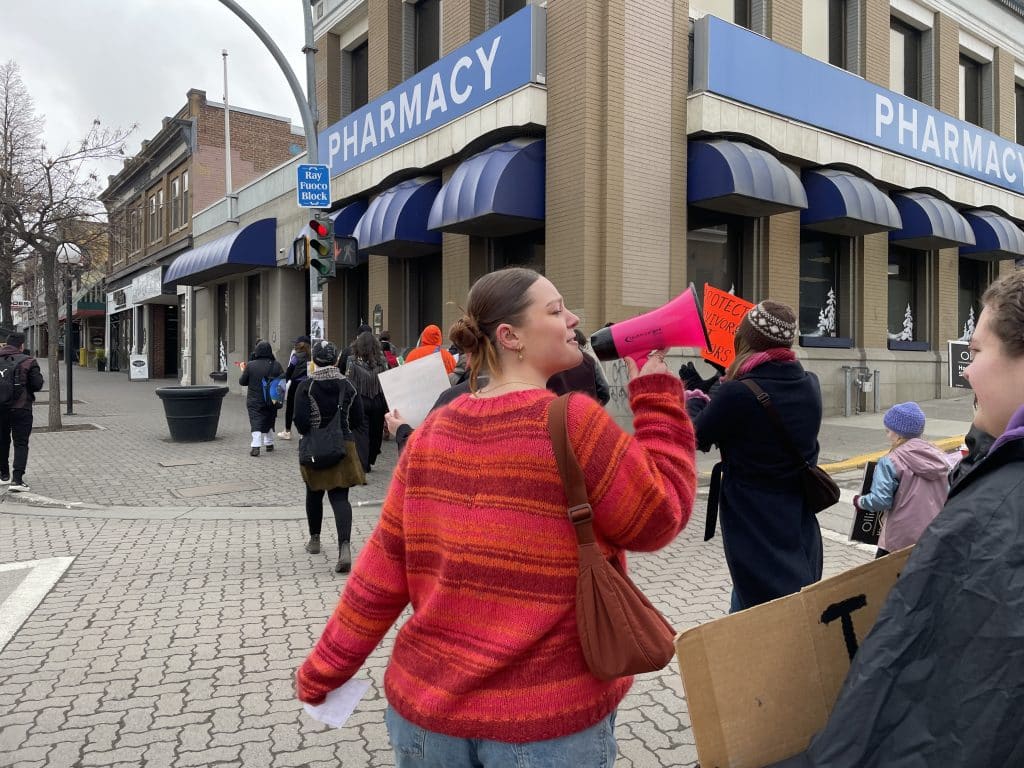
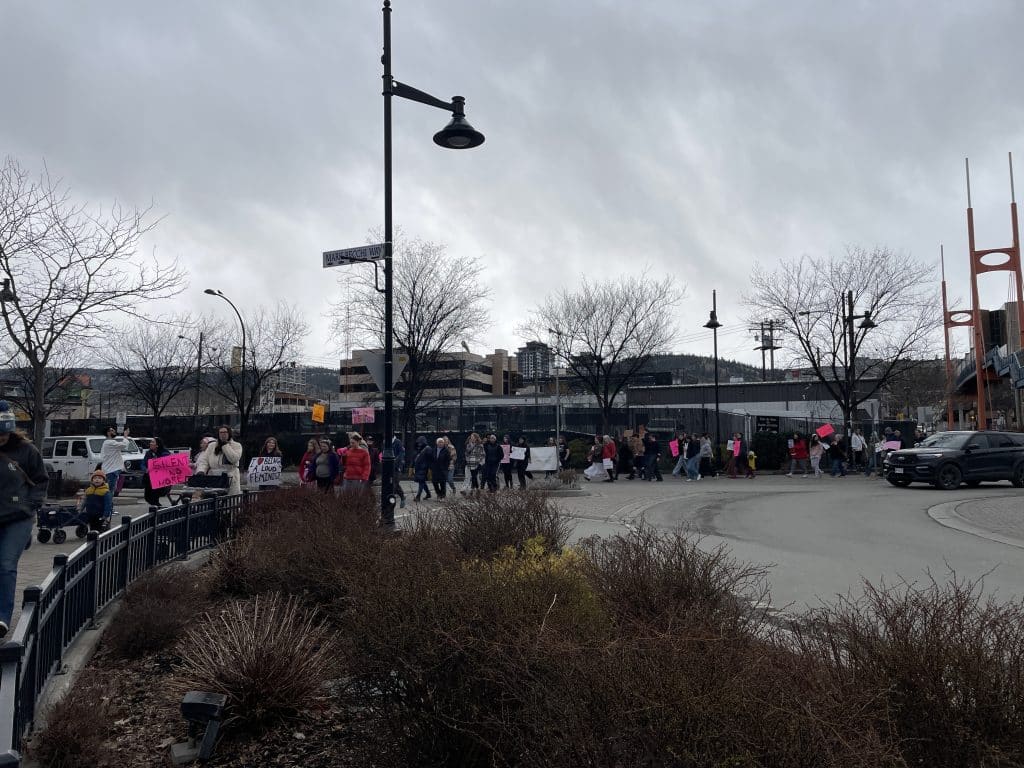
The march ended by the Hope sign at Riverside Park showing the unity of many women and folks who stand for equality and justice.
The Wren is a community driven local news outlet. Your questions and ideas help guide what we dig into. Your feedback after we publish a story helps ensure we're always improving our reporting to better serve you
What do think about this story?