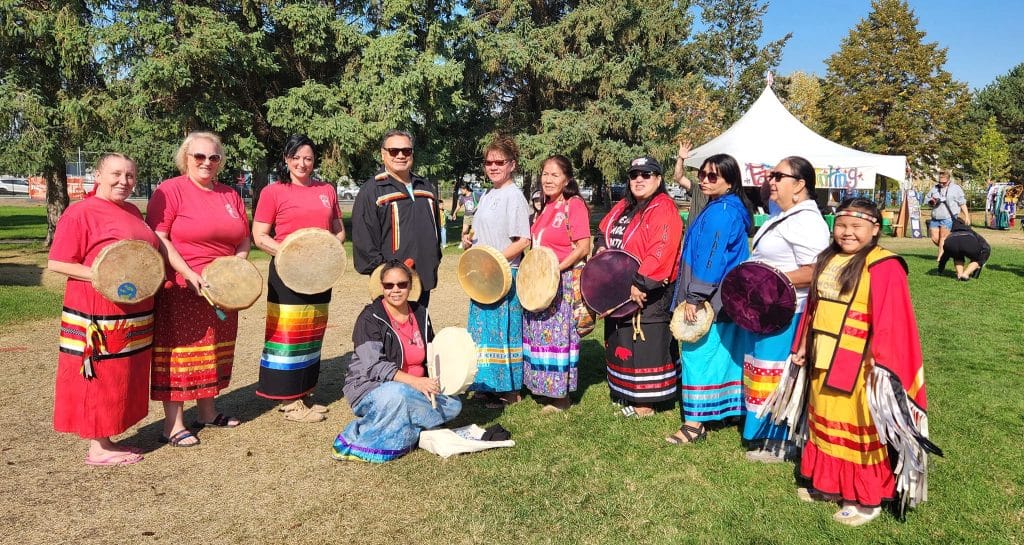
For many in Kamloops (Tk’emlúps), the Kamloops Aboriginal Friendship Society (KAFS) is a port in the storm. Founded in 1972, the charitable organization touts an open-door policy, providing services for both Indigenous and non-Indigenous people.
While all are welcome to access the programs offered at KAFS, there is a focus on providing culturally appropriate and inclusive services for Urban Indigenous peoples. Those working at KAFS strive to empower all in Kamloops to be healthier, be it physically, mentally, emotionally or spiritually.
Now after at least 10 years of planning for an expansion, growth is on the horizon, and KAFS leadership is excited to reintroduce an innovative service that has contributed to the overall health of its members: a culturally safe health centre operated by Interior Health.
For Lynn Chrysler, who is Cree and Métis from Northern Alta., the Aboriginal Friendship Society is both a workplace and a mainstay throughout her life. Chrysler has been at KAFS going on eight years, but her experience with the larger Friendship Centre Movement, began when she was just 12 years old.
Growing up in Alberta, the friendship centre there was a part of Chrysler’s childhood and upbringing. She participated in youth group programs offered through the centre, ceremonies, funerals and community meals held there. Even just popping in on a bad day to get that sense of belonging helped shape her into the person she is today.
“It’s community,” Chrysler, general manager of KAFS, tells The Wren, summing up her experience with friendship societies. “I know in my personal life, I felt supported. If I needed counseling, or if I needed any support with my children or any of that kind of stuff, I knew that the friendship centre had that to offer.”
As she thinks back on the path she’s charted across Canada, from northern Alberta, to Edmonton to Kamloops, with each relocation her first inclination was to seek out a friendship centre and feel that belonging offered there.
Though independent and unique, Indigenous-owned and operated friendship centres are part of a national network of community hubs “offering programs, services and supports to Indigenous people living in urban, rural and remote settings,” the National Association of Friendship Centres states on its website.
The Friendship Centre Movement started in the 1950s and now includes well over 100 centres and associations across the country, including 25 within what’s been briefly known as B.C.
While the centres were a part of Chrysler’s personal journey, she now focuses on how she can contribute and help build that experience for others. Through KAFS’ youth programs, Chrysler interacts with young people who come to the centre to log their community service hours, offering her both a glimpse back to her childhood and an opportunity to mentor those following in her footsteps.
“I walked in their shoes at one time…and so it was kind of refreshing to see the youth that came here to do their community service hours,” she says. “If it makes them lead a better direction for themselves, then all the better.”
The centre also offers early childhood programs, working with families to provide culturally sensitive support. For Cal Albright, the executive director of KAFS who is Cree Métis from the Prairies, that means creating a safe space where people feel like they are at home.

“In Kamloops, there are over 100 Indigenous groups of people and this is their friendship centre,” he explains to The Wren. Historically, the confluence was a hub for many First Nations communities and this remains to this day. “Most of our staff need to be Indigenous…we have people that know their culture and are able to embed their culture in a way that provides support to all.”
While each Indigenous culture has unique practices, Albright said this can look like providing smudging, using a feather and smoke to cleanse and brush people off and holding sweats and ceremonies, among other things.
“We recognize that we have cultural traditions that are a part of who we are and it is natural for us to practice that on a daily basis,” Albright says.
A main focus is providing people with the tools and support they need to be self-sustained, for free, whether that is getting them into addiction treatment or affordable housing, or just offering a place to exist and celebrate their culture.
But he returns to a sentiment shared by Chrysler, which is this space and the friendship society movement as a whole, is about empowerment.
“I really believe the world, if you’re an Indigenous person, the world is your oyster,” Albright says. “We try to empower people and get them to believe in themselves.”
Indigenous Health Care at the Kamloops Aboriginal Friendship Society
The ability to empower those who visit the centre is strengthened through what Chrysler calls “wrap-around services,” including health care.
About 18 per cent of British Columbians are without a family doctor, according to 2017 figures from Statistics Canada and significantly higher proportions of First Nations people living off reserve, Métis and Inuit Peoples lacked access to a regular health care provider, compared with non-Indigenous peoples.
Operated by Interior Health, Albright says the centre was “highly utilized,” underlining the ongoing problem of anti-Indigenous racism in Canada’s healthcare sector.
Based on consultations with nearly 9,000 people, including patients and health care workers, the In Plain Sight report released in 2020 found widespread, systemic racism against Indigenous peoples in B.C.’s health care system.
The report found 84 per cent of Indigenous peoples avoided care due to personal experiences of racism or discrimination.
The presence of culturally safe and representative medicine in the friendship centre offered Indigenous peoples in the area a space to feel seen, heard and receive health care safely, Albright says.
However, due to the aging infrastructure of KAFS, the health centre closed in 2021. Looking ahead, Chrysler is eager to see its return.
“I’m excited for the new building, because then we can have all of those services under our roof, where we’re not sending our people elsewhere,” she says. “When we send them elsewhere, they get lost and sometimes, they don’t come back.”
In terms of strengthening their capacity to care for the community, both Albright and Chyrsler look forward to the prospect of an additional 15,000 square feet for the friendship centre.
“We just acquired an additional piece of property, so now we have 1.2 acres to develop,” Alright explains. “We anticipate in a few years, we will be opening a 12-storey high rise with 90 units of affordable housing.”
Replacing the health centre will go a long way in providing that full wrap-aroud care Chrysler wants to see, and help meet the needs of those who tend to avoid health care due to racism.
“We think because it is in our friendship centre, people will want to come and get their health needs looked after because they will recognize we are an Indigenous organization,” Albright says.
“It is going to be a very obvious cultural environment, so hopefully they can get their health needs taken care of in a culturally safe way. We’ve talked about having primary care services here, prevention services, we know that diabetes is a huge issue, even having a strong diabetic education program will really be needed because of the overrepresentation of diabetes we have in our community.”
Unhoused community finds support at the Kamloops Aboriginal Friendship Society
While celebration and expansion are ahead for KAFS. In their 50th year, Albright says there is a lot of need, but even more opportunity.
That need was emphasized in the 2023 point-in–time count, which “provide(s) a snapshot of the number of people experiencing homelessness within a community in a 24-hour period,” according to the report, found homelessness in Kamloops has increased 51 per cent over the last two years.
About 52 per cent of survey respondents said they are Indigenous, while 2016 Census data shows only 10 per cent of the Kamloops population identifies as Indigenous.
To help care for this community, whether Indigenous or not, the Kamloops Aboriginal Friendship Society offers a mini-storage program. It operates six days a week from 10 a.m. until 5 p.m., and provides people who are unhoused with a place to store up to 50 pounds of personal belongings. This is especially helpful for people using temporary overnight shelters, since residents must leave during daytime hours along with their belongings.
Additionally, there is a space to shower, wash and dry clothes and have coffee. A key element to this work is the relationship building that happens in this space, according to Albright. Simply by getting to know people who are unhoused in Kamloops, Albright says trust is gained. This helps boost the likelihood of getting those with addictions access to health care, into treatment and housing.
“We use this relationship as a harm reduction approach,” he explains. “We are there to support them and if they want to move on, we are there. Of course, there are other agencies as well that come down there and talk to them, so I really see it as a part of a larger community that is providing much needed services to the homeless community.”
For many in the unhoused community, Chrysler says the main underlying issues are addictions and mental health issues, and Albright explained historical oppression plays a role as well. The point-in-time count found 43 per cent of the people who identified as homeless also had personal or generational residential school experience.
“There are a lot of residential issues, of course,” he says. “We believe that every Aboriginal person has been directly or indirectly impacted by the residential school, so there is a lot of trauma that we work with and see every day so we just do what we can.”
Well-known in Kamloops, the 2021 confirmation of unmarked graves of 215 children at the site of the Kamloops Indian Residential “School” reminded Canada of the country-wide attempt to deprive Indigenous children of their ancestral languages and cultures, physically and sexually abusing them and causing generations of trauma.
The trauma associated with this past is tied into corresponding illnesses, and culturally appropriate care is key to combatting the blame and stigma associated with addictions and mental health issues, Albright says.
“They need lots of support and we do our best to work with them and be an advocate in the community.”
Albright shares his motto for doing this challenging work day-to-day.
“I always challenge my staff: Every day we come to work, we are honoured to be delivering services to these people, they are our relatives,” Albright says. “You don’t know your impact, the behaviour you have, your expression, how you come across – that could be something that could change someone’s life.”
The future of the Kamloops Aboriginal Friendship Society
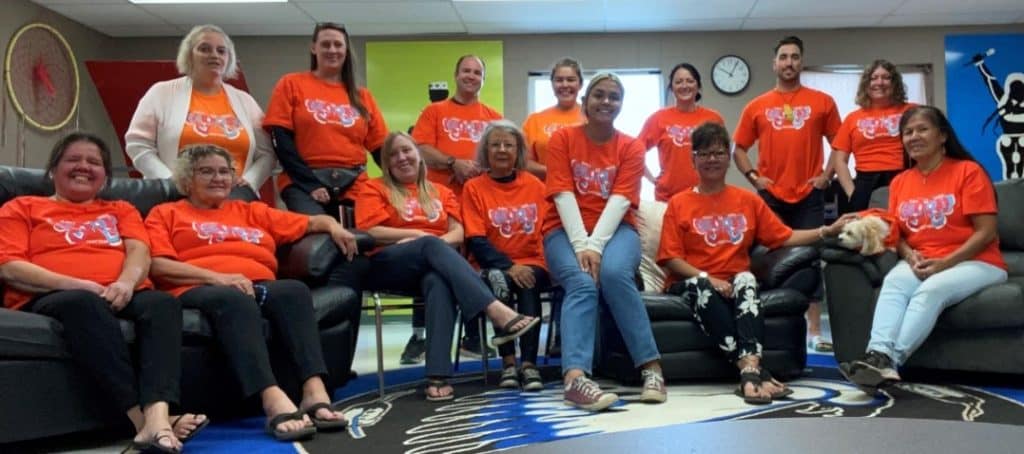
In addition to bringing back the health centre, Chrysler looks forward to a time when they can provide more space for the unhoused community. Currently, the space allotted for the storage program is in need of an upgrade. With only enough space for a few offices, Chrysler explains clients waiting for the storage, showers, washer and dryer and coffee have to cue up outside.
“I hate to see clients standing outside waiting to get inside to get a cup of coffee…And then the community looks at our people standing outside waiting to access the building and complain about it. But they don’t really realize the space is not suitable to have the people inside as a drop in center or any of that type of stuff.”
In the meantime, Chrysler is focused on advocating for government funding earnmarked for Indigenous programs to be allocated to friendship centres across the country because they are in the best position to provide culturally relevant care. As a non-profit organization, KAFS relies on provincial and federal funding for 90 per cent of its operations.
“We’re an Indigenous [led] organization and we should be considered first when it comes to that type of funding.”
Additionally, there are a number of volunteer opportunities available at KAFS for others who want to get involved. Interested volunteers can stop by and pick up an application at reception. There are also opportunities to help with events, like Indigenous Peoples Day, as well as day-to-day essentials like shoveling snow in front of the building.
With the anticipation of expansion and celebration on the horizon, Chrysler remains grounded in what is most important to her in operating the KAFS —community, connection and belonging.
“When you walk into the friendship centre, you’re not being judged,” she says. “You know you’re being taken care of, you’re being heard. And that sense of belonging is a big thing, of being welcome.”
The Wren is a community driven local news outlet. Your questions and ideas help guide what we dig into. Your feedback after we publish a story helps ensure we're always improving our reporting to better serve you
What do think about this story?