
Kamloops Adult Learners Society celebrates 20 years of lifelong learning
The Kamloops Adult Learners Society, going on 20 years of operations, was recently awarded $5,000 from the 2025 social and community development grants given by the city.
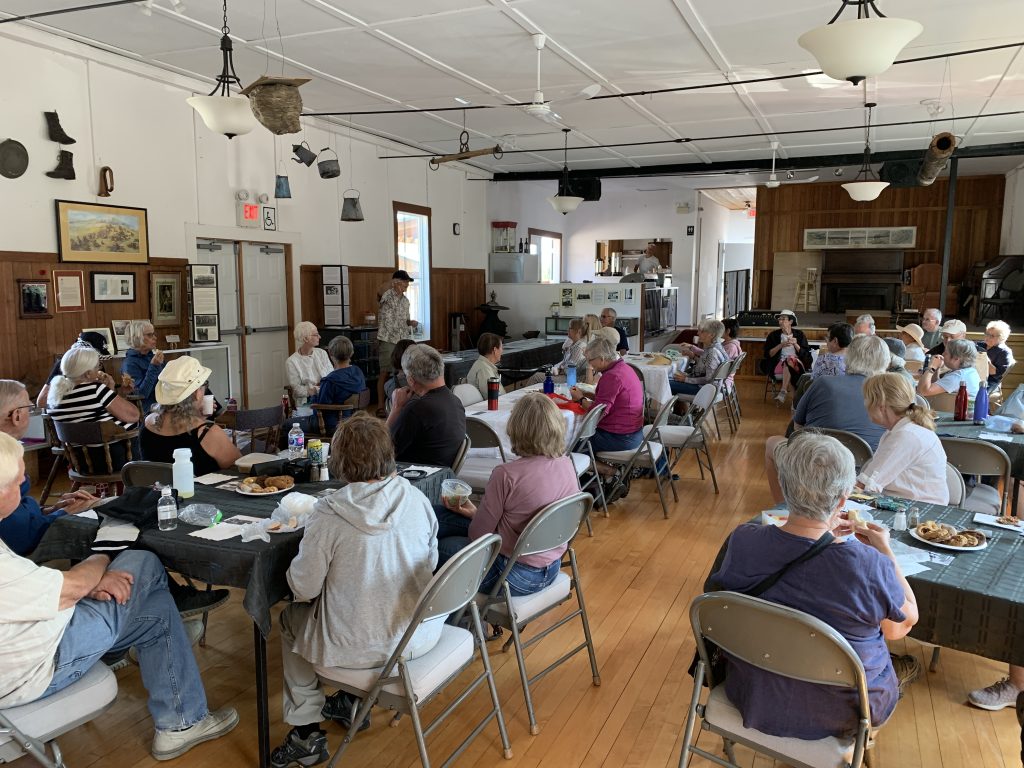
This year the Kamloops Adult Learners Society (KALS) is celebrating their 20th anniversary in September, and they are still operating by bringing valuable courses to Kamlooopsians.
The non-profit organization has focused on bringing lifelong learning to the community since 2005 by working with volunteers including teachers, leaders and organizers to offer courses on diverse topics.
KALS has over 300 members and welcomes all students over the age of 18. There is a $20 annual membership fee which is required to register for the courses. While some courses may have extra fees depending on the content or to cover the materials needed, KALS can offer financial waivers on a case-by-case basis.
KALS is constantly working to make the courses low cost so it is not a barrier to education. This is possible due to the volunteer work and relationships with various organizations in the community, like TRU which brings volunteers to courses. KALS also applies for grants, and was recently awarded $5000 for the 2025 social and community development grants given by the city. This grant is awarded to organizations in the community that serve Kamloops and align with the council’s strategic priorities.
The courses offered at KALS are divided into semesters, the winter semester begins in early January where they offer around 40 options. Most courses follow a university standard of lasting two hours a week in 12 weeks and they are all taught by volunteers. Each course has a minimum and maximum number of participants.
The full list of courses varies on topics, some offered currently include Taoist Tai Chi, wildfire & drought: how tree rings may tell the story and a come to the concert series where KALS has partnered with the Kamloops Symphony Orchestra.
Ginny Ratsoy is part of the board of directors of KALS and was first involved as a volunteer teacher, with experience teaching at Thompson Rivers University (TRU). This winter semester she will be teaching for KALS a four week course that follows fiction around Kamloops: Interior stories, which explores literature by women in the area.
Ratsoy has published an article on the importance of learning as a senior but also how universities can be better involved in the process. In addition, she has a chapter in the book No Straight Lines: Local Leadership and the Path from Government to Governance in Small Cities describing the role of KALS in Kamloops and their leadership.
Ratsoy explains the class environments are different, with some hosted in the Kamloops Sports Council where members might be sitting in a u-shape form similar to a regular classroom. In other cases, they might have tours that could be outdoors with members taken on field trips.
The people teaching classes at KALS are often experts in their field or university professors, which makes learning a better experience.
“[KALS relies] a fair bit on TRU professors and retired TRU professors, but we have no kind of formal affiliation with a university,” Ratsoy says. For funding KALS relies on membership fees and course fees, or grants, and Ratsoy says there is a lot of determination when it comes to running the organization.
During the COVID-19 pandemic KALS had to switch to a virtual format for their courses and around the time Ratsoy joined the board.
“I watched these women who were older, are strong, determined, they can pivot on a dime… some of these stereotypes about older people, that they’re not techsavvy, that they’re really set in their ways. Some of those stereotypes really were shown to be kind of empty,” Ratsoy says.
The organization has been motivated by the determination of learning and the freedom that is not restricted by bureaucracy, according to Ratsoy. However, one of the struggles KALS has faced is having a wider demographic.
“We are working on diversity now in terms of reaching out to younger people. We have done that on a kind of individual basis and we would love to have them,” Ratsoy says.
Sue Huddart is the co-chair of the program committee and is responsible for finding science and environment courses. Huddart first became involved in the organization around 2016, when she started attending as a participant then later on she became part of the program committee after she would pitch ideas.
“There’s about seven of us, we get together a few times a year. We discuss what might be of interest to people and who has contacts to follow up on ideas that people give us,” Huddart says.
For courses focused on environment and science, Huddart has been responsible for organizing field trips for courses that focus on the fauna and flora, along with the natural history of the region.
Huddart says some of the most popular classes amongst members of KALS are around local history.
“We try to offer a really wide range of subjects for everyone and people are pretty open-minded,” Huddart says. “We really cover any subject and if people come up with an idea, then we’ll throw it into the mix and see if we can’t find a speaker on the subject.”
Most of their classes include retired folks or seniors, but they are engaged in what Huddart describes as lifelong learning.
Nadine Fort was a student of KALS who also joined the board recently, she used to be a speech language pathologist and worked in that field for over 40 years until she retired.
“Most of your professional development, you’re always doing something that’s within the frame of reference of your profession,” Fort says. “Once I retired, I knew I wanted something that would sort of stretch me outside of that realm.”
She and her husband found KALS which gave them an opportunity to learn new things.
“When it came time where they were asking for people to be on the board, I thought this is an organization that values particularly senior adults, and who aren’t ready to just sit in a chair and watch TV, but want to expand and learn,” Fort says.
One of the courses Fort remembers fondly is when they went to the water treatment plant where they learned how water is treated to become safe drinking water which also introduced how water systems work in a city.
“That is not something I had ever thought about before. I just took it for granted,” Fort says.
Class environment

Larry Ward is a long time student of KALS, and has been involved for around ten years. Ward is also the host of the class News and Views. In the class they ask people to bring topics of the week so it can be discussed, and the participants can give their opinions.
During his time being involved in different classroom settings Ward says he has developed a comfort level in the environment.
“I continue to enjoy it because the atmosphere is very congenial and friendly, and we have a lot of laughs as well.”
In addition, he has found one of the benefits of the classes is getting to know people in the community.
Bruce Baugh is a philosophy professor at KALS who taught at TRU for 28 years on the same subject. Baugh has taught a course in the philosophy of rock music, along with other courses on introduction to philosophy and Nietzsche.
The syllabus is informal since there is not a required amount of material for students to get through. There is no homework, essays or exams in all classwork formats. The classroom format is small, with around 15 people.
“There aren’t the constraints that are there with a regular university course, which is nice. It’s great to have that kind of flexibility, and go with what people are interested in,” Baugh says.
Baugh says he loves teaching courses at KALS.
“When you’re teaching at university, in an intro philosophy course, there might be…20 per cent of the students who are actually interested in what you’re talking about. And the other ones you have to try to drag in or entice or use strategies to get them interested.”
However in the classes at KALS Baugh knows people are there because they want to be there and are interested in learning.
“It’s great to go in front of a room of people knowing that they’re already interested in whatever I’m going to be presenting, or whatever is going to happen in the class.”
Baugh says he teaches his philosophy courses out of pleasure.
“I enjoy it. You know, I get a lot back on the students and from the interaction with the students in class. Sometimes the discussion goes in directions that I wouldn’t have anticipated, and that gets me to think about things in a different way.”
The Wren is a community driven local news outlet. Your questions and ideas help guide what we dig into. Your feedback after we publish a story helps ensure we're always improving our reporting to better serve you
What do think about this story?
Author

Related Articles

Here’s how general election candidates will tackle affordability in Kamloops
Kamloops’ 2026 general election candidates share what steps they’d take to improve affordability.
Here’s how general election candidates will navigate homelessness and mental health issues in Kamloops
Kamloops’ 2026 general election candidates share share how they’d respond to homelessness, mental health issues and addiction.
Indigenous Film Festival returns ahead of National Day for Truth and Reconciliation
Indigenous storytelling shapes fifth annual film festival over three days this weekend.
