
Here’s what candidates have to say about AI infrastructure in Kamloops
As Kamloops becomes a hub for AI data centres, candidates share their thoughts on regulation and support.
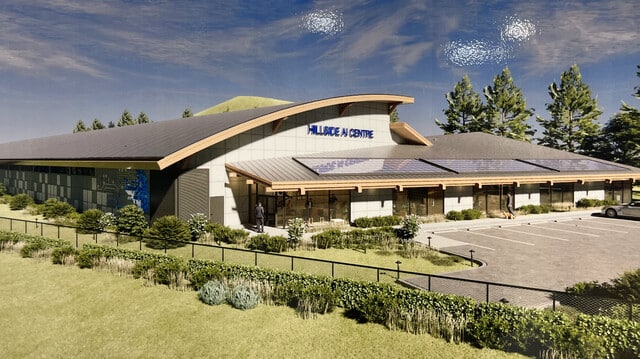
Leading up to the 2026 general election in Kamloops, The Wren surveyed readers to learn what they wanted to know from candidates running for council and mayor. Responses have been listed in the order they were received and have been lightly edited for length, clarify and fact-checking.
To learn more about the full survey responses, visit our article below:

Here’s how candidates responded to the question: What are your thoughts on AI data centres and their long term effects on the community? How would you aim to regulate them?
Mayoral candidates:
Ivory Winston
I believe in technological advancement and that our city should play an active part in it.
For me, the question is fairly simple: does this make Kamloops better in the long run?
With an AI data centre, I would want to understand the full picture. How many lasting local jobs does it create? How much land, power and water does it use? What infrastructure does it require, and what are the impacts from things like noise and heat?
If a project uses a significant amount of community resources, I think it is reasonable to expect a meaningful community benefit in return.
The city should use the tools it has through land use, zoning, development approvals and servicing to make sure that balance is there. I’m open to this kind of development when the long-term benefit to Kamloops is clear.
Nelly Dever
Kamloops is host to operational AI facilities from providers like Bell, and we welcome technological innovation that diversifies our tax base. However, because these large-scale operations have significant, long-term impacts on power grids and water infrastructure, their growth must be managed responsibly.
As mayor, my approach is to rely on science and professional expertise, not political guesswork. We won’t hinder industry growth, but we will ensure our municipal approval process requires developers to provide independent, verified resource-impact assessments.
By working collaboratively with senior levels of government and utility experts, we can establish clear, data-driven local regulation guardrails. This ensures Kamloops remains a competitive hub for tech investment while fully protecting the utility infrastructure and resources our local taxpayers rely on every day.
Mayoral candidates Mike O’Reilly, Reid Hammer-Jackson, Kris Lloyd-Middleton and Ray Dhaliwal did not respond prior to publishing. This article will be updated as more information becomes available.

Council candidates:
Dale Bass
My colleague Nancy Bepple and I, through our involvement with the Climate Caucus, saw our motion to lobby FCM to work with the federal government on protocols, procedures and other factors involved with creation of these centres be addressed approved by council. That work led to the announcement from the prime minister with some direction in best practices for their creation. I continue to lobby all levels of government about my concerns in the actual infrastructure and potential environmental issues. Overseeing those does not lie with the municipal government. We can and do regulate water usage but we can’t address hydro usage, for example and we are seeing centres that start with a low hydro usage scaling up and using more and more.
Christopher Mitra
With a background in computer science and years spent as a technology CEO, I understand this technology—and that is precisely why I am skeptical of large-scale AI data centres in Kamloops.
I don’t feel the reality of data centres matches the pitch that is sold. Hyper-scale data centres demand an extraordinary drain on local resources while offering minimal long-term benefit to our community:
- Minimal Local Employment: Despite their massive physical footprints, modern data centres operate with skeleton crews—often just a handful of technicians and security personnel. They simply do not generate the sustainable, high-volume local jobs our city needs.
- Straining an Already-Taxed Power Grid: British Columbia’s electrical grid is already under growing pressure. Dedicating immense blocks of energy to power-hungry server racks risks driving up regional demand and consuming electrical capacity that should be reserved for local industry and residential needs.
- Water Usage in a Drought-Prone Community: Kamloops is a semi-arid desert valley that is already experiencing yearly summer droughts, low river flows, and strict water conservation advisories. Diverting millions of litres of water toward evaporative cooling systems for computer servers is not wise. Even closed systems need to be renewed, with large water usage
- Low Tax Benefit: These facilities use prime industrial land and consume vast power and resources while returning little economic value relative to the strain they put on our public assets.
How I Would Regulate Them: We must protect our community resources. I will advocate for tight zoning requirements and strict utility policies that treat data centres with extreme scrutiny. Any proposal must face non-negotiable hurdles, like an outright ban on open-loop water cooling, reviews of their power impact on the community (funded entirely by the applicant), and premium industrial utility rates so local taxpayers never subsidize corporate server farms. Kamloops must protect its power, water, and land for local priorities
Kelly Hall
Right now, in our community I’m working with various Businesses to help develop a new city bylaw that will assist in managing Data centre grow including AI. Working with our community Braintrust from all sorts of business, breaking down the silos, so we can have all collaborate for the benefit of the community.
Brice Eberle
I have concerns, and I would be very vigilant and cautious through zoning conditions, water limits and rezoning approvals. Before we greenlight anything else like Kenna Village, I want an independent environmental review done, not just take the company’s word for it. Our watershed’s already under stress in drought years, and that’s not something to gamble with for a tax bump.
Dave Baker
There has been a lot of interest in AI centres recently. The high energy use and water use seem to be the two biggest drawbacks. I am very concerned about the energy usage because I don’t know at what point our current supply system would max out. What’s the cost of having to upgrade our infrastructure and what could that do to the rates we currently pay? The amount of water they require is also a concern as Kamloops does not have an infinite supply. We already experience water restrictions, can we handle more usage? I understand there are closed loop systems that help but is that enough? There are studies being conducted on current data centres that may help us further understand the pros and cons. AI is here, it seems that we all use it in some way or another, let’s just move slowly and try and do things right.
Katie Neustaeter
There are currently no zoning limitations requiring approval from council for an AI data centre facility to be built on industrial lands within the city, and public concern over water usage, heat output, land use and more has been mounting.
I believe that data sovereignty is important, particularly as Canada’s relationship with the USA (who currently houses much of our nation’s data) is fracturing. Private medical or banking information, government data, national security, and critical infrastructure records should be housed within our borders for protection, but so too should we be cognizant of the impacts of an expanding technology sector that consumes prime, taxable real estate for AI slop production.
With these things in mind, I brought forward a motion directing city staff to draft a local policy framework governing AI data centre development in our community. It was adopted by council. The intention is to explore local regulations for proposed AI data facilities, focusing on zoning, taxation considerations, infrastructure impacts (such as power and water demands), an automatic public hearing, and securing potential community benefits or amenities should they be built.
The public is wary of the implications of AI data centre development, and while we do not know the long-term impacts, we must learn from the previous lack of regulation of emerging tech industries and set forward policies to try and mitigate unintended consequences while we still can.
Good government doesn’t just react to today; it reads the evolving room and writes policy for tomorrow. My position as I learn about both the concerns surrounding and arguments for embracing rapid AI data centre advancement is that we cannot wait for someone else to bring our community a solution that will safeguard our lands and resources but must take the responsible initiative ourselves for current and future generations.
Kadin Rainville
The crystal ball question of trying to predict the future is challenging. My decision making process is based on data so I would want to shortcut this question and see what other municipalities are doing that have already had AI data centres in place for a period of time. The challenge with any new technology is what are the unintended consequences that will occur in the future. Short term I think it provides jobs and an economic diversity to our city which we are in dire need of to insulate against challenging economic times. A quick ChatGPT inquiry shows that AI data centre governance in California is controlled right now by “electricity, environmental, building, air-quality, water, land-use and utility rules” and I foresee this will continue to develop rapidly.
Bonnie Cleland
There are valid concerns about the development of AI data centres and their potential impacts on local residents, municipal infrastructure and the environment. At the same time, I think we need to consider these decisions in a larger Canadian context.
Canada is pursuing greater AI computing capacity within our country, and I think that’s critical. AI is increasingly being integrated into services Canadians already use, sometimes without us even being particularly aware of it. As AI becomes more embedded in our economy and everyday infrastructure, maintaining domestic capacity becomes a question of Canadian resiliency and sovereignty, not simply technological development.
That doesn’t mean Kamloops should accept any proposed data centre on any terms. I would want to look at communities where data centres have been developed successfully, understand what made those projects work, and learn from them.
Any proposal should clearly demonstrate its expected water and electricity consumption, infrastructure requirements, impacts on surrounding residents, and tangible benefits to Kamloops. We should also ask whether there are innovative ways to reduce resource use or turn waste into a community benefit.
Data centres generate significant heat. Could that heat be captured to support greenhouses and contribute to year-round local food production? Could water be recirculated or lower-water cooling technologies be used? I don’t know whether those particular ideas would be viable here, but those are exactly the kinds of questions I want us asking.
I don’t think this should be approached as simply being for or against AI data centres. Our responsibility is to understand the benefits, costs and risks, regulate the areas within municipal control, and ensure any development approved in Kamloops provides meaningful benefit without imposing unacceptable costs on the community.
Nancy Bepple
Some issues around data centres are the responsibility of other levels of government. A couple months ago, myself and councillor Dale Bass brought forward a motion on the need for federal guidelines and regulations. Our motion was used by the Federation of Canadian Municipalities, municipalities’ national organization, as part of their advocacy with the federal government. And it worked. This a September, the federal government released its Canada’s Responsible Data Centre Development Principles.
At the same time, the current Council has asked staff to bring forward a draft policy for local issues. I will be reviewing the draft policy carefully to see if addresses issues within municipal jurisdiction such as water use.
Jesse Ritcey
The challenge with AI data centres is the tremendous amount of energy they use and the waste heat that generates. Heat is either addressed through evaporative cooling, which requires a lot of water, or in newer, closed loop systems, it is radiated out into the environment. This can be an asset for district heating systems in the cooler months but during the summer is a major liability, increasing the risk of drought, fires, and negative health impacts from heat. We can ameliorate this by requiring shade trees and planting of greenery around data centres. In our dry climate though, that means lots of supplementary water, which goes back to the issue of the data centres water usage.
I believe we should create a specific zoning classification for data centres. Currently they can be built anywhere that is zoned for industrial land throughout Kamloops without any prior approval being needed. By requiring a specific zoning, we would regain control over their growth in our community.
Lyndsey McDonald
I’m not opposed to technological innovation or the economic opportunities AI may bring to Kamloops. But I believe regulation is important, and we need to be paying attention now rather than waiting for problems to appear.
There is a lot of conversation surrounding AI—water and electricity consumption, infrastructure demands, employment, environmental impacts, privacy, security, taxation and even how rapidly the technology itself is changing. I think all of those conversations deserve to be observed, researched and adequately planned for.
My starting point is simple: AI isn’t the test. Accountability is.
Before supporting major data-centre development, I want clear information about its resource and infrastructure requirements, who pays for upgrades, what benefits remain in Kamloops, and what happens if our community’s needs change.
I would support a transparent municipal framework that establishes clear expectations around water use, infrastructure cost recovery, community benefits, local employment and training, taxation, reporting and environmental impacts.
We also need to plan for the long term. Technology can change quickly, while the infrastructure built to support it can remain for decades.
I don’t think regulating AI means trying to stop innovation. It means understanding the potential benefits and risks, establishing appropriate safeguards, and making sure private development doesn’t create costs that are ultimately carried by the public.
I’m open to innovation. I believe Kamloops should also be prepared for its consequences.
Randy Sunderman
I am undecided as to the role AI data centres should play in our community. As an economic developer, I know the importance of capitalizing on new opportunities as they emerge; however, these must be well grounded in the potential adverse impacts. Right now, city staff are investigating AI data centres and preparing a report to council. The city has also reached out organizations like the Kamloops Chamber for input and further expand the discuss. Community conversation and reflection is good step on our path determining how our community looks at AI data centres.
Brian Andrews
Data centres are already here in Kamloops, and more are coming to the Interior. Done right, projects like the expansion of the Bunker Road facility bring construction jobs, long-term tax revenue, and a stronger economic foothold. Done without care, they can drain already scarce water sources, warm the air around the buildings which impacts the environment, and strain the community’s electrical grid.
Data centres are controversial for good reason, which is why we need proper planning and strong regulation. Local watershed groups have raised alarms about drought risk, and there has even been a call for a provincial moratorium. Telus says its facilities here in Kamloops will use 90 per cent less water than a traditional data centre – but those are company claims, and residents deserve to see real results without putting their community at risk first.
I would ask three questions of every proposal. How does it help or harm our community over its lifetime? What does it demand from BC Hydro and our water system? Who pays the ongoing costs of the pressure it puts on our community, our resources, and our environment? Municipal tools already exist. The city regulates data centres through zoning and taxation, with a daily water-use cap of 35 cubic metres, and council is also asking for a national framework. I would use development permits and servicing agreements as well.
Before approval, I would negotiate firm commitments on jobs, local hiring, and environmental standards, and I would want a tax structure that delivers real community benefit. Closed-loop cooling and heat recapture systems for example, shows what a better data center can look like – but we still need to strive for more innovation and protections. Our goal for Kamloops should be growth that strengthens us for the long term, not a short-term gain that leaves us with costly consequences.
Nevin Webster
I am okay with data centers in industrial areas like Mission Flats, away from where people live; assuming we believe closed loop systems are as effective as they say. I also believe the topic of regulation needs to be tackled before we see more data centers built. Regulation of data centers in Kamloops should include monitoring their water usage during droughts.
Greg Unger
AI data centres need to be studied more closely before we allow more of them into our city. They use up precious water resources while we are in a multi-year drought. They take up valuable real estate while bringing very few jobs to Kamloops. Like public surveillance systems (i.e. Flock), data centres are proving to be very unpopular in many communities around the country. Any future data centre developments should go through a public consultation process before going ahead. There is evidence of AI being a bubble, and we need to be prepared for the bubble to pop by not over-investing in this tech.
Cindy Sonne
I’m still weighing this, and my biggest concern is water. Kamloops hit Drought Level 5 in 2023 and was back at Level 4 this summer. Bell says its Kamloops data centres use closed-loop cooling and don’t rely on city water except to fill the system. I’d like to research this more and hear from our citizens if they have been affected by this.
Bill Sarai
As this is such a new and controversial issue dividing the country, more information from both sides is crucial. Our council has asked our staff to set up a workshop with all parties. We will also see what other levels of government guided us with their studies. As this technology is rapidly changing, we need to find a way to protect our environment, but at the same time embrace the benefits AI brings to the table.
We don’t want to be the first ones to the dance, but also not to be the last, if that makes sense. One thing I did learn is the new technology is that the new AI systems use a closed-loop water system. So similar to your car radiator, fill it up once and you’re good for years. The concern I do have is electricity usage and job creation after the build out. How do we tax it? Is it light – medium or heavy industry? All this has to be brought forward before I can support it one way or another.
Margot Middleton
This issue is under discussion at all levels of government and the full impact is yet unknown, so at this time we require more information and direction from other levels of government and UBCM.
Steve Bucher
We have five data centres now. Every time a business tells a consumer that they will no longer mail out a statement, it increases the demand for data centres. I do not think data centres are disappearing anytime soon. So we need the service; we use the service; and demand will go up as our reliance on paper decreases.
So, we need to pick the best location for them; pick the best limits on noise, water usage, heat production and energy usage. The demand for energy cannot meet our current capacity, so smart limits will be required.
Ian Head
Data centres have been pushed down our throats and are way to costly to our environment and the cloud of invasion of privacy is paramount. I am not in favour of any expansion of these centres.
Rob Bertrand
I’m not against technology or economic development, but development needs to make sense for Kamloops. Before approving AI data centres, we need clear answers about electricity demand, water use, noise, infrastructure requirements, location and actual local economic benefits, at this time I do not see enough value in there being AI Data Centers in our city.
Council candidates Stephen Karpuk, Dennis Giesbrecht, Kathrine Blair-Wunderlich, Doug Ronnquist, Mac B. Gordon and Robin Reeb did not respond prior to publication. This article will be updated if more information is made available.
The Wren is a community driven local news outlet. Your questions and ideas help guide what we dig into. Your feedback after we publish a story helps ensure we're always improving our reporting to better serve you
What do think about this story?
Author

Related Articles

Here’s how general local election candidates will support public transportation
Candidates for the 2026 municipal election have plans for transportation in Kamloops.

Here’s how general election candidates will tackle affordability in Kamloops
Kamloops’ 2026 general election candidates share what steps they’d take to improve affordability.
Here’s how general election candidates will navigate homelessness and mental health issues in Kamloops
Kamloops’ 2026 general election candidates share how they’d respond to homelessness, mental health issues and addiction.
