
Here’s how general election candidates will navigate homelessness and mental health issues in Kamloops
Kamloops’ 2026 general election candidates share how they’d respond to homelessness, mental health issues and addiction.
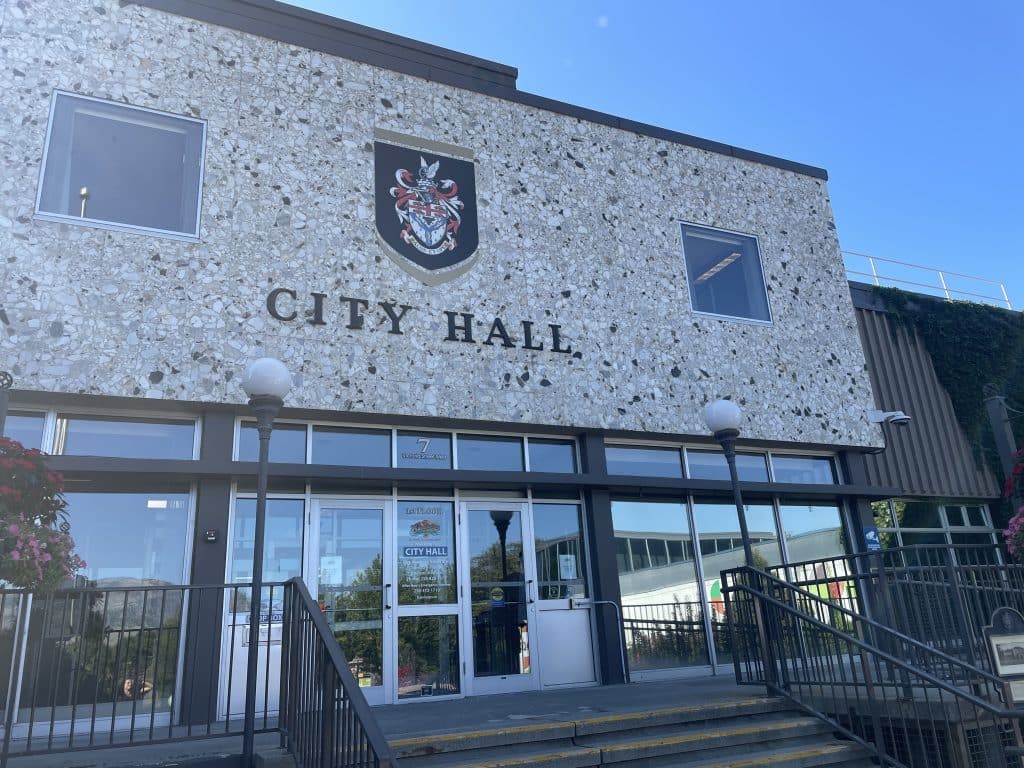
Leading up to the 2026 general election in Kamloops, The Wren surveyed readers to learn what they wanted to know from candidates running for council and mayor. Responses have been listed in the order they were received and have been lightly edited for length, clarify and fact-checking.
To learn more about the full survey responses, visit our article below:

Here’s how candidates responded to the question: How will you bring all partners to the table regarding the unhoused population in Kamloops? How will you support wrap-around services for mental health and addictions?
Mayoral candidates:
Ivory Winston
There are already a lot of people and organizations in Kamloops working hard on this. I think we need to get them around the same table, make sure their efforts are connecting and understand where people are still falling through the cracks.
That includes health care, housing providers, service organizations, Indigenous organizations, first responders, other levels of government and people with lived experience.
Homelessness, mental health, addictions and housing often overlap, but they are not the same problem. Different people need different kinds of help at different times.
I also think we should be willing to dream bigger. What if Kamloops could become known for finding better ways to help people rebuild their lives? There may be ideas right here in our community that we simply haven’t heard or tried yet.
We should build on what is working, be honest about what isn’t and make room for bold local ideas that could make a real difference.
Nelly Dever
Addressing homelessness, mental health and addictions requires collaborative leadership. The current gridlock at city hall has hindered progress, and we need a coordinated pivot toward collective action and street safety.
As mayor, top of mind is: a structured, results-oriented regional task force, an intergovernmental community safety triage centre (RCMP, Community Service Officers and clinicians), expanding CSO zones, and advocating for a modern care institution. This includes all-encompassing wrap-around services like education and life skills to reintegrate individuals back into becoming contributing members of society.
We will advocate fiercely to provincial and federal governments to secure dedicated funding for comprehensive, localized treatment facilities. Emergency shelters must connect seamlessly to psychiatric care, medical detox and transitional housing. Simultaneously, we will protect community safety by backing our public workforce and law enforcement, ensuring our business corridors remain secure.
Mayoral candidates Mike O’Reilly, Reid Hammer-Jackson, Kris Lloyd-Middleton and Ray Dhaliwal did not respond prior to publishing. This article will be updated as more information becomes available.
Council candidates:
Dale Bass
This has already been done. There is: the collaborative homelessness response tables, which includes a leadership table, an interagency supports table, a systems improvement table and the HEART table; The safe and secure Kamloops working group, which includes the social agencies engagement group, the protective and safer services engagement group, the business sector engagement group and the neighbourhood associations engagement group; The Kamloops Access Hub leadership group, which is populated by the city, Tk’emlúps te Secwepemc, BC Housing, Interior Health, the Ministry of Social Development and Poverty Reduction, the city’s business improvement associations and operators of shelters; The Reaching Home Community Advisory Board, which has community representatives and which oversees funding from the federal Reaching Home: Canada’s Homelessness Strategy funding.
All fundamentally through their terms of reference address those issues included in your question.
Christopher Mitra
Having spent 18 years as an Auxiliary RCMP officer and Restorative Justice Facilitator, I know firsthand that real community safety requires both firm accountability and compassionate, practical care.
Right now, there seems to be endless finger-pointing between the city, Interior Health, BC Housing and local service providers, and I’d like to see the city take the lead and bring all the relevant parties to the table
- Bring all the players to the table: The city alone cannot make the changes required. Let’s step up and form a collaborative group focused on shared, measurable results rather than arguing.
- Better good neighbour agreements: I believe we can be compassionate while still protecting our neighbourhoods. I will advocate for clear, binding Good Neighbour Agreements with shelter and aid housing operators, mandating perimeter cleanliness, active security and timely response to neighbourhood concerns.
- Push hard complex care: Kamloops should not be in the business of funding healthcare alone, but we must aggressively fight for the provincial resources we need. I will lobby Victoria to make Kamloops a designated regional hub for B.C.’s secure, involuntary care and complex-care models for people with severe brain injuries, psychosis and untreated addiction who cannot safely survive on the street.
- Let’s fast-track secure treatment land-use: Let’s make sure Kamloops is never bypassed due to municipal delays. I will advance motions to identify, pre-zone and fast-track municipal land for treatment and recovery facilities. When provincial funding arrives, Kamloops must be shovel-ready.
Editor’s Note: In The Wren’s in-depth reporting on recovery in Kamloops, reporter Sunny Stranks found a lack of evidence to support involuntary treatment. Read the fact-check here.
Kelly Hall
This multi-level governmental challenge is our biggest community challenge. We need to push provincial for more funding and appropriate housing. Earlier last year I put a Notice of Motion to stop the development of Leigh and Fortune because BC Housing changed the terms within the request for proposals. Community was asking for recovery-focused housing and council, through my motion, stood together and did not more forward on this development.
As a result, we are now seeing BC housing looking at their data and understanding the needs of community and we are seeing more Transitional and Seniors supportive housing. Assisting with the support of wrap-around services is a direction our community needs to explore and push provincial governments to fund more.
Working with BC Housing to develop the right types of housing is a good step. We also can look at Premier David Eby’s program of involuntary institutional care programs. I think this is another opportunity.
Editor’s Note: In The Wren’s in-depth reporting on recovery in Kamloops, reporter Sunny Stranks found a lack of evidence to support involuntary treatment. Read the fact-check here.
Brice Eberle
I would work hard to understand what the problem each group faces at the ground level, and then get everybody in the same room. Interior Health, BC Housing, RCMP, ASK Wellness, Mustard Seed etc., and ask them what we can do to assist them. Right now it seems there is a disconnect and that’s on us to fix. A possibility might be putting services in one building (housing, mental health, addictions) instead of sending people back and forth between the hospital, the shelter and the street. Ultimately, it’s about listening, compassion and working with all parties involved.
Dave Baker
Kamloops has many different agencies dealing with the unhoused, people with mental health and people with different types of addictions. There is no one solution that fits for everyone. I would like to see a comprehensive list of our current facilities, what they provide and who pays or is responsible for these services, i.e. municipal or provincial. Once we have this information we can provide each individual seeking help with what they require. Hopefully we can then help them in their journey to move through a system from beginning to end.
Something else I think worth exploring is at a more provincial level bringing together service providers from other cities, towns and villages throughout British Columbia to work together on solutions as these issues are not ours alone.
Katie Neustaeter
Kamloops is uniquely fortunate when it comes to the willingness of community partners to collaborate, connect and convene to find solutions to challenging social issues, even though the struggle is uphill.
Although housing and health are under provincial authority, the city regularly dedicates considerable resources and capacity to addressing these matters with all available and participating partners. This work is heavy and considerable, while also often going unrecognized.
Whether it’s the distribution of Federal Reaching Home funds and the CAB that facilitates it, supporting the delivery of the CAP program, ARCH and KamPASS, supportive housing coorindation, and more, the city is faithfully in the spaces required to try and address the local impacts of provincial and federal policies with the direction of council.
An excellent example of council bringing partners together to achieve successful outcomes for vulnerable populations is the Situation Table. After meeting with the attorney general of B.C. at UBCM in 2025, council supported the establishment of this new approach to strengthen local coordination and, through grant funding, 80 local people have been trained and there are 25 agencies working together to provide better outcomes and case management for vulnerable individuals in our city.
Moving forward I will continue to champion innovative solutions like the HEART and HEARTH funding that council secured through the province to establish housing and supports, the purpose-built complex care coming to our community through council advocacy, or the demand for recovery-focused facilities so that functional solutions can be found as we work toward the wrap-around supports urgently needed to address the many desperate mental health and addictions needs in our community.
This also means saying “no” sometimes to non-recovery focused housing, which I did repeatedly and vocally on the BC Housing proposed Leigh/Fortune development which was not approved and is not moving forward.
Kadin Rainville
The NDP government has come to the conclusion based on data evidence that they need to focus more on mandatory care. This takes the vulnerable population off the street and forces them into treatment. This is a very complicated change of direction for them but they are saying they have 2,000 of these beds now available.
I have had a friend that was unhoused that we couldn’t help because of his addiction so I was happy to see the NDP move this way as my friend may still be with us today if we could have made treatment mandatory for him. Again what I am currently working on is a “roundtable” that involves all levels of government speaking with each other as well as the stakeholders for the issue of that specific roundtable. Having all stakeholders meet regularly to discuss not just issues but solutions leads to the best results as we can avoid unintended consequence
Editor’s Note: In The Wren’s in-depth reporting on recovery in Kamloops, reporter Sunny Stranks found a lack of evidence to support involuntary treatment. Read the fact-check here.
Bonnie Cleland
The first step is ensuring we’ve identified the people with relevant expertise, experience and responsibility, as well as those directly affected, and that they feel genuinely their voices and concerns are being heard. If people don’t believe their participation matters, eventually they stop coming to the table, and that can halt progress on a very complex issue.
We also need to be clear about who we’re talking about and what issues are affecting them. The unhoused population in Kamloops is not a monolith. People become unhoused for different reasons, face different barriers and need different kinds of support. We can’t expect one approach to work for everyone.
A huge challenge is that responsibility is spread across different organizations and levels of government. Effective wrap-around support requires those groups to coordinate, communicate and understand their respective roles rather than expecting any one organization to solve the problem alone. We need to build on the collaborative work already happening in Kamloops and ensure everyone at the table understands their roles and responsibilities.
There also needs to be an action plan tied to clear, measurable outcomes. When we invest money, time and resources in an intervention, we need to know whether it is accomplishing what we intended and whether there are unintended consequences. If it’s working, we can build on it. If it isn’t, we need to understand why and be willing to change course.
Finally, we need to hold the duality of individual responsibility and compassion. We can have compassion for people experiencing homelessness, mental-health challenges or addiction without accepting harmful behaviour when it occurs. Supporting individuals and maintaining reasonable standards of safety for the broader community are not mutually exclusive goals.
Nancy Bepple
As part of council, City of Kamloops has created a situation table of 65 individuals from 22 organization. This table allows unhoused individuals to have access to all the services available in a coordinated way. The Kamloops Interagency Supports Table provides respectful and effect services for youth, seniors, women, people with disabilities and others. I support the continuation of this service and opportunity of other community groups to be part of it.
I do not support the current council’s goal of involuntary care being delivered at Kamloops Regional Correctional Centre or in the Okanagan correctional facility. I do not support the plan because of limited access to voluntary care, the clear decisions from the courts that the province’s involuntary care policy violates the Charter, and the completely inappropriate use of jail as a place for health care.
Jesse Ritcey
The Kamloops Interagency Supports Table is a proven model that already exists where many of these discussions are being held.
The latest current point in time count identified 419 individuals in need of housing and has represented a steady increase the past few years. It is clear we need to be seeking more investment from the province and BC Housing for affordable housing options across the continuum, from emergency shelter to supportive housing to subsidized units, rather than just emphasizing new market rentals or expensive new homes as a solution to the housing crisis.
Unfortunately, anything to do with providing medical care to individuals, including harm reduction services, has become very politicized. We can support wrap-around service providers by grounding policies in evidence-based decision making, following solid medical and social science rather than opinions. That means leaving service providers free to determine and deliver the services that are needed.
Lyndsey McDonald
I don’t think Kamloops needs another silo. We need to connect the organizations already doing this work and put the person experiencing homelessness at the centre.
I would bring together the City, Tk’emlúps te Secwépemc, BC Housing, Interior Health, provincial ministries, non-profits, emergency services, businesses, service providers and people with lived experience.
My Build & Belong concept proposes a four-year municipal pilot for up to 1,000 participants, with a minimum two-year pathway focused on stability, education, participation, employment and building the resources needed for greater independence. I want measurable outcomes so we can see what actually works.
Wrap-around support should mean people don’t have to navigate a maze of disconnected services themselves. Housing, transportation, income, employment, mental health, addictions and community supports need to connect.
The city can’t take over provincial healthcare responsibilities, but council can convene partners, advocate for resources, support appropriate municipal programs and hold partnerships accountable for outcomes.
Different people become unhoused for different reasons, so our responses need to reflect that. My goal is to help build pathways out of homelessness, rather than simply managing homelessness indefinitely.
Randy Sunderman
Conversations are evolving on this topic and partners already work hard to connect and coordinate to bring services and programs to the unhoused in Kamloops. I would like to see greater effort among the service providers working with business and residents in neighbourhood committees to problem solve the issues that arise from having unhoused population around the city. Ask Wellness is currently piloting this approach on the Northshore and I believe we need to continue to refine and support its implementation.
The real challenge that needs to be brought forward is what partners can we bring to the table to address the 15 per cent or so of the unhoused population that is currently falling outside the support network. I believe the city can play a role in identifying the players and a pathway to begin tackling one of the most challenging issues of the unhoused population in Kamloops.
Wrap-around services for mental health and addictions are primarily funded by the provincial government, and our various service agencies try their best to make sure wrap-around supports are in place. As council we can advocate and lobby for additional services as gaps are identified. Further, I would support the municipal officials currently UBCM in pushing the province to take immediate action in:
- Immediately moving beyond harm reduction and make detoxification beds for drug users available within Health Ministry facilities in all B.C. communities.
- Properly locate public-facing, low-barrier harm reduction services and not allow drug users to operate “such that harm is transferred to the neighbourhood where the services operate.”
- Immediately establish government-operated addiction and mental illness treatment and recovery services available on a regional basis throughout B.C.
Brian Andrews
The city cannot solve homelessness alone. As councillor, my job is to bring everyone to one table: the province, Interior Health, the RCMP, Tk’emlúps te Secwépemc and frontline agencies like ASK Wellness.
The Journey Home strategy already gave us a shared direction. What has been missing is accountability, consistent follow-through, and a council that treats mental health crises, affordability, and homelessness as connected issues that deserve priority attention.
Housing alone is not enough. We need a solid pathway that sees people through from the streets to recovery. Too often, community members tell me there are gaps, little follow-through, and not enough oversight. People get lost in the system. They reoffend, end up back on the streets, and begin using again.
We need to break that cycle. It takes more than a bed, a safe injection site or a meal. People need serious mental health care, addiction treatment, income supports and life skills to help them grow and succeed. I want to look at successful programs other communities have invested in and see whether they would fit Kamloops.
We do not need more pilot projects. We need tried and proven systems. I will advocate for more permanent supportive housing, detox and treatment spaces in our region, and teams that pair health workers with police, so calls involving mental distress end in care, not jail cells.
I will also be honest with residents. Neighbourhoods deserve safety and cleanliness. But looking after our most vulnerable, whether they are struggling on the street or one paycheque away from losing their housing, is all part of the same solution. We need to build trust in our community. Sometimes that means admitting a program or situation is not working and trying again.
No matter what, we need a safe community and services that lift people up when they need it most.
Nevin Webster
I think all partners should meet on the street rather than at a table so that they can best understand the situation firsthand. My support comes from the fact that I have dealt with mental health struggles in the past and that I have a desire to be present on the streets and working to build relationships with those working with the unhoused population and the unhoused themselves. Actively being on the streets and making community with those who are also, is the only way I see things developing positively for the street community and community at large.
Greg Unger
We need to make sure that the city is represented at the Kamloops Food Policy Council’s Food Access Working Group to make sure vulnerable community members have access to food. We need to create working groups for addictions recovery and mental healthcare by bringing together organizations like ASK Wellness, Canadian Mental Health Association, Kamloops Aboriginal Friendship Society and others, and make sure the city is at the table for these discussions.
We need to bring Business Improvement Associations and business owners to these discussions as well. Getting diverse interest groups talking to each other goes a long way to creating empathy and understanding. The city needs to work to de-stigmatize our vulnerable populations through public awareness campaigns around the upstream causes of homelessness and addictions.
We need to require that the RCMP and Community Services Officers have training around working with compassion towards vulnerable populations and we need to get more Public Health Nurses on the streets, riding along with RCMP officers or doing street outreach of their own.
Cindy Sonne
This is personal. My father was an alcoholic, and my brother struggled with addiction before he died by suicide. I’ve spent 25 years in healthcare caring for people with disabilities, homelessness and addiction. I’m not against addiction services. I would support them if they were properly run, but right now they aren’t providing proper care. My priority is getting the province to do a full, independent audit of every harm reduction facility, shelter and supportive housing site in Kamloops. Council told the Ppovince it wasn’t interested. I am interested and I feel it is necessary.
Bill Sarai
We have initiated the situation table with all the partners participating. Now we have the attorney general supporting our interrogated community court group. The other conversations I just had as the president of SILGA with the premier and ministers at UBCM last week, they are committed to a voluntary and involuntary complex care beds in the interior.
Editor’s Note: In The Wren’s in-depth reporting on recovery in Kamloops, reporter Sunny Stranks found a lack of evidence to support involuntary treatment. Read the fact-check here.
Margot Middleton
Partners are already at the table but this issue is very complex. Providing an area with the least impact to businesses and residents to set up a Campus of Care would be key to improvements.
Steve Bucher
I would be surprised to find out all the partners are not talking. The greatest issue with wrap-around service is when the chronic offenders destroy what was built. We have done a poor job identifying who is causing trauma to our vulnerable population and who is stealing the opportunities from those who enjoy the low threshold services. I have walked by the downtown 24 hour bathroom when it has been on fire, or just put out. It happens way too often.
Ian Head
This is an interesting question as I feel very strongly that partnerships are not healthy and reestablishing clear transparent awareness of the current nonprofits will require audits to pull back the curtain and give us real facts of where money is best used.
As far as supporting wrap -round services the current partners are, to say the least, fragmented and non-transparent and there are unknowns as to how they are truly helping as there needs to be a forensic audit to help with where we need to advocate. Better management and focus on recovery rather than harm reduction and the revolving door we are seeing.
Rob Bertrand
We need everyone at the same table. The city, province, Interior Health, BC Housing, RCMP, service providers, businesses and people with lived experience. Shelter beds alone aren’t a solution if there’s nowhere for people to go next. I would advocate aggressively for greater detox, treatment, recovery, mental-health and supportive-housing capacity, with measurable outcomes.
Municipal government should coordinate, advocate and hold partners accountable while maintaining safe neighbourhoods and public spaces.
Council candidates Stephen Karpuk, Dennis Giesbrecht, Kathrine Blair-Wunderlich, Doug Ronnquist, Mac B. Gordon, Ian Head and Robin Reeb did not respond prior to publication. This article will be updated if more information is made available.
The Wren is a community driven local news outlet. Your questions and ideas help guide what we dig into. Your feedback after we publish a story helps ensure we're always improving our reporting to better serve you
What do think about this story?
Author

Related Articles

Here’s how general election candidates will support public transportation
Candidates for the 2026 municipal election have plans for transportation in Kamloops.

Here’s what candidates have to say about AI infrastructure in Kamloops
As Kamloops becomes a hub for AI data centres, candidates share their thoughts on regulation and support.
Here’s how general election candidates will tackle affordability in Kamloops
Kamloops’ 2026 general election candidates share what steps they’d take to improve affordability.
