
This Kamloops mental health team leads with compassion and it’s working, report shows
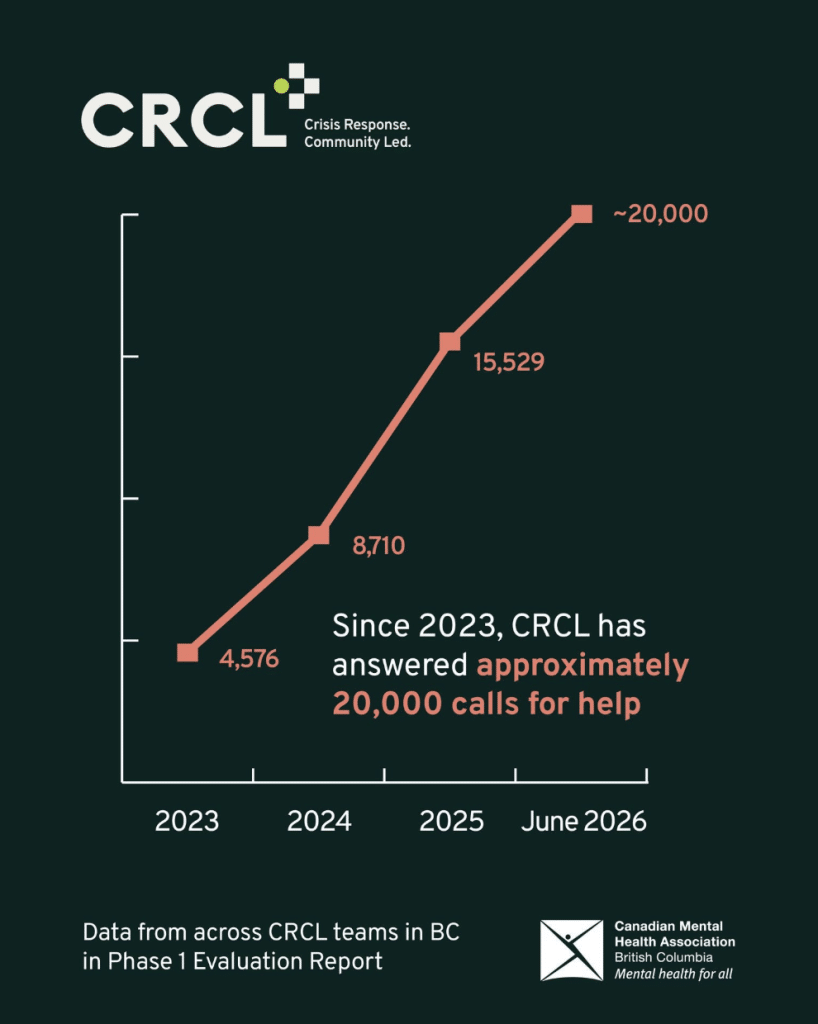
Now available 7 days a week, Canadian Mental Health Association’s Crisis Response, Community Led team has diverted 266 calls from local emergency services over the last year.
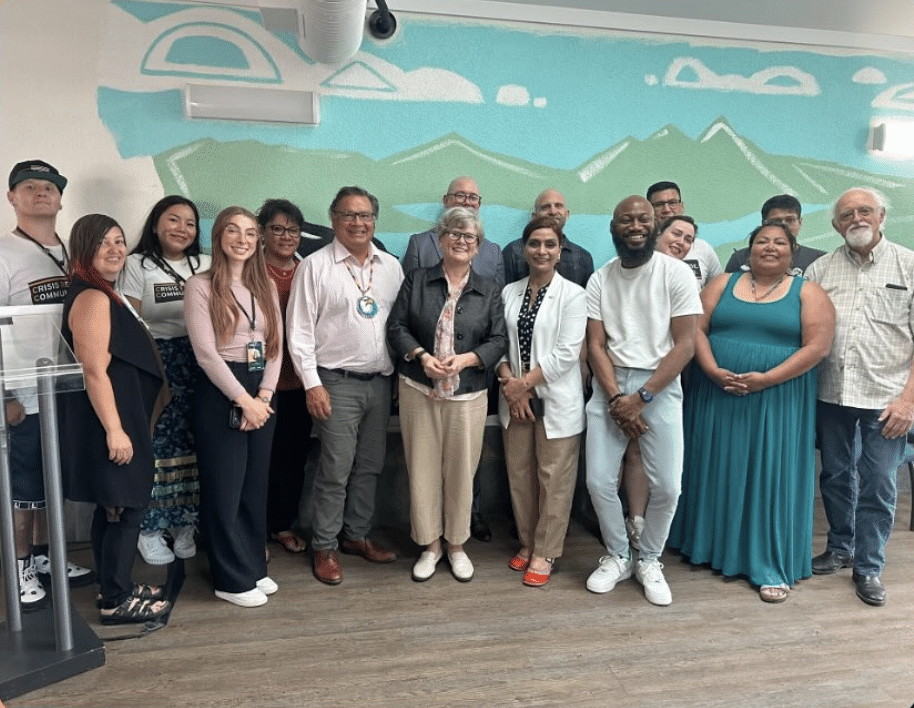
When a person in Kamloops experiences a mental health crisis, they might feel that calling 911 is the only option.
But a new crisis response team provided by the Canadian Mental Health Association in collaboration with local organizations aims to change that, dispatching mobile mental health and support teams instead of officers, while keeping the RCMP focused on emergency response.
Kamloops’ Crisis Response, Community Led (CRCL) program, operated by the Kamloops Aboriginal Friendship Society, launched in spring 2025 and was publicly announced in July 2025.
One year later, a province-wide evaluation covering its pilot stages paints a cautiously optimistic picture.
“Crisis means different things to different people, but it can run anywhere from intense feelings of anxiety, depression, feeling out of touch with reality, distressing or concerning behavior,” explains senior director of policy for Canadian Mental Health Association, Kim Mackenzie.
“The beauty of the team is they have time and they will create a lot of space to build relationships with the person in crisis and take the time they need to help de-escalate and co-regulate where appropriate.”
Crisis responders receive more than one hundred hours of instruction and training in trauma-informed crisis intervention and de-escalation, according to the CRCL website, and are recruited for both their formal education as well as lived experience.
The evaluation found that Kamloops’ CRCL team handled 266 calls, with about two-thirds having had no previous contact with the program and one-third being return callers, which may indicate they are building trust with people in need in the community.
Eighty-six per cent of the calls came in by phone and 13 per cent were in-person. Callers were most often the person in crisis themselves, followed by third parties, community service workers and bystanders.
“It’s really about creating space for somebody in that moment of crisis and meeting them human to human,” Mackenzie explains. “Getting on their level, sitting down, drinking a cup of tea with somebody, and showing up with a lot of empathy and compassion.”
The program operates through a consent-based service, meaning the person in crisis can withdraw their consent to participate at any time and refuse referrals, Mackenzie explains.
“We absolutely do not provide personal or health information to any other service providers or systems without the express consent of the person in crisis.”
Kamloops Aboriginal Friendship Society did not respond to requests for an interview about the program before publication, but the executive director stated during the 2025 launch, “We know the stress of daily living – whether you’re homeless or a university student, and are available to assist everyone in their crisis.”
Kamloops’ calls skew more urgent
One of the most striking findings: Kamloops consistently handled more urgent calls than any other CRCL program in communities such as Victoria, Prince George and the Comox Valley.
Nearly half of in-scope calls were rated urgent or moderately urgent — the highest proportion across all six B.C. communities by nearly eight percentage points. The site also recorded the highest rate of emergency-level calls at five per cent.
Kamloops had the highest rate among all sites of family and social supports, substance use and harm reduction services and basic needs responses.
Despite that, Kamloops dispatchers did not escalate any of their intake calls to emergency services. On scene, mobile teams requested police backup on just two occasions, explains Mackenzie, who provided slightly more updated data than the report to The Wren via email.
About a third of Kamloops service users were under 30 years old. Indigenous peoples are diverse in Kamloops, making up approximately 10.5 per cent of the total population. Roughly 31 per cent of CRLC service users identified as Indigenous — a figure that reflects Kamloops Aboriginal Friendship Society’s mandate.
Over half of CRCL’s service users, 57 per cent, were unstably housed.
While Kamloops had a high rate of missing data for follow up calls, evaluators noted that this may be partly due to the program’s early stages.
When referrals were needed, teams most often directed people to other Kamloops Aboriginal Friendship Society services or mental health services.
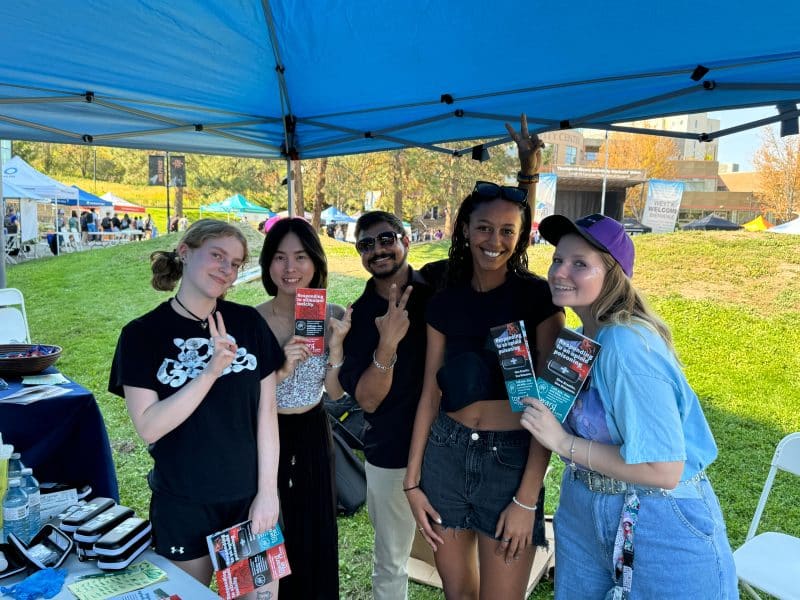
One bigger change Canadian Mental Health Association is advocating for is to have mental health as a fourth option in 911.
Currently, when callers dial 911, they are asked, “Do you need police, fire or ambulance, and for what city?”
The integration of mental health as a fourth option could help remove police from situations where they don’t need to be involved.
Meanwhile, CRCL is filling that gap.
“We’d love to see CRCL in every community, so that for the 98 per cent calls that don’t require any emergency services intervention, we are able to provide that right response at the right time,” Mackenzie says.
“If we can support people in their crisis while avoiding or diverting from those really expensive systems, not only is it good for the person in crisis, but it’s also cost-effective for some of the systems that are feeling lots of pressures and demand on their services.”
Anyone within city limits, 13 years and older, can call or text CRCL seven days a week at 778-470-2725, between 11 a.m. and 11 p.m.
Crisis lines for support 24/7 are at 1-800-784-2433 or 9-8-8 if you are experiencing feelings of distress or despair, including thoughts of suicide, or 310-6789, no area code needed.
The Wren is a community driven local news outlet. Your questions and ideas help guide what we dig into. Your feedback after we publish a story helps ensure we're always improving our reporting to better serve you
What do think about this story?
Author

Related Articles
Here’s how general election candidates will tackle affordability in Kamloops
Kamloops’ 2026 general election candidates share what steps they’d take to improve affordability.
Here’s how general election candidates will navigate homelessness and mental health issues in Kamloops
Kamloops’ 2026 general election candidates share share how they’d respond to homelessness, mental health issues and addiction.
Indigenous Film Festival returns ahead of National Day for Truth and Reconciliation
Indigenous storytelling shapes fifth annual film festival over three days this weekend.
