Editor’s note: As a member of Discourse Community Publishing, The Wren uses quotation marks around the word “school” because the Truth and Reconciliation Commission found residential “schools” were “an education system in name only for much of its existence.”
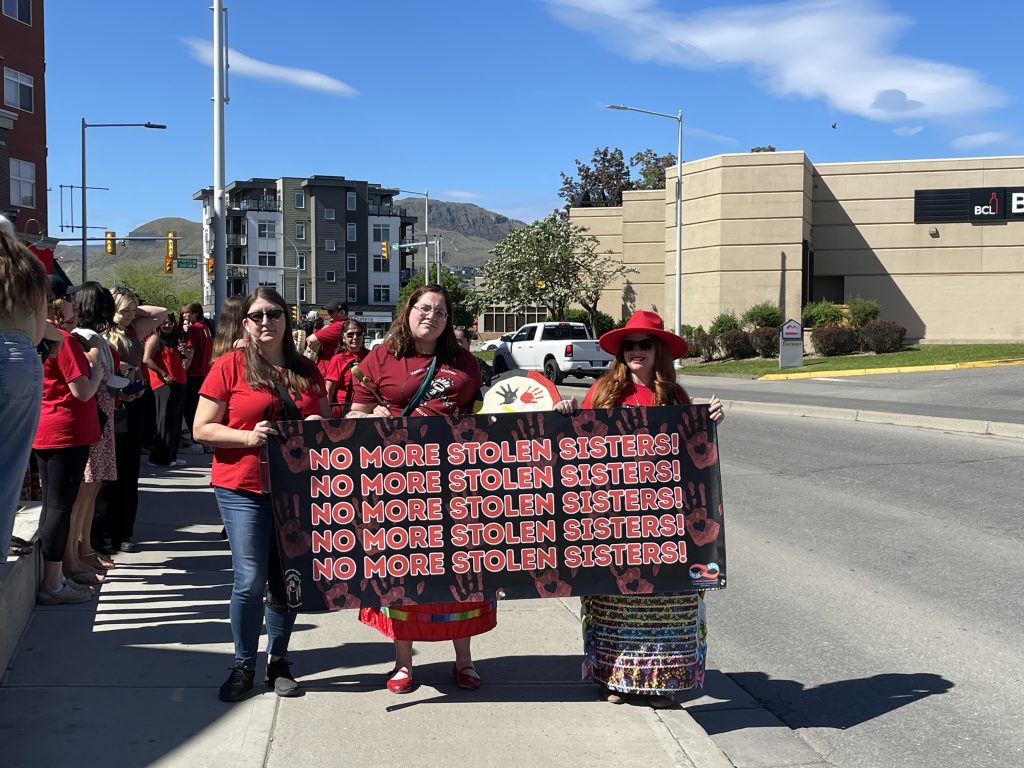
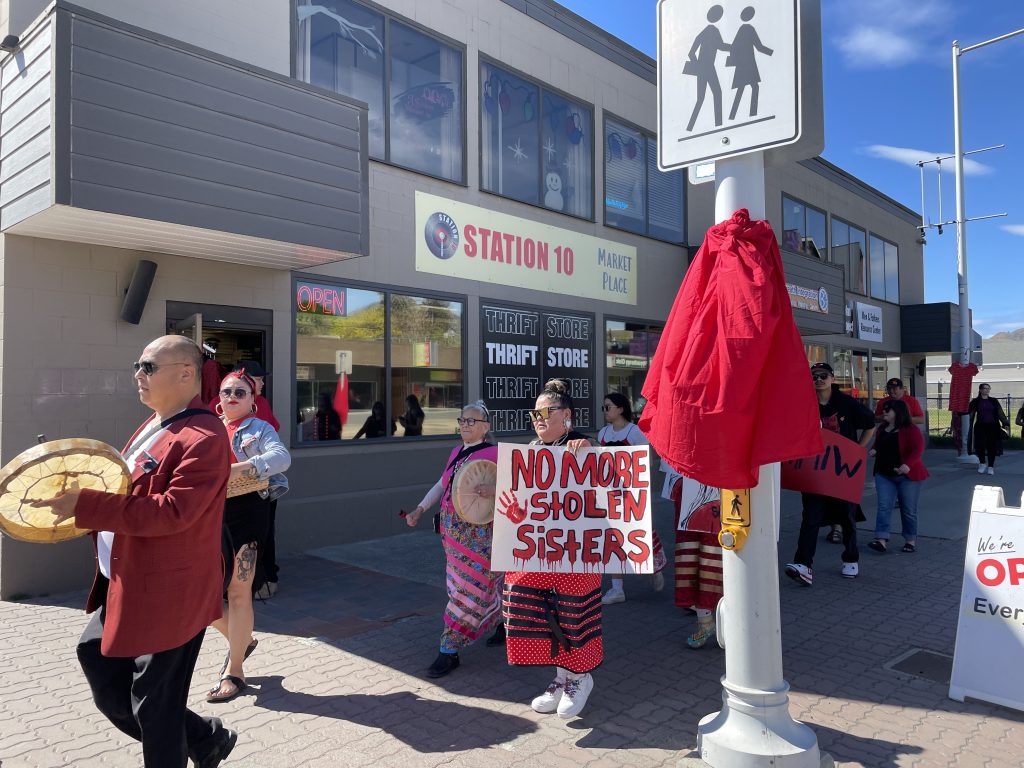
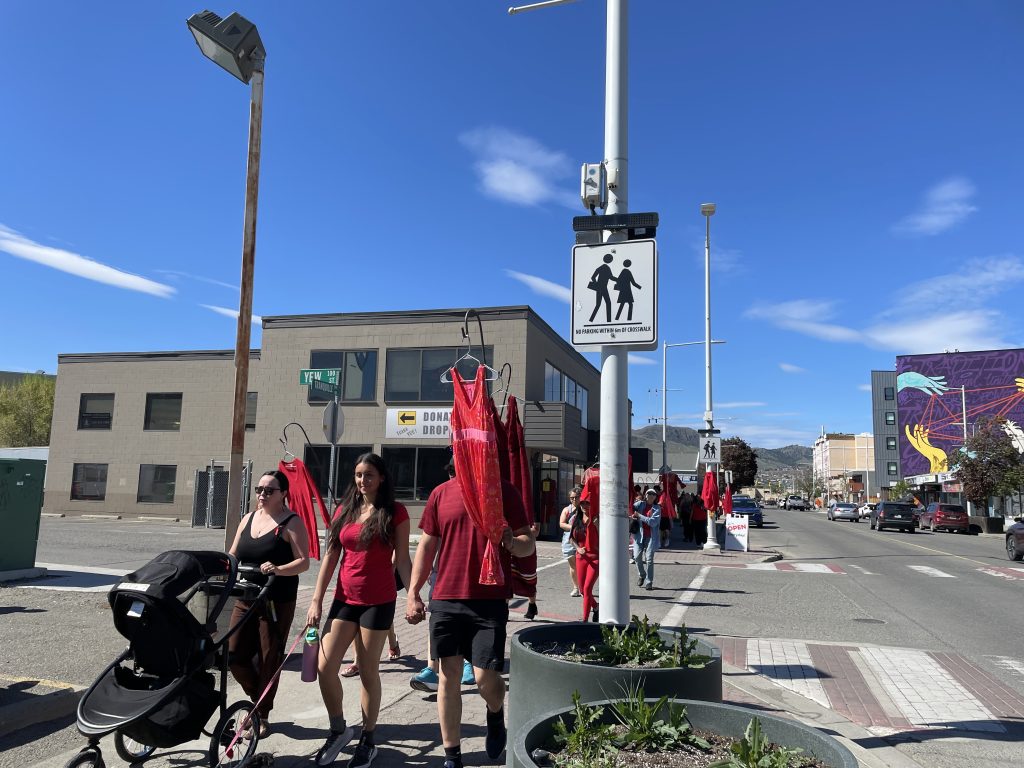
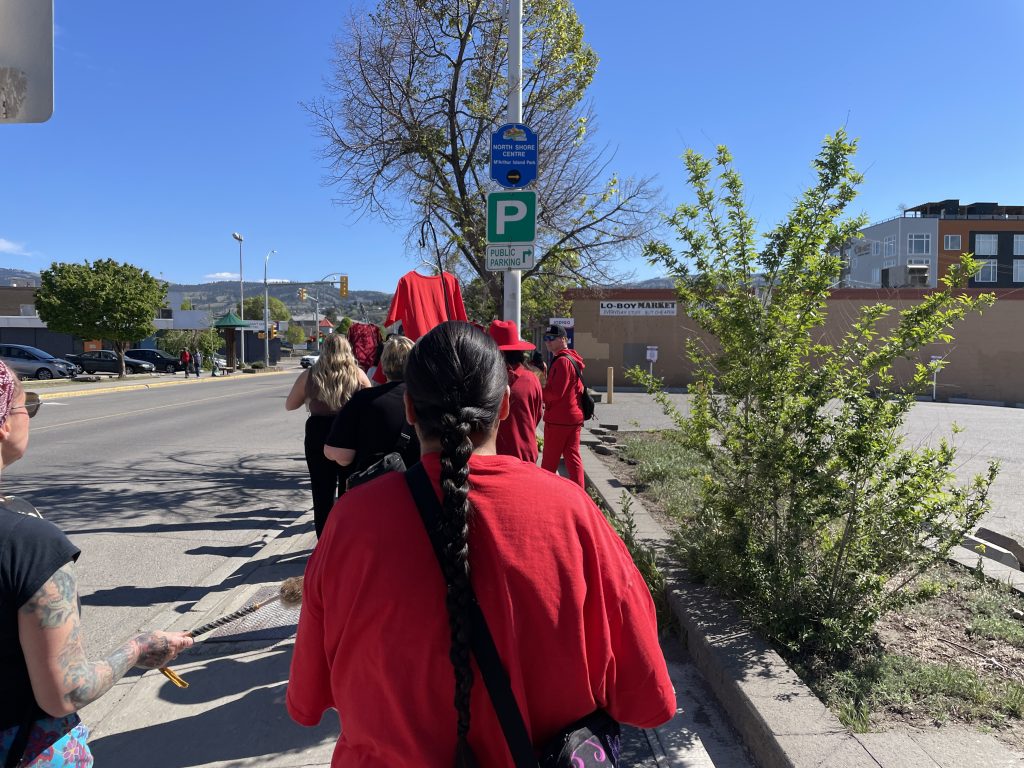
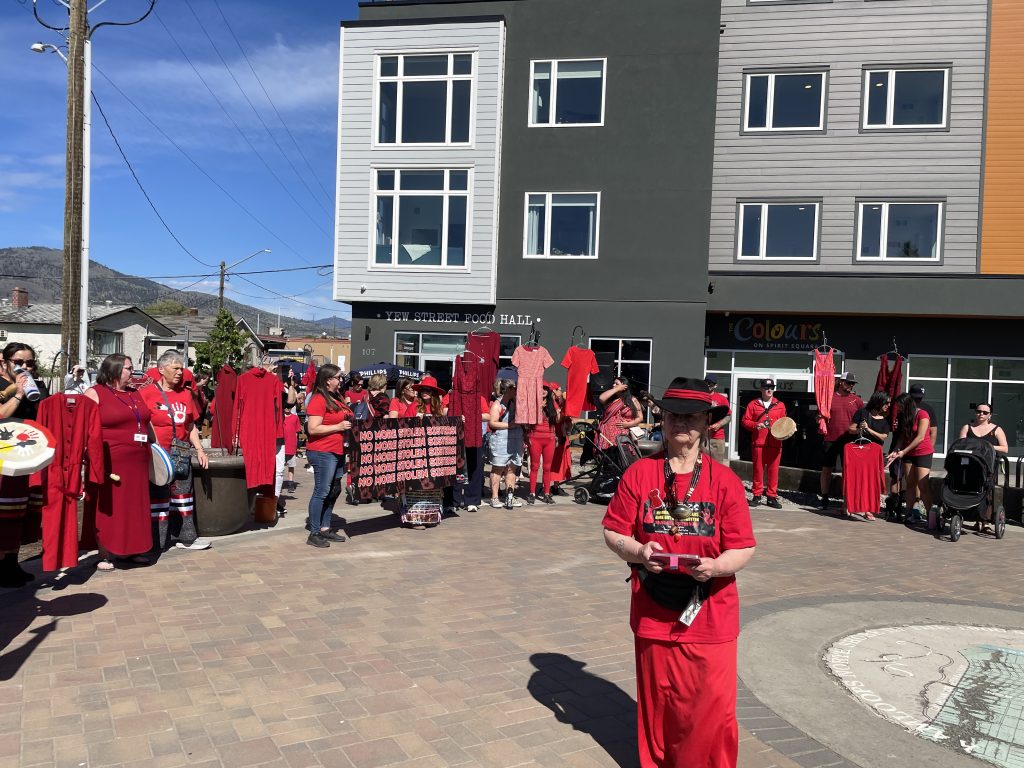
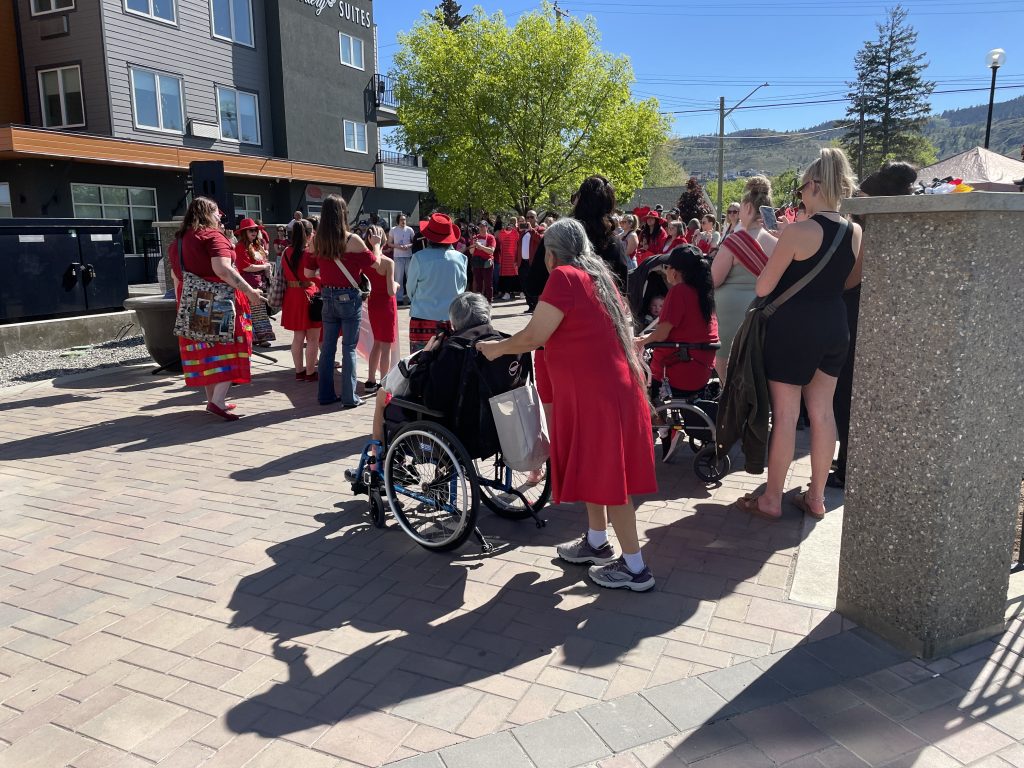
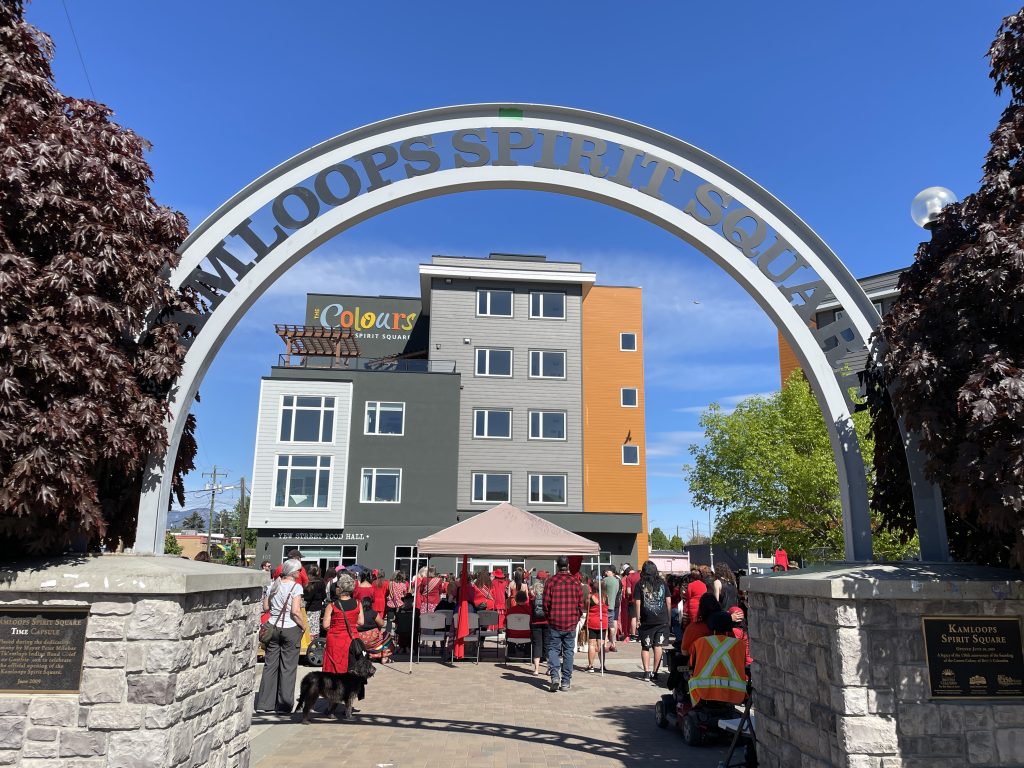
As rows of Kamloopsians walked down Tranquille Road from the Lii Michif Otipemisiwak office to Spirit Square for Red Dress Day, many held cedar bows tied in red fabric and sang songs. Every so often, a car would honk in support.
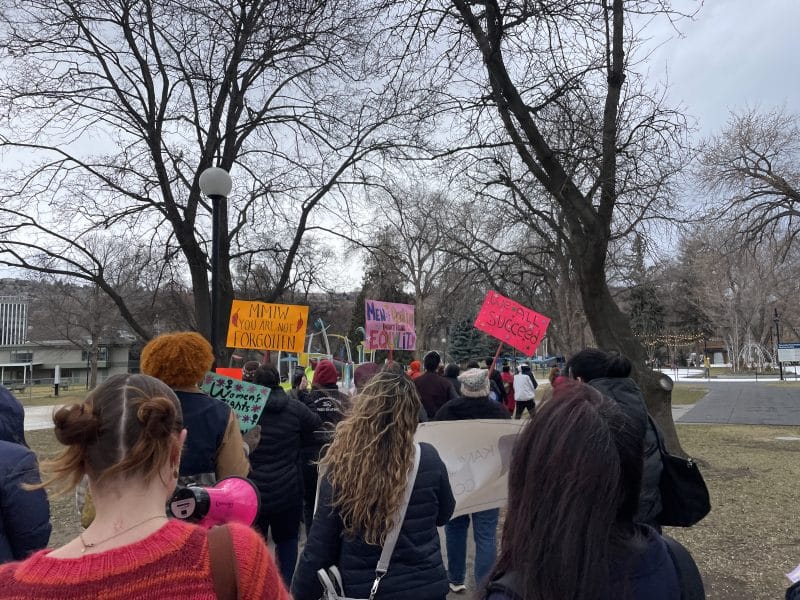
Lii Michif Otipemisiwak and Kamloops Aboriginal Friendship Society organized the Red Dress Day walk to bring awareness and commemorate the day on May 5. This year, hand painted signs once again called on all levels of government, especially the newly elected Liberal federal government, to take meaningful action to help protect the lives of Indigenous women, girls and 2SLGBTQQIA people.
Some people held signs that read “No More Stolen Sisters” and some wore T-shirts with the name of friends and family members who are missing, such as Alice Maureen Chingee who went missing in McLeod Lake, B.C. last year. Besides the sense of solidarity at the event, there was a sense of tiredness and sorrow that this is still an ongoing issue. Year after year folks come together to remember their missing family members and ask for justice long ago promised.
Organizers gave many of the roughly 50 participants ribbons and cedar tied in fabric. In many Indigenous cultures, cedar is burned to drive out negative energies and bring positive energies as a purifier.
In Spirit Square, Viola Thomas, Tk’emlups residential “school” survivor and previous Tk̓emlúps te Secwépemc Tkwenem7iple7 (councillor), spoke to the crowd.
“This isn’t just a woman’s issue, the right of safety is the right of safety for all,” Thomas said.
“We call out to the governments on all levels to implement the calls to action [also known as calls to justice] which are 231 calls to action from the Missing and Murdered Indigenous Women and Girls Inquiry.
“Of the 231 calls to action only two have been implemented. The final inquiry report was released in 2019 and here we are still today waiting for action from all levels of government for the implementation of the calls to justice.”
Thomas has worked to advance the rights of Indigenous people for 30 years. She was the first Indigenous woman elected as National President for the National Association of Indian Friendship Centres and participated in the Missing and Murdered Indigenous Women and Girls Inquiry.
Back in 2018, Thomas participated in the truth gathering process of the national inquiry. She spoke to the panel about the impacts of colonialism on Indigenous women and two-spirit people and the importance of restoring traditional Indigenous ways.
Residential “school” aimed to make people feel ashamed of their Indigenous identity and bodies, she said, “compounded by the layers of systemic, institutionalized racism by the state.”
In contrast, Indigenous laws and ways of knowing can “offer a springboard opportunity to revitalize our dignity as the first peoples of this country,” she said, which includes traditional ways of understanding gender roles.
“There is no he/she in our language – in Tk’emlúps language,” she said. “There is no, in my opinion, gender distinctions within our ceremonies, our songs and our dances. We celebrate and honour our diversities through our traditions.”
Thomas said more action could be taken by asking the province to get forensic experts to go through the cases of MMIWG.
The history and meaning of Red Dress Day
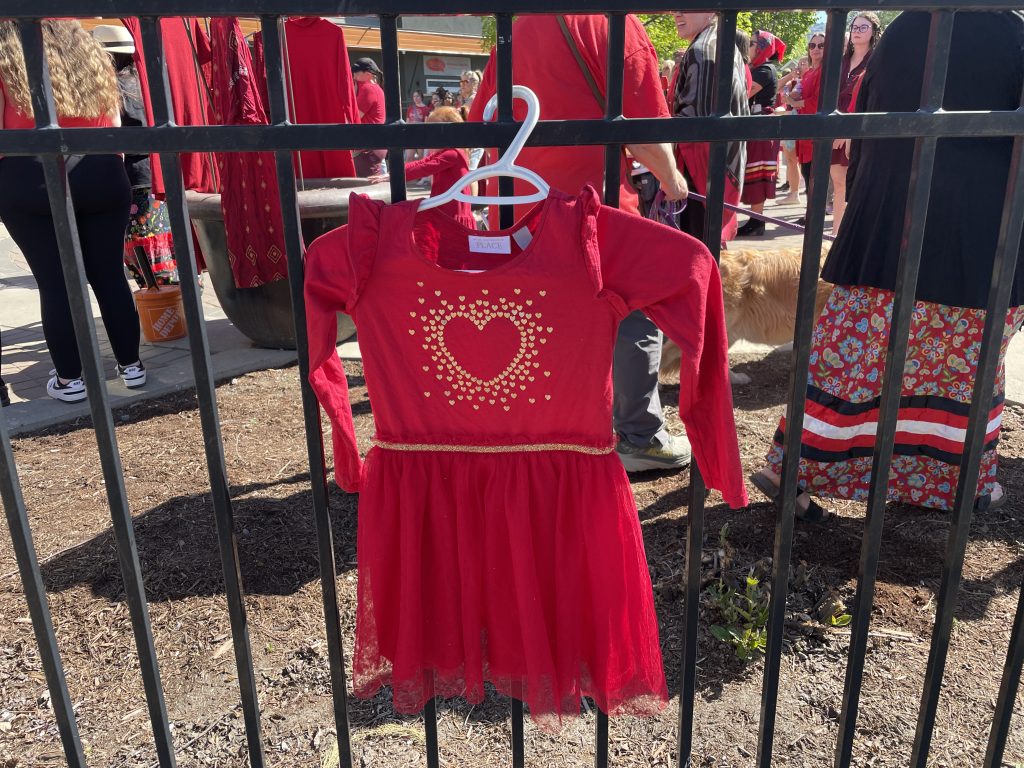
Red Dress Day originated in 2010 when Métis artist Jaime Black did an art installation named REDress Project using red dresses as a visual representation of MMIWG across Canada.
The project gathered traction to help commemorate the lives of those who were lost or are missing due to violence.
Empty red dresses hang in public spaces like lamp posts, trees and more to bring attention to the high number of missing and murdered Indigenous women and girls.
According to the Assembly of First Nations, “Indigenous women make up 16 per cent of all female homicide victims, and 11 per cent of missing women.”
Additionally, Indigenous women are twice as likely to experience violence from their former or current partner and four times more likely to be victims of violence compared to non-Indigenous women, leading the National Inquiry into Missing and Murdered Indigenous Women and Girls to use the term genocide to describe the ongoing intergenerational harms faced by Indigenous women, girls, and 2SLGBTQQIA people.
Statistics Canada found the RCMP were less likely to lay or recommend a charge of first-degree murder if the victim was Indigenous in 27 per cent cases.
Instead, the charges of manslaughter and second-degree murder were more common.
During the event, Thomas spoke about how action like making signs, wearing red and marching in solidarity with survivors was important to make voices heard in all government levels. In addition, acknowledging colonization and the effect of residential “schools” on Indigenous Peoples is increasingly important in response to the rise of residential “school” denialism.







The Wren is a community driven local news outlet. Your questions and ideas help guide what we dig into. Your feedback after we publish a story helps ensure we're always improving our reporting to better serve you
What do think about this story?