
Meet Eric Van Stone, the archaeologist who stopped digging and started carving
Once trained to uncover the past, Chipped Stone Tools artisan Eric Van Stone now reshapes stone into functional blades.
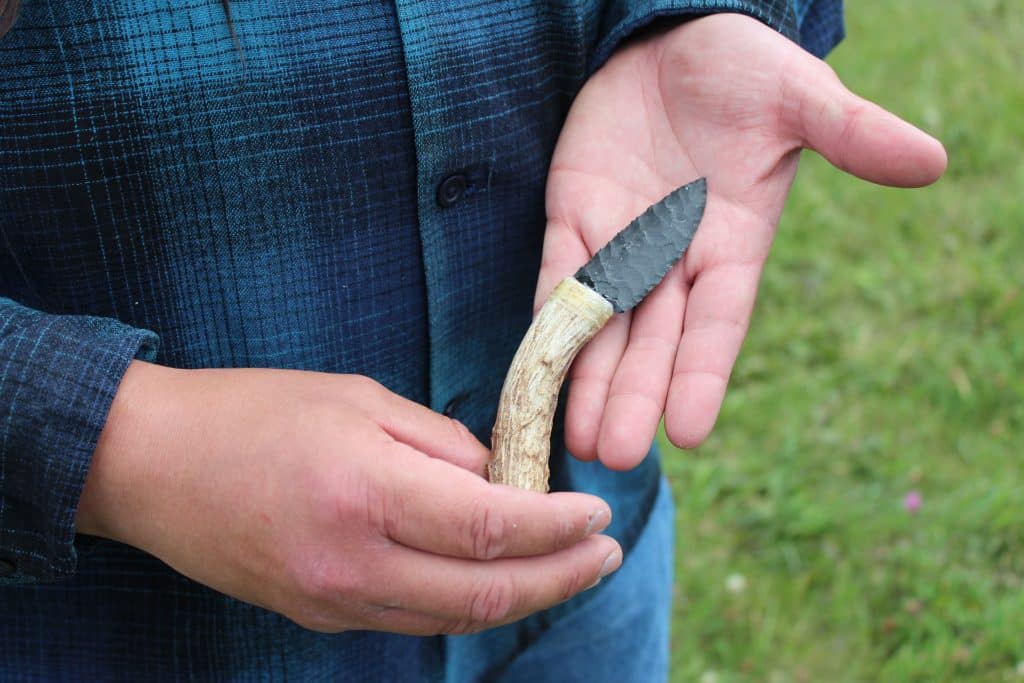
Each spring, as white-tailed deer, mule deer, moose and elk leave behind the antlers they’ve outgrown, artisan Eric Van Stone follows.
Reading game trails the way others read maps, he follows the migration routes and searches the forest floor for naturally shed antlers — raw materials that will later be transformed into handcrafted knives, jewelry and other pieces that carry a story from wilderness to workshop.
Syilx and Secwépemc artisan Van Stone focuses on tracking local migration routes of wildlife to pick up any antlers being shed and follow in their footsteps for inspiration.
“Sometimes I walk all day, and don’t find anything,” Van Stone says with a chuckle.
“Certain spots are better. Sometimes in the winter, you’re in deep snow, so you have to think about them and where they are.”
A former field archaeologist who worked digs across the West Coast, he now spends his time recreating the ancestral tool-making techniques he once excavated into what he calls lithic art.
But that closeness to the past has also turned him into an advocate for protecting it: at powwows and community events, Van Stone uses his booth to tell visitors why the real arrowheads and stone tools they stumble across in the wild are better left exactly where they lie.
During the creative process back at his workshop, Van Stone shapes the antlers into handcrafted knives and jewelry. He utilizes opalite, obsidian, Georgetown flint and blue glass to turn stones into blades “very carefully” using traditional techniques informed by his Syilx and Secwépemc heritage to complete his projects.
Today, he operates the Chipped Stone Tools, an artisan booth that showcases the path he’s carved out for himself.
While showcasing a knife from his display case that was made with an obsidian stone, he describes the process of using tools to create conchoidal fractures through pressure flaking.
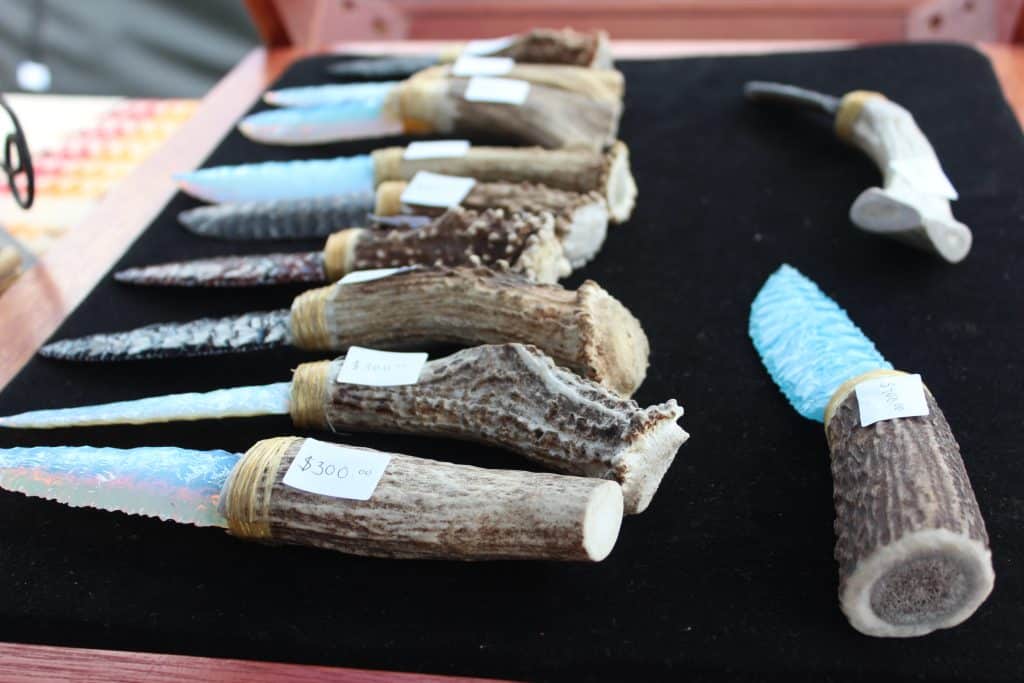
With some minor knicks on his palms and fingertips, Van Stone quippes about how quickly the flesh-wounds heal when made with natural materials.
Van Stone says obsidian is exceptionally sharp and has even been used in certain surgical scalpels for eye surgeries.
“Some of those edges are sharper than steel,” he adds.
Presence at the St’uxwtews Powwow
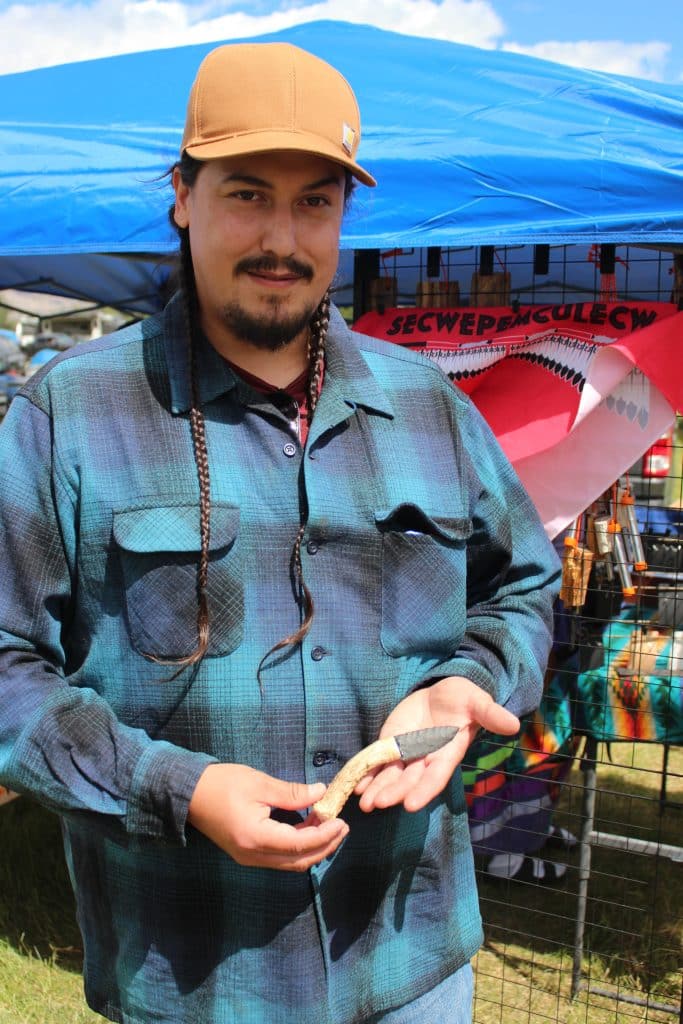
Outside the handmade arbour at the St’uxwtéws (Bonaparte First Nation) Powwow at Historic Hat Creek Ranch, rows of vendors offered refreshments, jewelry, ATMs and handicrafts.
Among them was Van Stone, whose booth showcased handcrafted blades, arrowhead earrings and other lithic-inspired artworks.
From July 3 to 5, Van Stone shared his creations with visitors while fielding community questions about the history, materials and techniques behind his work.
“For me, it’s archaeology,” Van Stone tells community members outside his booth. “Archaeology is the ultimate connection. It brings you back in time.”
Van Stone’s focus is now on art, but his path to becoming an artisan was shaped by years of exploring archaeology and welding.
After transitioning from welding, he gained on-the-job experience in archaeology throughout B.C. and Washington. His craft has since been informed by family and community connections in Kamloops (Tk̓emlúps), museum visits, books, online learning and a desire to share knowledge with others.
“I think the push for public education [about artifacts and traditional tools] is really important,” Van Stone says, gesturing toward Arrowstone Park across the highway from the event.
The Legacy Beneath the Landscape
For Van Stone, arrowheads and stones are more than novel objects found on a hike — they are connections to the people, places and knowledge that came from his ancestors.
Through his handcrafted pieces and conversations with the public about the pieces, he hopes to encourage a greater understanding of why archaeological materials are meant to be respected and preserved in the wild.
At community events and in his time outdoors, Van Stone often finds himself answering questions from people who have discovered arrowheads or other artifacts while walking through the landscape.
He says those discoveries can create a sense of wonder, but believes removing them from their original location can disrupt what modern societies can learn about communities from the past.
“As soon as someone picks up an arrowhead, we can’t learn from it,” Van Stone says.
He added the location where an artifact is found is part of its story, which ultimately helps researchers understand how people lived, travelled and used the land in another time.
Van Stone says many visitors to his booth have shared stories of finding and collecting arrowheads without realizing the impact of removing them from archaeological sites.
While B.C. has regulations and penalties related to disturbing archaeological sites, he says more public education is needed to help people understand the importance of protecting these pieces of history.
“Do your homework,” Van Stone says. “There’s no education on it, but you shouldn’t be picking up artifacts and arrowheads.”
The Wren is a community driven local news outlet. Your questions and ideas help guide what we dig into. Your feedback after we publish a story helps ensure we're always improving our reporting to better serve you
What do think about this story?
Author

Related Articles
Here’s what The Wren’s readers want to know ahead of the 2026 provincial election
From family doctors to the provincial deficit, these were the most-asked questions in The Wren’s provincial election survey.
Here’s how general local election candidates will support public transportation
Candidates for the 2026 municipal election have plans for transportation in Kamloops.
Here’s what candidates have to say about AI infrastructure in Kamloops
As Kamloops becomes a hub for AI data centres, candidates share their thoughts on regulation and support.
