
Secwépemc sisters honour father’s dream with St’uxwtews powwow
After years of setbacks from wildfires, flooding and the loss of their father to cancer, the Pierro sisters continue the powwow he envisioned, carrying his legacy forward with the support of their community and future generations in mind.
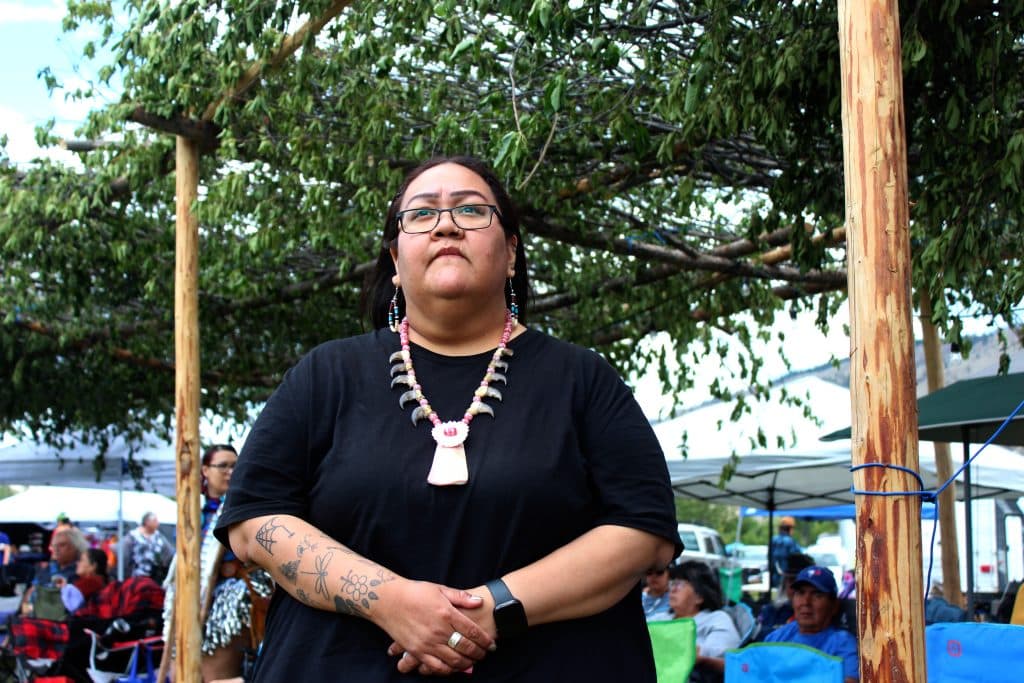
The most meaningful seat at this year’s St’uxwtews Powwow was the one that no one occupied.
Positioned inside the arbour, a reserved chair held a blanket, tobacco and sacred smudge in memory of the Pierro sisters’ father, John Pierro, whose determination to revive the community gathering outlived him.
After a challenging battle with cancer and nearly a decade of attempts to reignite the St’uxwtews (Bonaparte First Nation) Powwow after wildfires and flooding put it on hiatus, he never witnessed the powwow he envisioned.
John Pierro Powwow committee vice-president Savannah Pierro said her father never gave up on the idea of bringing the gathering back to their community.
“For years, my Dad tried getting us to come back,” Savannah said, acknowledging how the wildfires of 2017 and 2024 forced them to cancel, among other climate emergencies.
“Sometimes [the organizing work is] frustrating, but we’re doing it for the people, and I like the outcome.”
His daughters made sure that dream did not end with the late John Pierro, and hosted this year’s third annual event to commemorate his July 5 death at the Historic Hat Creek Ranch, which is managed by St’uxwtews First Nation, between July 3 to 5.
Up to 1,500 people from all over Turtle Island visited the St’uxwtews Powwow over the weekend to take in cultural dancing, drumming and socializing.
“As each year goes by, I think we’ll get bigger and bigger. My dream is to get as big as Kamloopa one day,” John Pierro Powwow president Shaunna Pierro said, noting her desire to see the prizes grow and to share the tradition with her five-year-old son.
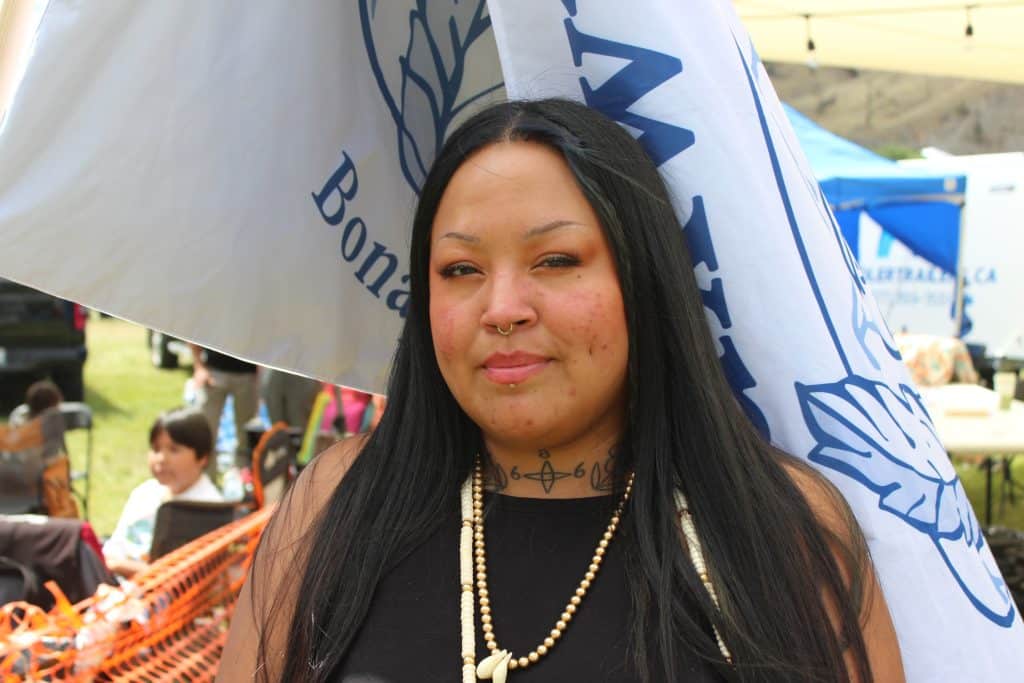
Today, the annual gathering stands not only as a celebration of Indigenous culture but as the realization of a promise carried forward by family and community.
“It helps with the healing process,” Savannah said. “Anyone who doesn’t believe needs to come here, and witness it for themselves. You need to be out here witnessing.”
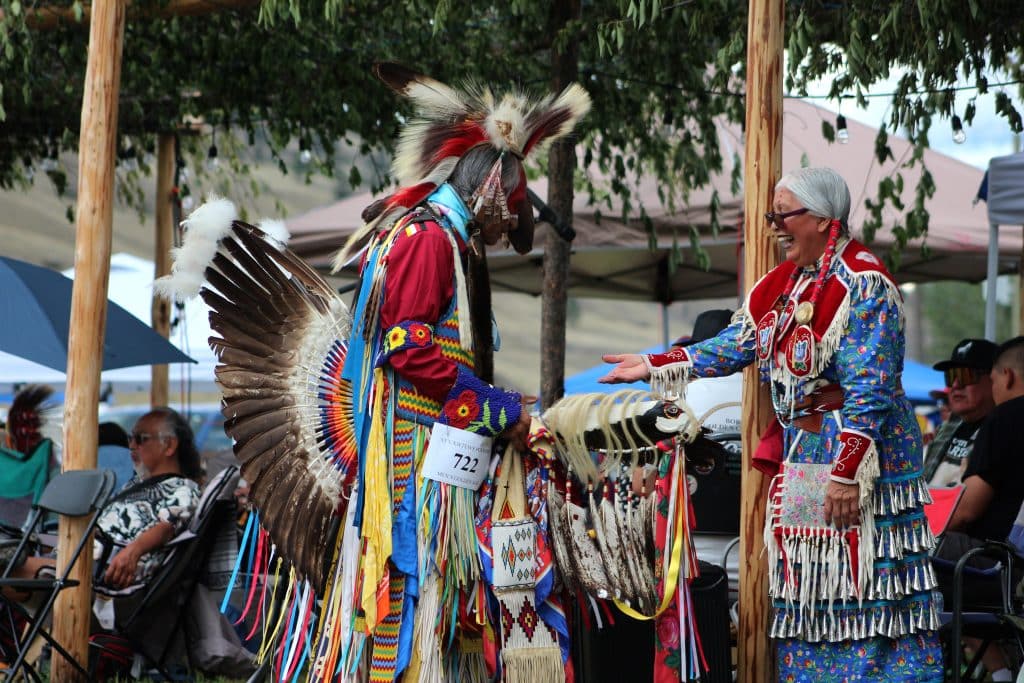
By the time the first grand entry begins, the arbour appears as though it has always belonged there.
But each summer, community members return to build it in unity by hand — raising the posts, assembling the structure with leafy green tree branches and preparing the space that becomes the heart of the powwow.
“All of the preparation takes a lot of team-work,” Danny Kennedy, event organizer with the John Pierro Powwow Society said. “But we’re lucky to have Elders in the community, sharing knowledge and bringing us snacks and water.”
Kennedy estimates it takes about 10 days to construct the arbour each year. He and a small crew focus on building the frame, while others spend a fortnight gathering leafy branches across the highway near Coldstream to create shade over the structure.
For Kennedy, the St’uxwtews Powwow also carries personal importance. He said it began taking place the first year he completed treatment for sobriety, a moment made even more memorable by watching his daughter, Sophia Chaos Kennedy, now 13, begin jingle dancing at the community event for the first time.
This year, he said Sophia’s raising money for the 50-50, participating in the talent show and giving a speech competing with the other princesses for the third year in a row.
“People come from Alberta and Washington — all over,” Kennedy said, glancing around the arbour as the community gathered before the grand entry.
Keeping the tradition alive for future generations
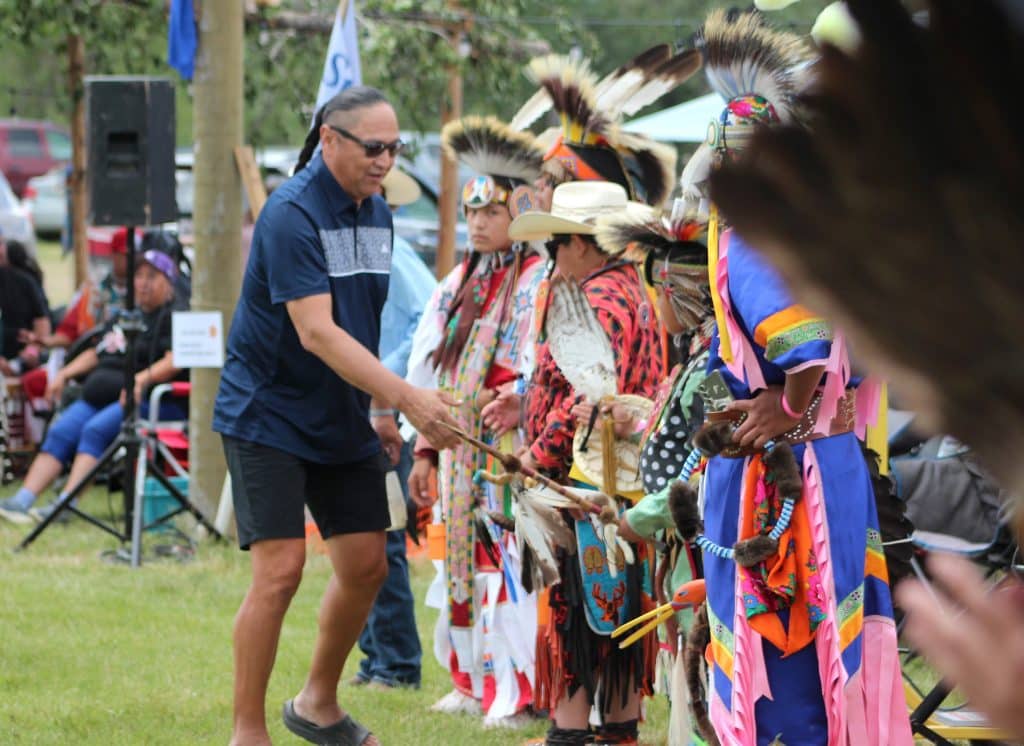
With the arbour standing and the community gathered annually, attention turns to how the powwow will be carried forward for future generations.
St’uxwtews Kupki7 Frank Antoine credits the John Pierro Powwow Society for successfully growing the cultural event from roughly 100 attendees when it started taking place after the Elephant Hill wildfire in 2017 to now about 1,500.
Whether the event remains a traditional gathering or evolves into a competitive powwow, Antoine believes John Pierro would have been proud of what it has become either way.
“I think the comment that I heard the most was that they’ve seen a lot of youth involved already, whether they’re picking up the garbage or they’re out of the dance floor,” Antoine said on the morning of Sunday, July 5.
“At the end of the day, I think what Shaunna and Savannah, and the committee are doing, including these youth, that’s important,” because it’s going to continue to keep the powwow going for future generations, he added.
Shaunna credits the success of the event to the Jace Roberts, the Roberts family, the Olney family, the Gaspard-Casper family, as well as Everett White and Lorena Seymour for taking the lead on staffing the annual events, both at Hat Creek and at Kamloopa Powwow.
Antoine said St’uxwtews First Nation is now in the third year of a six-year agreement with the B.C. Heritage Branch to manage the Historic Hat Creek Ranch.
With five Kukpi7s currently serving on the ranch’s board, he hopes to see greater First Nations involvement in the years ahead.
His long-term vision extends beyond the annual powwow. As stewardship of the land returns to the nation, Antoine hopes the site will continue serving multiple communities by hosting rodeos, conferences and other community events.
He envisions future infrastructure developments, including RV sites, an arena and a conference centre to host multi-purpose community events for all nations.
That philosophy also extends to the arbour itself. Each year, community members harvest trees to build the structure by hand. Once the powwow concludes, the wooden poles are sometimes repurposed and the leafy branches are used for horses and other livestock in the area, allowing the field to return to its everyday uses.
Antoine described the practice of building an arbour from scratch and returning the trees back to the land as a “recycleable, responsible tradition” and said he is only aware of one other powwow in Montana that follows a similar approach rooted in stewardship.
“Once we’re done with the trees, we repurpose them for the horses and other animals,” he said. “We share the space.”
“I want it to be really driven by family and community,” Antoine said. “It’s not about being Indigenous, it’s about sharing it. That’s what we’re trying to get through.”
The Wren is a community driven local news outlet. Your questions and ideas help guide what we dig into. Your feedback after we publish a story helps ensure we're always improving our reporting to better serve you
What do think about this story?
Author

Related Articles
‘It is about courage’: More students take up Secwepemctsín as language revitalization efforts grow
‘Without any new interest or passion for Secwepemctsín, there is no revitalization,’ student says.
Secwépemc actor William Belleau brings Hollywood to Alkali Lake
Days before the Leo Awards, Secwépemc actor William Belleau reflects on a career that’s come full circle with his role in the independent Secwépemc film W7éyle (Moon’s Wife).
Meet Eric Van Stone, the archaeologist who stopped digging and started carving
Once trained to uncover the past, Chipped Stone Tools artisan Eric Van Stone now reshapes stone into functional blades.
