If you could choose to live forever, would you? This is the question at the centre of the short film W7éyle (Moon’s Wife) — a top-six finisher in this year’s Crazy8s film festival.
Written and directed by Secwépemc filmmaker Amanda Wandler, the 15-minute film weaves together science fiction with an ancient story in Secwépemc culture.
In an interview with The Wren, Wandler describes herself as a “huge fan” of the science fiction genre.
The implications of immortality is one of those classic sci-fi ethical dilemmas.
After watching another movie about the concept of living forever, Wandler pondered how — if everyone made the choice to be immortal — the population would explode at an even more unsustainable rate.
But she also wondered what kind of impact immortality might have on individuals, especially on their own personal beliefs.
So she decided she wanted to bring Secwépemc cultural beliefs into the story as well.
“I thought, what would that choice look like in a film about an Indigenous couple?” she says.
Her film references W7éyle — a stseptékwll (an ancient oral story and teaching “inextricably linked to the land, Laws, and people of the Secwépemc Nation”) about a woman who marries the moon.
Both Wandler’s film and the traditional story invite the audience to consider what a person might have to give up to be with the person they love forever.
A wandering personal journey back to story-telling
Despite always having an interest in making movies, Wandler’s journey to become a filmmaker took a winding path.
First, she earned a law degree from University of B.C. in 2015, specializing in Aboriginal law. After that, she went on to work for several provincial Crown corporations.
But it wasn’t until the COVID-19 pandemic that she followed her true passion and finished her undergraduate arts degree at Thompson Rivers University, focusing on creative writing and psychology.
“When I did creative writing again, it brought me around again to creating film.”
Ever since, her energy has been focused on story-telling, (including writing several articles for The Wren).
Her first film was a short documentary about the resurgence of Indigenous tattooing; after that, she joined the CBC New Indigenous Voices program, a 14-week intensive filmmaking program in Manitoba.
She was also selected for the ImagineNATIVE Shorts Lab.
Last year, she took part in the Okanagan edition of the 48 Hour Film Project, a challenge hosted in more than a 100 cities globally.
Its participants write, shoot and edit a film in only two days.
“It was crazy,” she says of that experience. But it sparked an interest in taking part in more filmmaking challenges because “it really gets you working to accomplish something right away.”

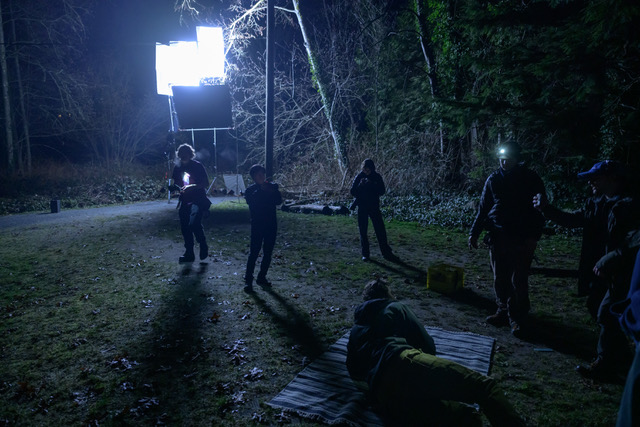
That short filmmaking challenge led her to apply to Crazy8s, a Vancouver-based program in which filmmakers create a film in just eight days.
The Crazy8s contest begins with applicants submitting a short video pitch, along with the first three pages of a script.
A jury of industry professionals and independent film community peers narrow these submissions to 40 quarter-finalists.
This group then pitches their ideas in person to a jury, which chooses 12 semifinalists, who then get to workshop their full script drafts with professional story editors — and ultimately submit a final draft for evaluation by the jury.
Out of that group, just six finalists are chosen to be the festival’s winners.
“Once you reach the top six, you’ve won the competition,” Wandler says.
But, she notes, that’s actually when the toughest challenge begins.
The six finalists get $2,000 each — plus in-kind production and post-production services worth up to $50,000, offered by film industry sponsors.
The finalists have only eight days to make their film: three days for filming and five days of post-production.
She says that, while every film is challenging to make, in this case Crazy8s’ strict time limit was the main source of stress.
Three days for filming was really tight, she recalls. Even with an extra two days for post-production, the team had to work long hours, and the editors barely slept.“
When making a film you are relying on the team to be able to bring it all together,” she explains. “We had a lot of great team members.”
Science fiction from Secwépemc characters’ perspective
The protagonist in Wandler’s film, Skwék̓w7es, is very close to her culture and believes she will reunite with her ancestors in the afterlife.
Her husband Greg, meanwhile, grew up in the foster system — and doesn’t share her beliefs. He strongly fears what will happen after death, which leads the couple into conflict.
Wandler says she really loves that both her film’s leading actors — Grace Dove and William Belleaux — are both Secwépemc, as is the score’s composer, Jeremy Kneeshaw.
“It is a story coming from one nation by having all these talented people coming together and creating something unique,” she says. “Some people believe that all Indigenous people are the same.
“I wanted to show that we have unique stories, unique culture and unique beliefs.”


Indigenous representation in film, she adds, is a type of education too — showing people the beauty of her culture.
According to the Secwépemc story in the film’s title, W7éyle is married to the moon. Every night their family sets up camp in a new place, reflecting the moon’s phases.
But when W7éyle repeatedly asks where their family will stay, her husband becomes irritated and snaps at her, telling her to camp on his face.
Taking him literally, she jumps onto his face and becomes stuck there forever — where she can still be seen to this day as the moon’s craters.
As a result, the two of them are together eternally. However, it also means she can never return to the Earth to see her family or friends again.
The power of representation

Because Indigenous youth are under-represented in popular media, Wandler hopes to inspire them to find confidence in their own unique voice and perspectives.
For young people interested in creative writing or filmmaking, she recommends learning as much as they can.
But, she emphasizes, that doesn’t necessarily need to be in school — learning how to be a story-teller can come from books, online and from potential mentors to get them started.
Looking to the future
Wandler now plans to submit her short film to as many film festivals as possible.
But she also dreams of expanding it into a full feature-length movie, and says she is working on a longer script to submit for more grants and competitions.
In the meantime, she is also working on another short film with imagineNATIVE Film and Media Arts Festival, as part of its short film lab.
The other film, which is still in-progress, features another classic sci-fi theme: cloning.
But, as with W7éyle, Wandler is exploring the topic with an Indigenous twist on the typical trope.
“I love adding that unique Indigenous perspective to science fiction,” she says.
So do we. That’s why we spend more time, more money and place more care into reporting each story. Your financial contributions, big and small, make these stories possible. Will you become a monthly supporter today?
If you've read this far, you value in-depth community news