Bees are a big deal, especially in Kamloops.
In 2017, Kamloops was designated a Bee City — the first one in the province. This means that the city and council have made a commitment to promoting “healthy, biodiverse habitats for pollinators.”
The city also works alongside the Thompson Shuswap Master Gardeners to provide easy-to-access resources for pollinator-friendly living.
This past February, the City of Kamloops renewed their Bee City application with an update to the initiative, highlighting the work done on West Highlands Park. The municipal facility has expanded the wildlife habitat with the help of volunteers and implemented a new community garden, which will serve as a perfect habitat for all pollinators.
This year, Thompson Rivers University (TRU) also applied and successfully received a Bee Campus designation.
The Wren spoke with Courtney Mason, a professor and Canada Research Chair at TRU, and also the person who submitted the application back in the fall of 2023.
Mason describes the process of applying for the designation as “a little bit of what you’re doing and a little bit of what you want to do.”
Bee City Canada not only recognises and showcases communities across the country that are taking steps towards bee-friendly landscapes, but also offers resources and support to these initiatives.
“Some of the things we were already doing at TRU… over the last decade with sustainable buildings and creating more sustainable culture on campus,” Mason says.

“We do have a long history of honey bees,” he adds. “It goes back to about 2010 or so. It was started by a Culinary Arts Department faculty member. We have a really small amount of honey bees on campus, somewhere between six and 10 hives, [and] they’re really effective for education about bees and the ecosystems they support.”
TRU uses the hives as an educational talking point for several different departments. Classes will often walk up to the orchard and use the hives as an entry point into talking about native pollinators and supporting natural habitats.
Some of the other activities that TRU is implementing with the new Bee City designation are increased natural zones that support native plants, no-mow zones so pollinators can use dandelions and other lawn-related flowers as habitats and decreasing the level of pesticide use on campus.
“One of our goals this year is to increase signage and promote natural spaces,” Mason says. “We’re looking at putting signs up at the orchard that explain the difference between native pollinators and honey bees. We’ll also be working with the sustainability office on outreach and education aspects as well.”
The many faces of native pollinators
There are over 450 different species of bees in B.C. alone, yet they are only a portion of the web that makes up pollinators throughout the province. Alongside bees, a variety of other insects and animals are responsible for spreading pollen throughout the environment and ensuring the continuation of fruit, vegetable, and flower production.
The most popular and well-known pollinator is the honey bee, which bounces from flower to flower, mixing and collecting pollen to return to the hive to make delicious honey. However, the honey bee is not the only pollinator out there, and in fact, the honey bee isn’t even native to North America.
Some lesser-known pollinator powers are hover flies, butterflies, wasps, beetles and bats. All pollinators are also usually separated into two groups: generalists and specialists.
“A generalist will go to any flower,” says Elaine Sedgman, bee specialist and master gardener for the Thompson Shuswap chapter. “It’s the specialists that will miss out if their native plant is not in your garden.”
Specialist pollinators are usually adapted to very specific conditions that other pollinators can’t compete with. An example of a specialist is the Death Camas Minor Bee (Andrena astragali), which scientists have observed is unaffected by the neurotoxin found in the pollen of the death camas flowers. This bee is one of the few insects that can pollinate the plant.
Honey bees, however, are generalists, but Sedgman says choosing the right plants does make a difference. As a generalist, they will go to any plant but by using native plants, you are increasing the chances of honey bees will pollinate those, rather invasive species.
“Choosing the right plant for pollinators is key,” Sedgman says. “A lot of people think, ‘We’ll put hives up for blueberries’, but actually blueberries need to be buzz-pollinated. So bumble bees buzz pollinate, and that’s something that honey bees just can’t do.”
Read more about planting drought-tolerant plants from our previous story here!
Planting pollinator-friendly yards
Flowers are always a beauty to behold in a yard or garden. Whether you’re an avid gardener or just enjoy a pretty sight, flowers can add so much more to a space.
A popular trend emerging is the “naturescape” garden, which prioritizes native plants and flowers that are food sources for butterflies, native bees, hummingbirds and other wildlife. These garden styles utilize attractive plants that are low maintenance, yet remain jewels in the garden.
Popular plants for the Kamloops (Tk’emlúps) area include kinnikinnik (Arctostaphylos uva-ursi), silverleaf phacelia (Phacleia hastata), larkspur (Delphinium sp.), pearly everlasting (Anaphalis margaritacea), yarrow (Achillea millefolium) and nodding onion (Allium cernuum).
Mason also highlights the importance of learning about pollinator-friendly plants and gardens.
“You know, the question is: how can we all support a more natural approach to the ecosystems we engage with or manage, like backyards and that sort of thing….I think a lot could be done in that area.”
Celebrating pollinators
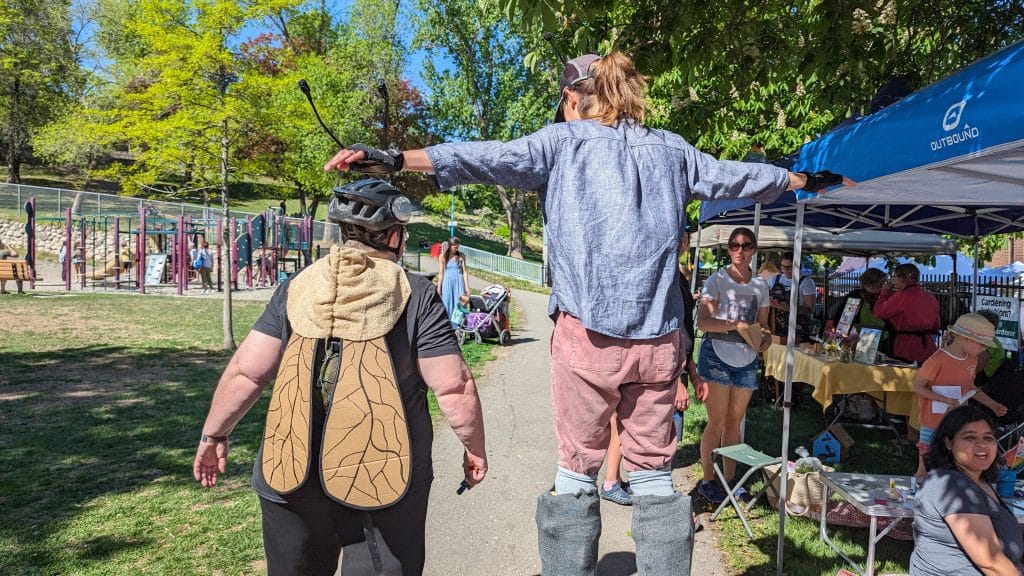
On Saturday, May 11, the Kamloops Regional Farmers’ Market kicked off the third annual Pollinator Festival. This year, the festival took place May 11 and May 18, and featured a variety of partners and activities that spread awareness about pollinators.
The farmers’ market has a list of different events throughout the year including Seedy Saturday, the annual Tomato Festival and the Street Food Fair. The Pollinator festival is the newest addition and has been growing steadily every year since it began in 2022.
“The market wanted a way to raise awareness about the importance of pollinators, and a festival to celebrate in the spring when gardeners are planting their gardens seemed a good place to start.” says Deanna Hurstfield, farmers’ market social media and special events manager. “There are several community groups who attend the markets to share knowledge about pollinators and show support for them.”
On May 11, the Thompson Shuswap Master Gardeners were available to chat about native plants and pollinators and family-friendly activities hosted by the Kamloops Art Gallery.
On May 18, the festival featured the Kamloops Naturalist Club and the Kamloops Beekeepers Club to engage with people. There was also a book club hosted at the Thompson-Nicola Downtown Library. Pollinator-activist Bonnie Klohn led the book club and discussed Jenna Butler’s book, Revery: A Year of Bees.
“We envision a day when everyone in our community will know about the pollinator festival and many will come to celebrate with us, whether at the market or in other parts of the community,” Deanna says. “That both the physical and cultural landscapes will have changes in such a way that supporting pollinators will be a naturally given facet in our community, and that our community will be all the more resilient for it.”
So do we. That’s why we spend more time, more money and place more care into reporting each story. Your financial contributions, big and small, make these stories possible. Will you become a monthly supporter today?
If you've read this far, you value in-depth community news