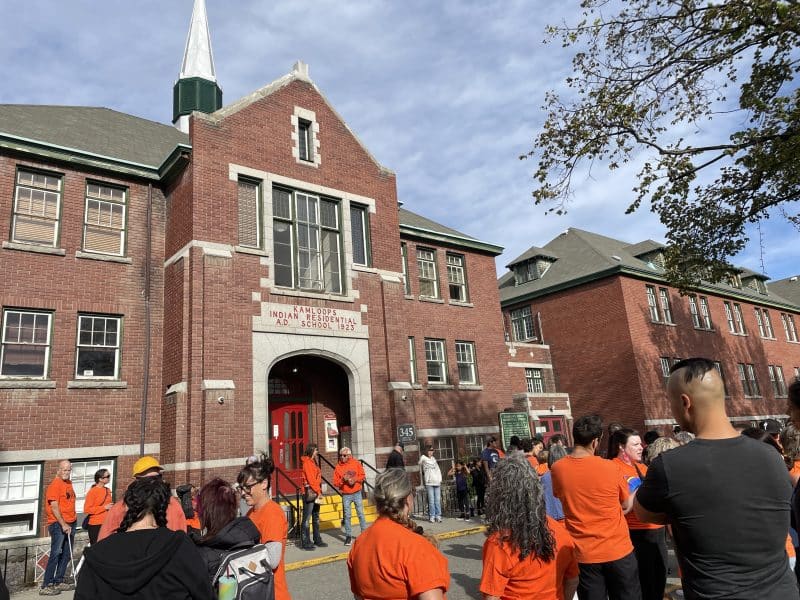
The use of artificial intelligence (AI) has increased day to day, noticeable in almost every facet of life. But where does the power for generating AI come from?
The answer is data centres, specialized facilities designed to run AI and machine learning workloads. Kamloops is currently home to three of these centres, with an additional three in the works.
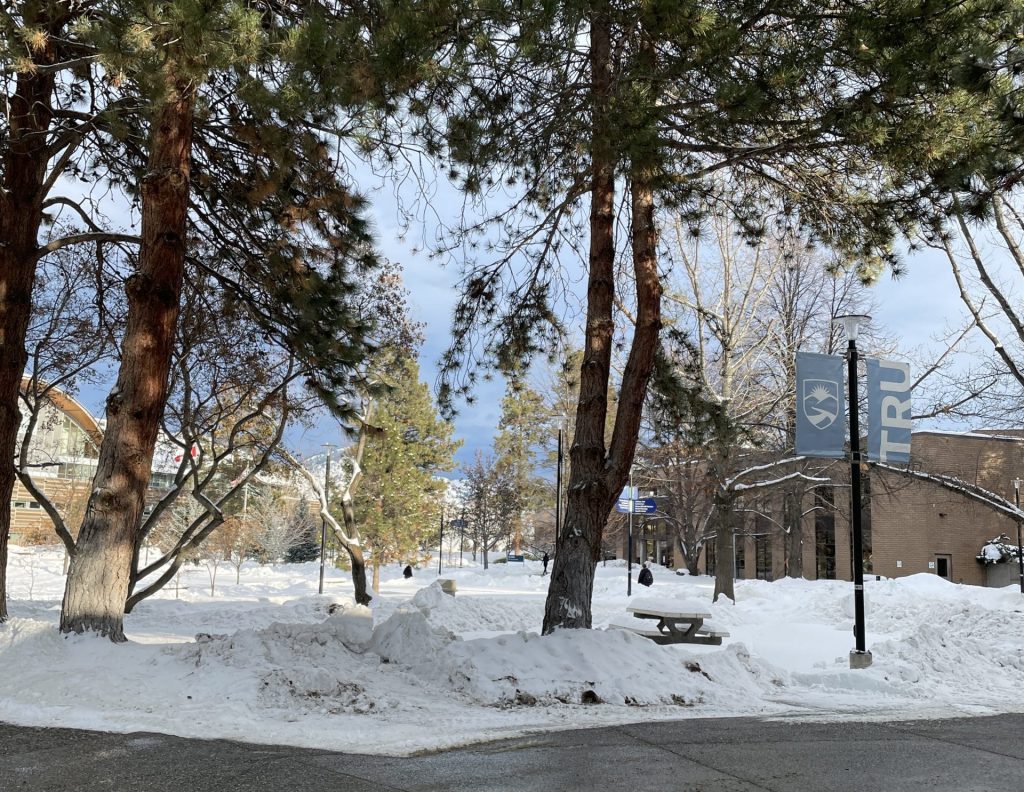
One centre currently being built through Bell AI Fabric in connection with Thompson Rivers University (TRU), has an expected completion of 2026.
To understand more about the purpose – and impacts – of this centre The Wren reached out to Matt Milovick, vice president of administration and finance at TRU.
The TRU Property Trust, which is responsible for the development of TRU’s surplus lands, is leading negotiations for the data centre, which is planned for the northwest corner of campus, across from two existing centres, Milovick says.
Hillside Data Centre Inc. is the holding company for the facility’s building shell and the site will be operated by iTel, a Bell company.
The land has a long-term lease and the proceeds from the disposition will be distributed to TRU and the TRU Foundation for research funding and bursaries for students, according to Milovick.
“TRU intends to enter into an arrangement with Hillside Data Centre Inc. to use the waste heat data centre operations to provide hot water to the west side of campus as the campus develops over time,” he added.
Potential research opportunities and collaborations related to AI are also possible, Milovick said.
Kamloops’ data centres part of a bigger project
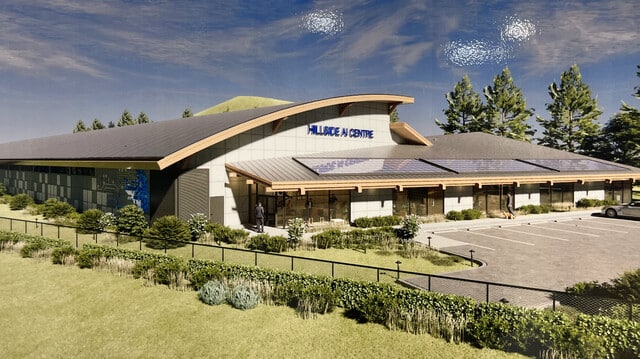
When Bell announced Bell AI Fabric, a “major investment that will create the country’s largest artificial intelligence (AI) compute project”, it stated collaboration with TRU as “an academic partnership,” adding it will be integrated into the district energy system, host training and provide students with access to “cutting-edge compute capabilities.”
Shannon Wagner, provost and vice president Academic of TRU shared the university is proud to collaborate on the project, saying it will create “unprecedented opportunities for students, researchers and our community.”
Representatives from TRU however, were clear the centre is a collaboration, not a university-led initiative.
“It is [Bell’s] project — not TRU’s project,” Robert Koopmans, director of strategic communications tells The Wren.
It is also part of a larger project with Kamloops, one piece of a national network with a “data centre supercluster in British Columbia,” according to Bell.
This group of six facilities will provide 500 megawatts of AI compute capacity, powered by hydro-electricity, Bell stated.
Another centre in Kenna Village Facility is planned for 2027, as well as two additional high-density AI data centres, with further national facilities to follow, according to Dan Rink, president of Bell AI Fabric and CEO and founder of iTel Networks.
But why start with Kamloops?
“Kamloops sits at the nexus of Canada’s major fibre routes, enabling low-latency connectivity,” Rink explains.
This means there is minimal delay in transmitting data, latency referring to the time it takes to send a unit of data across a network.
Kamloops is also not prone to many environmental disasters, he added.
The centres will provide stable access to clean hydroelectric power and they have a moderate climate and lower natural-disaster risk.
Energy and environmental concerns
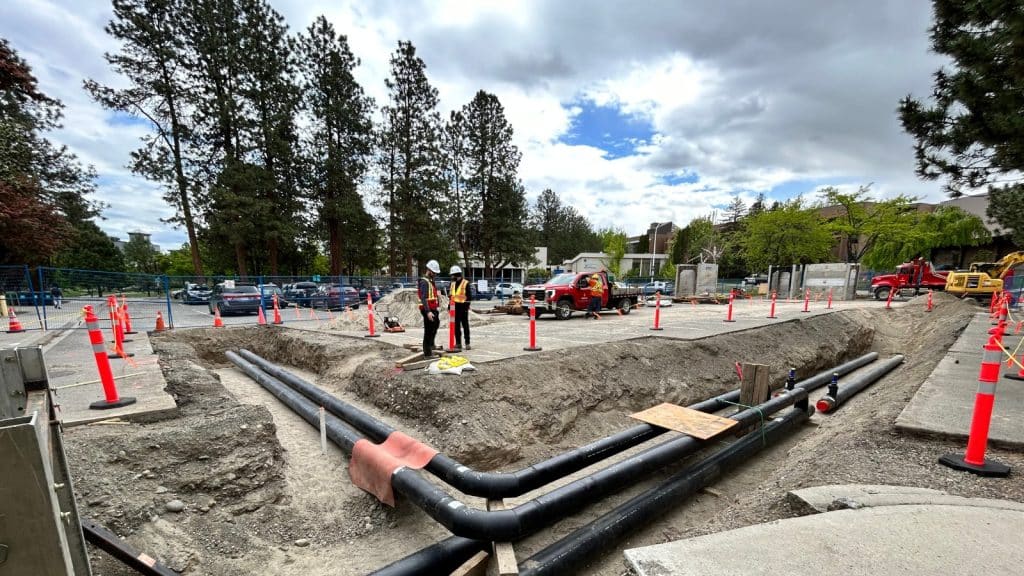
Along with the opportunities the development of AI data centres may bring to Kamloops, there are also environmental impacts due to the role water plays in cooling and powering these centres, especially for semi-arid systems and drought prone climate of the city.
Normally over the summer the city issues a water use restriction plan to conserve water. This year September and August were the warmest months on record for Kamloops.
This year has also seen multiple power outages, in the last 14 days there have been 10 power outages in Kamloops and more have been reported on.

Specifically to cool the computers used to generate AI, data centre developers tap into freshwater resources to “quench the thirst of data centers, which is putting nearby communities at risk,” according to the Environmental and Energy Study Institute (EESI).
Large data centres can also consume up to five million gallons per day increasing water consumption, energy and carbon emissions and adding to the anticipated 15 per cent increase in electricity demand by 2030.
“I got quite frustrated because TRU has this goal of being carbon neutral by 2030,” Alysha Fehr, student of natural resource science at TRU tells The Wren.
TRU’s goal to be carbon neutral is a part of the Hero for Zero initiative which includes a Low-Carbon District Energy System and Sustainability Powerhouse, replacing natural gas boilers with a sustainable electrical heating source. This system seeks to offset over 100,000 tonnes of greenhouse gas emissions over the next 30 years.
Providing land for an AI data centre is contradictory to this goal, Fehr says.
Carbon management firm Carbon Direct found the carbon footprint of AI consists of two parts: the embodied emissions, which come from construction of data centres and the manufacturing of the IT equipment and operational emissions from electricity that is consumed by computer chips when they are used for AI calculations.
Both emissions of carbon will grow as more AI data centres are built, and the Massachusetts Institute of Technology reported the energy demands of generative AI are expected to “continue increasing dramatically over the next decade.”
The intention of these centres is to run on “reliable, renewable hydroelectricity, which reduces both the carbon footprint and operating costs,” Rink says. In addition, the centre will be interconnecting with the TRU district energy system and the facility of waste heat to increase efficiency.
Further, the centre will use a closed-loop system, meaning no new water is brought in for the cooling system, Rink explains.
“The proposed data centre design does not rely on municipal water other than to initially charge the system and will not contribute to drought concerns,” Marvin Kwiatkowski development, engineering and sustainability director at the City of Kamloops tells The Wren.
The closed-loop system will be supported by a “high efficiency chiller plant and free cooling coils,” Kwiatkowski adds.
How will these centres benefit Kamloops?
Business interests, sovereignty and innovation are at the top of the list, Kwiatkowski says.
“For business growth and development, higher density computer and AI workloads require data centres for their power and cooling capabilities. Providing support to TRU, start-ups and larger companies is good for Kamloops and the region.”
The majority of AI centres are currently in the US, he adds.
“As governments start to leverage AI more, then develop critical business processes that rely on AI, there is a desire to ensure that changes in political landscapes won’t endanger that resource from being taken away or leveraged.”
This is a private development, and no taxpayer funds via the local government will go toward construction or fees, Kwiatkowski says. The project may receive federal funding however.
“Some of the benefits for Kamloops other than jobs and economic spinoffs include redistributing the energy produced from the data centres to heat, buildings, pools and homes.”
So do we. That’s why we spend more time, more money and place more care into reporting each story. Your financial contributions, big and small, make these stories possible. Will you become a monthly supporter today?
If you've read this far, you value in-depth community news