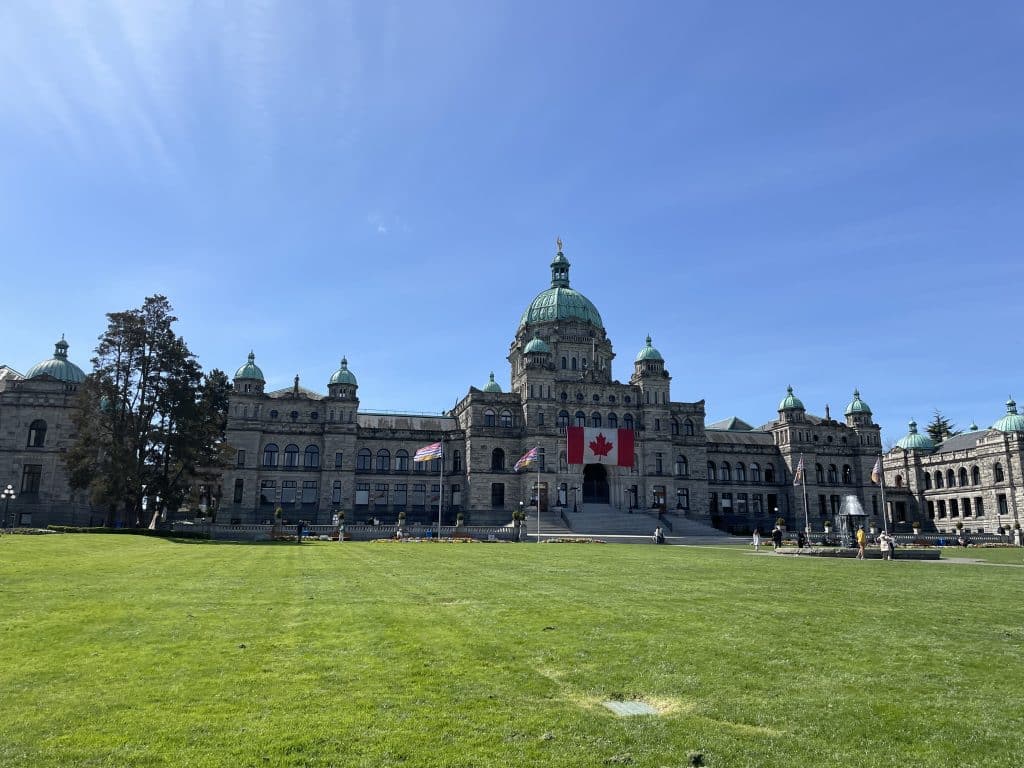
The provincial government plays a large role in the lives of Kamloopsians and British Columbians. Notably, the provincial government manages health care, housing and education.
During the last few election cycles, readers shared many issues they wanted provincial and federal candidates to look into. At The Wren we believe it is important to hold politicians and members of the government accountable. To do that, it is vital to understand what each level of government is responsible for – and how to engage with them.

The Government of British Columbia manages the affairs of the province through laws and policies, and is divided into the legislative, executive and judicial branches.
The three branches of the provincial government
The legislative branch is made up by the Legislative Assembly, which includes public officials that have been elected by the residents of British Columbia. The main purpose of the legislative branch is to serve as a public forum for open discussions. The elected representatives serve as mediums for the public and represent its concerns.
There are 93 Members of the Legislative Assembly (MLAs) representing the interests of constituencies across the province. MLAs participate in various parliamentary processes, including approving proposed expenditures, making laws and scrutinizing the government’s activity.
The executive branch is responsible for developing policies for issues in the province, submitting government spending to the legislative assembly for approval, preparing legislation and ensuring the implementation of provincial policies and laws.
The judicial branch of the provincial government includes the Provincial Court of British Columbia, the Supreme Court of British Columbia and the British Columbia Court of Appeal. The courts have a significant role, including interpreting laws and enforcing the principle of the rule of law. While the laws are approved by the legislative branch of the provincial government, the judicial branch has to settle questions on particular legal issues and interpret those laws. The court also ensures the actions of the provincial government are based on constitutional and legal authority.
Responsibilities of the Provincial Government
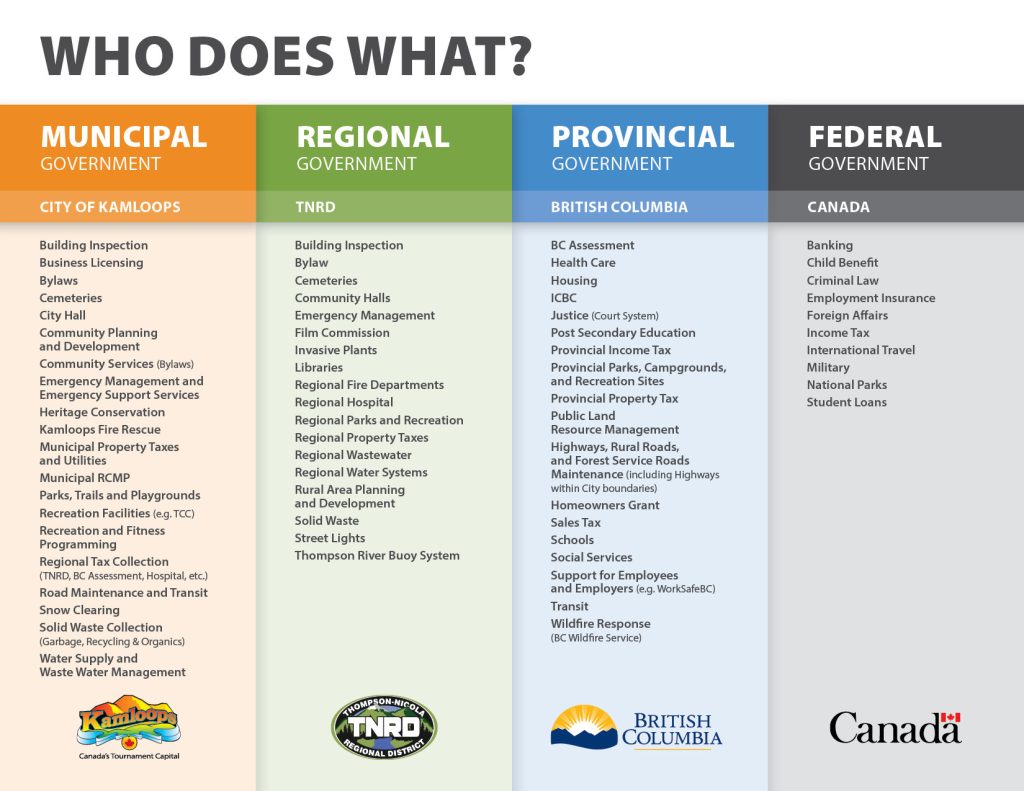
The provincial government covers eight regions that have very unique economies, history and cultural diversity.
Kamloops has two seats at the legislative assembly which covers two electoral districts, Kamloops-North Thompson and Kamloops Centre.
During the last provincial election in 2024 Elections BC released updated maps.
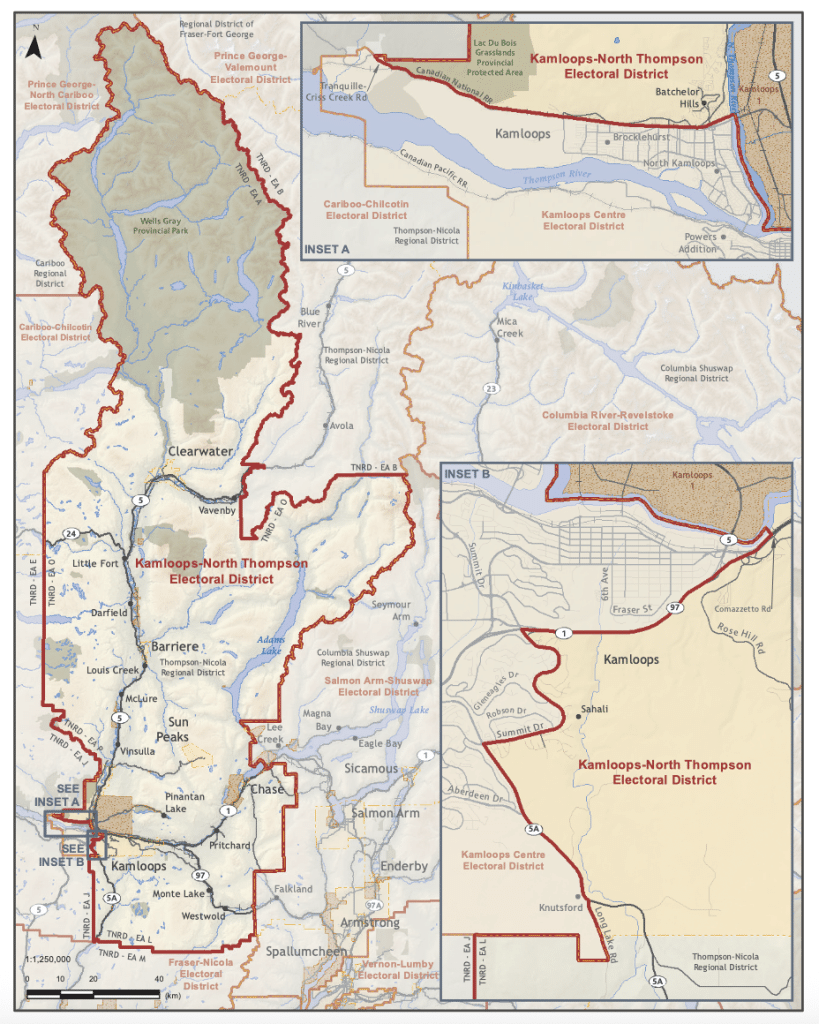
The MLA for Kamloops-North Thompson is Ward Stamer, a member of the Conservative Party of British Columbia.
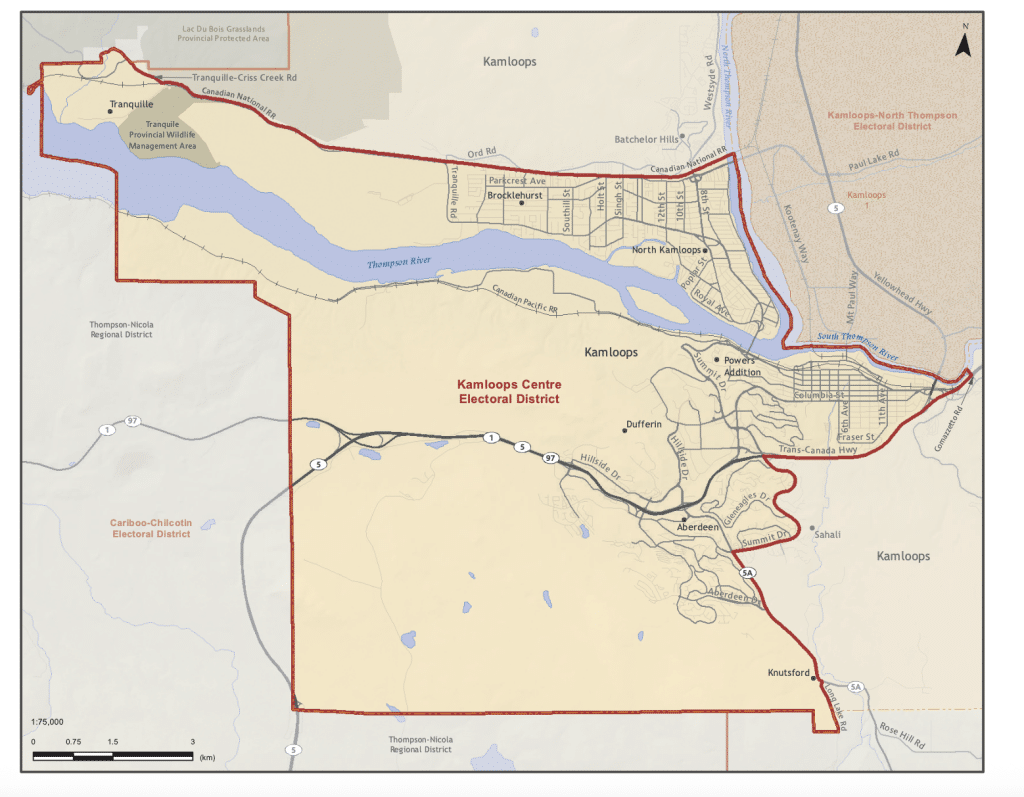
The current MLA for Kamloops Centre is Peter Milobar, also a member of the Conservative Party of British Columbia.
In the time Milobar has been in office, a majority of people come to him with individual and one-off issues or concerns. He broke down the process for making changes to policies.
“You can bring forward, say, a private member’s bill, but it’s up to the government whether it gets debated or not,” he tells The Wren. “You can try to make amendments to legislation the government’s brought forward but ultimately if they choose to not agree with you, they have the majority of seats. They can vote down those types of changes as well.”
Due to the time, procedure and resources required to make amendments to legislation, Milobar often helps constituents navigate bureaucracy, so they understand what to do for their specific needs.
Many folks might not understand the procedure, and often things like tax cuts or legislation changes cannot be done quickly. Terry Kading, a political science professor at Thompson Rivers University explains why that is.
“By the late 20th century most of the power with respect to everything that’s largely important to us as citizens such as health care, education, infrastructure, resource development, all those things basically became almost the full authority of provinces.”
Provinces have large responsibility, but each varies in resources, including wealth and population, which can cause an imbalance, Kading says.
“What you end up with is [provinces] are lacking the money to actually fulfill all of those particular areas in a way,” he says. “This is why you end up with this very complex framework in which it takes a lot of time to work out all the details on each of these different issue areas.”
“You can see why people get very frustrated and feel like you’re not being heard or not being taken seriously,” Milobar adds.
As MLA, he operates with an open door when people contact his office. When possible, he will go directly to the relevant minister for help. Other times, he takes constituent concerns into account when working in the legislative assembly. Here are a few topics he and other MLAs can help with.
Health care
“Health care is a massive, massive concern,” Milobar says.
The goal of the provincial government is to deliver accessible and responsive health-care services. B.C. has a publicly-funded health-care system which ensures eligible residents have access to the necessary health-care services. The Medical Services Plan pays for those medically required services performed in a hospital.
The PharmaCare program helps pay for prescribed medications by physicians or pharmacists.
More programming offered by the province can be accessed on its website.
MLAs can help folks navigate these systems and understand options available.
MLAs also advocate on behalf of constituents for more services, such as a cancer centre in Kamloops, and they work to ensure that when money is appropriated, the services are meeting the conditions of that funding.

Housing
Housing and tenancy at all levels is under the jurisdiction of the provincial government. MLAs can advocate for policies like the $400 refundable tax credit for renters, support for Indigenous housing, Attainable Housing Initiative or seniors housing.
Housing can also involve the municipality, and MLAs can help constituents understand who they need to connect with.
“I try to make sure [residents] understand I’m not just trying to pass the buck,” Milobar says, adding that at times the most efficient way he can help is by directing folks to the appropriate person or entity.
In those instances, Milobar and staff try to streamline the process to make sure constituents are “getting access to the level of government that can truly action their issue,” through connecting and introducing
“I view it more as part of my job to help the citizens navigate the overall political system.”
How to engage your MLA
As a resident, business owner or organization leader, engaging with your MLA can be helpful to help raise awareness around many issues.
“People are emailing and contacting us regularly on a weekly basis,” Milobar says.
Emailing and calling are two ways to get in contact with an MLA. Every MLA has a publicly available phone number and email, but you can also often find MLAs at public events or community gatherings.
When preparing to talk with an MLA, remember they are members of government. Be polite, respectful and prepared. Drafting an outline of key concerns, questions or issues can help with focus.
Following your conversation, stay in touch with updates and continue to advocate for your needs.
Lastly, time your engagement and be flexible. When MLAs are in session, they may be unavailable to talk with constituents. Reach out when they are not in session and try to schedule a time to meet when they are in town. With busy schedules, you may have to share your issue with staff.
“We try to have meetings with [constituents] if that’s what they’re hoping to have,” Milobar says. “Sometimes it takes a while, based on calendars and schedules to make it happen, but we try.”
The list of the current MLAs serving for various regions is available on the website of the Legislative Assembly, including their phone numbers and email addresses.
Constituents can connect and engage with provincial activities via govTogetherBC.
The Wren is a community driven local news outlet. Your questions and ideas help guide what we dig into. Your feedback after we publish a story helps ensure we're always improving our reporting to better serve you
What do think about this story?