
Secwépemc leadership collective awarded for reconciliation efforts
The 2024 BC Reconciliation Award recognizes Qwelmínte Secwépemc for empowering the next generation of leaders to implement Secwépemc laws.
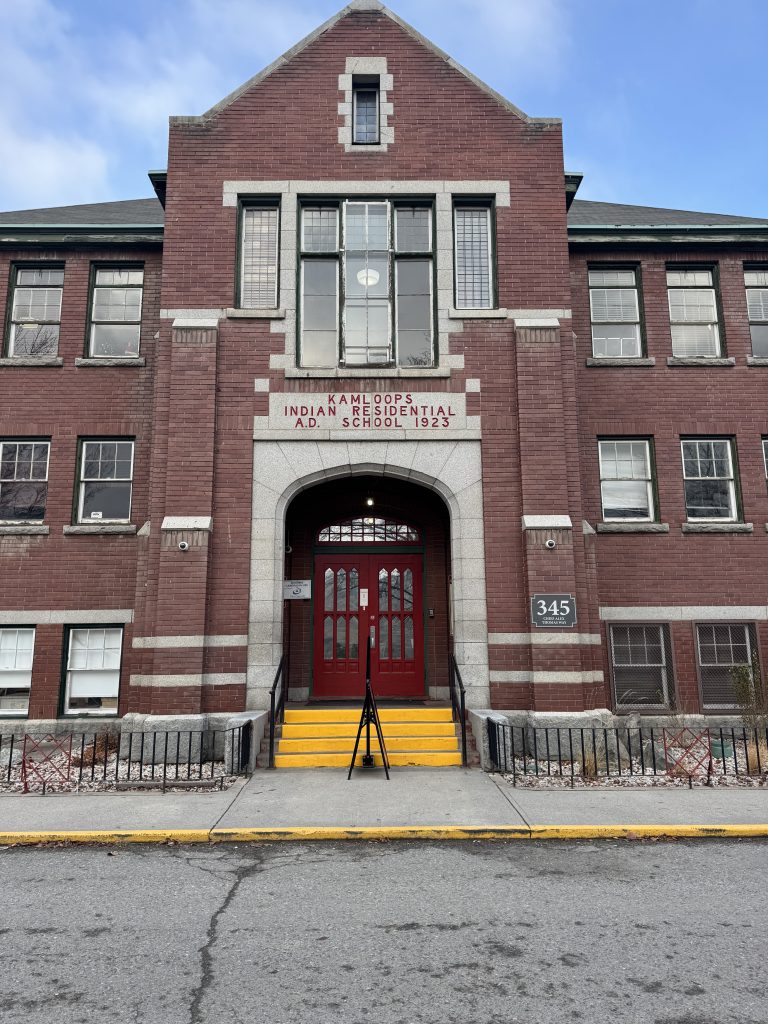
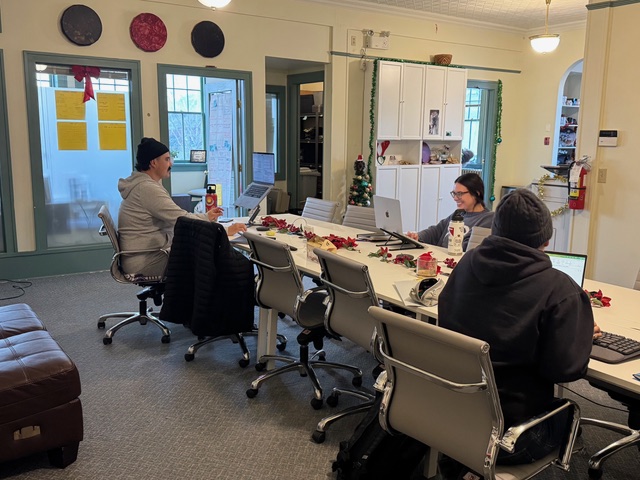
Inside the former Kamloops Indian Residential School (KIRS), animal hides adorn desks and drums hang on walls – bringing Secwépemc law and culture into a space where it was once forbidden.
The space is a home for Qwelmínte Secwépemc, the land and resource leadership collective that facilitates decision-making between eight Secwépemc communities and the Government of British Columbia, using Secwépemc law and teachings.
Since the organization was founded in 2019, it has successfully co-developed partnerships with B.C. ministries to share governance, helping to ensure “Secwépemc people play a central role in regional economic development and governance,” according to the Lieutenant Governor of British Columbia.
On Jan. 23, the Office of the Lieutenant Governor of British Columbia in partnership with BC Achievement Foundation will present QS with a 2024 BC Reconciliation Award in “Victoria” for its work facilitating dialogue between Secwépemc communities and the B.C. government.
The BC Reconciliation Award stems from the 2015 Truth and Reconciliation Commission’s Calls to Action, recognizing “individuals, groups and organizations who demonstrate exceptional leadership, integrity, respect and commitment” to them.
While QS is not a governing body, its staff members implement Secwépemc beliefs to guide decision-making and collaboration with the province on forestry management and wildlife stewardship.
For example, QS and the province continue to work together on a collective forestry agreement informed by a working group composed of forestry technicians and political representatives from Skeetchestn Natural Resources Corporation and the province.
QS is represented by Skú7pecen re Stseptékwlls (the story of porcupine). Skú7pecen (porcupine) brought the conflicted Elk and Swan nations together through collaboration and dialogue, making it a symbol for reconciliation.
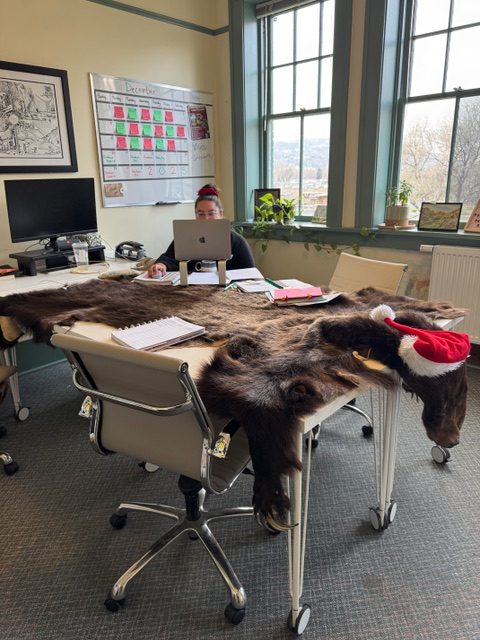
Within the building of the former Kamloops Indian Residential School, many of the 10 Qwelmínte Secwépemc staff members work together around a large conference table adorned with hides. Jazmen Pigeon, Knowledge Builders program guardians coordinator, sits at her computer. Photo by Amanda Wandler / The Wren
Part of how QS achieves these successes is by providing Secwépemc interns with hands-on education.
The first intern program was completed in 2019 with four university students in the areas of environmental policy, law, anthropology and political science.
Over the years the program has grown to train additional students, with 15 participants in 2023.
“[Students] can learn about diplomacy, about nation-building, about Secwépemc governance and law, and what it looks like to approach natural resource management with a perspective of respectful recognition of Indigenous title and rights,” says Hunter Lampreau, Skú7pecen journey director.
For Drew Rose, Knowledge Builders program coordinator, QS provides opportunities for personal growth and connection. He describes how the summer speaker series helped him learn from Indigenous Elders and Knowledge Carriers.
“Every week, we get to sit with a Knowledge Carrier or Elder, learning who they are and receiving knowledge — whether about the land, hunting, protocol or other teachings,” he says.
“Being so far from home, this really grounded me. Building those relationships and creating a sense of belonging with these people was extremely beneficial for my growth.”

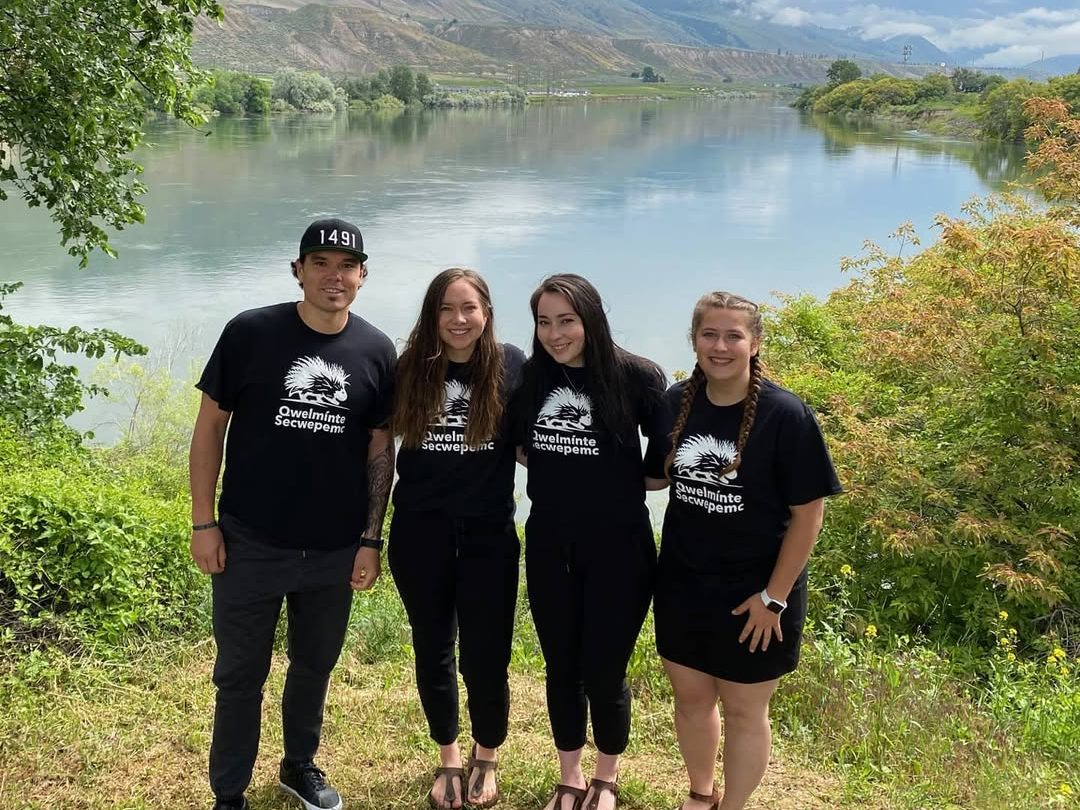
Both Hunter and Jessica Nelson, QS’ intern program coordinator, acknowledge the deep significance of working at the KIRS site.
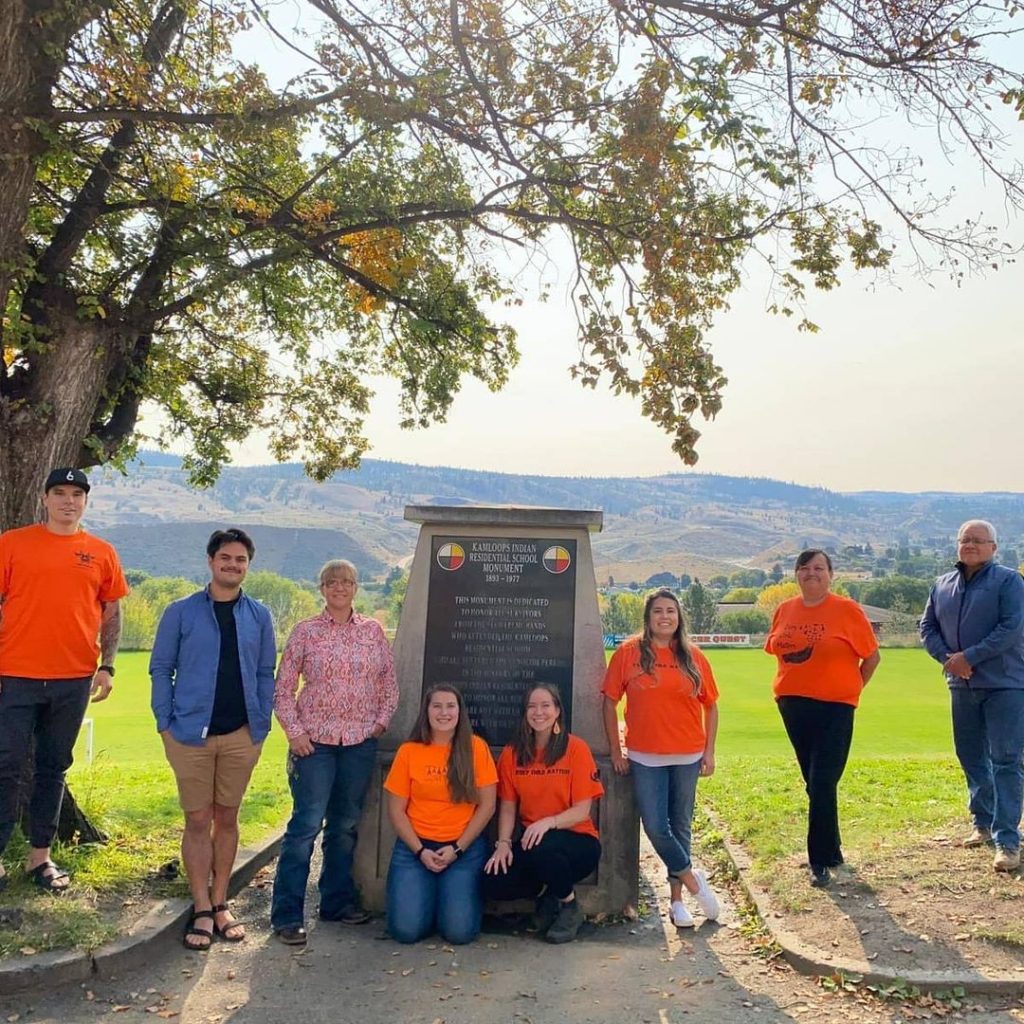
KIRS was established in 1890 to forcibly remove Indigenous children from their families, attempting to erase cultural teachings and practices.
The site holds painful memories of abuse, and in 2021, finding evidence of unmarked graves reignited calls for justice for Indigenous Peoples.
Nelson reflects on her experience walking through the same halls her grandmother once walked as a child.
“It’s hard to be in this space and be part of this work, but also to see that we now have reconciliation in action here,” she says.
“My grandma came to a speaker series in the past and shared her experiences. Seeing her come back and say, ‘Look at all the good work happening now in this space compared to the experiences she had as a youth — it’s incredible.”
Hunter shares how working in the same space where his grandparents once endured hardships has profoundly impacted him as well.
“My family names on both sides are on that plaque out front that recognizes them. So, to work in that space — in the former Junior Boys Dormitory where my grandparents attended — but to do it with the objective of uplifting the next generation of youth in a healthy way is incredible.”
Call to Action 43 asks all levels of government to “fully adopt and implement the United Nations Declaration on the Rights of Indigenous Peoples as the framework for reconciliation.”
In 2019, the B.C. government adopted the Declaration on the Rights of Indigenous Peoples Act (DRIPA), which requires the province to align laws — both existing and new — with First Nation laws.
For the Secwépemc, stewardship of tmícw (land, waters and everything on earth) since time immemorial recognizes the “deep interconnection between the environment, economic sustainability, social relationships, culture and heritage and health both within and between people,” according to QS’ website.
Partnerships with the province empower participating Secwépemc communities to take an active part in decision-making and work towards exercising their self-governance over caring for the land.
More recently, the eight Secwépemc communities have focused on forestry negotiations with the province to respond to the impacts of climate change, such as wildfires and floods, in their territories alongside the impacts of the forestry sector.
Together they are working to “transform the cannibal powers on the land,” in particular the Tree Eaters — QS’ word for the forestry sectors which have stripped Secwépemc lands of their former abundance.
By working together on forestry management and policies, Secwépemc communities can protect their rights without needing to resort to conflict, a QS-led reconciliation agreement states, such as adversarial and costly court cases.
An information session on the Knowledge Builders program will be held on Jan. 8, 2025 at the Cplul’kw’ten Gathering Place at Thompson Rivers University. Follow QS on social media to learn more.
The Wren is a community driven local news outlet. Your questions and ideas help guide what we dig into. Your feedback after we publish a story helps ensure we're always improving our reporting to better serve you
What do think about this story?
Author

Related Articles
Meet Eric Van Stone, the archaeologist who stopped digging and started carving
Once trained to uncover the past, Chipped Stone Tools artisan Eric Van Stone now reshapes stone into functional blades.
Secwépemc sisters honour father’s dream with St’uxwtews powwow
After years of setbacks from wildfires, flooding and the loss of their father to cancer, the Pierro sisters continue the powwow he envisioned, carrying his legacy forward with the support of their community and future generations in mind.

‘I’ve just done what needed to be done:’ New documentary features women on the frontlines of climate disasters
Screening of Emergence: Women in the Storm by award-winning filmmakers Nova Ami and Velcrow Ripper brought local experts, researchers and frontline workers together for a community conversation.
