
Your questions about Kamloops’ new water restrictions, answered
The city’s utility manager shares the ins and outs of the new water restrictions.
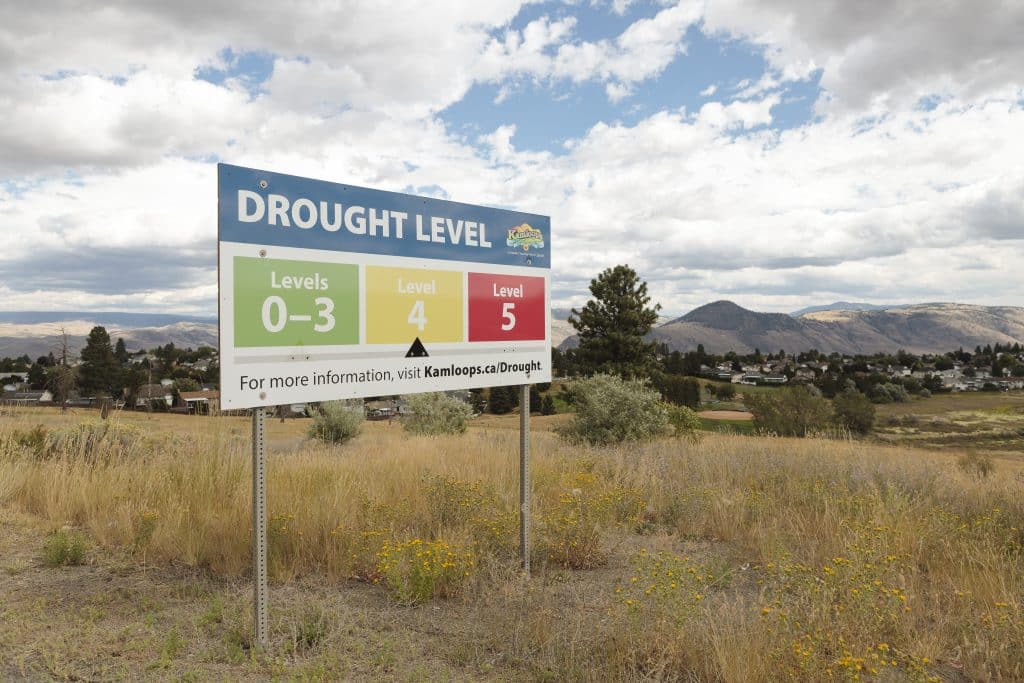
On July 20, the City of Kamloops asked residents to follow Drought Level 4 water use restrictions to help conserve our water supply, one step below the most severe provincial classification of Drought Level 5.
With this being the first time the city has placed proactive measures in place, many residents have asked questions.
How do I determine my watering days? Why is pressure washing still allowed when lawn watering is restricted? How are the restrictions decided?
The Wren sat down with the City of Kamloops’ utility services manager Rob Wagner to get you answers.
This interview has been lightly edited for clarity.
Some people are wondering why Kamloops is in Drought Level 4 when the snowpack was pretty good this year and the river seems full.
RW: We’re being proactive in our approach to drought season. We monitor the effects of the snowpack and the river levels through freshet [rapid snow melting and rain], and now we’re moving into drought. The snowpack did melt. We seemed in the beginning of the winter to be really good in terms of snowpack numbers, but if people were following the province’s updates, we went through the snowpack quite quickly.
So as the province sets the drought levels, and they’re the ones doing the modeling, they’re the ones that are looking at the snowpack, looking at river levels, and then assessing what the future will hold based on that.
So they’re saying, ‘Hey, South Thompson area, you need to move to Level 4,’ and then we follow the guidelines set out by the province.
This is the first time we’ve rolled out this system where we’re actually putting some restrictions on things based on the weather. We’re hoping that the residents will follow these recommendations and participate in trying to protect the environment and protect our river as we move through the hotter conditions.
With high temperatures and risk of wildfire, isn’t it more of a wildfire risk if everyone’s lawns die and their plants shrivel?
RW: You still are allowed to sprinkle your lawn one day a week, and you’re allowed to irrigate your trees, shrubs, plants, flowers and food-producing plants and crops one day a week, and three days a week with drip irrigation. You’re also allowed to hand water those trees, shrubs and food-producing crops unlimited.

Why is pressure washing allowed when watering lawns isn’t?
RW: So hard surfaces like cleaning your driveway or or sidewalks or things like that, that is allowed. But we’re asking you to use a pressure washer because a pressure washer will be more efficient with the water use. You’ll use less water and get more done with a pressure washer as opposed to a handheld hose. So you are allowed to do that. But we’re asking only if you really need to, I mean, don’t just get out there and blast your driveway for no reason.
How does the city measure and determine where to restrict water usage?
RW: We do have water meters. Everybody in town, businesses and homeowners have water meters in their homes and facilities, and we watch that. We can tell how much is coming out of the river into the water treatment plant and going out, so we know those levels. The city itself is reducing its water as well. It’s not like we’re asking residents to do it and not do it ourselves.
However, although we’ve cut back on the water that we’re using in the sports fields such as baseball or soccer fields and stuff like that, we do have to keep those going for user groups.
They need to be safe, and they’re also paying for that.
Are Kamloopsians generally good at conserving water?
RW: This is the first time we’ve rolled out the program, so we’ll see how this goes, and we’re hoping that the residents respond positively. We’re trying to protect our environment. We did have good response in the later stages of the southeast sector water break, where in the beginning maybe the messaging wasn’t getting through clear.
But as that went along, by day four and five, we ended up having great response to the residents out east who helped us get through that by greatly reducing their water consumption.
How are local businesses treated differently when it comes to water restrictions?
RW: These [restrictions] are primarily focused on residents because that’s where we can do the most good, and we’re not here to put any business out of water. Like a commercial car wash, for example, uses a lot of recycled water, so they can keep going, right?
That’s the other reason we’re trying to protect our water levels, is we need to make sure down the road that we have enough water for everybody’s indoor use.
Every business has the right to keep going, and we’re asking the residents, as part of our community, to do their part. And if a little bit of grass starts to turn brown or yellow, it will come back, and it’ll be okay. It’s a natural thing.
Why is the AI data centre allowed to use city water supply when regular people have to restrict consumption?
RW: That’s a business, so they’re allowed to keep going with what they’re doing. Why a data centre or how a data centre gets approved would be done through the building permit, which is a question better directed to the city’s Development and Engineering Services.
Have you heard any other questions from the community you’d like to address here?
A few people were getting on the bandwagon that we’re trying to save money on infrastructure such as pumps or what have you, and I can just assure you that that is not true. This has nothing to do with that. The city does not enact these policies without the direction of the province.
So this is the province modeling the water throughout the summer.
And Kamloops isn’t the only municipality. Every single one — Kelowna, Vernon — everybody’s doing it where the province feels water could become an issue down the road.
Where can people go to get more information?
People can get all the information they need from the city of Kamloops website, which is Kamloops.ca/drought. And there’s a great infographic on there. It’ll tell you the days of the week that is the watering days for you, it’ll tell you some great ways to save water in your indoor and outdoor use. It’ll tell you some water restrictions, frequently asked questions and answers, and some drought frequently asked questions and answers that should help people with questions.
The Wren is a community driven local news outlet. Your questions and ideas help guide what we dig into. Your feedback after we publish a story helps ensure we're always improving our reporting to better serve you
What do think about this story?
Author

Related Articles
MLA candidates for Kamloops share plans to address affordability ahead of B.C. election
Here’s how Kamloops’ MLA candidates answered the question: What will you do to help with affordability?

How will Kamloops MLA candidates support healthcare?
Here’s how Kamloops MLA hopefuls will address the shortage of primary healthcare providers in small-urban and rural areas.

Here’s how MLA candidates will improve safety for all in Kamloops
Here’s how candidates answered the question: How would you create safety for everyone in Kamloops?
